It Is Important to Properly Manage
Acne in Mok-dong from the Early Stages <Written by a Doctor>
Acne in Mok-dong
Hello.
I am Kim Jin-hyun, Chief Director of the Mok-dong branch of You&I Clinic.
“I left a single pimple alone, thinking it would go away quickly,
but it left a dark scar on my face.”
If you search online for acne treatment, you may find that more people than expected have concerns like this.
A very small pimple may seem like it will disappear quickly and leave no scar, so people leave it alone, only to end up with marks that they regret for a long time.
“Time will take care of it~”
If you leave it alone with that expectation, in many cases it can lead to inflammation, hyperpigmentation, scars, and other situations that are much harder to resolve.
That is why it is important to manage acne properly from the beginning.
From now on, let’s take a closer look at how to respond in the early stages.
Table of Contents
-
Why acne should be properly managed from the early stages
-
Can scars form even if you do not pop acne?
-
Personalized treatment is important for acne
Acne in Mok-dong
Why early acne must
be properly managed
The sebaceous glands begin to receive hormonal stimulation as adolescence starts.
At this time, excess sebum secretion often begins.
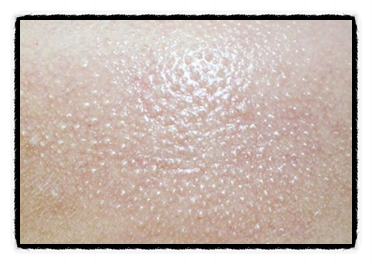
Whiteheads
If the keratin at the opening of the pores thickens during this process, sebum may not be able to flow out properly and can turn into a “closed comedone (whitehead),”
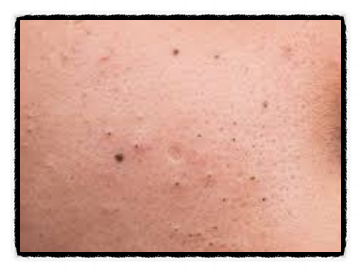
Blackheads
If the surface opens, it comes into contact with air and oxidizes, developing into an “open comedone (blackhead).”
At this stage, if you dissolve the sebum buildup or remove the dead skin cells, you can greatly reduce the chance of it progressing to inflammatory acne. But if you leave one small lesion after another because it does not seem severe right now, you may end up facing a more serious condition.
In fact, many people do not think much of acne that only has white bumps.
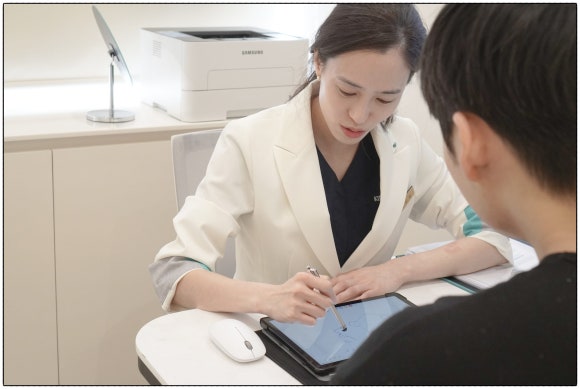
You can think of the inside of a comedone as an oxygen-free area where acne-causing bacteria can easily multiply.
Because the lipase produced by bacteria can directly trigger the inflammatory response, if you think there is no need to touch it and leave it alone, missing the treatment window can easily allow it to develop into pus-filled acne.
Acne in Mok-dong
Can scars form even if you do not pop acne?
There is another common misconception about acne.
“ As long as I do not touch it, it will not leave a scar. ”
But in reality, if the inflammation itself causes the wall of the sebaceous gland to rupture, the skin will rush into a repair process called collagen rebuilding.
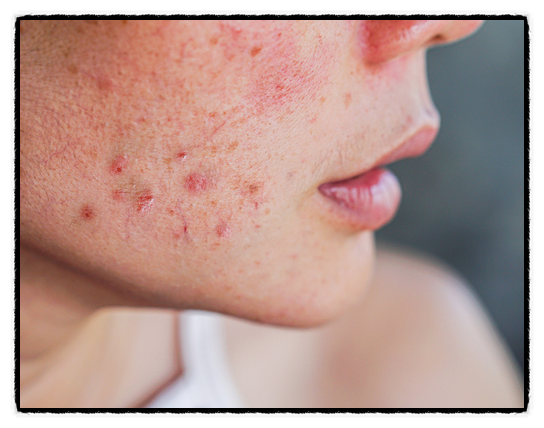
During this process, it can leave behind depressed or raised scars.
In addition, even after the inflammation disappears, blood vessel dilation or excessive melanin reactions may continue, leaving red marks or brown hyperpigmentation.
Many people want to treat depressed or raised scars right away, but in fact, once a scar has formed, restoring it to its original state is extremely difficult and takes a long time.
That is why it is preferable to respond appropriately from the early stage of acne, before scars even form.
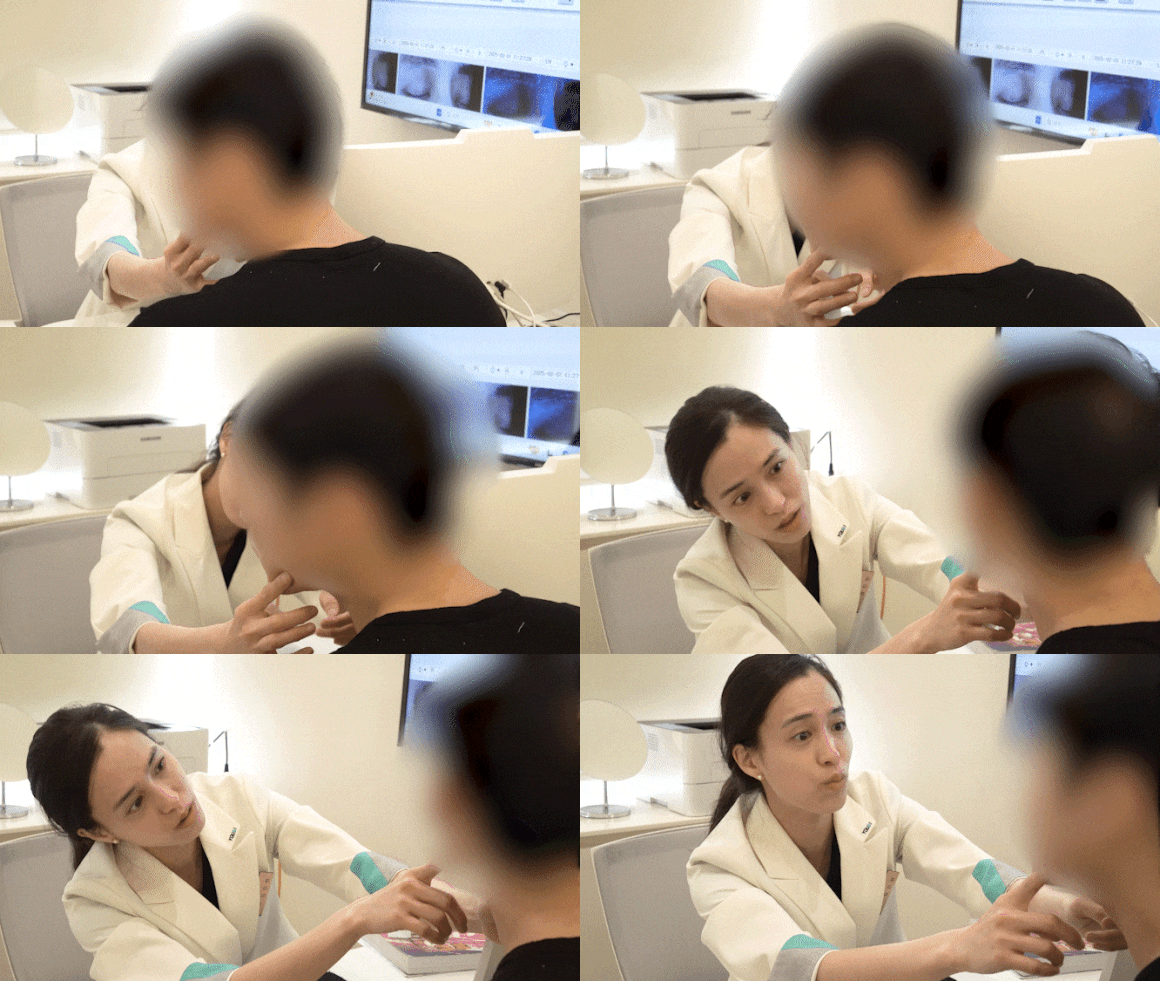
There is also the belief that red marks will naturally fade, so some people do not actively pursue treatment.
If these red marks, that is, dilated capillaries in the dermis, remain, then each time there is irritation from ultraviolet light or heat, the redness can recur and lead to symptoms such as chronic flushing.
So rather than simply waiting, it may be helpful to combine early care such as vascular-stabilizing lasers or antioxidants.
Acne in Mok-dong
Personalized treatment is important for acne
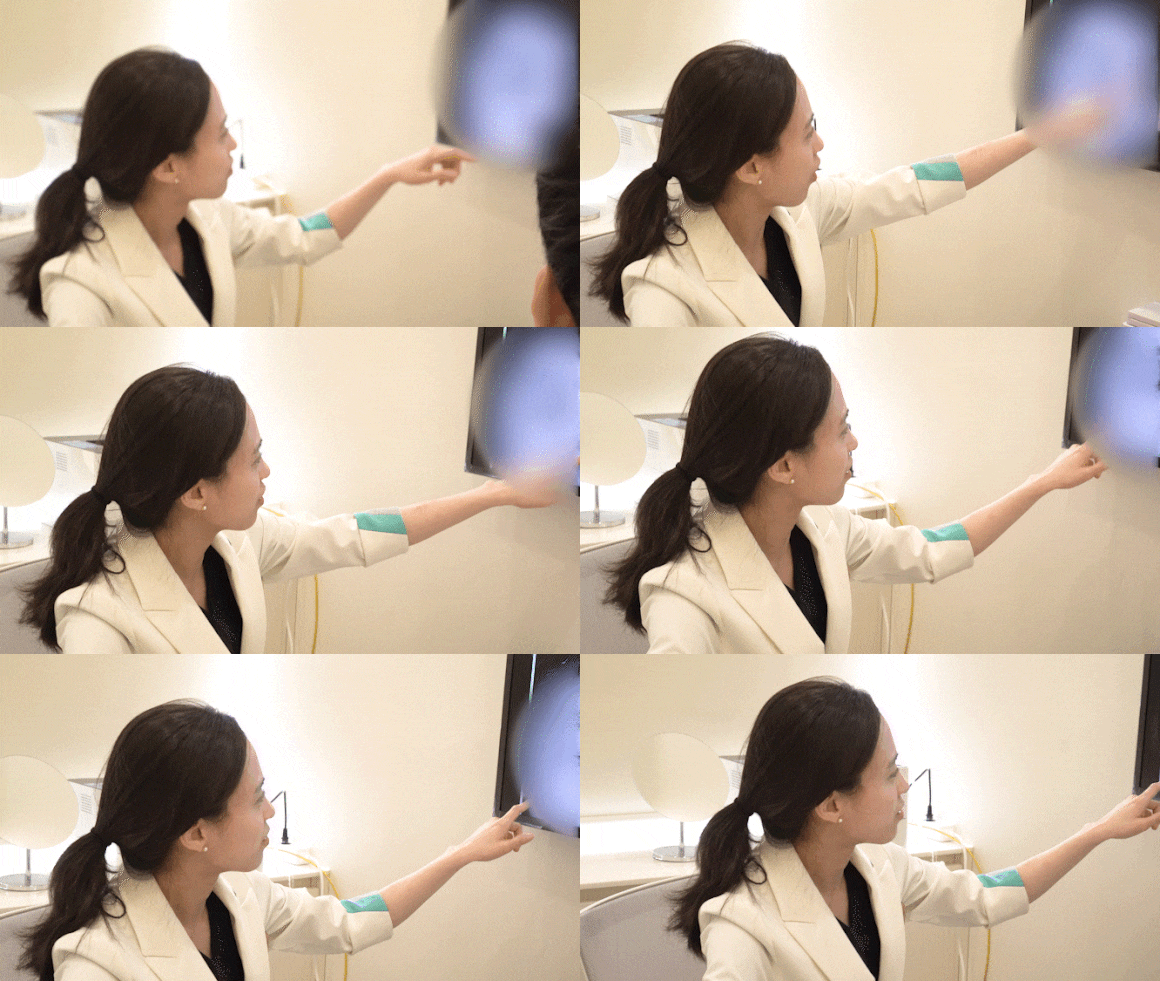
That is why it is important to respond to acne as quickly as possible and properly according to your skin condition.
Treatment should be carried out by thoroughly checking three things: skin type, acne stage, and lifestyle habits.
If a patient has severe oily skin or enlarged pores, treatment can be performed by suppressing excess sebum and controlling dead skin cells, while also using laser treatment to stimulate the sebaceous glands.
However, if the skin is dry or thin, it may be better to first care for the skin so the moisture barrier can recover properly, and then gradually clear the acne.
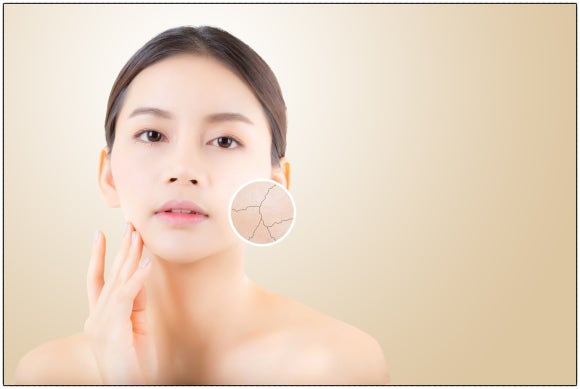
If high-output peeling or strong laser treatment is suddenly applied to such skin types, it may instead damage the skin barrier and increase the likelihood of side effects.
For women whose acne frequently appears due to large hormonal fluctuations, it may be helpful to identify the pattern of acne before and after menstruation and prescribe anti-inflammatory medication or schedule low-intensity lasers or peeling in a personalized way for that period.
In this way, acne can be targeted more effectively only when treatment is applied differently according to skin type, constitution, and routine.
These days, there are so many good acne medications and laser treatments available that many people think they can simply receive treatment without much thought.
Some may even think that if they get a scar or two, a few laser sessions will quickly remove them.
But acne is not a simple condition.
The outcome often depends on where and how the chain reaction of excess sebum, blocked pores, bacterial growth, and inflammatory response is interrupted.
In particular, when treatment begins properly from the early comedone stage, it can greatly help reduce tissue damage and the risk of scarring.
Therefore, if you are considering acne treatment, I hope you do not wait too long and instead receive a clear diagnosis of your skin type so you can proceed with personalized treatment.
This was Kim Jin-hyun, Chief Director of the Mok-dong branch of You&I Clinic.
Thank you.
< Related post >
< Directions >