PicoAlex ‘superpower pigment destruction’
Is it true that it can do that?
PicoAlex

Hello.
I am Kim Jin-hyeon, chief director of the Mok-dong branch of U&I Clinic.
“ I heard that one PicoAlex treatment
can make all pigment disappear.
Is that true? ”
“ I heard that one or two sessions can
get rid of melasma and blemishes entirely. ”
Because it is so widely used online with expressions like “superpower,” “new concept,” and “innovative,” many people end up with vague expectations about PicoAlex rather than clear information.
However, like other procedures, PicoAlex is also a treatment with limitations.
So today, I prepared this post to explain PicoAlex properly.
I’ll explain it clearly and in detail, so please focus for just 3 minutes!
Table of contents
PicoAlex
What is PicoAlex?
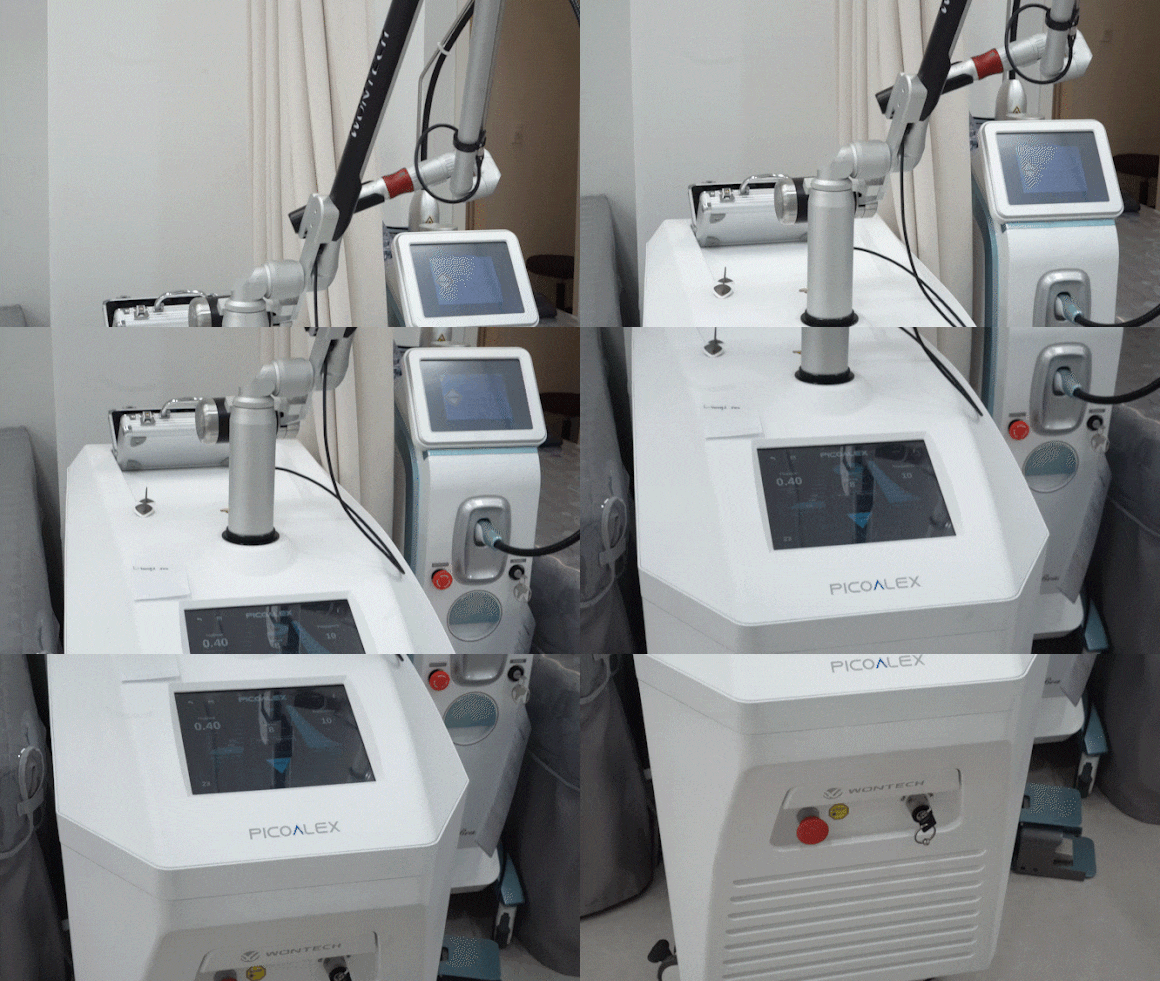
This is PicoAlex :)
PicoAlex is a laser that helps rapidly break down pigment particles using extremely short pulses measured in picoseconds, which are one-trillionth of a second.
Compared with conventional nanosecond lasers, its core principle is to apply strong pressure for a shorter period of time to break pigment particles into smaller pieces.
“ I’ve heard of pico,
but Pico ‘Alex’ is new to me.
What does it mean? ”

PicoAlex is a laser based on the 755nm Alexandrite wavelength.
That is why it is called Pico ‘Alex’ ^^.
This wavelength has a high absorption rate for melanin, so it has the characteristic of working effectively on both epidermal and dermal pigment.
It is considered to be widely usable for various treatments, including tattoo removal, pigment treatment, Ota nevus, and blemish treatment.
PicoAlex is also notable not only for its wavelength but also for its output.
It can reach up to 310 mJ, which is advantageous for reacting with deeper pigment.
But what you must keep in mind is that this kind of powerful output does not mean all pigment can be solved “in one shot.”
Results always vary depending on the location of the pigment, skin type, and tissue response.
PicoAlex
Misconceptions about PicoAlex
“ How far does the meaning of
superpower go? ”
It is true that PicoAlex is a device that can be useful for pigment conditions.
But it is not a magical device that makes all pigment disappear with just one treatment.
You may ask why that is, even though both the wavelength and output are powerful.
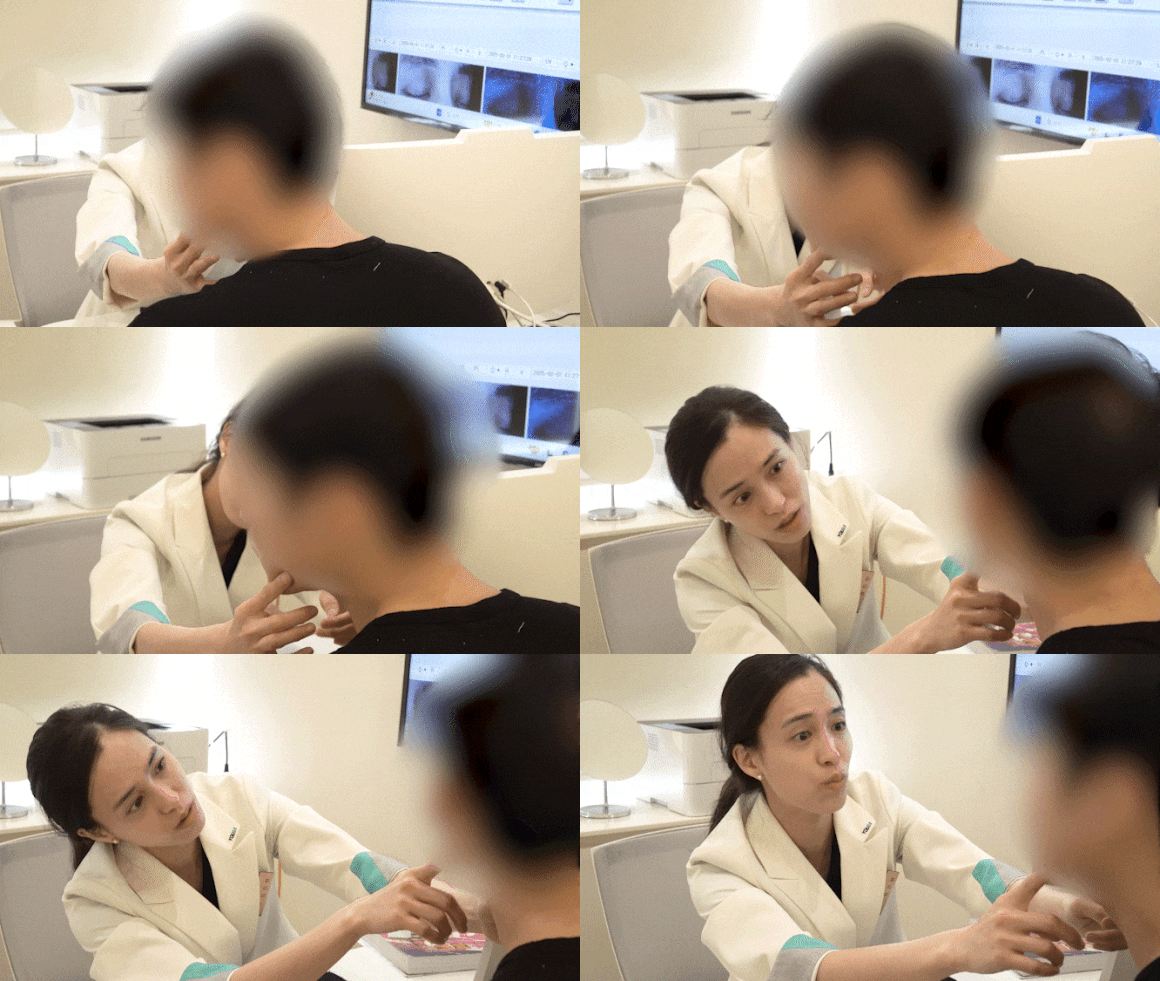
First, you need to look at how deep the pigment is in the skin.
Pigment close to the epidermis may respond relatively quickly, but pigment in the deeper dermis or vascular pigment may require a more multi-layered approach.
Also, you should keep in mind that destroying only the pigment without damaging normal skin is technically not an easy task.
PicoAlex attempts focused targeting of pigment using a focusing lens, but the treatment range and degree of stimulation can vary depending on the practitioner’s skill, irradiation density, and output settings.
“ Then isn’t it no different from existing pico lasers
except for the wavelength? ”

Not quite.
First, as mentioned earlier, PicoAlex uses the 755nm wavelength specialized for melanin.
Because of that, the target also changes.
It has the characteristic of responding more sensitively to melanin-centered pigment lesions such as melasma, blemishes, and freckles.
On the other hand, pico lasers based on 1064nm may be relatively more suitable for tattoo removal and improving skin tone.
In other words, rather than thinking that only the wavelength is different, you should consider the ripple effect that the wavelength creates, changing not only the purpose of use but also the target lesion.
PicoAlex
How to use PicoAlex
“ Then how many sessions of PicoAlex
are needed for the lesion to improve? ”
Because this can vary widely from person to person and depending on the type of lesion, there is nothing fixed that can be said as “this many sessions is enough.”

However, as with all laser procedures, I can say for sure that, with PicoAlex as well, it may be difficult to observe dramatic improvement after just one or two sessions.
Therefore, it is desirable to expect gradual pigment reduction through repeated treatments.
Although there are individual differences, the recommended treatment interval is usually 3 to 4 weeks, and after treatment, temporary redness, mild swelling, or stinging may occur.
But in most cases, it recovers naturally, so there is no need to worry too much ^^!
Also, it may be helpful to know that avoiding strong sun exposure and irritating skincare for a certain period, and thoroughly moisturizing and protecting the skin with sunscreen, can help achieve both treatment effectiveness and skin recovery at the same time :)

If you are considering PicoAlex, rather than jumping in after hearing rumors, I recommend first getting a proper diagnosis of what type of pigment you have on your skin and where it is located, and then starting with a careful treatment plan.
Please remember that the word “superpower” gains meaning not from the device itself, but when there is an accurate diagnosis and a treatment plan tailored to you^^
This has been Kim Jin-hyeon, chief director of the Mok-dong branch of U&I Clinic.
Thank you.
< Related posts >
< Directions >