Mokdong Pico Toning
Hello.
I’m Kim Jin-hyun, chief director of the Mokdong branch of U&I Clinic.

Recently, if you have searched for treatments for melasma and spots, you may have noticed the term “pico toning” appearing often.
Pico toning is, as the name suggests, a pigment treatment method that uses a “pico laser” to break down and remove pigment in the skin little by little.
However, even when the same “pico laser” is used, there are many different types of devices, so it can be hard to know which one is better.
Today, I’ll explain what a pico laser is, how the PicoCare and PicoAlex devices differ, and the precautions you should 꼭 check before the procedure.
Table of Contents
- What is a pico laser?
- PicoCare vs. PicoAlex
- Precautions before the procedure
Mokdong Pico Toning
What is a pico laser?
Pico lasers deliver energy at a “picosecond” speed (one trillionth of a second), which is 1,000 times faster than the nanosecond lasers that were commonly used in traditional pigment treatment.
They are characterized by less heat damage to the skin and by breaking pigment particles into much finer pieces.
Because of this, one of their biggest advantages is that they can offer effective treatment results while causing less pigmentation.
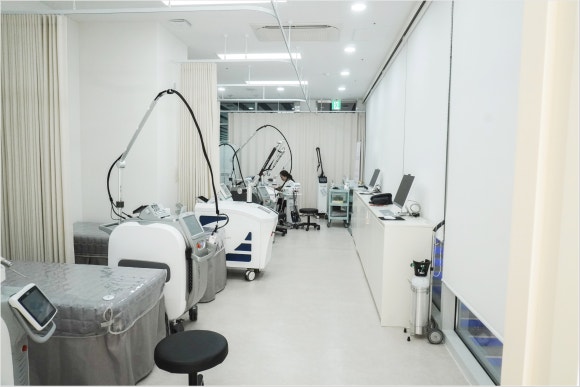
In this way, pico lasers target melanin in the skin more precisely,
and because they can break down even tiny pigment particles, the treatment range extends to deep pigment lesions in the dermis and even tattoos.
At the same time, since they reduce the burden on skin tissue,
people with sensitive skin or those whose skin has been irritated by repeated toning treatments can also use them relatively safely.
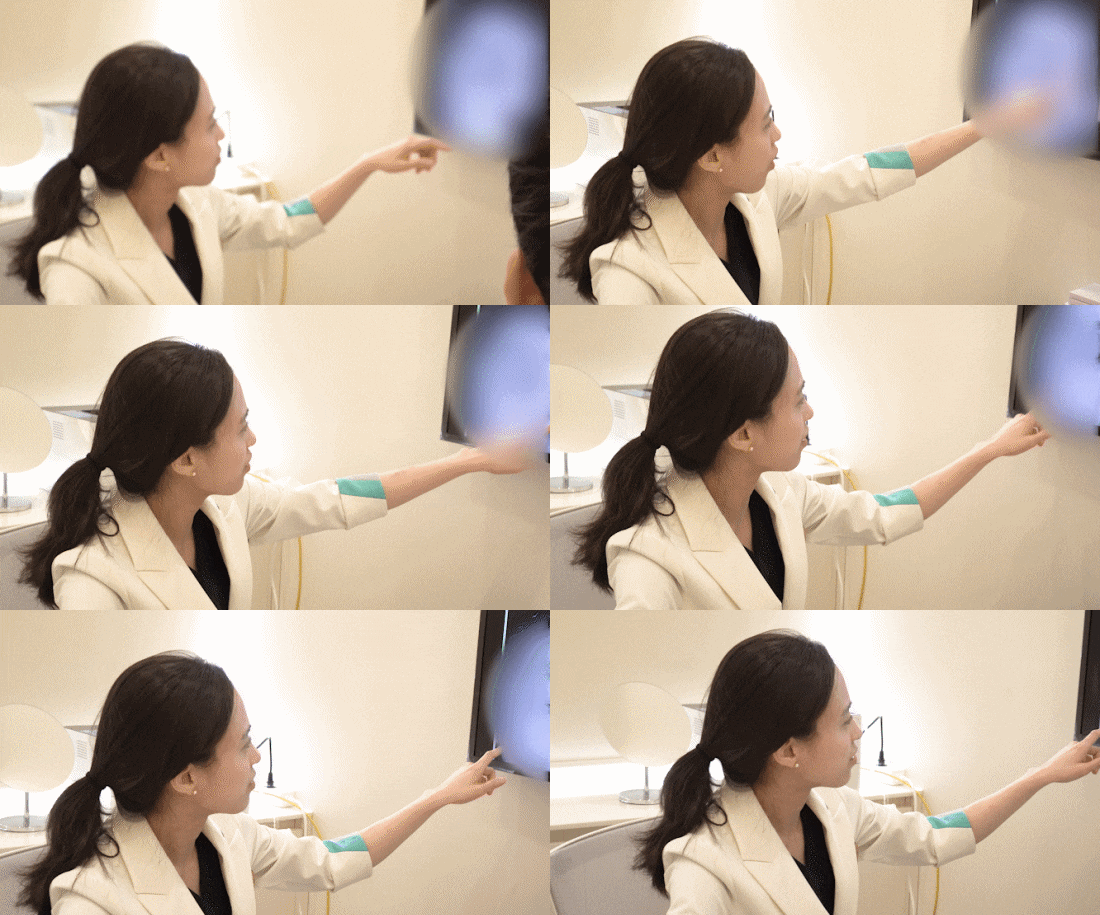
However, in some cases, existing lasers may be better.
Depending on the depth and type of pigment, as well as an individual’s skin characteristics, a nanosecond laser with a slower delivery speed may actually be more advantageous.
In particular, when the pigment is close to the epidermis and strong treatment is needed, there are also cases where the wavelength or delivery method of another specific device is more effective.
Therefore, the important point is that sufficient diagnosis and consultation should come first to determine which wavelength and treatment method are suitable for your skin.
Mokdong Pico Toning
PicoCare vs. PicoAlex
When searching for pico laser devices, you will also come across the names “PicoCare” and “PicoAlex.”
Both are picosecond-based lasers, but because they differ in wavelength, mechanism of action, and indications, the choice should be made according to the skin condition.
First, let’s look at what each device is.
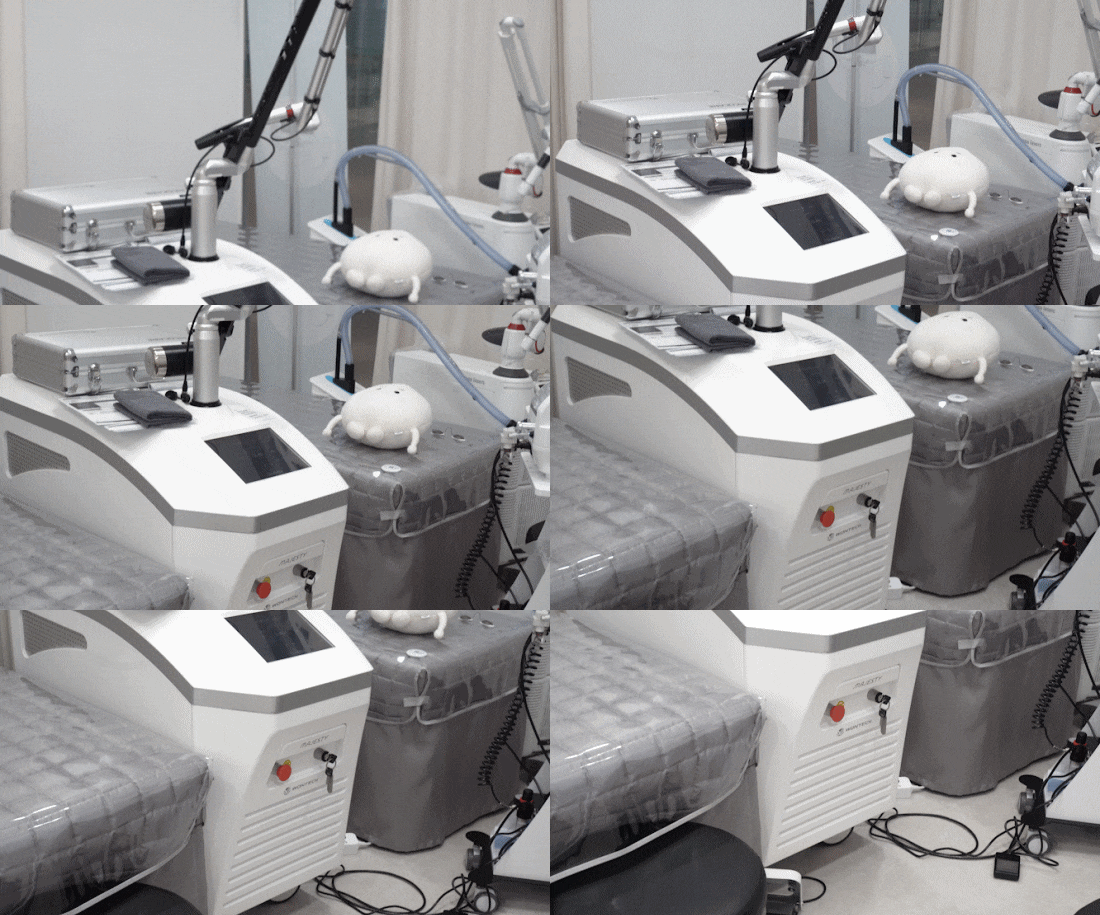
First, PicoCare is a picosecond laser device developed by the Korean company Wontech,
and it uses two wavelengths, 1064 nm and 532 nm, allowing it to broadly address various pigment lesions in the epidermis and dermis.
It can be applied to complex pigment conditions such as freckles, melasma, Ota nevus, tattoos, and blemishes, and its advantage is relatively low skin irritation.
PicoCare Majesty is an upgraded version of PicoCare,
and while it is based on the same wavelengths, it has a shorter pulse width and improved output stability, enabling more precise procedures.
It can provide a more effective approach especially for difficult lesions such as recurrent or deep-seated melasma and complex pigmentation.
In short, PicoCare Majesty can be seen as retaining the strengths of the original PicoCare while adding upgraded energy control.
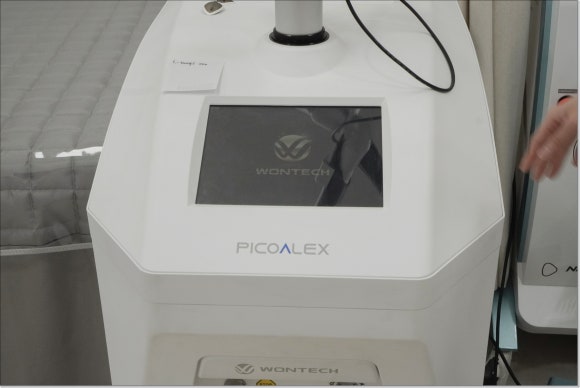
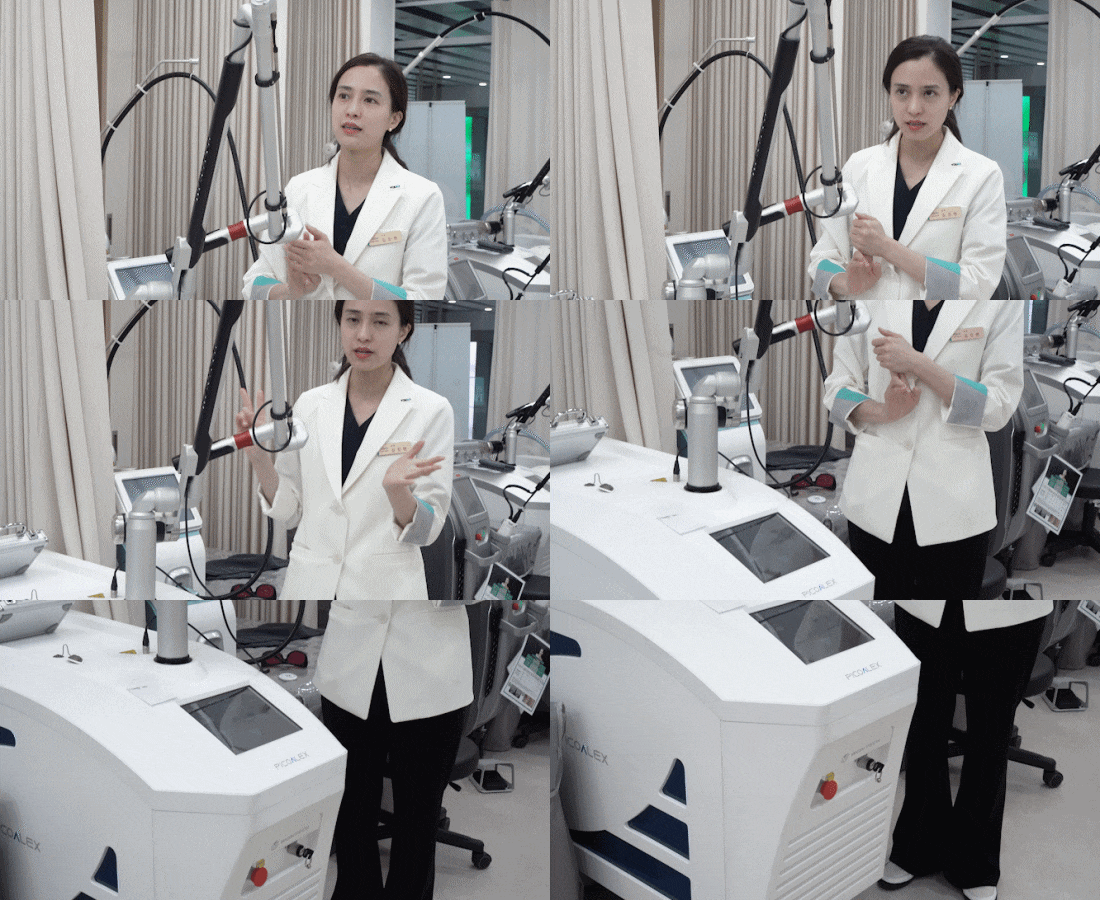
On the other hand, PicoAlex is a device that uses the 755 nm alexandrite wavelength, which is well absorbed by melanin.
Because of this, it shows a faster response to pigment close to the epidermis, such as freckles, light lentigines, and early-stage melasma.
When pigment centered in the epidermis is clearly visible, you can expect more distinct results with PicoAlex.
In the end, both devices are pico lasers, but because they use different wavelengths, the choice of device should vary depending on the depth and characteristics of the pigment.
For example, blemishes centered on melanin in the epidermis may respond better to PicoAlex,
while deep melasma or mixed pigment lesions may be more suitable for PicoCare or Majesty.
Mokdong Pico Toning
Precautions before the procedure
There is something you should definitely think about before deciding on pico toning.
That is whether the procedure is being performed with an intensity and method suitable for your skin.
Even with the same device, the results can change completely depending on factors such as output, number of shots, and delivery time.
For example, if your skin has already been highly irritated, you need an approach that gradually removes pigment while protecting the skin barrier rather than using strong output.
On the other hand, deeper and older pigment may require higher output.
Also, even for the same pigment condition, two devices may be used in combination or applied differently by area, taking into account skin type, sensitivity, and past procedure experience.
In fact, if a laser that is too strong is used, or if the procedure is done without properly analyzing the depth of the pigment,
side effects such as post-inflammatory hyperpigmentation or recurrence may occur.
Therefore, the important thing is not to rely on a specific device, but to determine through careful diagnosis which method is safe and effective for you.
Today, I shared information that may be helpful for those 고민 about Mokdong pico toning.
Before deciding on pico toning, it is a good idea to receive sufficient consultation and precisely diagnose your skin type and the location of the pigment.
Because every skin is different, and the cause and condition of pigmentation also vary, we recommend deciding which device is most suitable based on the diagnostic results.
I hope this article helped those considering pico toning find at least a little guidance.
This was Kim Jin-hyun, chief director of the Mokdong branch of U&I Clinic.
Thank you.
< Related post >
< Directions >