Mokdong Agnes
UNI U&I Clinic
�
Hello.
I am Kim Jin-hyeon, chief director of U&I Clinic Mokdong branch.
�
�
When you look in the mirror, you may find yourself increasingly worried about the small, bump-like spots that keep appearing around the eyes or cheeks.
�
�
At first, you may think they are acne, try squeezing them, or apply ointment, but they do not go away easily and may even seem to be increasing in number.
�
�
In particular, syringomas that appear in sensitive areas such as around the eyes may not be very noticeable, but they can still feel uncomfortable because they draw attention the moment you take off your mask.
�
�
When recurring inflammatory acne is added on top of that, the stress on your skin can be greater than expected.
�
�
Many people think acne or syringomas are simply ‘skin trouble’ and repeatedly try to remove them only from the surface.
�
�
However, if you look deeper into the cause of the problem, you will see that a more fundamental treatment approach is needed.
�
�
So today, let’s take a look at what causes recurring acne and syringomas, and what treatment methods are effective.
�
�
In particular, I’ll introduce the radiofrequency treatment device ‘Agnes,’ which has recently been receiving a lot of attention.
Table of Contents
-
What are the underlying causes of acne and syringomas?
-
What is Agnes?
-
What are the treatment process, post-procedure care, and expected results?
�
�
Mokdong Agnes
What are the underlying causes of acne and syringomas?
�
�
Acne and syringomas both have one thing in common: they start with abnormalities in the sebaceous glands.
�
�
Sebaceous glands secrete sebum in our skin to maintain moisture and protect against external irritation, but
�
�
when these glands become overactive or abnormally proliferate, various problems can occur.
�
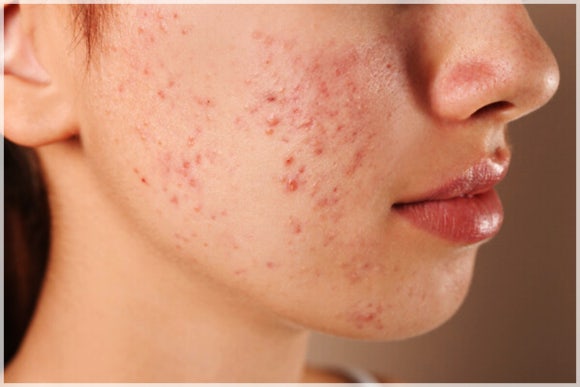
In the case of inflammatory acne, excessive sebum production blocks pores, and bacteria multiply in that environment, triggering an inflammatory response.
�
�
It may look like a simple skin issue, but in fact, the cause is often the sebaceous glands deep within the skin.
�
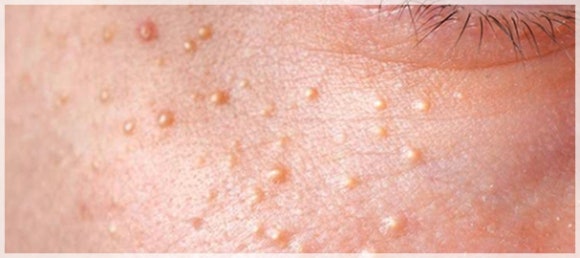
Syringomas also develop in a similar context.
�
�
They especially appear as small bumps around the eyes or cheeks,
�
�
and are benign tumors caused by abnormal proliferation of the sebaceous glands in a structure where sweat glands and sebaceous glands are closely adjacent.
�
�
At first glance, they look similar to milia, but this is also why simply squeezing them or applying ointment does not solve the problem.
�
With these skin conditions, ordinary extraction or medication cannot remove the sebaceous glands, which are the root cause,
�
�
so over time they may return or spread more widely.
�
�
That is why, in order to prevent repeated recurrence, treatment that targets the ‘inside’ rather than the surface, specifically precise destruction of the sebaceous glands, becomes necessary.
�
�
Mokdong Agnes
What is Agnes?
�
�
The device developed to fundamentally address skin conditions caused by sebaceous glands is ‘Agnes.’
�
�
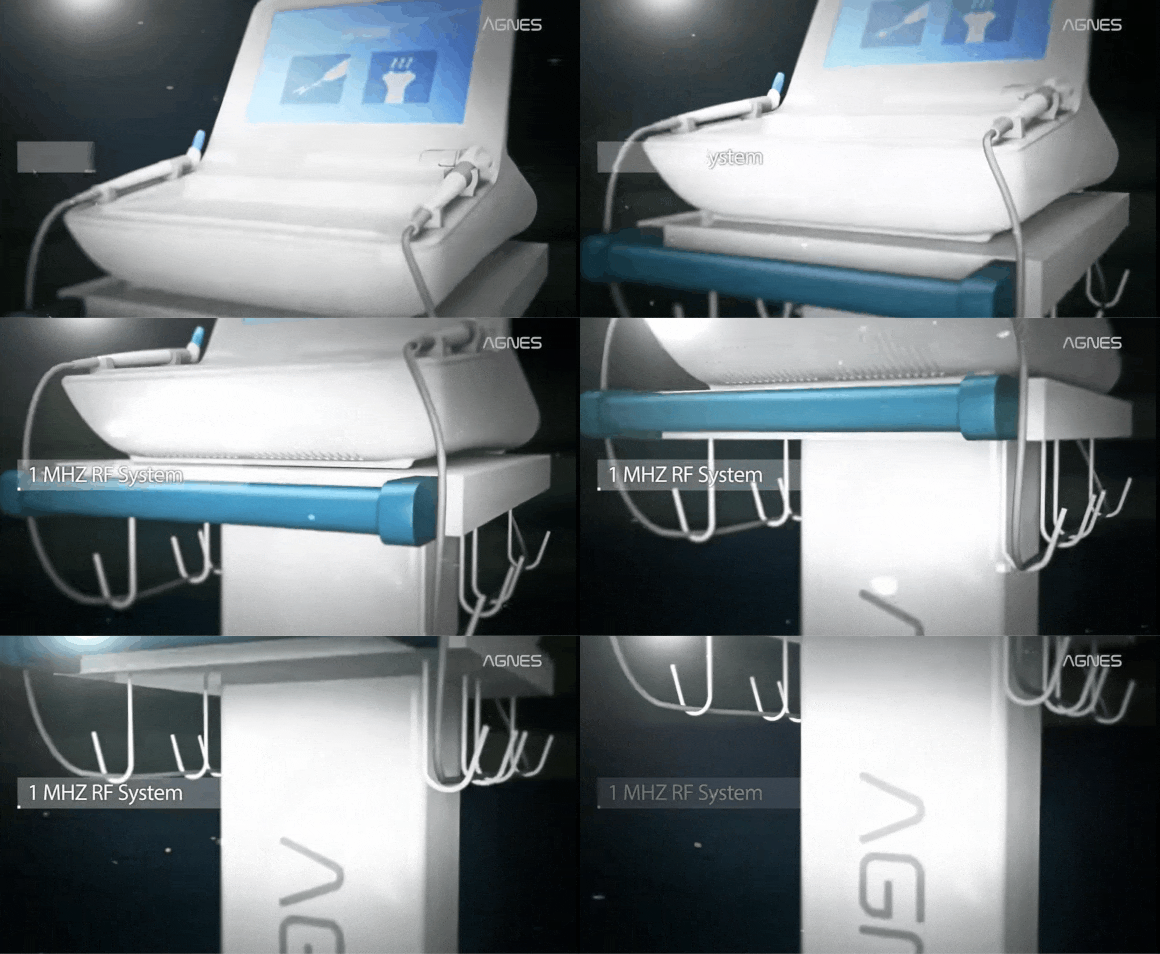
Agnes is a medical device that delivers radiofrequency energy by targeting the sebaceous glands inside the skin,
�
�
and is known as an effective treatment particularly for acne, syringomas, and sebaceous gland hyperplasia.
�
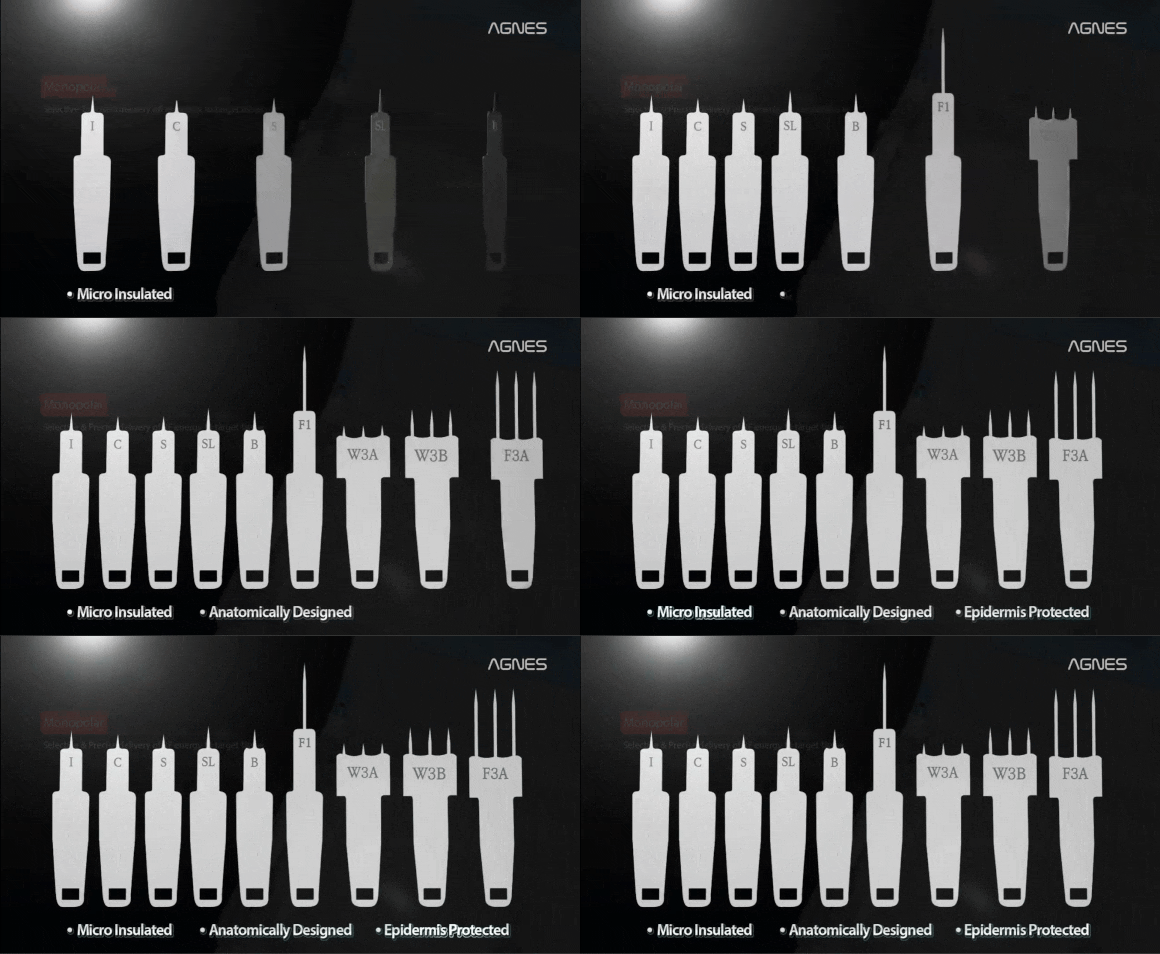
The key feature of Agnes is its ‘insulated micro-needle.’
�
�
Even when this needle is inserted into the skin, energy is not emitted from the entire needle; radiofrequency is released only from the 1–2 mm tip.
�
�
Because of this, the skin surface and surrounding healthy tissue are not damaged, and energy is delivered only to the sebaceous glands, which are the center of the problem.
�
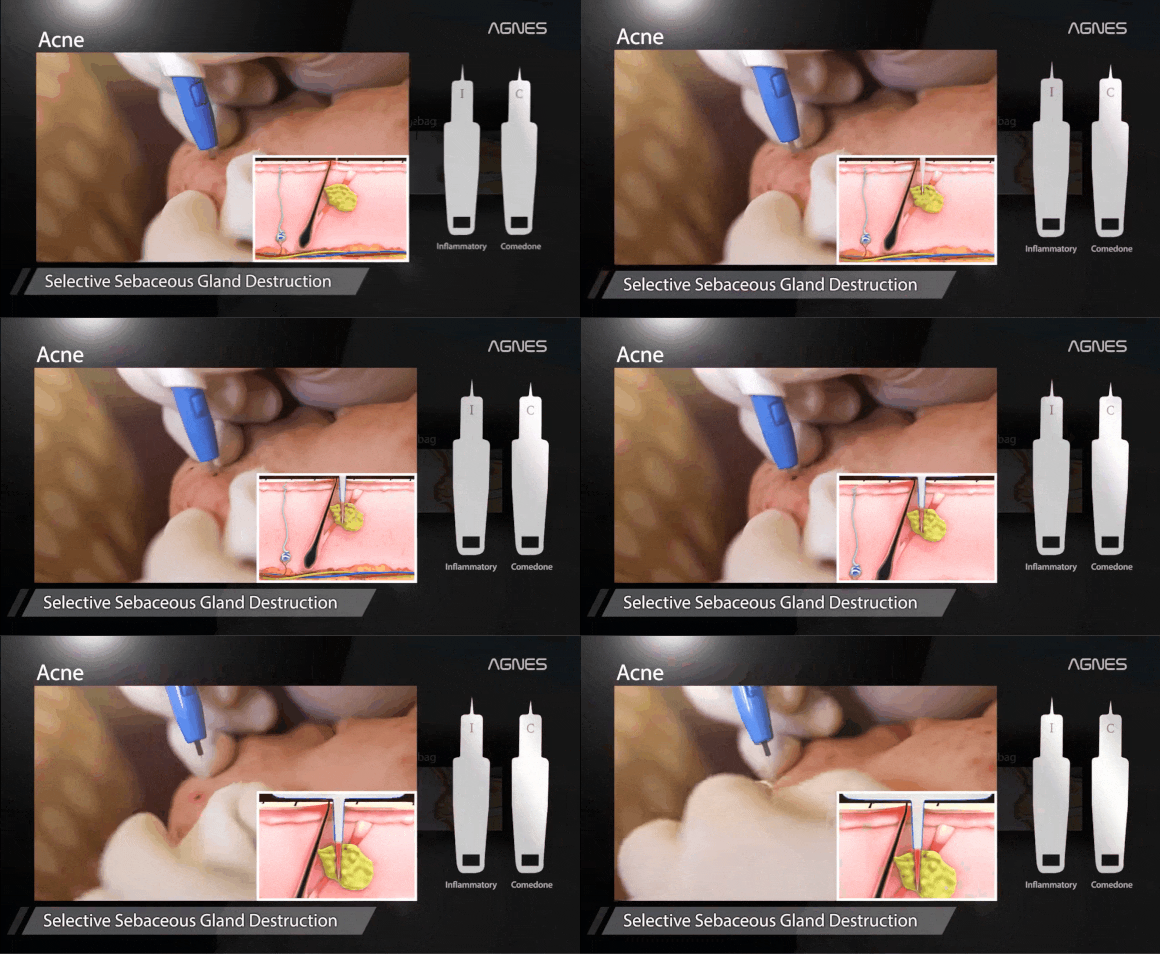
Agnes has two handpieces, which can be selected according to the purpose of treatment.
�
�
The Acne handpiece precisely destroys the sebaceous glands that cause acne,
�
�
and the ‘Melting handpiece’ helps remove residual tissue and refine skin texture in cases such as syringomas.
�
�
This approach is closer to a ‘fundamental treatment’ that directly removes the cause, rather than merely relieving symptoms.
�
�
A major advantage is that it allows such fine control that it can be applied even to sensitive areas like around the eyes.
�
�
Mokdong Agnes
What are the treatment process, post-procedure care,
and expected results?
�
�
An Agnes procedure is performed through a relatively simple process.
�
�
First, a numbing cream is applied to the treatment area to minimize pain, then a micro-needle is inserted into the skin and radiofrequency energy is delivered.
�
�
After that, the procedure is completed with care that helps calm the skin.
�
Because skin thickness and lesion depth vary from patient to patient, the treatment intensity and depth must also be adjusted individually.
�
�
In general, satisfactory results can be expected after 1 to 3 repeated treatments,
�
�
and some patients may experience noticeable improvement after just one session.
�
After the procedure, temporary redness, warmth, or mild swelling may occur, but in most cases these side effects subside quickly.
�
�
Above all, thanks to Agnes’s insulated needle structure, the burden of burns or scarring is low, and returning to daily life is also relatively quick.
�
�
So far, I have talked about acne and syringomas for those looking for Mokdong Agnes, and
�
�
a bout Agnes treatment that targets the underlying causes of both conditions.
�
�
Because recurring skin trouble and syringomas can affect self-esteem beyond being just a skin issue,
�
�
I hope this article has been helpful in deciding on a treatment direction, even if only a little.
�
�
For all treatments, it is important to accurately understand the condition of your skin and choose a procedure that is right for you.
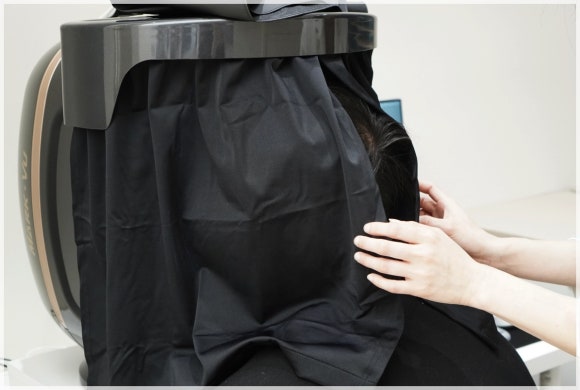
MarkView
�
These days, many places use skin diagnostic devices such as MarkView to analyze skin condition more precisely before treatment, so
�
�
I recommend that you receive enough consultation before treatment.
�
�
This has been Kim Jin-hyeon, chief director of U&I Clinic Mokdong branch. Thank you. ^^
�
�
< Related post you may find useful >
�
�
�
�
< Directions >
�