Mok-dong Lifting, Radiofrequency and Ultrasound
What’s the Difference?
Mok-dong Lifting
Hello.
I’m Kim Jin-hyun, Chief Director of the Mok-dong branch of You&I Clinic.

"There are so many lifting devices
I don’t know which one to choose."
When you first start looking into lifting procedures, there are often so many types and so many different devices that it can be hard to know what to get.
Lifting is broadly divided into thread lifting and laser lifting.
Laser lifting can then be further divided depending on whether the laser is radiofrequency or ultrasound.
Today, I’ll explain in detail the differences between radiofrequency and ultrasound laser lifting, as well as the points you should consider before the procedure.
Table of Contents
-
What is radiofrequency lifting?
-
What is ultrasound lifting?
-
Things to consider before the procedure
Mok-dong Lifting
What is Radiofrequency Lifting?
Radiofrequency lifting is a procedure that delivers radiofrequency energy mainly to the dermis layer of the skin to stimulate collagen regeneration.
The radiofrequency energy acts as heat, stimulating fibroblasts in the dermis. Over time, collagen production becomes more active, and you can expect the skin to tighten naturally.
Unlike ultrasound lifting, which penetrates deep into the skin, this method has the characteristic of gradually building elasticity from the layers closer to the skin surface.
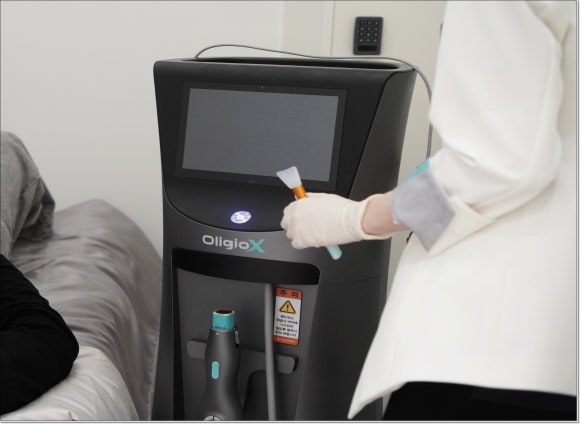 Oligio X
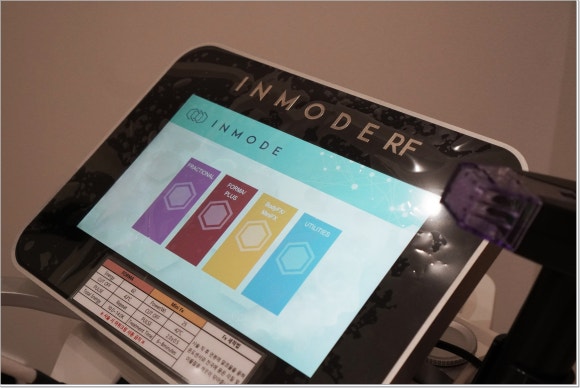
Representative devices include InMode and Oligio X.
It can be a suitable choice for those who want to refine the overall facial contour or improve fine wrinkles.
Radiofrequency lifting is especially suitable when the skin is thin or overall elasticity has weakened, and it is often used when a relatively gentle tightening effect is desired.
Mok-dong Lifting
What is Ultrasound Lifting?
This is a procedure that uses high-intensity focused ultrasound (HIFU) to deliver energy to the SMAS layer.
The SMAS layer is a structure much deeper than the skin and is a key tissue that supports facial contour and elasticity.
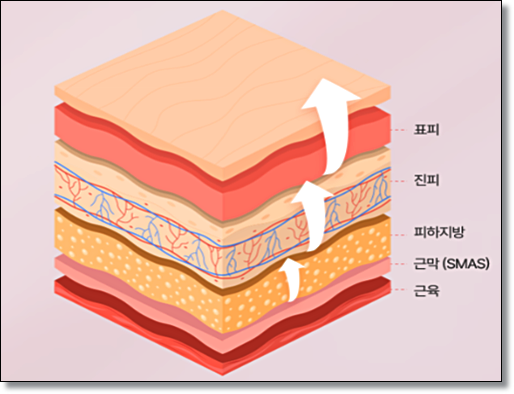
When heat stimulation is applied to the SMAS layer, the tissue contracts, creating a tightening sensation from within the face.
In other words, it creates a lifting effect that pulls firmly from deep within, rather than from the surface of the skin.
Therefore, it is effective for improving sagging in the midface area or refining the jawline—areas where visible improvement is desired.
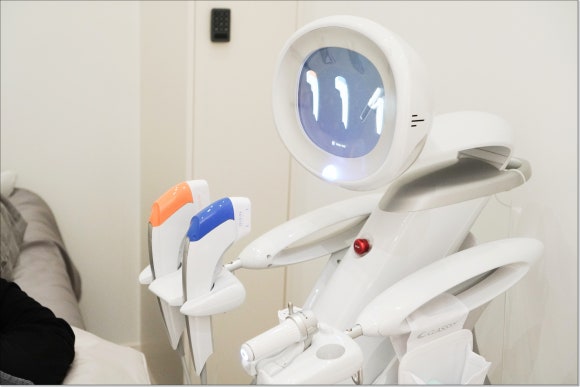 Shrink Universe
Representative devices include Ulthera and Shurink, and they are recommended for those whose skin is on the thicker side or who are expecting a more pronounced lifting effect.
Some people feel a tightening sensation immediately after the procedure, but in general, the effect appears gradually over several days to several weeks as collagen is remodeled.
Mok-dong Lifting
Things to Consider Before the Procedure
When considering a lifting procedure, an important point is to understand your own facial structure and clearly identify what kind of change is needed.
The face is not a single structure; it is made up of various layers, including the epidermis, dermis, subcutaneous fat, muscles, and the SMAS layer.
Skin aging progresses differently in each layer.
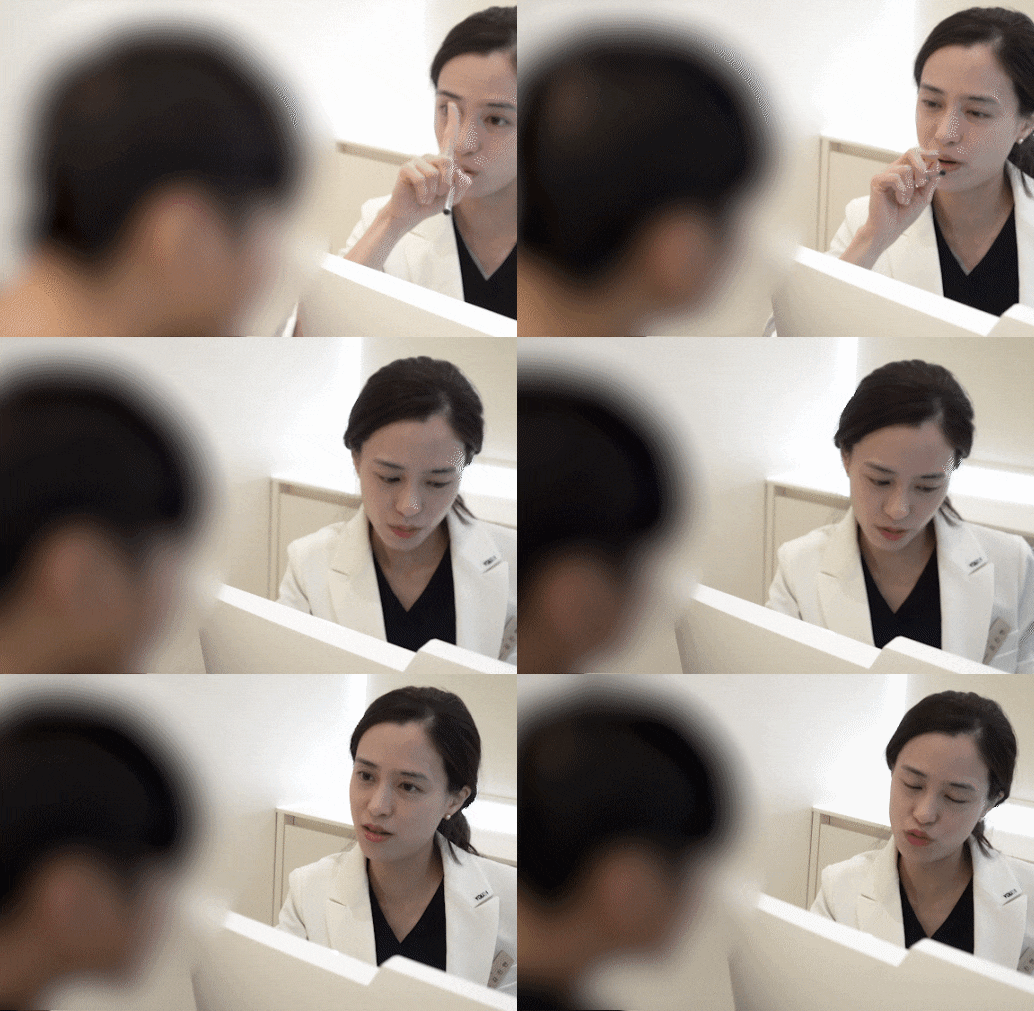
The surface of the skin becomes thinner and drier, making fine lines more likely to appear. The fat layer may hollow out or sag, and the muscles may lose strength and droop downward.
Because of this complex structure, it is difficult for one procedure to solve all skin concerns at once.
In fact, the wrong approach can make the overall impression look even more unnatural.
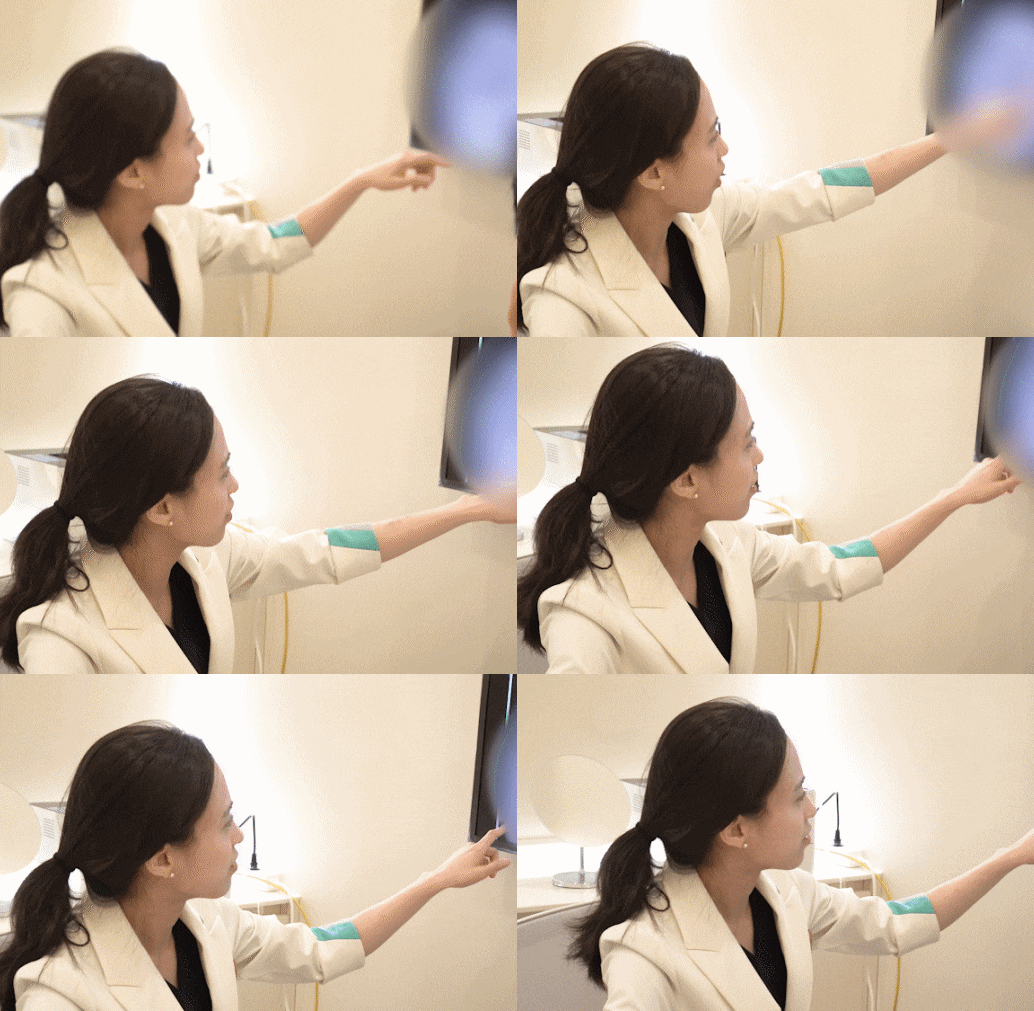
For example, if an area that has hollowed out needs volume restoration but only lifting is performed, the face may look sharper.
Conversely, if volume is added to an area with a lot of fat and heaviness, the face may look even more saggy.
Rather than simply increasing firmness, you need a customized plan that considers the balance and harmony of the entire face in order to experience the lifting effect you expect.
Therefore, before the procedure, there should be a thorough diagnosis through consultation with the medical staff to determine which areas are hollowed out, where elasticity is needed, and which technique would be effective.
Today, I wrote this post to help those who are looking into Mok-dong lifting.
Both radiofrequency and ultrasound each have their own advantages and can also complement each other.

Because the best method can vary depending on each person’s facial structure and the degree of aging,
rather than choosing a famous procedure or device, I recommend first receiving a careful diagnosis of your skin condition and structure.
I hope today’s post was helpful for those wondering which lifting option to choose.
This has been Kim Jin-hyun, Chief Director of the Mok-dong branch of You&I Clinic.
Thank you.
< Related posts you may find helpful >
<You&I Clinic Mok-dong Branch Consultation Hours>
Weekdays :
am 10:00 ~ pm 08:30 [evening consultation]
Weekends (Sat/Sun) · Public holidays :
am 10:00 ~ pm 04:00
*No lunch break
*Open on Saturdays, Sundays, and public holidays
< Directions >