목동울쎄라
Comparing Moksdong Ulthera, Shurink, and Thermage
Moksdong Ulthera
Hello.
I’m Kim Jin-hyun, the chief director of You&I Clinic Moksdong Branch.
"I heard Ulthera hurts that much...
Is it really that effective?"
"Thermage or Shurink... what’s different about them?"
These are questions I hear several times a day in the consultation room.
The moment people become interested in lifting, the words Ulthera/Shurink/Thermage are all recommended at once.
The prices are different, the pain levels are different... it can be confusing to know what’s actually right.
So today, I’ll easily explain the "real differences" between the three lifting devices that people most often get confused about while searching.
As you read, you may naturally get a clearer sense of what suits you best.
Then let’s go through the first point step by step.
Table of Contents
-
The type of energy and target layer are different
-
The duration of effect and pain level are also different
-
The suitable device differs depending on face type
Moksdong Ulthera
The type of energy and target layer are different
On the surface, all three are "lifting devices," but in reality, they affect the skin in completely different ways.
Because of this difference, the results also vary, and the suitable face type differs as well.
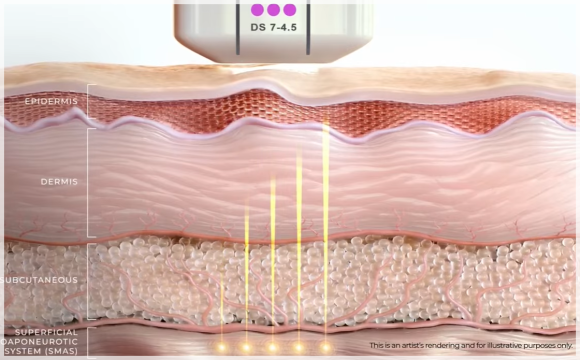
First, Ulthera and Shurink are HIFU methods that use ultrasound.
The principle is to focus energy on a deep layer, like concentrating sunlight to a single point with a magnifying glass, causing the SMAS layer or the fat layer to contract.
That is why people who feel their lower cheeks have sagged or whose jawline looks blurred often notice a firm lifting effect when they receive it.
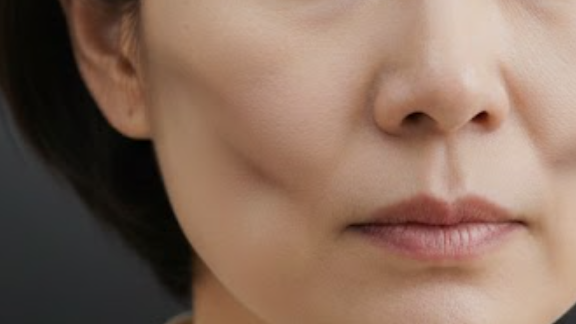
However, the story is a little different for people with very little facial fat.
Because ultrasound also affects the fat layer, it can actually cause hollowed cheeks as a side effect.
(This is also an area that must be judged very carefully in actual treatment.)
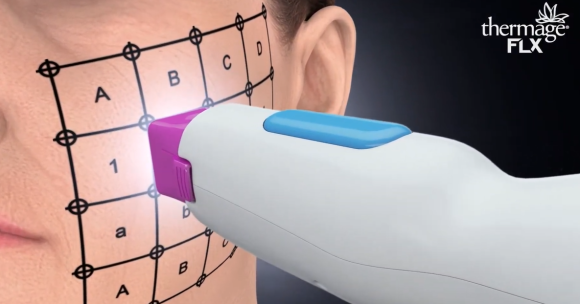
By contrast, Thermage is a device that uses radiofrequency (RF) to promote collagen regeneration in the dermis.
Since it does not directly pull on the SMAS layer, it is relatively safe even for people with insufficient facial fat, and it is stronger for improving overall skin texture, elasticity, and firmness rather than lifting.
It can also be used in areas such as around the eyes where the skin is thin, so its range of applications is fairly broad.
Moksdong Ulthera
The duration of effect and pain level are also different
All three devices are effective, but when grouped under the same name of "lifting," their durability and how difficult they feel are quite different.
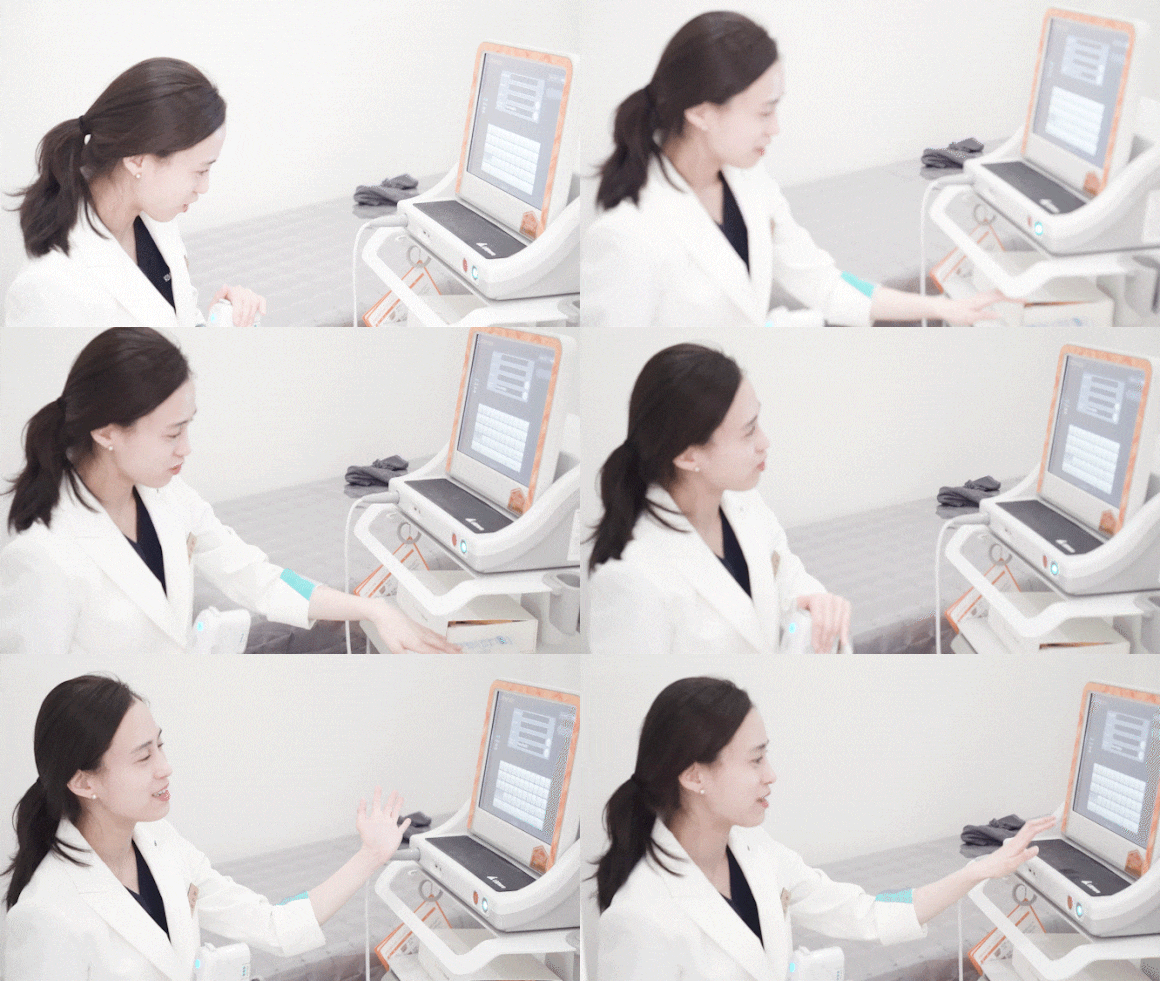 Ulthera (these days, we use the upgraded version,
Ulthera Prime ^^)
Ulthera (these days, we use the upgraded version,
Ulthera Prime ^^)
Ulthera tends to last close to a year, and while its effect is strong, the pain level is also the highest.
People who have received it give sharply divided reactions, from "bearable" to "really painful," but those who want strong tightening tend to prefer it.
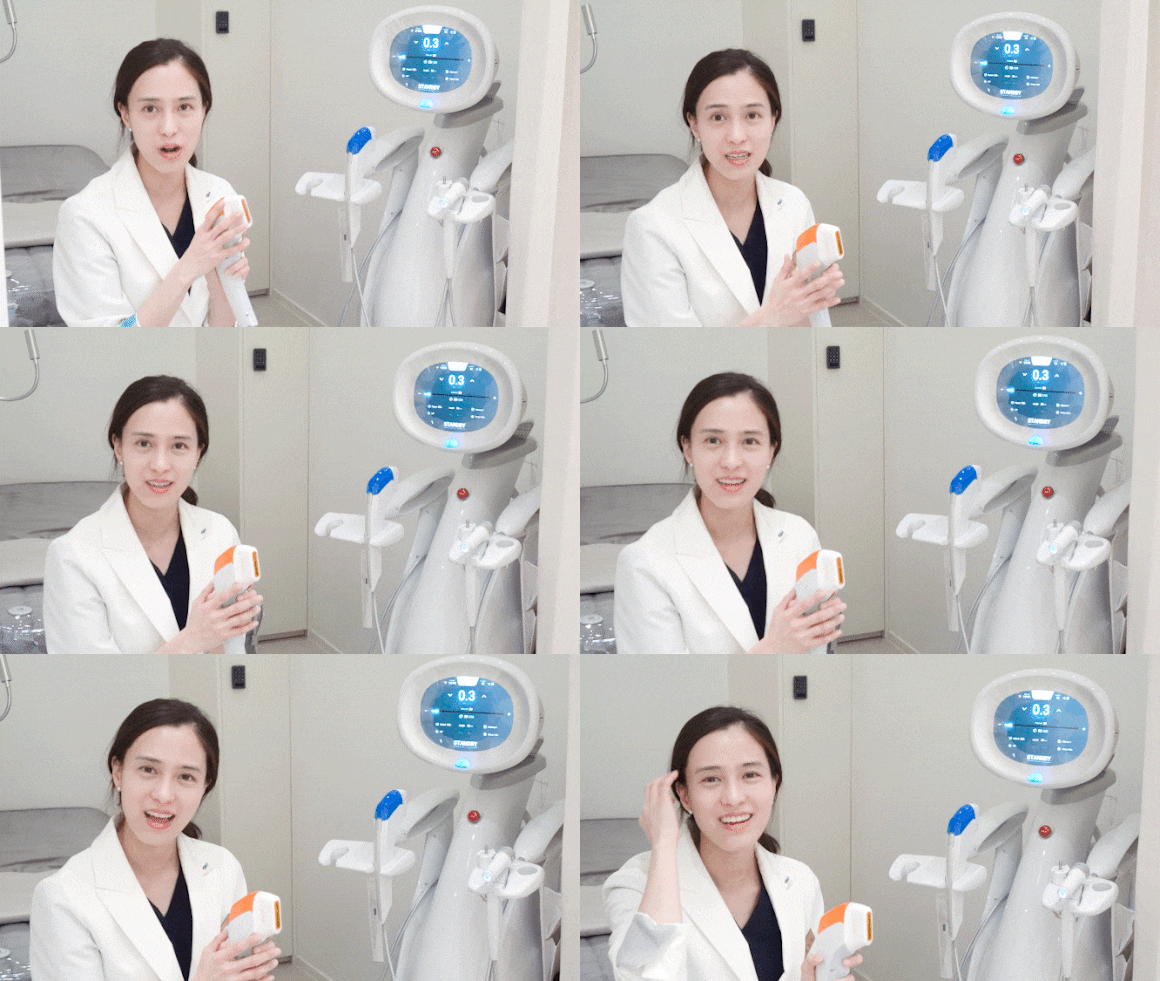 Shurink Universe
Shurink has a shorter duration of about 3 months, but because the financial burden is lower, many people receive it regularly as part of ongoing care.
In particular, if you are looking for a cost-effective ultrasound lifting treatment, it is often the most straightforward choice.
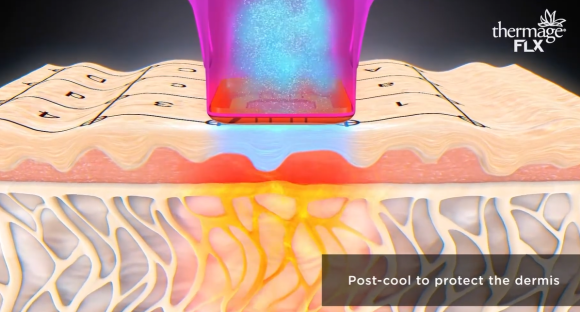
Thermage lasts about 12 months, and the pain level is lower than Ulthera.
Therefore, people often choose it naturally when they are more concerned about overall loss of elasticity than sagging, or when they want skin that looks plump rather than simply tightened.
Moksdong Ulthera
The suitable device differs depending on face type
In the end, the question "Which device is better?" is less important than
"Which method is right for my face?"
If the facial contour has lost definition and there is a moderate amount of facial volume, ultrasound-based Ulthera or Shurink can be helpful.
In particular, if your concerns are lower cheeks, double chin, or the jawline, the effect can be easier to feel because they can target the fat layer as well.
On the other hand, for people with little facial fat who are worried about hollow cheeks,
radiofrequency-based Thermage may be much safer than ultrasound.
That is because it stimulates mainly the dermis, so there is less concern about hollowing, and it can be performed relatively safely even on thin skin.

And if sagging, reduced elasticity, and enlarged pores are all concerns, combining devices that act on different layers is already widely used.
For example, a representative combination is to first achieve structural lifting with Ulthera and then improve texture and elasticity with Thermage.
If cost-effectiveness is your top priority, Shurink has the advantage of being available at about one-fourth the price of Ulthera for the same number of shots.
So far, I’ve organized the differences between Ulthera, Shurink, and Thermage for those considering Moksdong Ulthera.
Even though all three devices use the name lifting,
because the layer they affect, their purpose, duration of effect, and pain level are all different,
it is most important to carefully consider whether the method is right for you.
This has been Kim Jin-hyun, chief director of You&I Clinic Moksdong Branch. Thank you. ^^
< Articles you may also find useful >
<You&I Clinic Moksdong Branch Hours>
Weekdays:
am 10:00 ~ pm 08:30 [evening clinic]
Weekends (Sat/Sun) · Holidays:
am 10:00 ~ pm 04:00
*No lunch break
*Open on Saturdays, Sundays, and public holidays
< Directions >