Hello.
I am Kim Jin-hyun, Head Director at U&I Clinic Mokdong Branch.
�

�
When you start looking into lifting, you often run into one big question.
�
�
"Thermage, Oligio, InMode,
Shringk, Ulthera, thread lifting... What
am I actually supposed to get?"
�
�
There are many procedure names, but it can be hard to find a place that clearly explains how they actually work differently within your skin.
�
�
Because of that, people often end up choosing based only on reviews or comparing only prices.
�
�
But lifting procedures differ completely from device to device in terms of how deep the energy reaches and how it works.
�
�
Just as different instruments resonate in different ranges even if they are both instruments, radiofrequency and ultrasound
�
�
and thread lifting each play different roles within the skin.
�
�
Today, for those considering Yangcheon-gu lifting, I will explain how these three categories differ
�
�
and summarize them with evidence from actual research results.
�
�
Even if you do not choose us, if you understand these differences, it will help you choose the procedure that suits you no matter where you go. ^^
�
| Table of Contents |
|---|
| 1. Radiofrequency vs. Ultrasound: The layer of action and purpose are different��2. A comparison of radiofrequency vs. ultrasound seen through actual studies��3. What is thread lifting? |
�
- Radiofrequency vs. Ultrasound,
The layer of action and purpose are different
Yangcheon-gu lifting
First, let’s look at radiofrequency (RF) lifting.
�
�
Radiofrequency uses heat to warm the collagen fibers in the dermis, causing them to contract,
�
�
and then induces the generation of new collagen.
�
�
In simple terms, it works by tightening the skin’s elastic network again, so you can think of it as being closer to “improving skin quality.”
�
�
Representative devices include Thermage FLX, Oligio, and InMode.
�
�
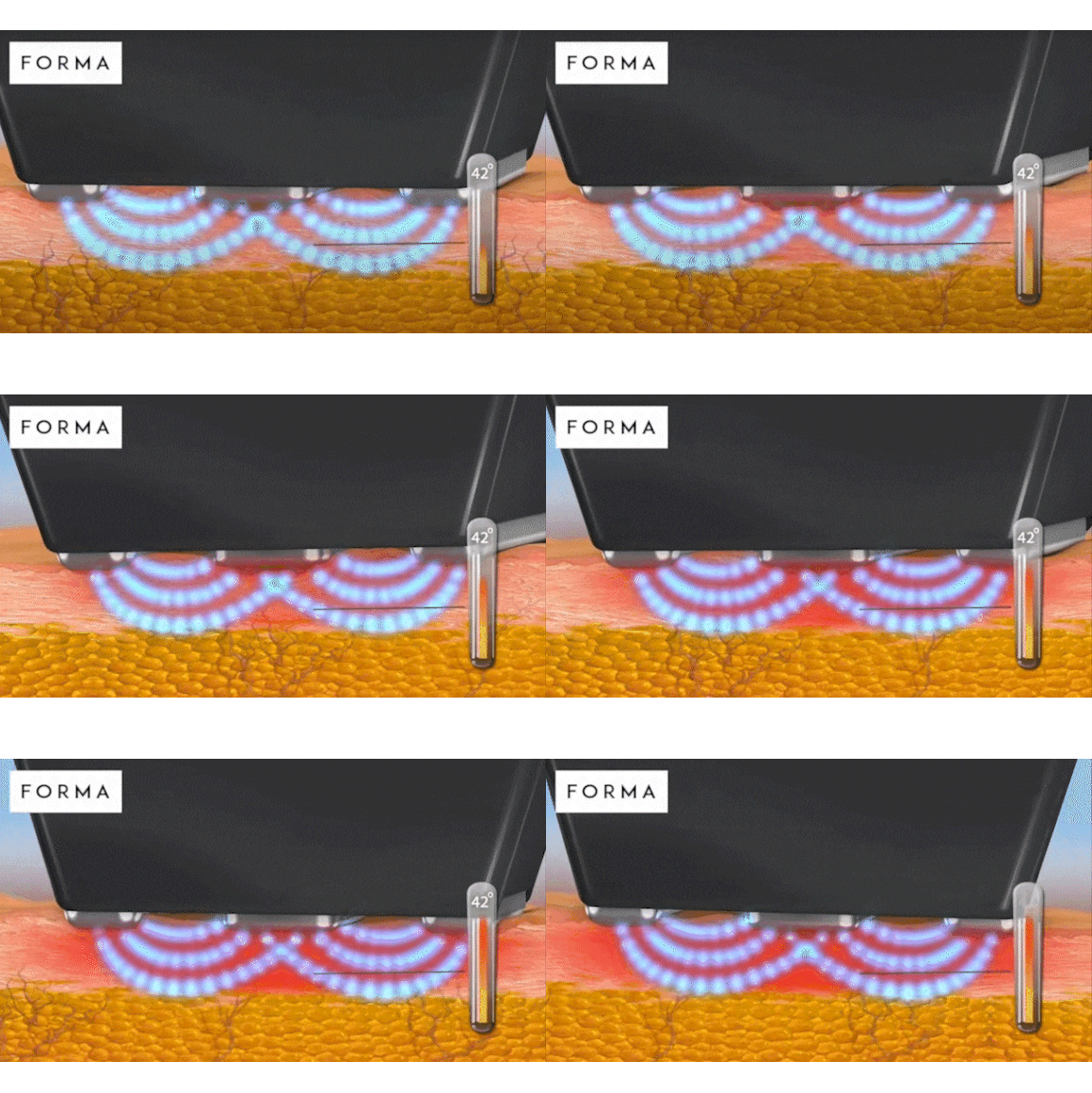
In particular, with InMode, you should definitely understand the difference between the Forma and FX modes.
�
�
Forma delivers radiofrequency heat evenly from the surface to the dermis
�
�
and is a firmness-focused procedure that ensures safety through real-time temperature monitoring.
�
�
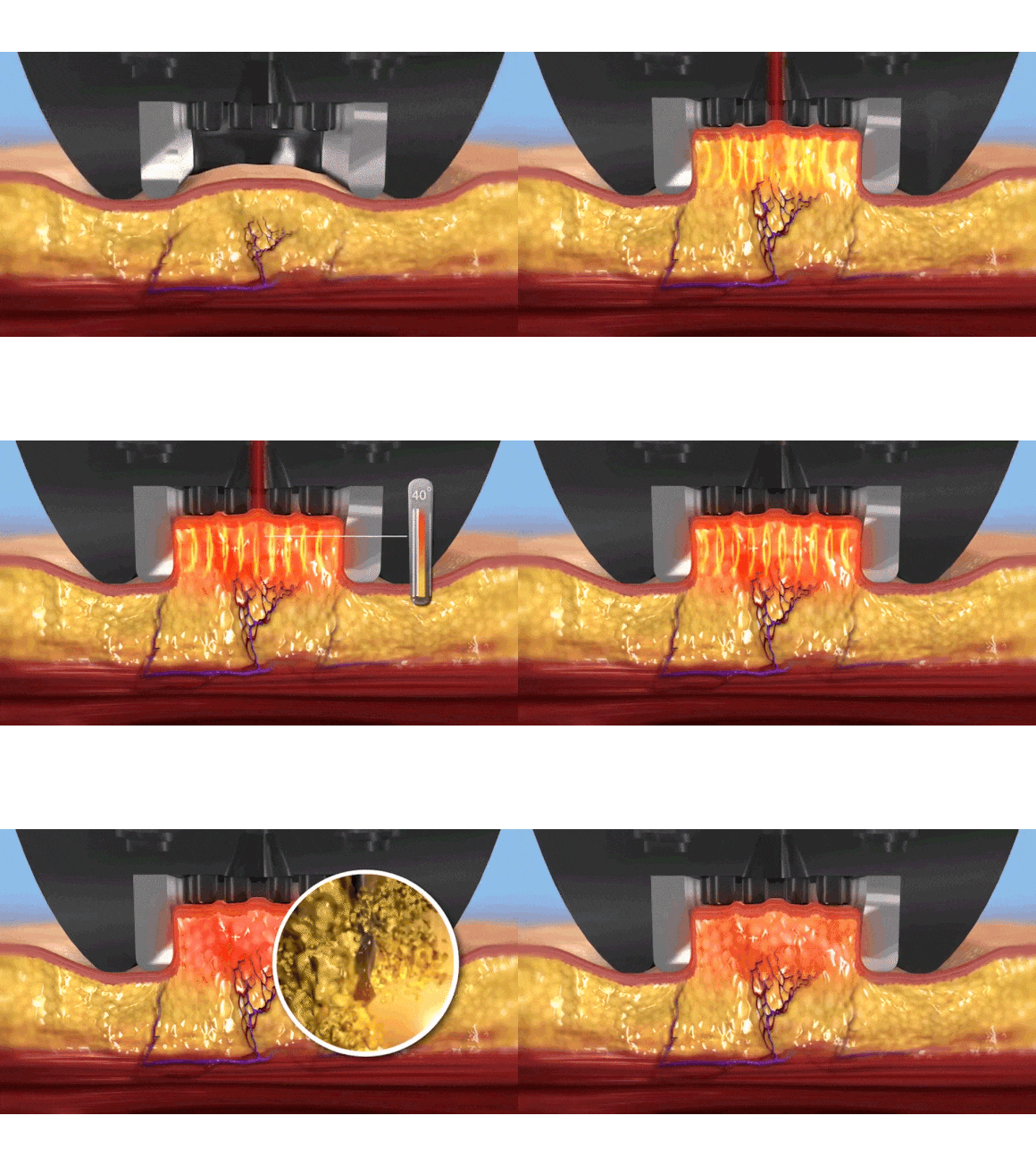
By contrast, FX is a completely different concept.
�
�
It works by mechanically suctioning and fixing the skin like tweezers,
�
�
and then simultaneously delivering radiofrequency and high-voltage energy through that space.
�
�
The electroporation that occurs at this time coagulates and breaks down fat cells.
�
�
Beyond simple tightening, you can expect an effect that reduces cheek fat and even fat under the chin—literally a procedure that
�
�
“tightens while reducing.”
�
�
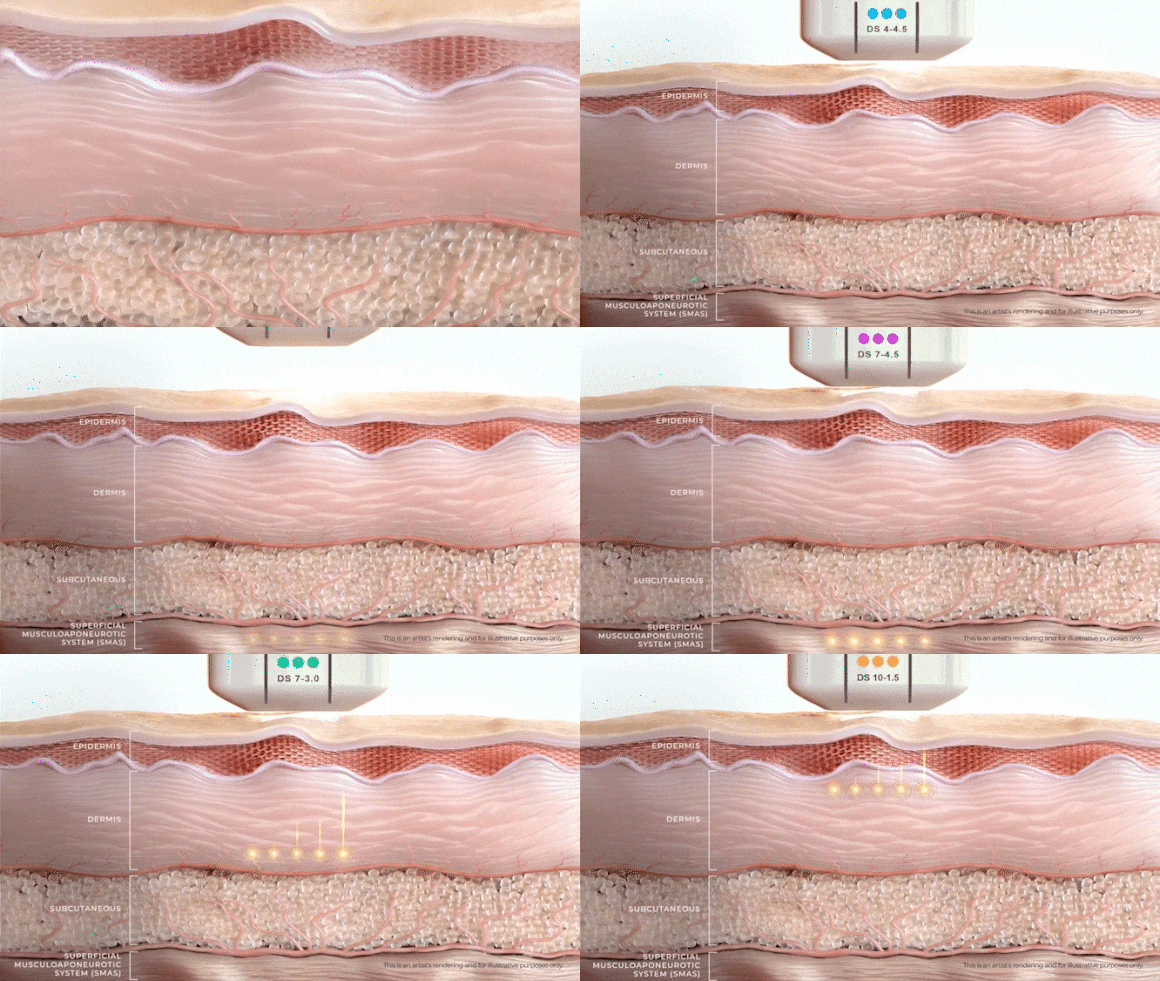
Then what about ultrasound (HIFU) lifting? Ultrasound delivers high-intensity focused energy to the SMAS layer, the fascia layer located deepest in the skin, and forms thermal coagulation points.
�
�
The SMAS layer is the very structure that is actually pulled in plastic surgery facelift operations.
�
�
If radiofrequency targets collagen in the dermis, ultrasound targets a much deeper depth of about 4.5 mm, so it is closer to “improving sagging.”
�
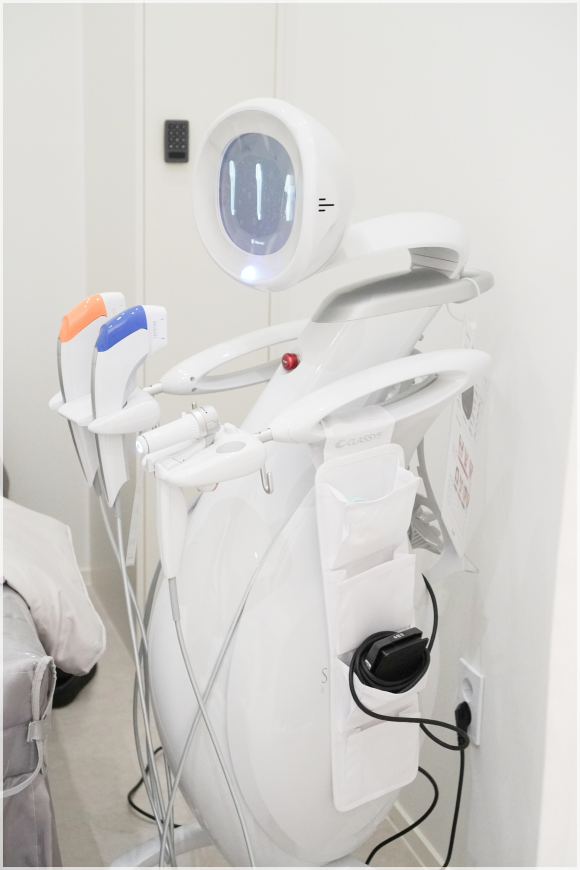 Shringk Universe
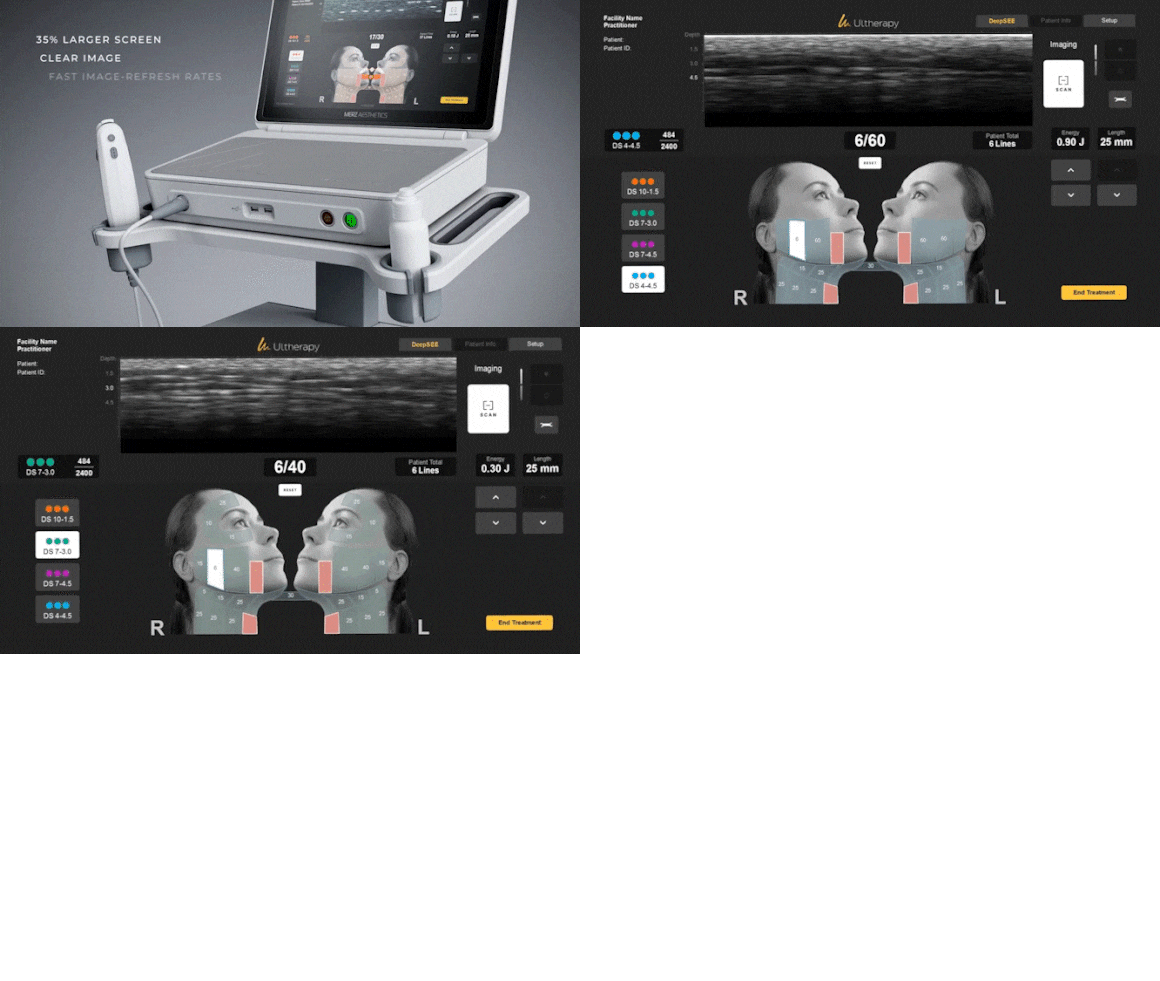
The representative device Shringk is cost-effective, so it is often used repeatedly and is suitable for maintenance care,
 Ultherapy Prime
while Ultherapy Prime has high precision thanks to real-time imaging,
�
�
so you can expect a strong lifting effect even with a single session, but the pain and cost are relatively high.
�
�
- A comparison of radiofrequency vs. ultrasound
seen through actual studies
Yangcheon-gu lifting
"So which one is better?" Many people ask this, but the answer becomes clear when you look at actual study results.
�
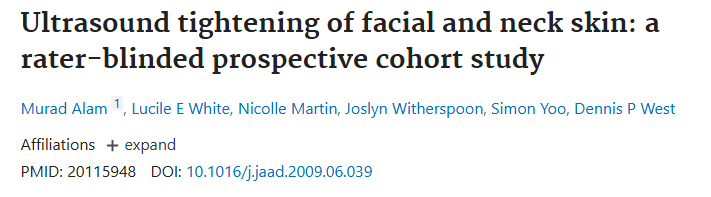
Ultrasound tightening of facial and neck skin: a rater-blinded prospective cohort study
First, this is a clinical study published in 2011 on ultrasound alone.
�
�
In patients with moderate facial sagging, after HIFU treatment and 90 days of follow-up,
�
�
the eyebrows rose by an average of 1.7 mm, and tightening of the lower face and jawline improved significantly.
�
�
This demonstrates a structural lifting effect by forming thermal coagulation points all the way down to the SMAS layer.
�
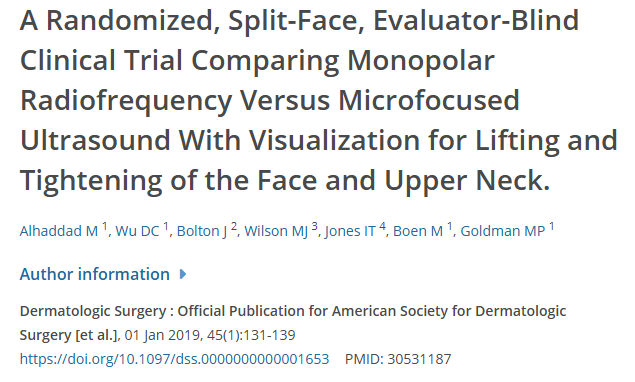
A Randomized, Split-Face, Evaluator-Blind Clinical Trial Comparing Monopolar Radiofrequency
Versus Microfocused Ultrasound With Visualization
for Lifting and Tightening of the Face and Upper Neck.
�
And there is an even more interesting study.
�
�
It is a comparative study in which one side of the same patient’s face was treated with ultrasound and the other side with radiofrequency.
�
�
After 12 weeks of follow-up, the ultrasound side showed better jawline lifting effects,
�
�
while the radiofrequency side showed better skin elasticity and skin texture improvement.
�
�
Both procedures had high satisfaction, but the areas and methods of improvement were different.
�
�
In other words, the conclusion is not that one is better or worse, but that the indications are different.
�
�
- What is thread lifting?
Yangcheon-gu lifting
If radiofrequency and ultrasound use energy, that is, “thermal stimulation,” to tighten the skin, thread lifting takes a completely different approach.
�
�
That is because medical absorbable threads are inserted directly under the skin without using a device,
�
�
physically pulling and lifting the tissue.
�
�
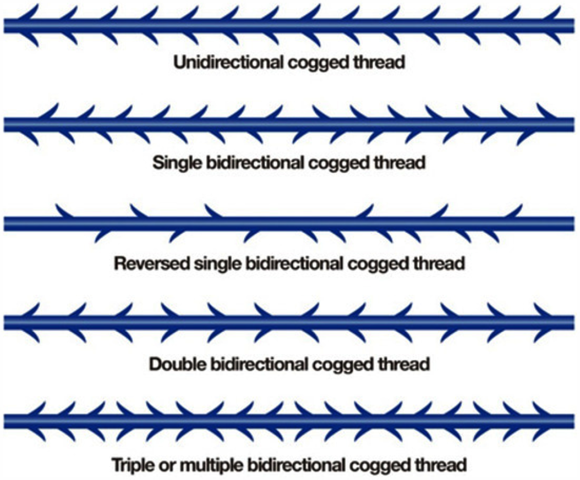
In particular, cog threads have small barbs on the surface, and these barbs hook into the subcutaneous tissue and pull it upward.
�
�
That is why the lifting effect is visible immediately after the procedure, which is its biggest feature.
�
�
In addition, as the body’s natural healing response occurs around the inserted threads and collagen synthesis is promoted,
�
�
the firmness improvement effect can be maintained for a certain period even after the threads are absorbed over several months.
�
�
However, compared with device-based procedures,
�
�
there is downtime such as swelling or a pulling sensation after the procedure,
�
�
and you should know that the practitioner’s skill has a major effect on the outcome.
�
�
These days, many cases use a combined approach of first securing structural lifting with thread lifting and then maintaining firmness with radiofrequency or ultrasound.
�
�
So far, for those considering Yangcheon-gu lifting, I have explained the working principles of radiofrequency, ultrasound, and thread lifting, the differences between devices, and actual research evidence.
�
�
The most important point is that the first step is not the device name, but an accurate diagnosis of your facial condition.
�
�
If you have any questions, I recommend getting a consultation comfortably, even if it is not with us.
�
�
Thank you for reading this long post.
�
�
This was Kim Jin-hyun, Head Director of U&I Clinic Mokdong Branch. ^^
�
�
< Other helpful posts >
�
�
< U&I Clinic Mokdong Branch Hours >
�
Weekdays :
�
am 10:00 ~ pm 08:30 [Evening clinic]
�
Weekends (Sat/Sun) · Public holidays :
�
am 10:00 ~ pm 04:00
�
*No lunch break
*Saturday, Sunday, and public holiday treatment
�
�
< Directions >