Mok-dong Thermage Hot?
Vibration and Cooling Systems
Mok-dong Thermage
Hello.
I am Kim Jin-hyeon, Chief Director at the Mok-dong branch of YOU&I Clinic.
"I want to get Thermage,
but I heard it gets extremely hot?"
"Is it something I can tolerate,
or does it really hurt?"
If you searched for Thermage and ended up reading this post..
You are probably interested in the effects of Thermage, but hesitating because of reviews saying it is "hot."
Some people say it felt like a warm massage, while others say it was quite hot, so it may be hard to get a clear sense of what it is really like.
Today, I will explain honestly and technically why Thermage can be hot, and how that heat is controlled.
Table of Contents
Mok-dong Thermage
Is Thermage hot?
To get straight to the point, the heat from Thermage is not a "side effect" but the core principle that creates its results.
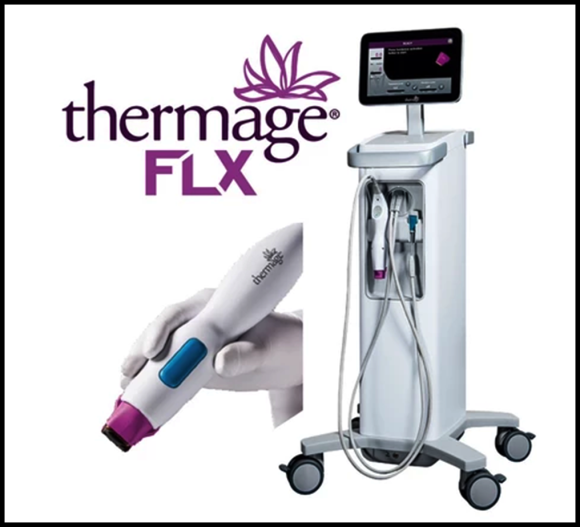
Thermage FLX is a device that delivers monopolar radiofrequency energy deep into the dermis and subcutaneous fat layers of the skin.
Unlike general bipolar RF devices that act only on the superficial layers of the skin, Thermage’s monopolar RF uses a volumetric heating method to deliver heat more deeply and evenly.
This heat affects collagen in two stages.
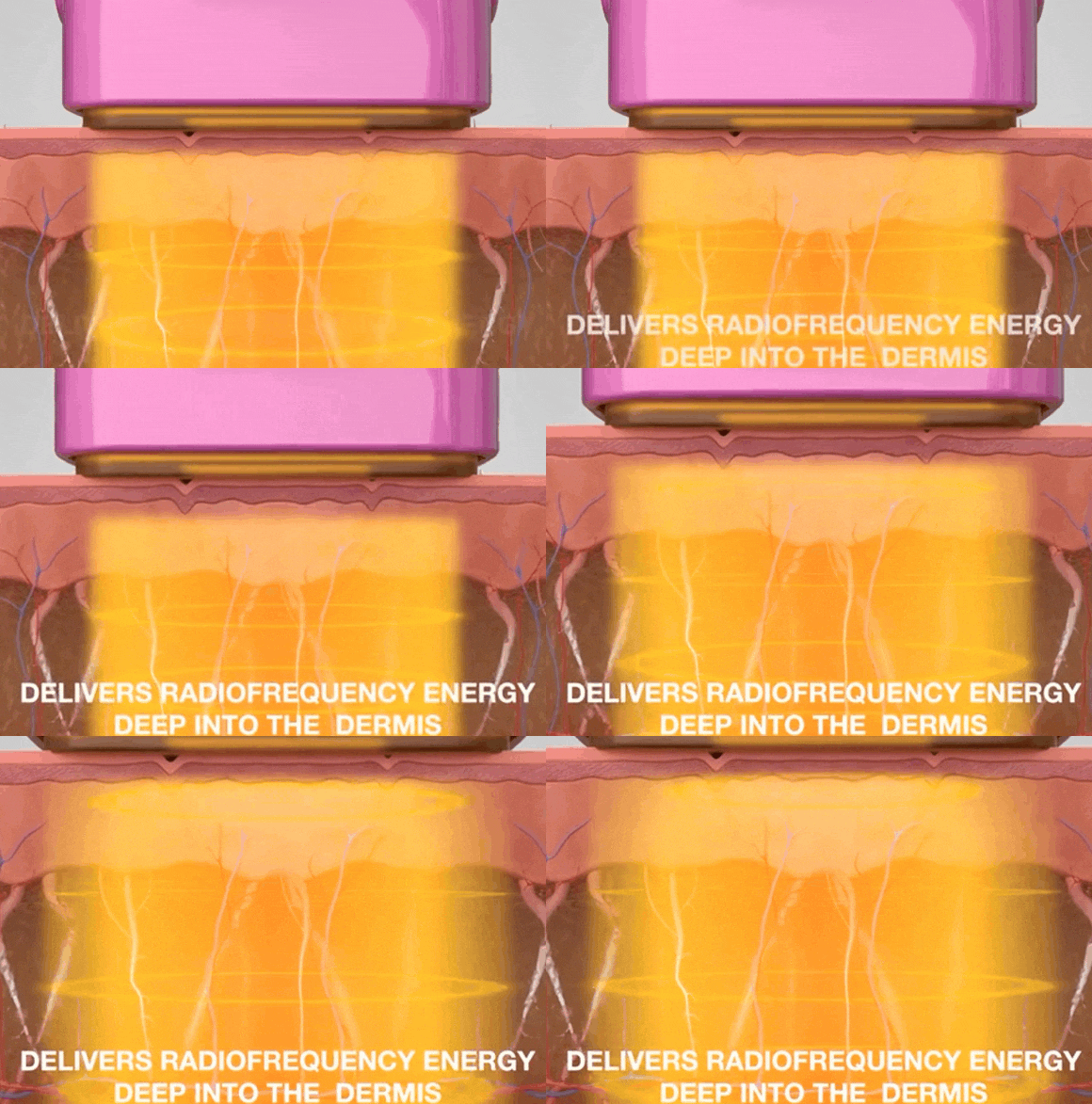
First, when the RF heat is delivered to collagen fibers in the dermis, water molecules within the collagen separate, causing the fibers to contract immediately.
Just like a sweater shrinking in a dryer, the collagen tightens, producing about 20% tightening right after the procedure.
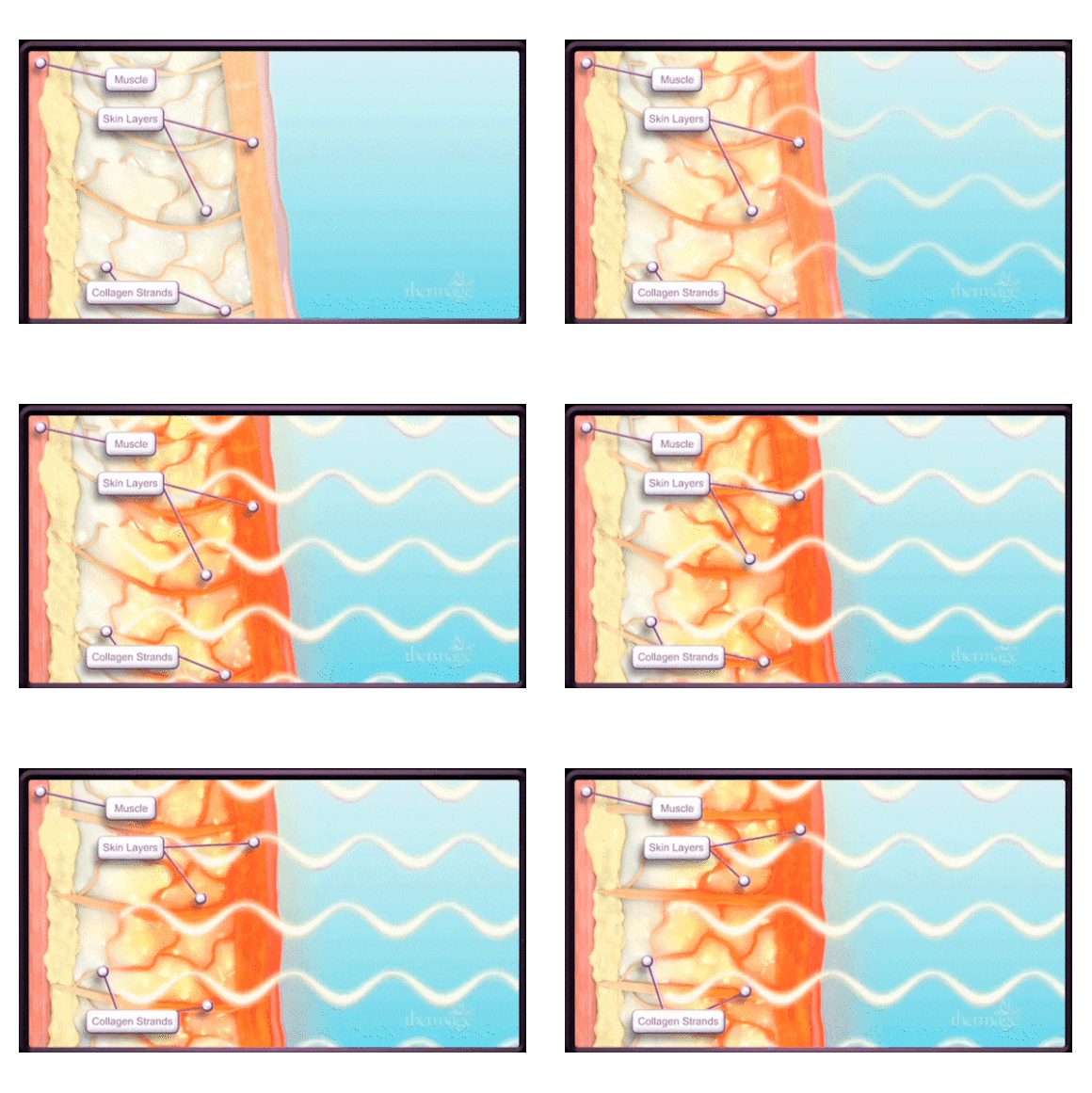
Then, the microdamage caused by this heat stimulates the skin’s natural healing response, leading to gradual new collagen production over 2 to 6 months after the procedure.
This is why Thermage reaches its true effect several months later.
To put it another way, the heat of Thermage is like the temperature inside a kiln used to fire pottery.
A proper temperature is essential for pottery to become strong and beautiful, but if it is not controlled, it will crack.
Thermage also needs enough heat to be delivered, but the system that precisely controls that heat determines both the result and safety.
Mok-dong Thermage
Cooling and vibration: the technology of Thermage FLX
So how does Thermage FLX manage this hot energy?
The key lies in the simultaneous operation of three technologies.
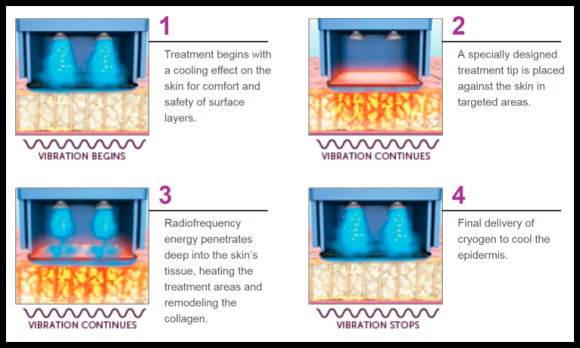
First is the cryogen cooling system.
The handpiece tip of Thermage FLX has a built-in device that sprays an ultra-cold cooling gas, which operates in a specific sequence with every pulse of RF energy delivered.
When the tip contacts the skin, cryogen is first sprayed to cool the epidermis, and then RF energy is delivered deep into the skin.
At this point, the dermis is heated while the epidermis is protected by cooling.
During RF delivery, three additional cooling bursts are sprayed, and finally one more cooling burst ends the cycle.
Thanks to this "sandwich cooling" structure, it is possible to keep the skin surface protected with cooling while concentrating therapeutic heat only inside.
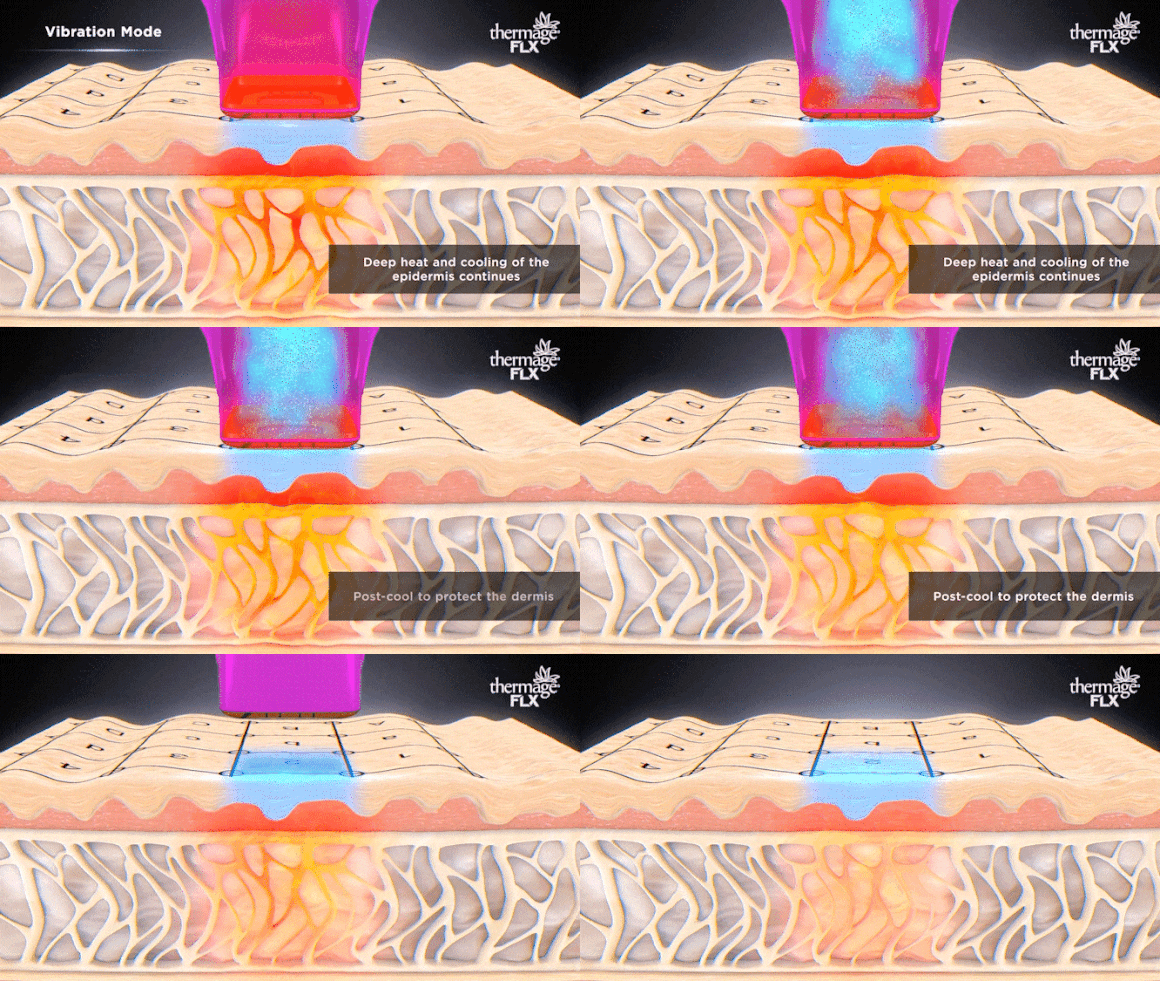
And then there is the multidirectional vibration system.
This vibration is not just shaking; it is a pain-relief technology that uses neurological principles.
In the human nervous system, tactile signals travel faster than pain signals, so if vibration reaches the brain first, the pain signals caused by heat are perceived less.
This is called the gate control theory. In simple terms, vibration closes the brain’s pain gate first, making the heat stimulus that follows feel less intense.
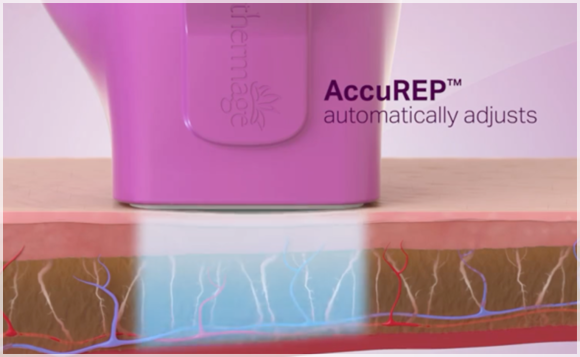
In addition, Thermage FLX’s biggest technical advancement, AccuREP™, cannot be left out.
It is an algorithm that measures skin impedance in real time with every pulse and automatically makes fine adjustments to RF output.
Even on the same face, the thickness of the skin on the forehead, cheeks, and jawline differs, so this system detects those differences pulse by pulse and optimizes the energy.
This is why the risk of localized overheating, sometimes reported in previous generations, has been greatly reduced.
Mok-dong Thermage
But in the end, isn’t it still hot?
To be honest, since RF heat is delivered deeply, it cannot be said to be "not hot at all."
Also, the sensation varies quite a bit from person to person.
Even at the same energy level, the feeling differs depending on skin thickness, amount of fat, and an individual’s pain threshold, and Thermage FLX allows energy to be adjusted from levels 0 to 4.
For appropriate results, the goal is a level that feels "quite warm but not hot," and finding that just-right temperature is the practitioner’s role.
Even with the same device, the heat delivery pattern changes depending on the pressure with which the handpiece is applied to the skin, the speed of movement, and the degree of overlap.
An experienced practitioner adjusts according to the skin characteristics of each area while reading the patient’s response in real time,
and these differences in handling can create completely different experiences even with the same device.
If you apply topical anesthetic cream generously 30 to 60 minutes before the procedure, the perceived temperature can be reduced significantly, and it also helps to keep the skin well moisturized in advance so that it is not dry or sensitive on the day of the procedure.
So far, for those worried about the heat of Mok-dong Thermage, I have explained the principle by which heat creates results, how the cooling and vibration systems work, and the factors that affect the actual sensation.
The key to Thermage is not avoiding heat, but controlling it precisely, and the final quality of that control depends on the practitioner’s experience as much as on the device itself.
I hope this post was helpful for those who were 고민했. Here, I will end the article.
This was Kim Jin-hyeon, Chief Director of the Mok-dong branch of YOU&I Clinic. Thank you.
< Other posts you may find helpful >
<YOU&I Clinic Mok-dong Branch Hours>
Weekdays:
am 10:00 ~ pm 08:30 [Late-night hours]
Weekends (Sat/Sun) · Public holidays:
am 10:00 ~ pm 04:00
*No lunch break
*Open on Saturdays, Sundays, and public holidays
< Directions >