Mokdong Juvelook Combined with MTS?
Let’s Take a Look at the Study
�
Hello.
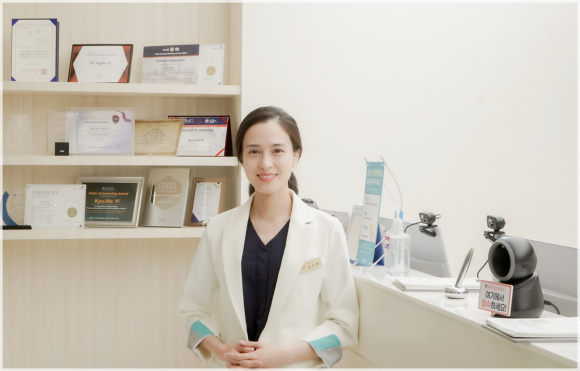
I am Kim Jin-hyeon,
Chief Director of UNNI Clinic Mokdong Branch.
�
"I’m planning to get Juvelook,
but if I do it together with MTS,
is the effect better?"
�
As pores become larger and skin texture
turns rougher, you may start to feel the
limits of covering it with makeup alone.
�
That is why many people become
interested in skin boosters.
�
As you search, you will often come across
claims such as, "It is better to use it with
MTS than to receive Juvelook alone."
�
But is that really true?
Today, let’s look at a paper published in
an international journal in 2025 and
organize the evidence for the combined
use of Juvelook and MTS.
�
If you read for just about 3 minutes, it will
help you understand why this combination
is drawing attention and for whom it may be
suitable.
�
| Table of Contents |
|---|
| 1. Juvelook and MTS: what role does each procedure play? 2. What were the findings of the study published in an international journal? 3. Then who might benefit from it? |
�
- Juvelook and MTS: what role does each
procedure play?
Mokdong Juvelook
First, let’s briefly go over Juvelook.
�
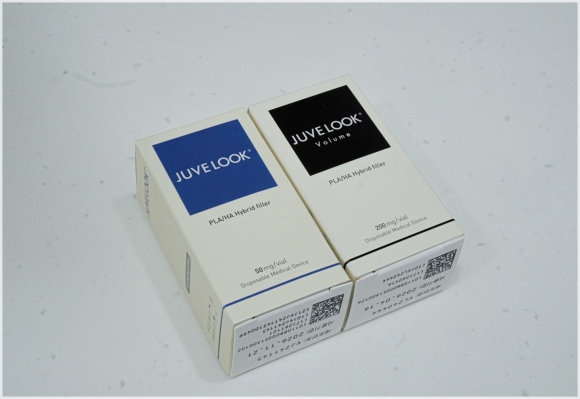
The main ingredient of Juvelook is PDLLA,
or poly-D,L-lactic acid.
�
When this ingredient is injected into the dermis,
it gradually breaks down and gives the surrounding
tissue a kind of controlled stimulation.
�
In response to that stimulation, our body
produces new collagen.
�
A substance that works in this way is called a
"biostimulator."
�
Simply put, instead of filling something from
the outside, it works by inducing the skin to
produce collagen on its own.
�
So what is MTS?
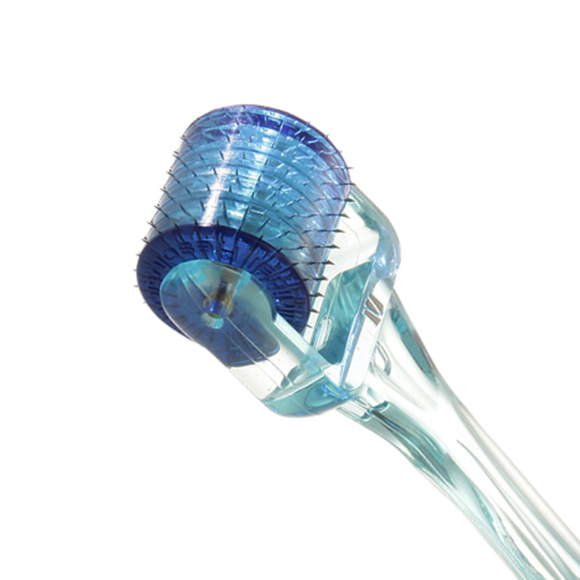
MTS stands for Microneedle
Therapy System,
�
and it is a procedure that uses a device with
fine needles to create very small openings,
called microchannels, on the surface of the skin.
�
When this micro-injury occurs, the skin triggers
a healing response and stimulates collagen
production.
�
In addition, the microchannels opened by MTS
also serve as a pathway for active ingredients
to be absorbed deep into the skin.
�
So what happens if Juvelook, which stimulates
collagen production, and MTS, which opens
a pathway for absorption while also
stimulating collagen production,
�
are used together? The answer to that has
actually been published in a paper.
�
- What were the findings of the study
published in an international journal?
Mokdong Juvelook
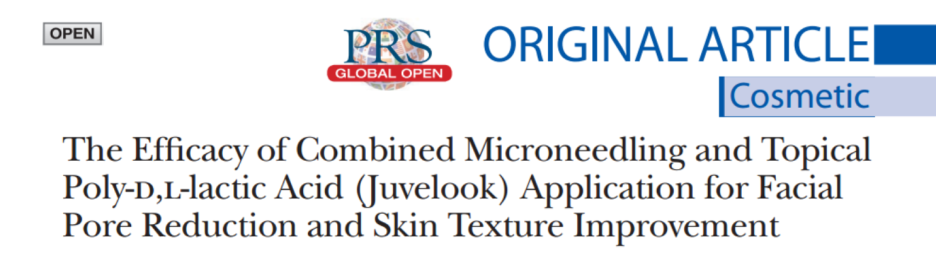
The Efficacy of Combined Microneedling andTopical Poly-D,L-Lactic Acid (Juvelook) Application for Facial
Pore Reduction and Skin Texture Improvement
In June 2025, a paper was published in the
international journal PRS Global Open.
�
This study was conducted on 15 patients aged
30 to 55 who had enlarged pores.
�
The procedure involved first creating micro-injuries
in the skin with MTS at a depth of 0.5 mm, then
applying 1 mL of Juvelook PDLLA solution to
allow absorption,
�
and this process was repeated a total of 3 times
at 3-week intervals.
The results were quite meaningful.
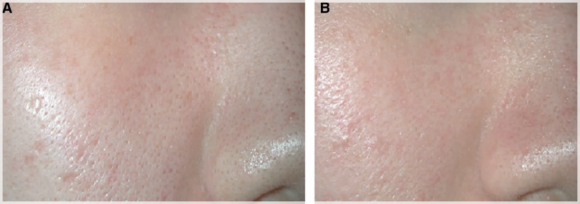
Fig. 1. Results of combined microneedling (MTS) and
Juvelook (PDLLA) treatment in a 34-year-old female patient.
�
Before treatment: visibly enlarged pores and rough
skin texture with a pore grade of 6.
�
After treatment: 22 weeks after the final procedure,
the pore grade had significantly decreased to 3,
confirming pore size reduction and skin texture
improvement.
�
The average pore score before the procedure was 6,
the largest stage, and after 12 weeks it had decreased
to 3, about half.
�
A statistically significant difference was also
confirmed, and this effect was maintained up to
22 weeks.
�
Patient satisfaction was also high, with 12 out of
15 patients responding "very satisfied."
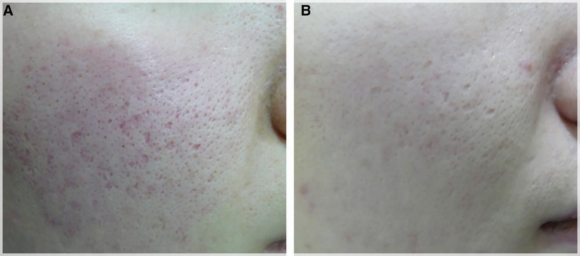
Fig. 2. Results of combined microneedling (MTS) and
Juvelook (PDLLA) treatment in a 40-year-old female patient
�
Before treatment: visibly enlarged pores with a pore
grade of 5.
�
After treatment: 22 weeks after the final procedure,
the pore grade had decreased to 2, showing pore size
reduction and skin texture improvement.
�
As for side effects, mild redness and temporary
swelling appeared immediately after the procedure,
�
but all of them disappeared within 24 to 48 hours,
and no serious adverse reactions such as nodules or
long-term irritation were reported.
�
In the conclusion, the researchers evaluated the
combined use of MTS and Juvelook as a minimally
invasive method that is effective for pore reduction
and skin texture improvement.
�
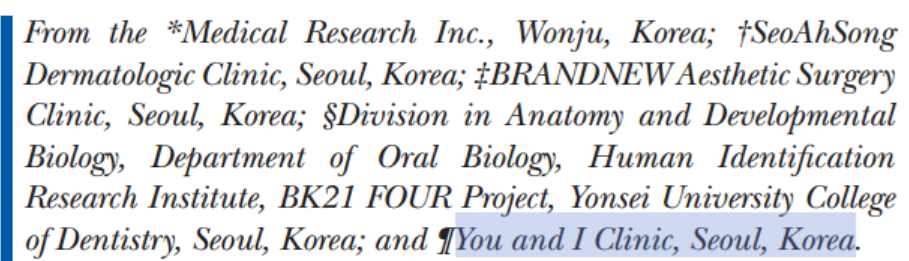
For reference, one of the institutions affiliated
with this study is listed as UNNI Clinic.
�
- Then who might benefit from it?
Mokdong Juvelook
Based on these findings, the combined MTS and
Juvelook procedure may be a particularly meaningful
option for people who are concerned about enlarged
pores and worsened skin texture at the same time.
�
Another point worth noting is that the study participants
had Fitzpatrick skin types III to IV.
�
This corresponds to Asian skin types, including Korean skin.
�
For those worried about post-inflammatory hyperpigmentation
after laser procedures, this non-laser approach may help
reduce the burden.
�
In addition, the short downtime can be an advantage for
those who want to minimize disruption to daily life.
�
That said, there is also something we should be honest
about.
�
Because this study was a small case series involving
15 patients,
�
it does not guarantee the same results for all skin types
and conditions.
�
The researchers themselves stated that follow-up studies
using larger randomized controlled trials and objective
evaluation tools such as 3D imaging are needed.
�
Therefore, if you are considering the procedure,
it is important to first receive a thorough diagnosis and
consultation about your own skin condition.
�
So far, we have looked at the combined Juvelook and
MTS procedure in Mokdong, from the role of each to
actual paper results and who it may be suitable for.
�
To summarize, the synergy in which Juvelook’s PDLLA
ingredient induces collagen production and MTS helps
its absorption
�
was confirmed through an international journal, and
positive results were reported especially for pore reduction
and skin texture improvement in Asian skin types.
�
However, for any procedure, the most important step is
to check whether it suits your own skin condition, and I
hope you will keep that in mind.
�
Thank you for reading this long post.
�
This was Kim Jin-hyeon, Chief Director of UNNI Clinic
Mokdong Branch. ^^
�
< Related posts you may find useful >
�
�
�
< UNNI Clinic Mokdong Branch consultation hours >
�
Weekdays:
am 10:00 ~ pm 08:30 [evening consultation]
�
Weekends (Sat/Sun) · Public holidays:
am 10:00 ~ pm 04:00
�
�
�
�
< Directions >