Mok-dong Thread Lifting
Hello.
I am Kim Jin-hyun, Chief Director of UNNI Clinic Mok-dong Branch.

“Isn’t thread lifting just a procedure where you insert threads and that’s it?”
“I’m curious whether the lift is similar no matter who gets it.”
If you started searching because of thoughts like these, you are probably concerned about sagging but still feel hesitant about surgery.
Thread lifting is a relatively familiar procedure, but when you look closely, it is a much more delicate process than many people expect.
Even with the same thread, one person may have a sharper-looking jawline, another may have a lighter-looking buccal area, and for someone else the nasolabial area may appear softer.
In the end, what makes the difference is not so much the type of thread or the name of the procedure, but whether there was a design suited to my face.
Today, I’ll explain that point a little more realistically.
After reading, you’ll understand why thread lifting is closer to a procedure that is “designed correctly” rather than one where you simply “put in a lot.”
Contents
-
Why the design changes even for the same procedure
-
What does an individual-specific design mean?
-
Look at these points before the procedure
Mok-dong Thread Lifting
Why the Design Changes Even for the Same Procedure
Many people think of thread lifting as something like “a procedure that lifts by inserting several threads.”
Broadly speaking, that is true. However, the actual face is not flat but three-dimensional, and sagging does not occur in the same direction for everyone.
For some people, the buccal area descends and the jawline appears less defined; for others, the area beside the mouth folds downward, making the nasolabial folds and marionette lines stand out together.
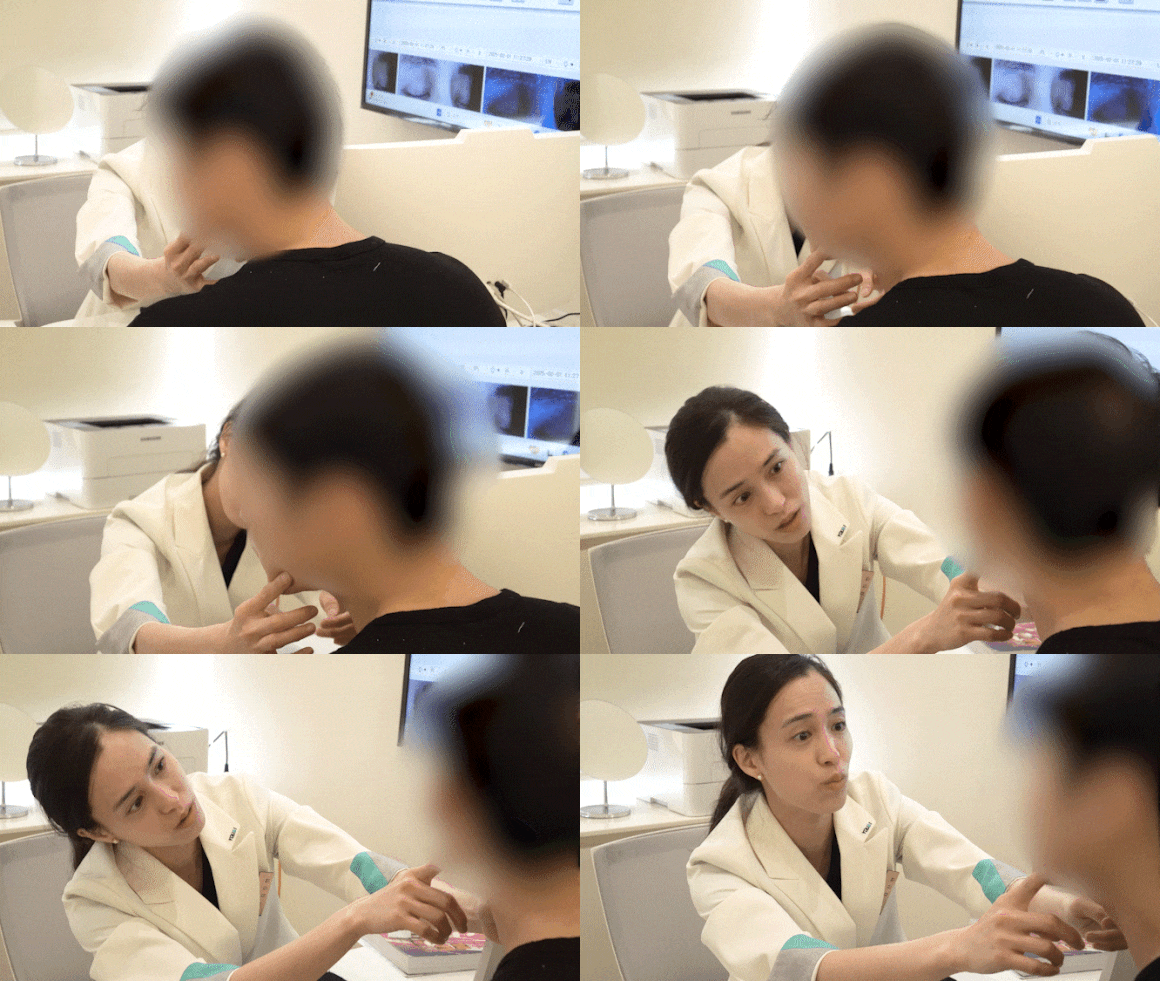
What matters here is that you should look not only at the skin, but also at the structures beneath the skin.
As we age, collagen and elastin in the dermis decrease, and the supporting strength of the retaining ligaments weakens, causing the soft tissue to move downward.
Simply put, it is similar to the ropes of a taut tent gradually loosening.
Just as the areas that need repair differ depending on which ropes in the same tent loosen first, the face also inevitably requires a different design depending on the cause and direction of sagging.
Mok-dong Thread Lifting
What Does an Individual-Specific Design Mean?
An individual-specific design does not mean something grand.
Rather, it is closer to a process of removing unnecessary excess. More threads do not automatically mean better results.
If you pull too strongly, it may look lifted at first, but the expression can seem unnatural, or certain areas may look bunched up when smiling.
On the other hand, if you properly identify the necessary vector, meaning the direction that needs lifting, even a relatively small number of threads can make the overall impression look more refined.
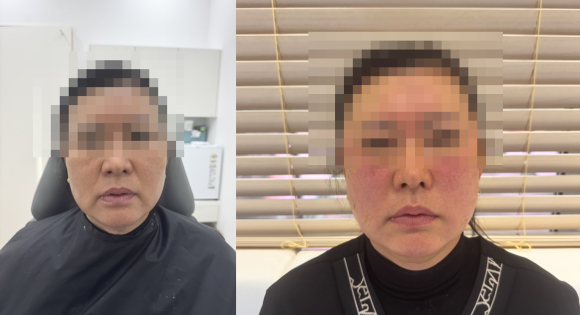
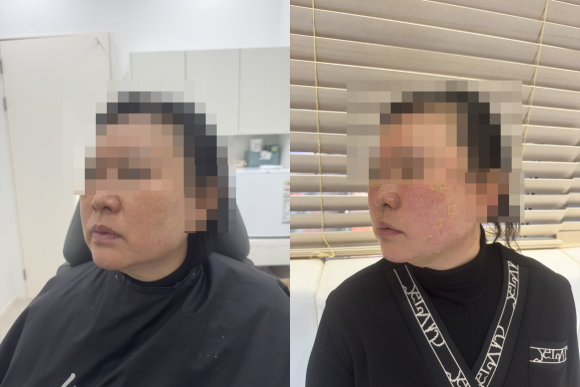
In particular, thread lifting often falls short if it is decided by looking only from the front.
When you look in the mirror, you may spend the most time looking straight ahead, but in reality, your impression is often felt more strongly from a 45-degree angle and from the side.
That is why it is important to examine whether the jawline, cheek line, and lower face connect smoothly.
It is similar to how simply fastening the buttons on a piece of clothing all the way up does not make the fit better; the overall silhouette is refined only when the shoulder line and waistline also align.
Thread lifting is not about pulling a lot. It is more accurate to see it as a design that organizes the face in a harmonious way.
Mok-dong Thread Lifting
Look at These Points Before the Procedure
If you are considering thread lifting, it is better to first look at how carefully your sagging is divided and assessed, rather than focusing only on a well-known procedure name.
A person with less facial fat and a person with more facial fat will naturally need different approaches, and the direction will also differ depending on whether skin elasticity is sufficient, whether the fat layer is thick, whether the jawline is the main issue, or whether the buccal area is the key concern.
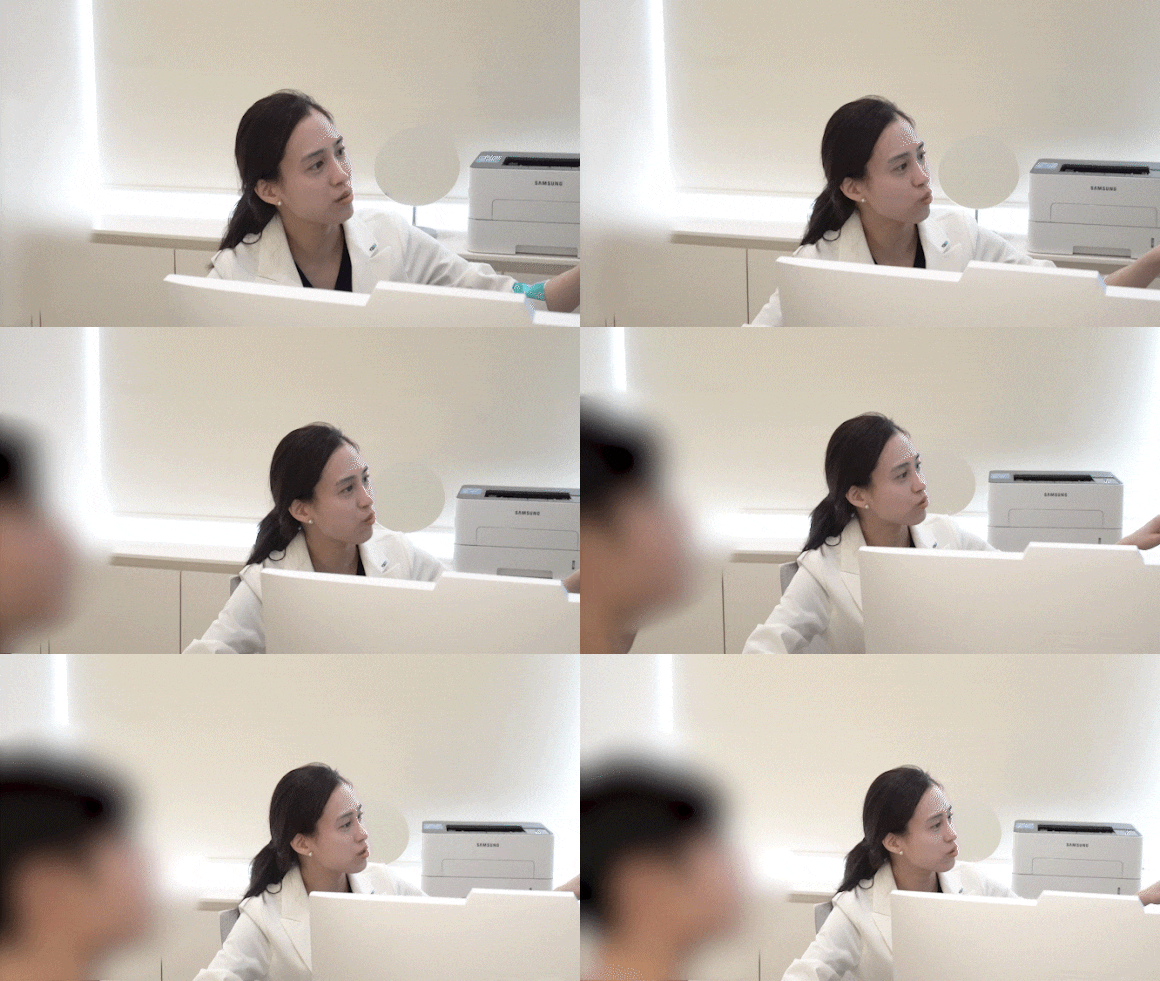
It is also important whether the explanation compares thread lifting with other methods rather than insisting only on thread lifting.
In some cases, radiofrequency or ultrasound lifting may be more suitable, and in others, a method other than threads may be a more natural choice.
It helps with decision-making to see whether the explanation is given while looking at both the front and side, and whether practical points such as swelling, pain, and the possibility of asymmetry are calmly addressed rather than only emphasizing how long the results last.
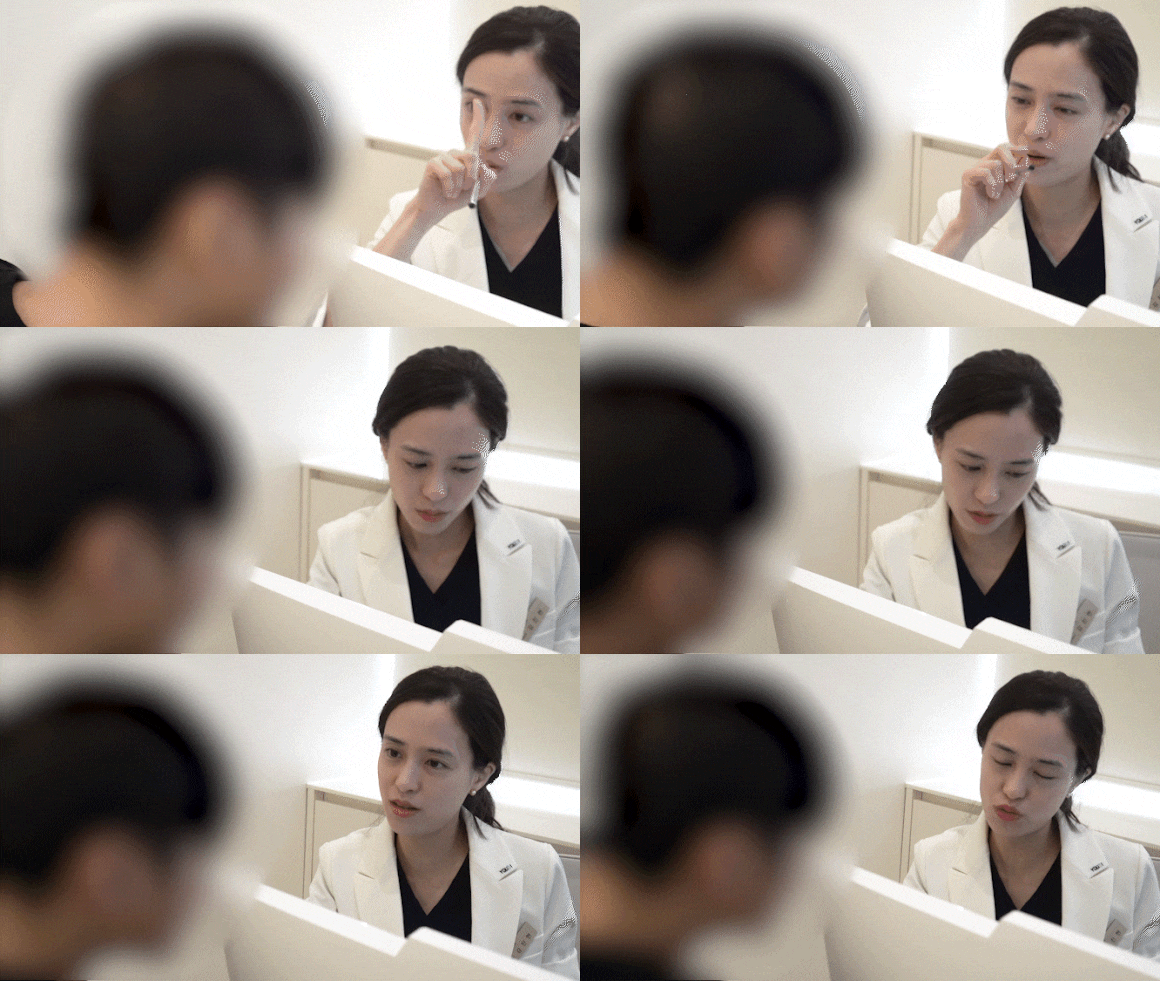
In the end, when looking into thread lifting, what matters is not the number or name of the threads themselves,
but whether there is an explanation for where and why they should be pulled on my face.
Just as the route to a destination can differ depending on who reads the same map, the same threads do not produce the same result on every face.
So far, I have explained to those looking into Mok-dong thread lifting why an individual-specific design is important.
Thread lifting is not simply a procedure that pulls sagging areas upward; it is closer to a process of reading the structure and movement of the face and rebalancing it.
That is why it may be more important to place the threads correctly than to place many of them, and finding the vector suited to your face may matter more than following a trendy method.
If you are thinking about thread lifting, it may be better to ask, “Where is the key area on my face?” before asking, “How many threads are used?”
That one question can make a fairly big difference in how natural the result looks.
This has been Kim Jin-hyun, Chief Director of UNNI Clinic Mok-dong Branch. Thank you. ^^
< Related post you may find helpful >
<UNNI Clinic Mok-dong Branch Hours>
Weekdays:
am 10:00 ~ pm 08:30 [Evening hours]
Weekends (Sat/Sun) · Public holidays:
am 10:00 ~ pm 04:00
*No lunch break
*Open on Saturdays, Sundays, and public holidays
< Directions >