Oksu-dong hair removal, if there has been no change as much as you expected
If you’re disappointed, check this
Oksu-dong hair removal
Hello.
I’m Kim Jin-hyeon, the chief physician at U&I Clinic Mokdong branch.

“I'm worried about the number of sessions and the interval, but
what should I check first?”
Many people experience rough skin or discomfort from folliculitis after using a razor every day.
That is why many people look for a more fundamental solution through Oksu-dong hair removal.
Rather than making a decision based only on simple information, it is important to clearly understand the principles and precautions.
Today, I’ll explain how hair removal works and how many sessions are needed, and if you haven’t felt the results as much as you expected, this may help if you read to the end.
Table of contents
Oksu-dong hair removal
How does it work?
Laser hair removal works by using energy that reacts to melanin, the dark pigment in hair, to selectively destroy the hair root.
As the laser energy is converted into heat, it directly damages the hair follicles that produce hair.
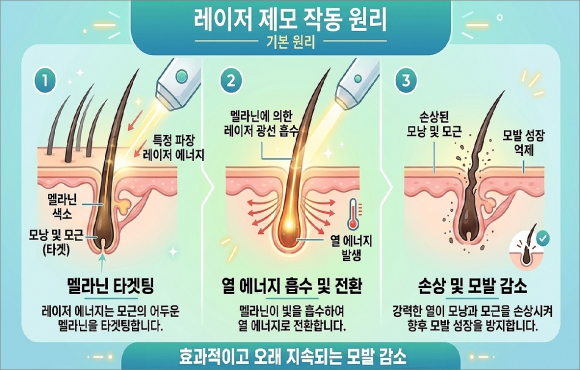
This is different from shaving, which simply cuts off the hair visible on the surface, from the very basis of the approach.
Of course, you may want all the follicles in the area to be destroyed in a single treatment, but in reality, the laser effectively reacts only to hairs in the growth phase.
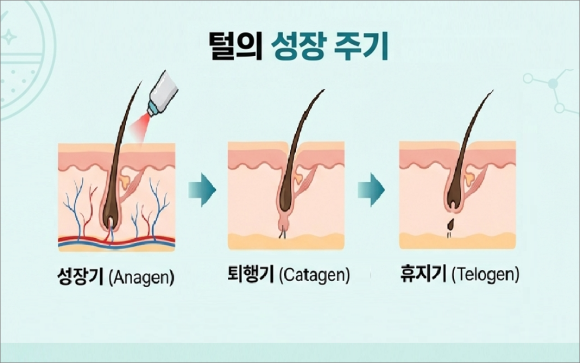
Because the hairs on our body each have different growth cycles, hairs that were in the resting phase grow back again, which is why a repeated process is necessary.
Understanding these biological characteristics and managing them steadily at regular intervals is the way to increase satisfaction.
Oksu-dong hair removal
Differences by device
Devices commonly used for Oksu-dong hair removal, such as Apogee Plus, use a 755nm wavelength, which has a relatively high melanin absorption rate.
This makes it useful for concentrating energy on the follicles and may help tidy up thick, dark hair.
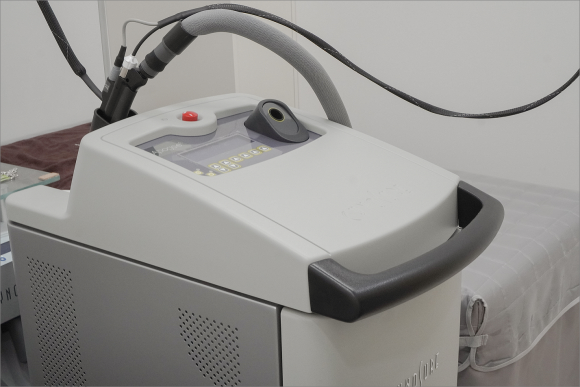 Apogee Plus
The key is to deliver enough heat to the targeted hair roots while reducing irritation to the skin surface.
That said, some people worry that the heat from the laser may lead to skin pain or irritation.
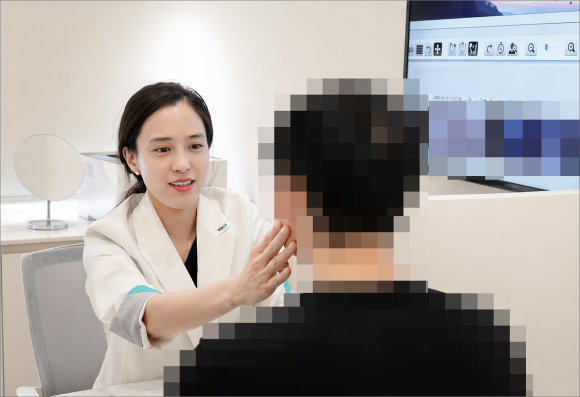
To address this, a system that sprays a strong cooling gas works together to protect the epidermis and reduce the burden of pain.
The discomfort felt during the procedure varies greatly from person to person, but if the device’s cooling function is used properly, the process can be more comfortable.
Oksu-dong hair removal
Number of sessions and precautions for satisfaction
For satisfactory improvement, repeated treatments at intervals of about 4 to 6 weeks, for at least 5 sessions, are often considered.
This is because newly emerging follicles must be targeted one by one in line with the hair growth cycle mentioned earlier.
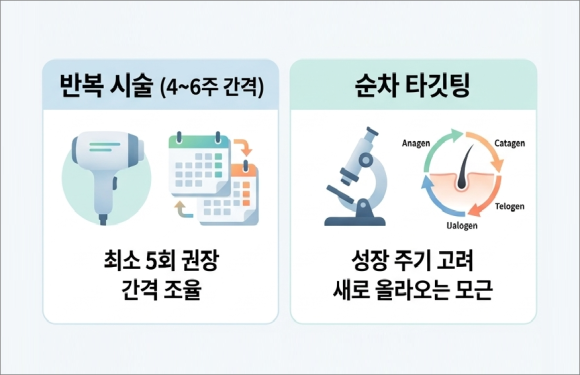
Because hair density and growth speed differ from person to person, it is better to finely adjust the interval while monitoring progress rather than relying on a fixed number of sessions.
Occasionally, the skin may become red or itchy after the procedure, but these are often temporary symptoms.
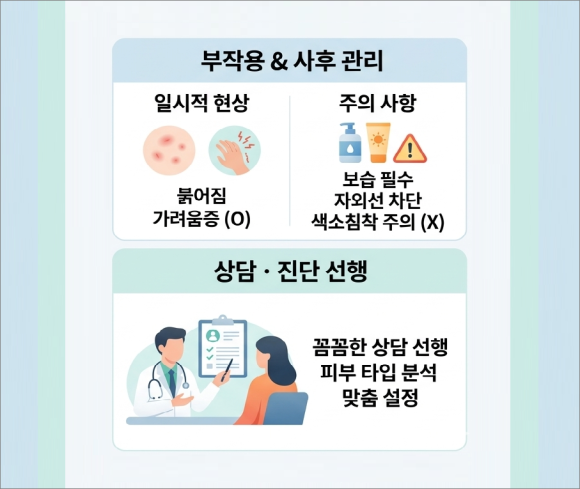
However, if you neglect moisturizing and sun protection, there may be concerns such as hyperpigmentation, so you should pay attention to aftercare.
Also remember that careful consultation and diagnosis before the procedure should come first in order to set the appropriate intensity and interval for your skin type.
Today, I explained this for those looking for information about Oksu-dong hair removal.

The key to Oksu-dong hair removal is repeating the treatment in line with the hair growth cycle, but the response may differ depending on each person’s skin condition.
Since the plan may vary depending on your skin condition and goals, I recommend finding the approach that suits you best based on a thorough diagnosis before treatment.
This was Kim Jin-hyeon, chief physician at U&I Clinic Mokdong branch.
Thank you.
< Other posts you may find helpful >
< U&I Clinic Mokdong Branch consultation hours >
Weekdays:
am 10:00 ~ pm 08:30 [late-night consultation]
Weekend (Sat/Sun) · Public holidays:
am 10:00 ~ pm 04:00
*No lunch break
*Consultations on Saturdays, Sundays, and public holidays
< Directions >