Mok-dong Thermage
Hello.
I’m Kim Jin-hyun, Chief Director of UNI&U Dermatology Clinic, Mok-dong Branch.

"I want to get Thermage,
but I’m hesitating because I’ve heard it hurts a lot."
"Sedation feels burdensome,
but I’m also scared to get it without anything."
When you hear the word "Thermage,"
the concern over strong pain
may come to mind
just as much as the lifting effect.
Especially if you are sensitive to pain
or it is your first time having a procedure,
the burden can feel even greater.
So the method of getting it as comfortably as possible
is probably the part you’re most curious about.
Today, from the features of Thermage
to research papers that demonstrate its effects,
and even non-sedation anesthesia with AirNox,
I’ll explain everything in detail in about 3 minutes,
so I hope you’ll read to the end.
| Table of Contents |
|---|
| 1. Thermage FLX: What kind of procedure is it?2. Thermage effects seen through research papers3. Comfortable non-sedation anesthesia with AirNox |
- Thermage FLX: What kind of procedure is it?
Mok-dong Thermage
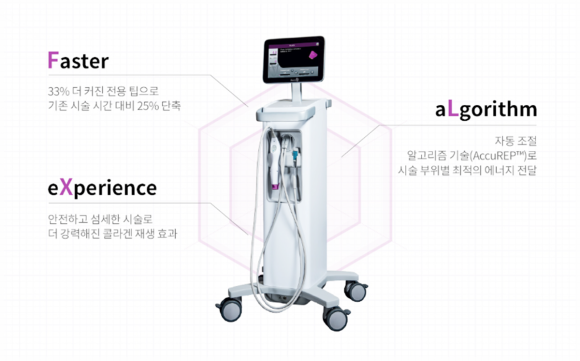
Thermage FLX is an upgraded version
of the existing Thermage,
and it is a lifting procedure that delivers
radiofrequency energy deep into the dermis.
It is known to be effective for
promoting collagen production in the skin,
which helps with lifting and improving fine wrinkles.
You may be curious about how it differs from
Ulthera, which is often compared as a similar lifting procedure.
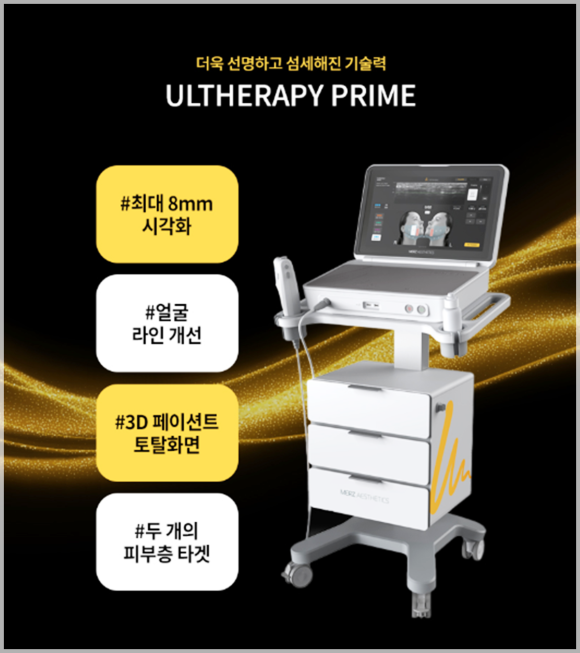
The biggest difference is the way it works.
Thermage uses radiofrequency
to stimulate collagen in the dermis,
while Ulthera uses ultrasound
to act on the dermis and the SMAS layer.
So Thermage is better known for improving fine wrinkles
and overall firmness,
while Ulthera is stronger for deep tightening.
- Thermage effects seen through research papers
Mok-dong Thermage
To show you more objective data
about Thermage’s effects,
I brought one related research paper.
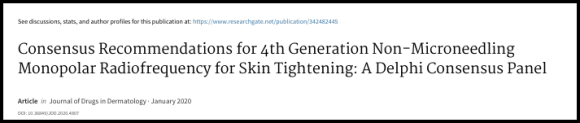
Consensus Recommendations for 4th Generation Non-Microneedling Monopolar Radiofrequency for Skin Tightening: A Delphi Consensus Panel
Published in 2020
in the Journal of Drugs in Dermatology,
this was a consensus statement
with the participation of 8 dermatology specialists
from the U.S. and Hong Kong.
It is a study in which experts with
an average of 12.7 years of clinical experience
on Thermage FLX gathered
and derived 19 consensus statements
using the Delphi method.
If I briefly summarize the key points,
it goes like this.
First, in terms of effectiveness,
more than 90% of appropriately selected patients
reportedly experienced positive results.
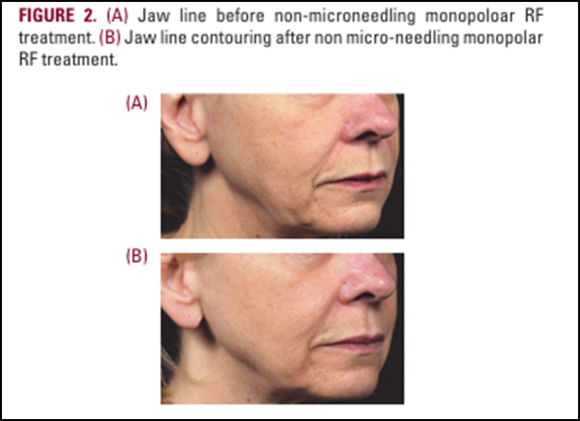
Fig 2. Comparison photo of the jawline before and after Thermage treatment
Also, in a patient satisfaction survey
of 5,700 patients treated with first-generation devices,
87% reported immediate tightening,
92% confirmed lifting effects even after 6 months,
and
94% said they were satisfied
with the treatment results.
The mechanism of Thermage
is that radiofrequency energy delivers heat
to the dermis, breaks the hydrogen bonds
of collagen molecules,
and
causes immediate collagen contraction.
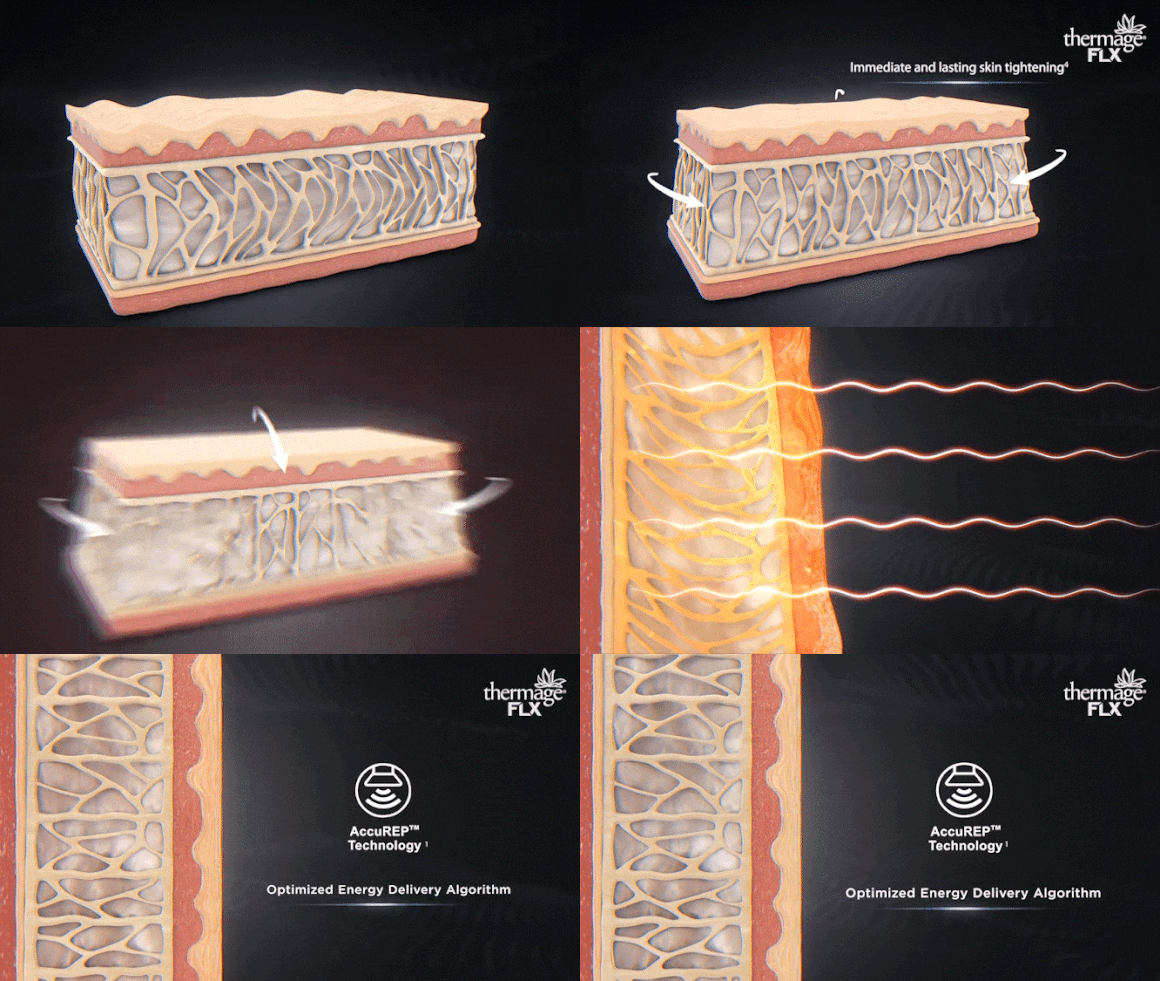
After that, during the wound-healing process,
new collagen regenerates,
and over 2 to 6 months,
the skin gradually becomes tighter.
And what we focused on in this paper
was the specific recommendations for pain management
during the procedure.
According to the paper, during treatment, the heat sensation
felt by the patient is divided into 5 levels from 0 to 4
and used as feedback,
with the target range being between 2 and 2.5.
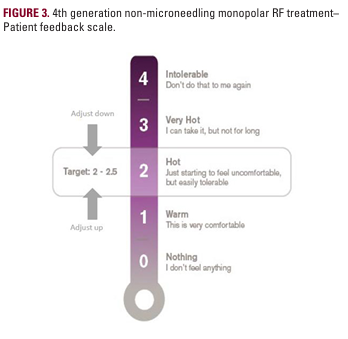
Fig 3. Patient heat-sensation feedback scale (0–4 levels)
In other words, the energy must be adjusted to a level that is
"hot but still sufficiently tolerable"
in order to secure both effectiveness and safety.
The important point here is that,
as the paper also clearly states,
sedation or strong painkillers are not recommended.
This is because the patient must accurately convey
their heat-sensation feedback
for the procedure to be safe.
Ultimately, the ideal anesthesia method is one that reduces pain
while preserving the patient’s consciousness
and ability to provide feedback.
- Comfortable non-sedation anesthesia with AirNox
Mok-dong Thermage
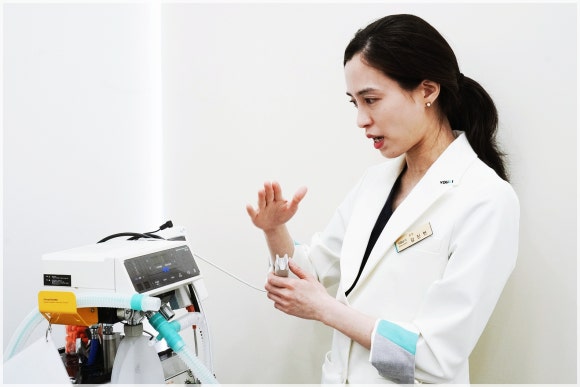
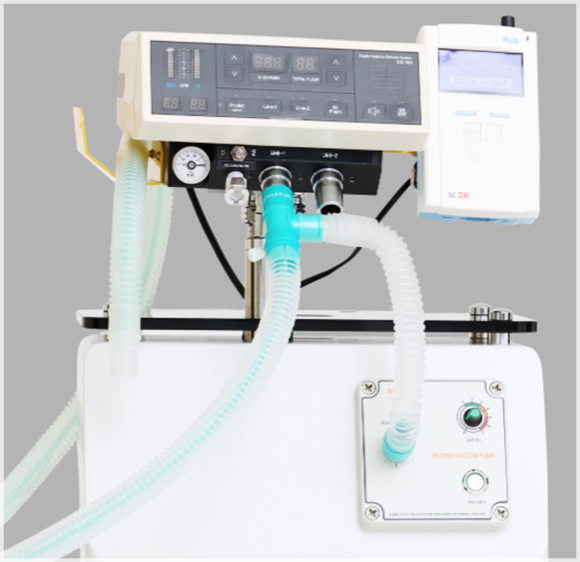
So the method receiving attention recently
is the non-sedation anesthesia system using AirNox.
AirNox is a method in which nitrous oxide (N2O)
and oxygen (O2), long used in medical settings,
are mixed in precise ratios and inhaled.
It works by acting on the central nervous system
to reduce pain sensitivity and tension.
Its major feature is that, unlike sedation,
the procedure is performed while the patient remains alert
and fully conscious.
As emphasized earlier in the paper,
Thermage is a procedure that requires
the patient’s heat-sensation feedback,
so AirNox, which reduces pain while keeping you conscious,
is a good match.
Also, when gas inhalation is stopped,
you return to normal condition within a few minutes,
so
you can go back to daily life immediately
without a separate recovery period after the procedure.
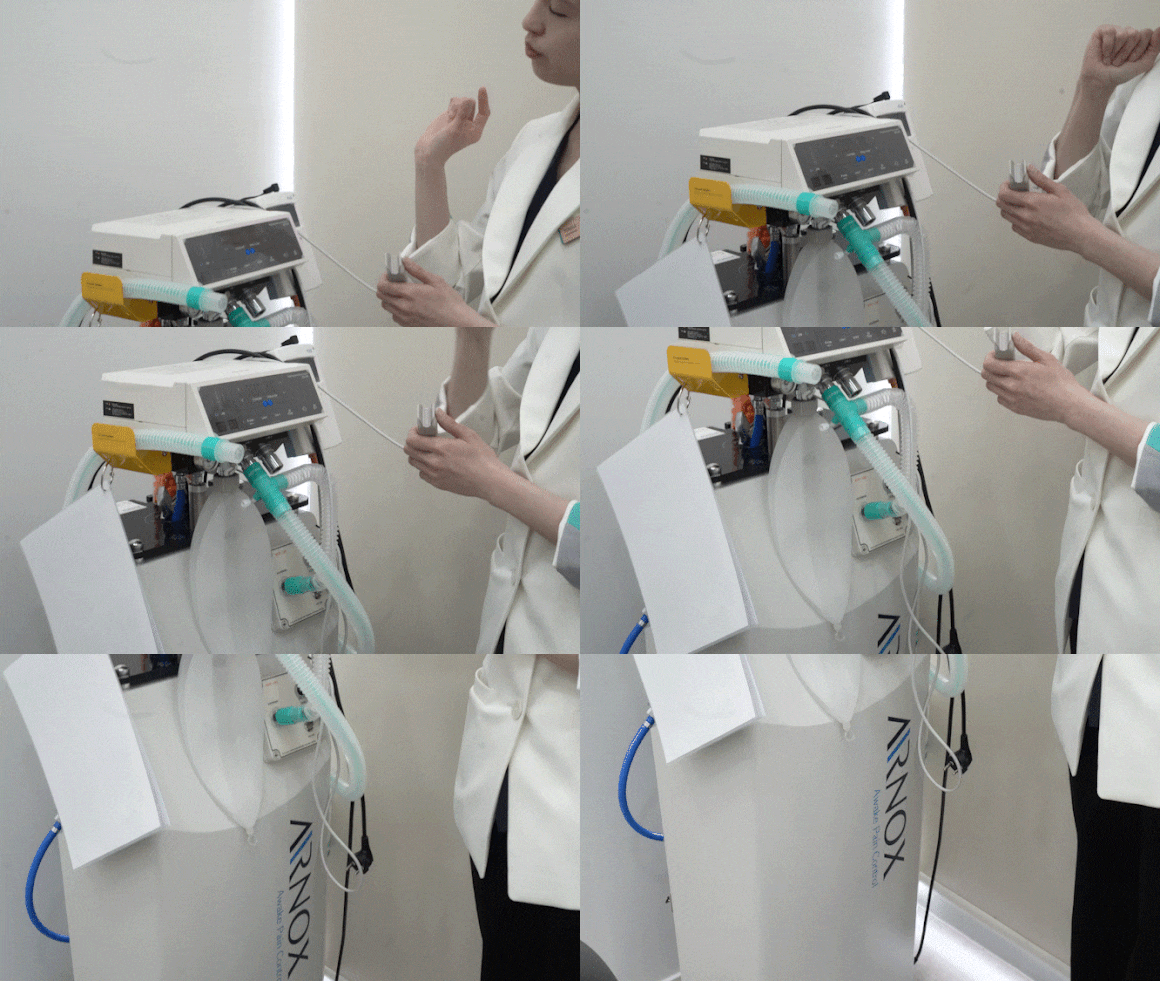
It does not require fasting like sedation does,
and there are relatively few restrictions on driving
or returning to work right after the procedure,
so it is especially useful for busy people.
However, it is better to avoid eating an excessively large meal
right before the procedure,
and it is important to breathe deeply and slowly through the nose
during treatment.
If you have hesitated to get Thermage because of pain,
if sedation feels burdensome,
or if you are especially sensitive to pain,
it may be worth considering non-sedation anesthesia
with the AirNox method.
So far, we have looked at Mok-dong Thermage
from the procedure’s features to research data
and non-sedation anesthesia with AirNox,
one by one in detail.
Thermage is a procedure that helps
with lifting and improving fine wrinkles
through collagen regeneration,
but
to achieve the proper effect,
energy must be adjusted according to the patient’s
heat-sensation feedback.
That is why a non-sedation anesthesia method
that reduces pain while keeping you conscious
can be a reasonable choice. ^^
If you are considering Thermage,
please carefully check not only the procedure itself
but also which anesthesia method is used together with it,
and
through a thorough consultation,
choose the direction that is right for you.
Thank you for reading this long post.
< Other posts you may find helpful >
<UNI&U Dermatology Clinic Mok-dong Branch Hours>
Weekdays:
am 10:00 ~ pm 08:30 [evening hours]
Weekends (Sat/Sun) · Public holidays:
am 10:00 ~ pm 04:00
*No lunch break
*Open on Saturdays, Sundays, and public holidays
< Directions >