Mok-dong Oligio
Concerned That There Is Little Change Even After Lifting?
Mok-dong Oligio
Hello.
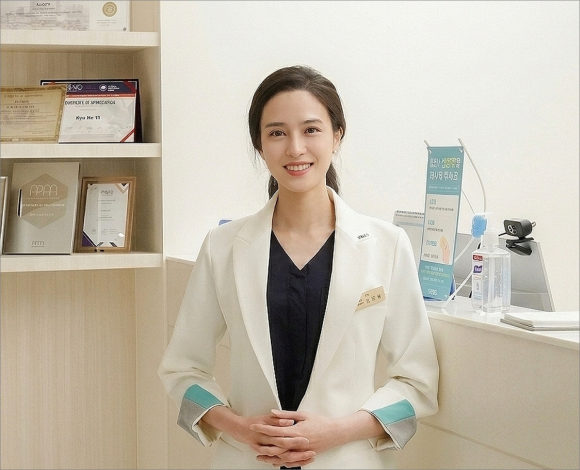
I am Kim Jin-hyun, the chief director of UNNI Clinic Mok-dong Branch.
"This is my first lifting procedure,
and I’m worried whether it will suit my skin."
Many people are concerned about sagging facial lines every time they look in the mirror due to reduced skin elasticity.
In particular, as lifting devices have become more diverse, it can be difficult to determine whether the Mok-dong Oligio procedure is the right option for you, or what criteria should be used to plan it.
Rather than starting simply because of recommendations from others, it is important to understand how radiofrequency energy works on each person’s skin.
Today, for those hoping for firmer skin changes, I will organize the key information you should know before the procedure.
Table of Contents
-
What kind of procedure is it?
-
How are the right number of shots determined for me?
-
Post-procedure care points
Mok-dong Oligio
What kind of procedure is it?
Oligio is a procedure that delivers radiofrequency (RF) energy to the dermal layer of the skin, causing aged collagen to contract and inducing new collagen production.
When strong thermal stimulation is delivered, loosened tissue goes through a process of becoming denser and more compact.
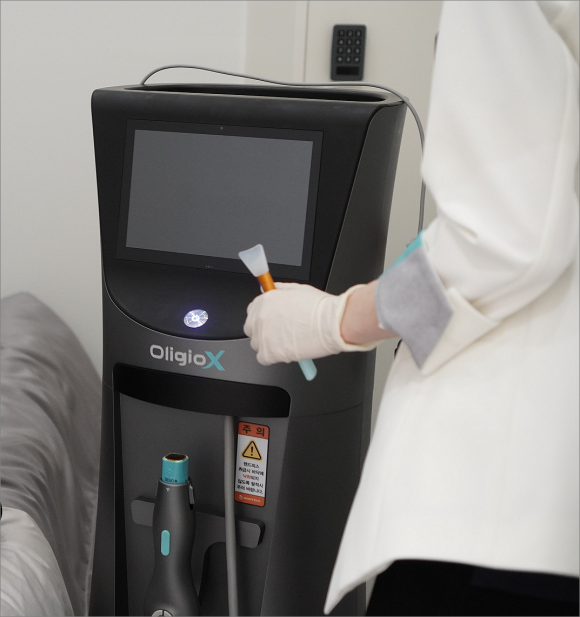 OligioX
Technology that reduces burden on the skin surface is applied, so returning to daily life is relatively quick.
However, because it uses heat, some people worry about pain or irritation during the procedure.
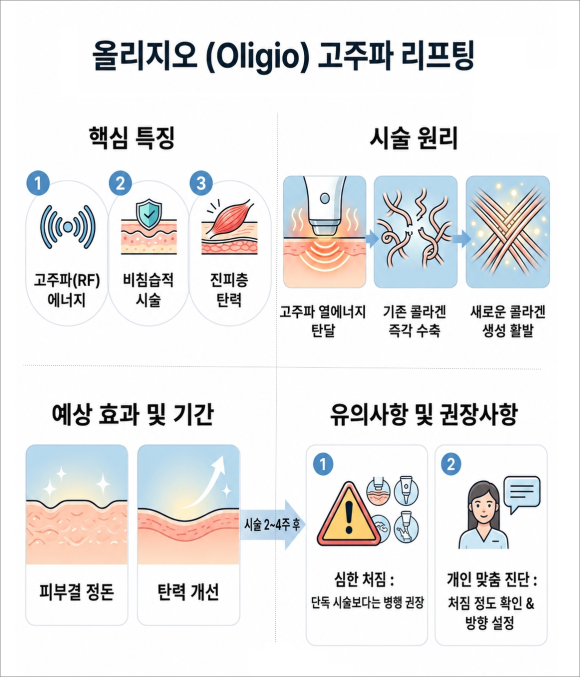
The Oligio system is designed to ease such discomfort through an intelligent cooling function and a micro-vibration mode.
As a result, even those with sensitive skin can expect positive changes if careful diagnosis is performed first.
Mok-dong Oligio
How are the right number of shots determined for me?
The decision on the number of shots depends not simply on the size of the number, but on the area and density where the energy needs to be delivered.
Usually, 300 shots are recommended when you want to focus energy on specific areas such as the eye area or nasolabial folds to improve firmness.
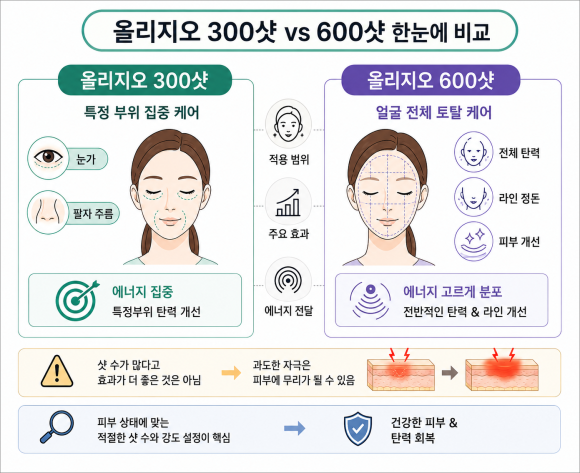
On the other hand, 600 shots may be a suitable choice when you want to enhance the overall firmness of the entire face and refine the facial line.
Of course, you might expect that the more shots there are, the more noticeable the result will be, but depending on the skin condition, too much stimulation may instead place an unnecessary burden on the skin.
Therefore, it is most important to carefully check skin thickness and the degree of elasticity, then adjust the required number of shots and distribute the energy efficiently.
This is because setting the proper intensity for yourself is the way to maintain the skin’s natural health while restoring firmness.
Mok-dong Oligio
Post-procedure care points
After radiofrequency energy is delivered, it usually takes about 3 to 4 weeks for actual structural changes to appear.
As the collagen regeneration response continues steadily, over time you may feel that the skin becomes denser and the skin texture improves.
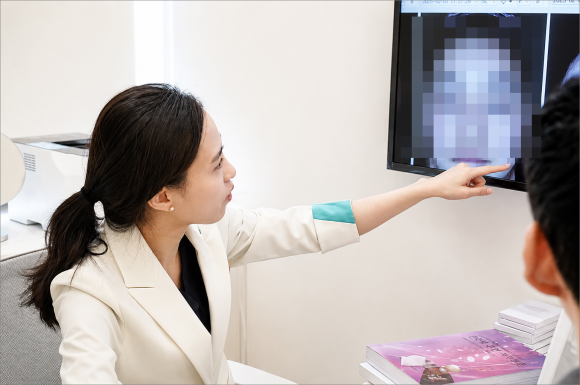
Although changes can be expected even from a single procedure, combining it with regular care tailored to your skin type may help maintain greater satisfaction.
One thing to be careful about during recovery is that the skin may become temporarily dry.
To support smooth regeneration, you should pay attention to moisturizing care and develop a habit of applying sunscreen carefully.
Because the speed of regeneration and the degree of response vary from person to person, it is important to closely monitor the subtle changes that appear after the procedure and continue appropriate aftercare.
Today, for those who searched for information on Mok-dong Oligio, I shared the key points you should know.

For Oligio, controlling the number of shots and energy intensity are key points, but individual differences can occur depending on the skin condition and tissue characteristics.
Therefore, I recommend approaching it with a customized plan based on sufficient diagnosis and tailored to each person’s skin condition.
This was Kim Jin-hyun, chief director of UNNI Clinic Mok-dong Branch.
Thank you.
< Related posts you may find helpful >
<UNNI Clinic Mok-dong Branch Hours>
Weekdays:
am 10:00 ~ pm 08:30 [Evening hours]
Weekends (Sat/Sun) · Public holidays:
am 10:00 ~ pm 04:00
*No lunch break
*Open on Saturdays, Sundays, and public holidays
< Directions >