Mokdong milia,
3 things to know before removal
Mokdong milia
Hello.
I am Jin-hyun Kim, the medical director of U&I Clinic Mokdong Branch.
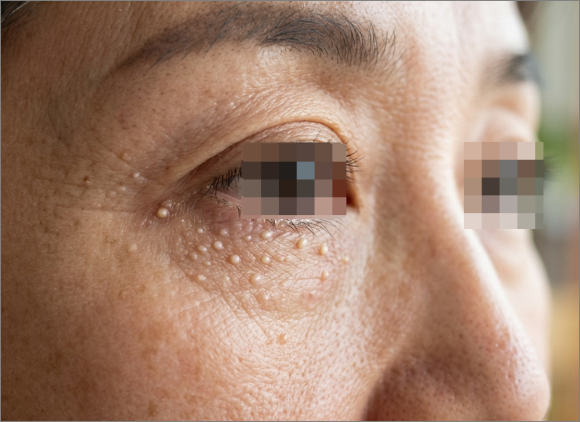
Milia
“I’m curious about what milia are.”
“What can I do to prevent them from coming back after removal?”
Many people feel stressed whenever they look in the mirror because of the small, white, bumpy grains that appear around the eyes, cheeks, or forehead.
They are difficult to cover with makeup, and even when people try to squeeze them with their fingers, the cysts are not easily removed. This often leaves the surrounding skin red and irritated, causing considerable frustration.
Although they may look similar to acne on the outside, their structural characteristic of having a hard mass of keratin trapped inside means that trying to deal with them on your own can easily leave scars instead.
Today, for those searching for information about Mokdong milia, I will explain in detail everything from the causes and treatment principles to the points requiring attention afterward.
Table of Contents
Mokdong
Why do milia develop?
Small white or yellowish sacs that develop close to the skin’s surface are called milia.
They are cysts formed when keratin or sebum cannot be discharged properly and becomes trapped beneath the skin.
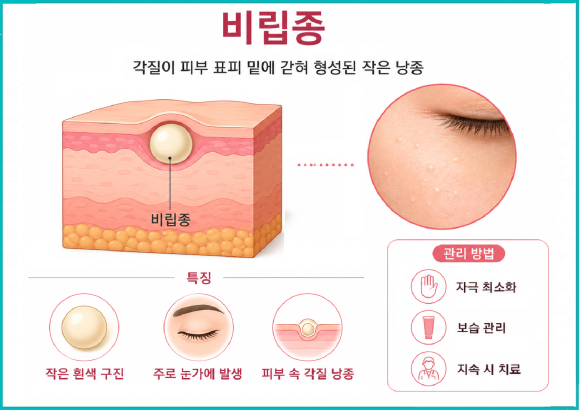
They commonly appear around the eyes or cheeks, where the skin is thin. Although they are benign lesions that do not harm health, they do not disappear easily, so many people seek improvement for cosmetic reasons.
They may also develop due to abnormal thickening of the stratum corneum or residual material left after minor skin damage.
They commonly originate from hair follicles or sebaceous glands. If left untreated, the lesions may persist or appear to spread to the surrounding area, so addressing them early can be more effective.
They can occur regardless of skin type. In addition to genetic factors, they may also develop when dead skin cells are not shed properly due to everyday skincare habits.
Mokdong milia
How are they removed?
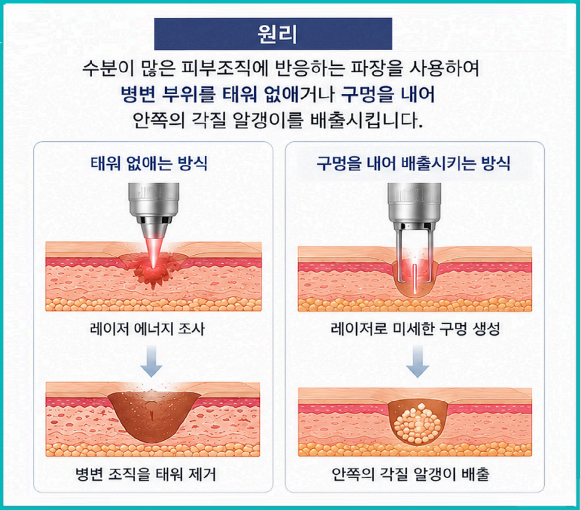
When treating these lesions, CO2 lasers using carbon dioxide and devices such as Clarity II are commonly used.
The principle involves using a wavelength that reacts to water-rich skin tissue to vaporize the lesion or create an opening through which the keratin grains inside can be expelled.
Milia removal
Precise adjustment makes it possible to treat the area while minimizing damage to the surrounding tissue.
However, the depth and thickness of the lesion vary from person to person, so applying the same intensity uniformly may increase concerns about marks or hyperpigmentation.
Therefore, it is necessary to first determine whether the lesion is positioned deeper than it appears and carefully adjust the energy accordingly.
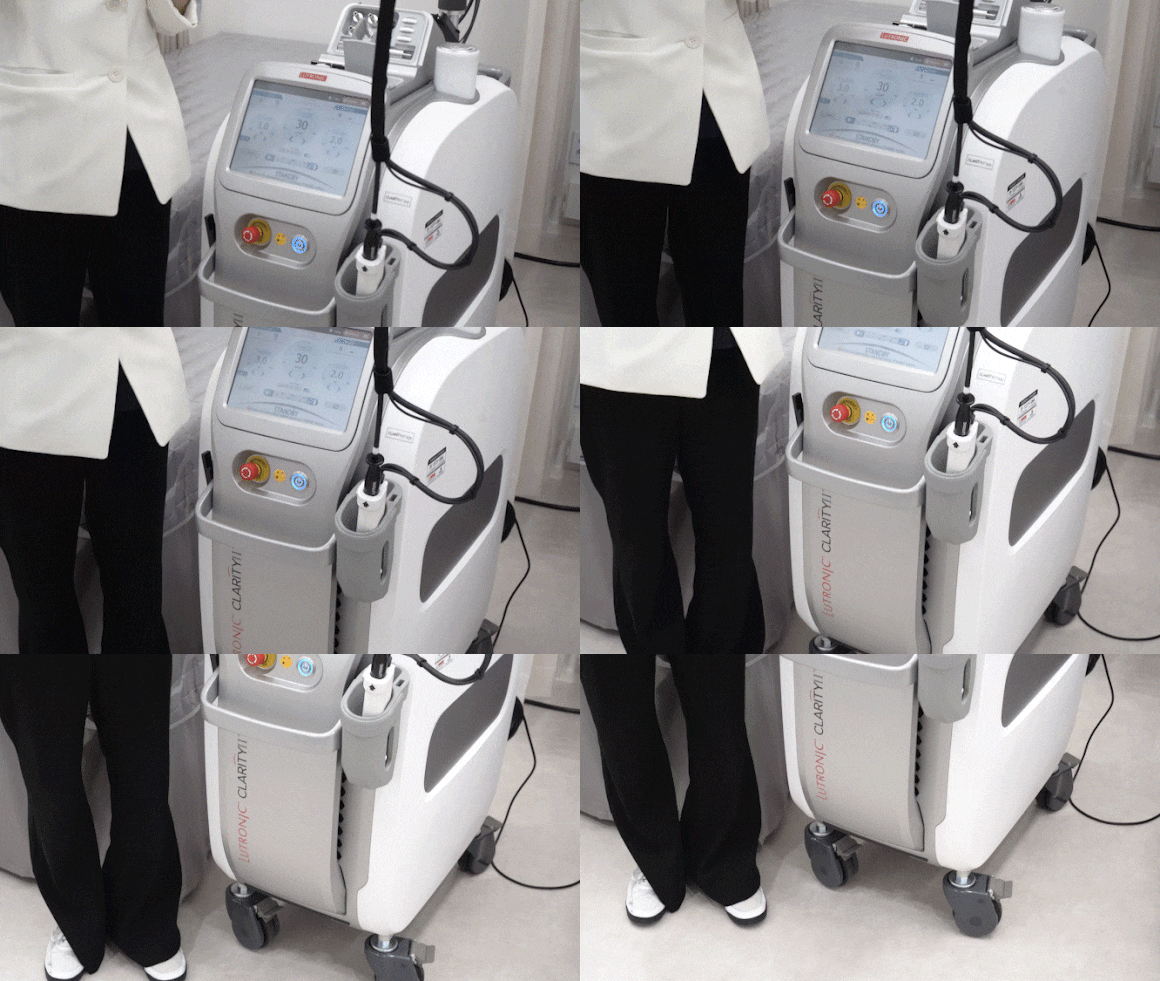
Clarity II
Although the lesion may appear to be a simple problem of the epidermal layer when viewed with the naked eye, in many cases its root extends into the upper dermis.
Rather than unnecessarily stimulating the deeper layers, the skill involved in precisely opening the lesion and removing the keratin inside plays a major role in the outcome.
Therefore, it is important to carefully assess the thickness and hydration of the surrounding skin using diagnostic equipment and establish customized parameters.
Mokdong milia
How should they be managed after removal?
After careful removal, a small scab may form over the area, and care during this period can have a significant effect on the subsequent course.
If irritated skin is exposed directly to ultraviolet rays, hyperpigmentation may occur, leaving a dark mark. For this reason, sunscreen should be used regularly.
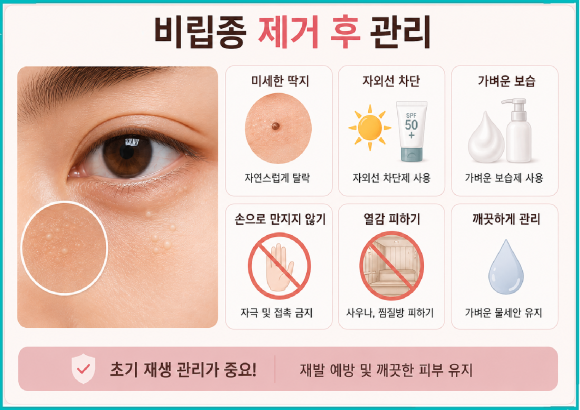
Some people apply a large amount of highly nourishing or oily cream because they want a quick recovery.
However, this may instead clog the pores again and lead to recurrence, so it is important to choose a lightweight moisturizer and avoid touching the area with your hands.
Immediately after the procedure, the skin barrier is temporarily weakened. Do not remove the scab artificially; protect it until it falls off naturally.
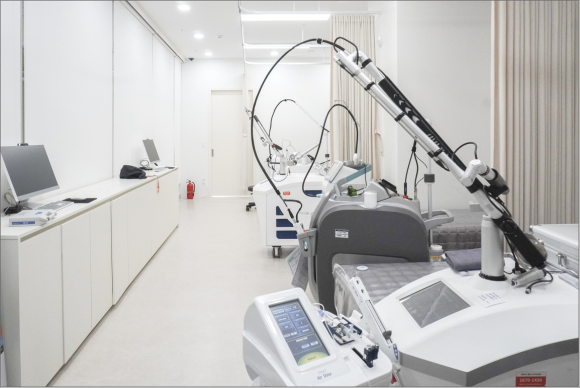
Laser room
Avoid environments where heat persists, such as saunas or heated spas, and maintain cleanliness mainly by gently washing your face with water. This can help support proper skin recovery.
Careful management during the initial recovery period can help reduce the long-term risk of keratin-filled sacs forming again in the same area.
Today, I have shared the essential information for those searching for information about Mokdong milia.

Waiting room
Milia can be removed with relatively little burden using devices such as CO2 lasers and Clarity II.
However, the outcome may vary depending on each person’s skin condition and the depth of the lesion.
Because the visible appearance may differ from the actual condition, I recommend choosing an approach based on a thorough diagnosis.
This was Jin-hyun Kim, medical director of U&I Clinic Mokdong Branch.
Thank you.
< Recommended Related Articles >
<U&I Clinic Mokdong Branch Hours>
Weekdays:
am 10:00 ~ pm 08:30 [Evening hours]
Weekends (Sat/Sun) · Public holidays:
am 10:00 ~ pm 04:00
*No lunch break
*Open on Saturdays, Sundays, and public holidays
<Directions>