Hello.
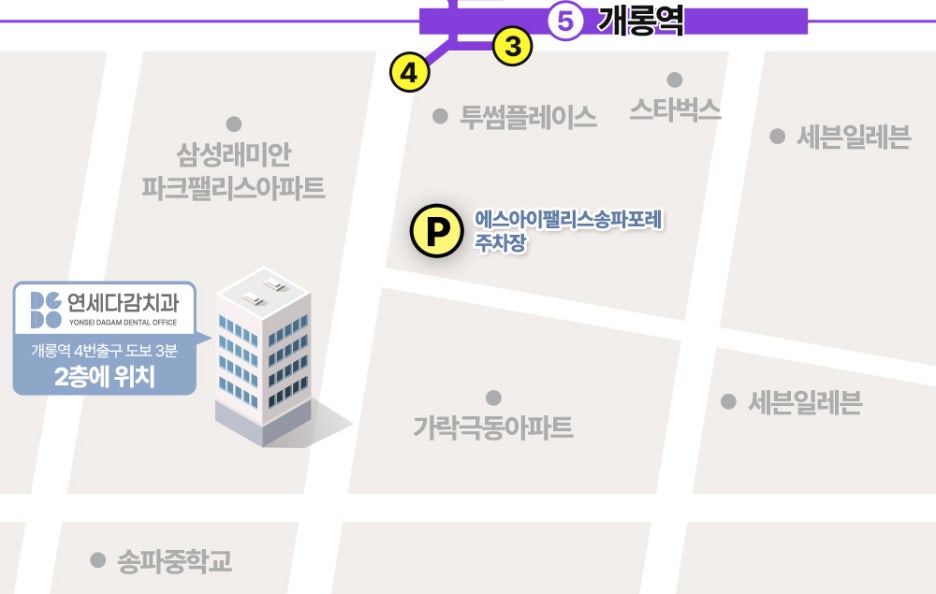
This is Yonsei Dagam Dental Clinic near Ogeum-dong.
Wisdom teeth, also called the third molars,
can be present from one to four,
and in some cases, there may be none at all.
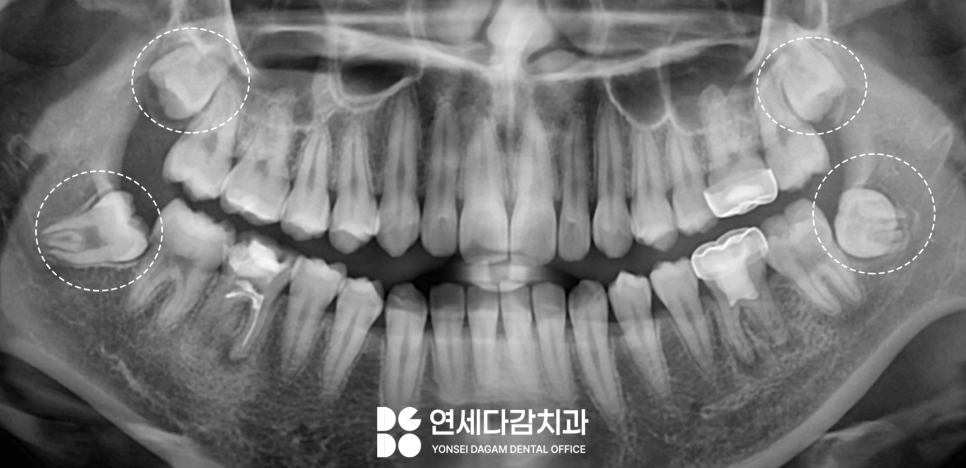
Even if all four are present,
it does not necessarily mean they all have to be removed.
However, when problems have already occurred
or there is concern that they may occur,
or before orthodontic treatment,
if examination results show that the wisdom tooth is an obstacle,
there are cases where extraction is diagnosed as necessary.
Most wisdom tooth extractions
are relatively simple procedures,
but sometimes, when the direction and position
are different from what is expected,
it is classified as a complex case.
In general, if an impacted wisdom tooth is present,
it is often in a horizontal,
sideways position.
At this time, it is often tilted toward
the adjacent tooth,
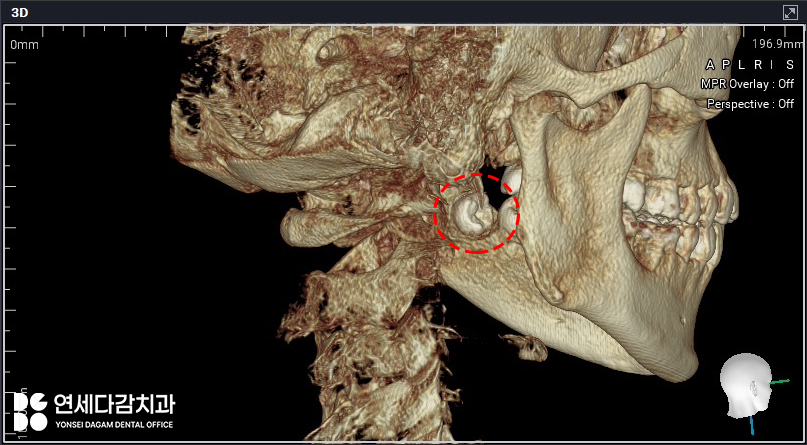
but in some cases, the crown,
which is the head part of the tooth,
is facing toward the lingual side (the tongue side).
In such situations, the extraction process
becomes much more difficult.
The reason I mentioned this at the Ogeum-dong dentist
is because of the anatomical structure.
On the lingual side, important anatomical structures
such as the lingual nerve
and major blood vessels are located,
so special care is required
during the extraction process.
Therefore, from the incision to the extraction,
all steps must be performed with greater delicacy.
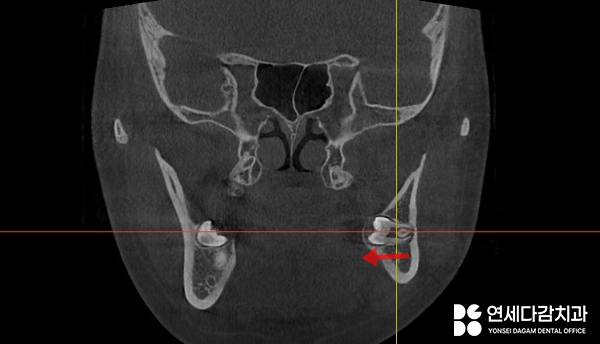
In such complex cases,
it is essential to use CT imaging
to analyze the three-dimensional structure
and establish a safe extraction strategy in advance.
During the actual treatment process,
a careful incision is made to prevent injury to the lingual nerve,
and the dissection process is also performed meticulously
to secure visibility.
After that, the crown and the middle part of the root
are separated,
to avoid damage to the surrounding area,
the fragmented tooth is carefully dislocated.
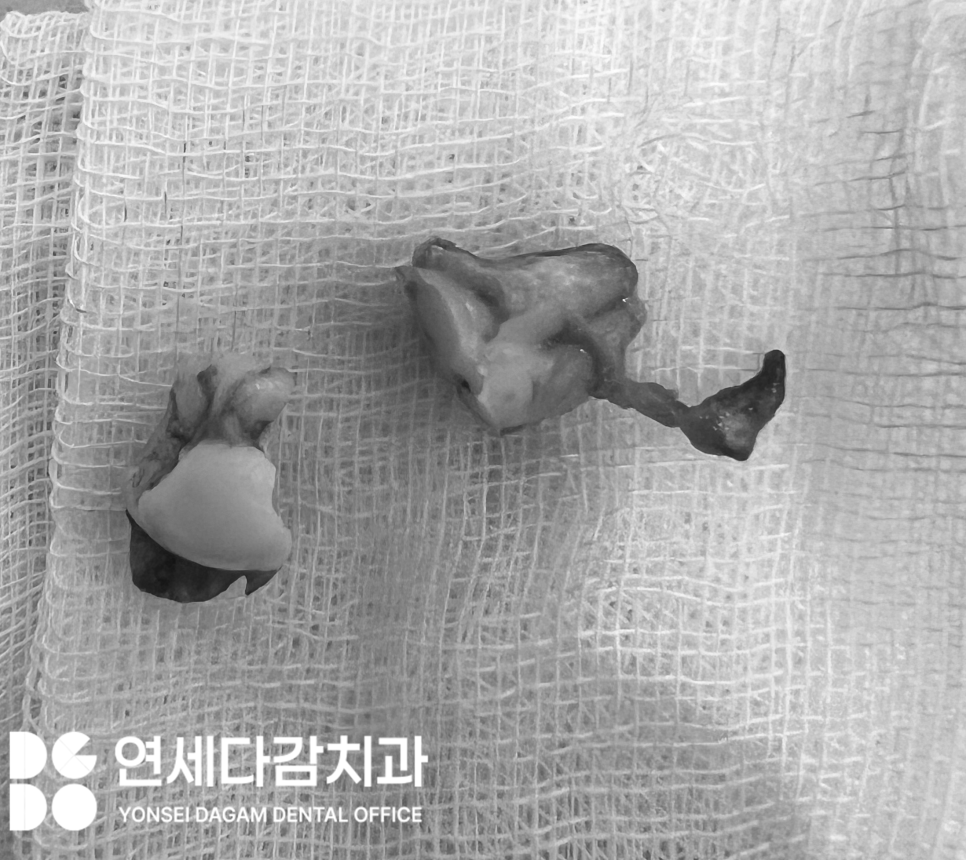
Because an adequate extraction strategy
was established in advance through CT,
we were able to complete the treatment safely.
After surgery, we also continuously monitored
for any symptoms of sensory disturbance,
and confirmed that there were no abnormalities before finishing.
Another important structure to be careful of
during lower wisdom tooth extraction
is not limited to this alone.
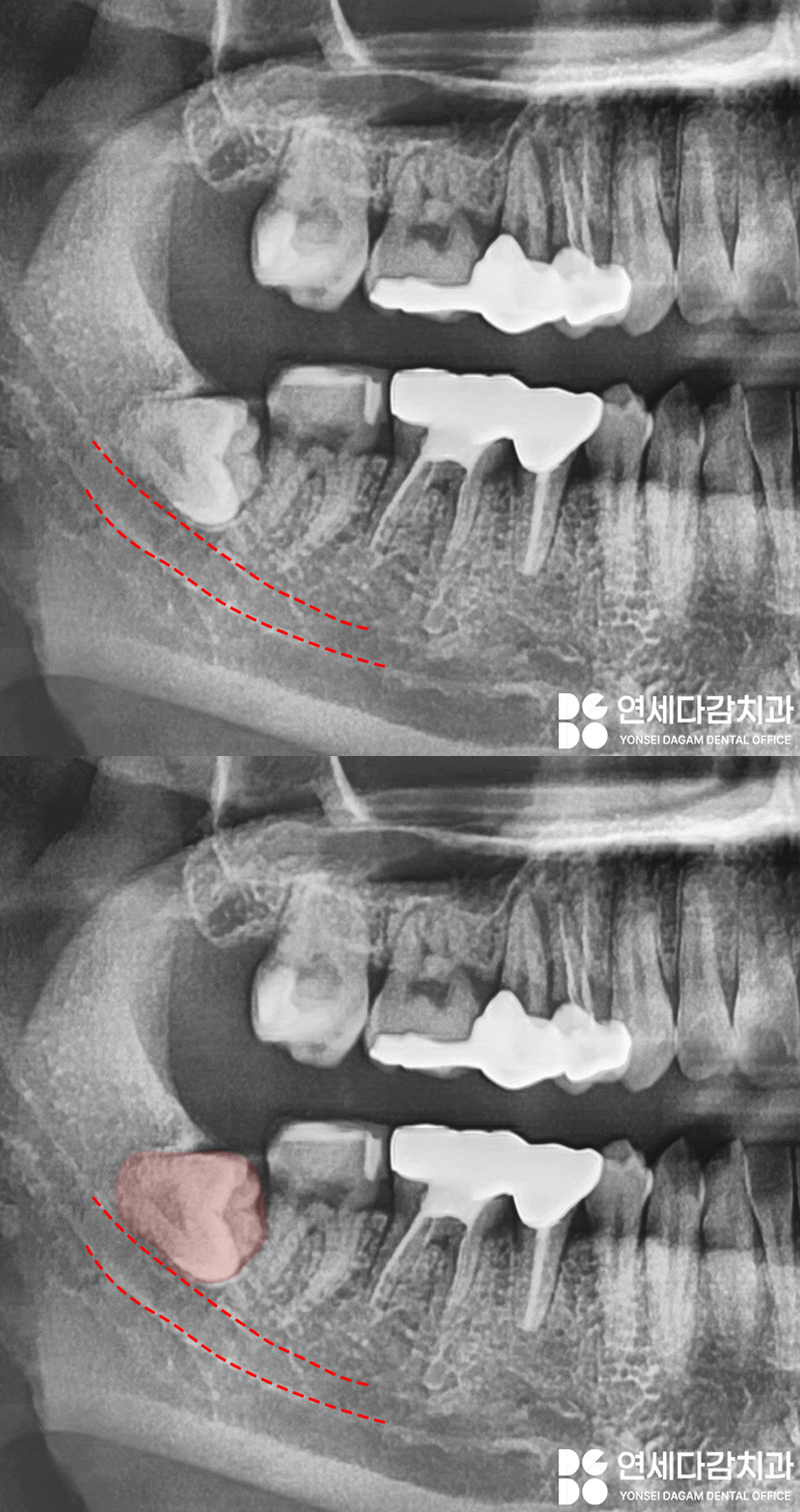
When impacted horizontally,
CT analysis often shows that it is close to the inferior alveolar nerve.
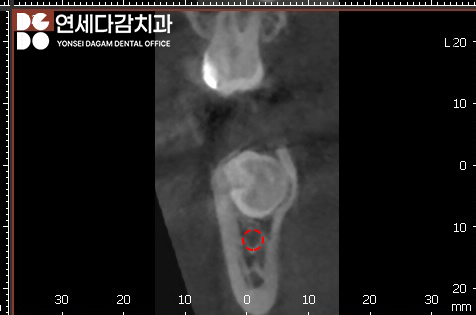
The inferior alveolar nerve is a major structure
responsible for sensation in the lower jaw,
so if it is damaged, sensory disturbances can occur.
Therefore, in the case shown at the Ogeum-dong dentist,
an extremely careful approach is necessary.
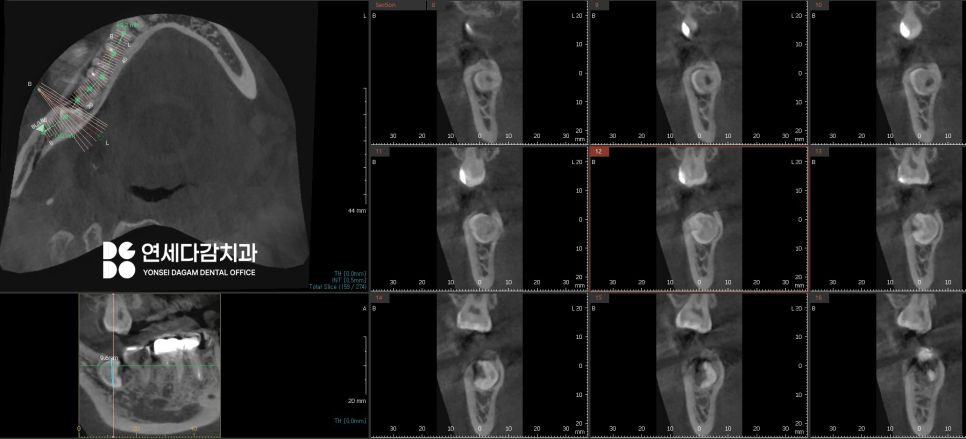
Likewise, through preoperative analysis,
a treatment strategy is established,
and according to the plan, sectioned extraction is performed
to complete the treatment neatly,
without leaving any tooth fragments behind.
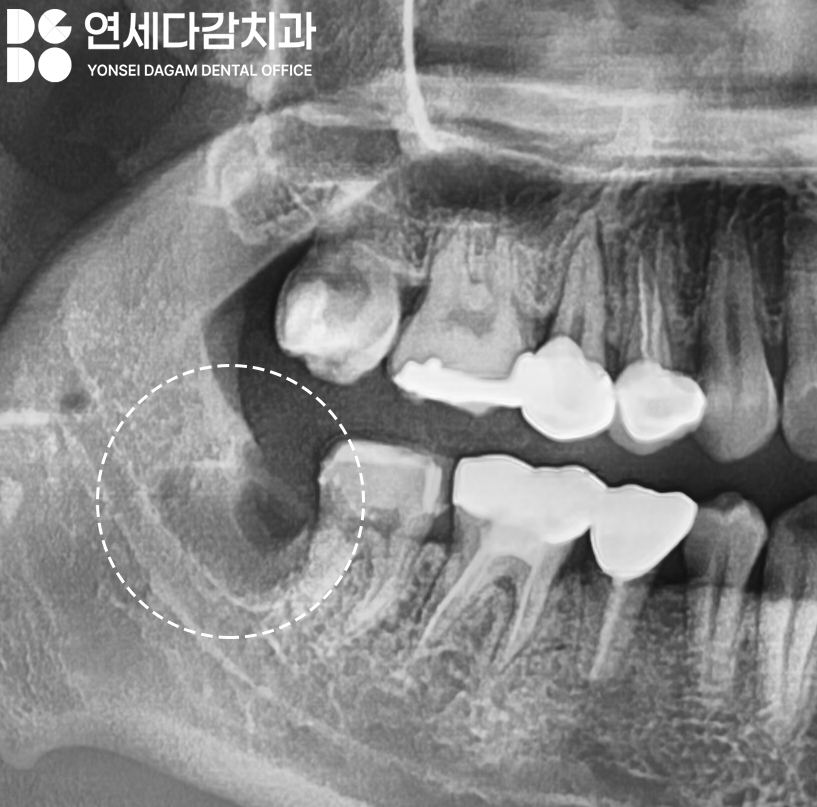
At Ogeum-dong dentist,
after treatment, we make it a point to check
whether there are any sensory disturbance symptoms,
and continue monitoring through regular checkups.
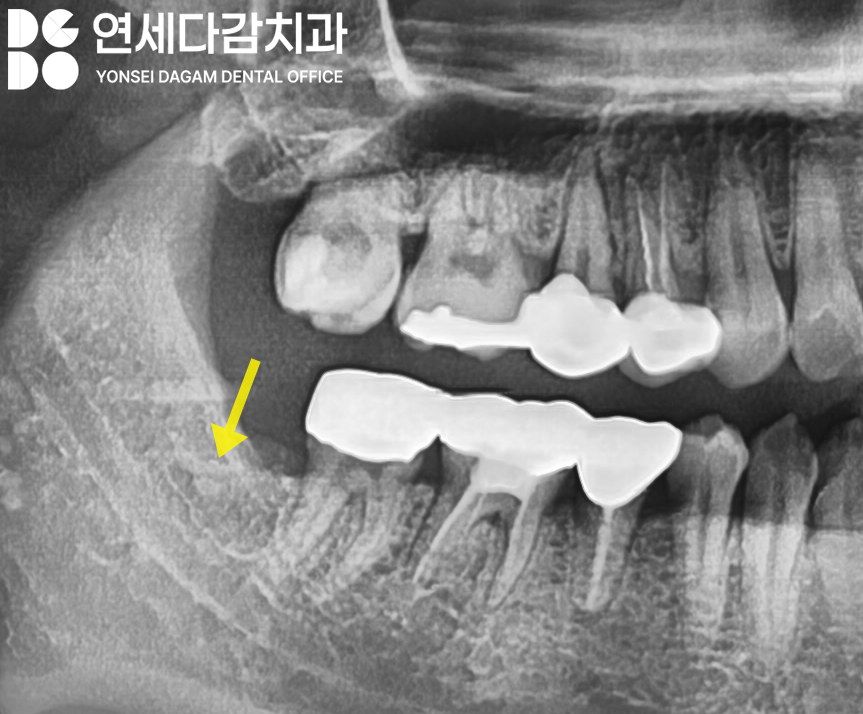
The area where the tooth was removed
gradually heals naturally,
and at the regular checkup after 12 months,
the bone has stabilized,
and on the X-ray shown at the Ogeum-dong dentist,
you can see that the density has increased.
As such, wisdom teeth are often located close to
major anatomical structures in the oral cavity,
so the key is to plan a safe extraction method in advance
based on three-dimensional analysis using CT.
So far, there have been no special complications,
and to ensure that there will be none in the future as well,
at the Ogeum-dong dentist,
we showed a treatment process that always takes a careful
and cautious approach.
These unusual and complex wisdom teeth cases
are always somewhat tense,
and it seems there are many especially interesting cases.
Going forward, through even more oral health knowledge,
we hope you will be able to receive safe treatment.
This has been Yonsei Dagam Dental Clinic in Ogeum-dong.
Thank you.
2024.05.11~2025.05.25