Hello.
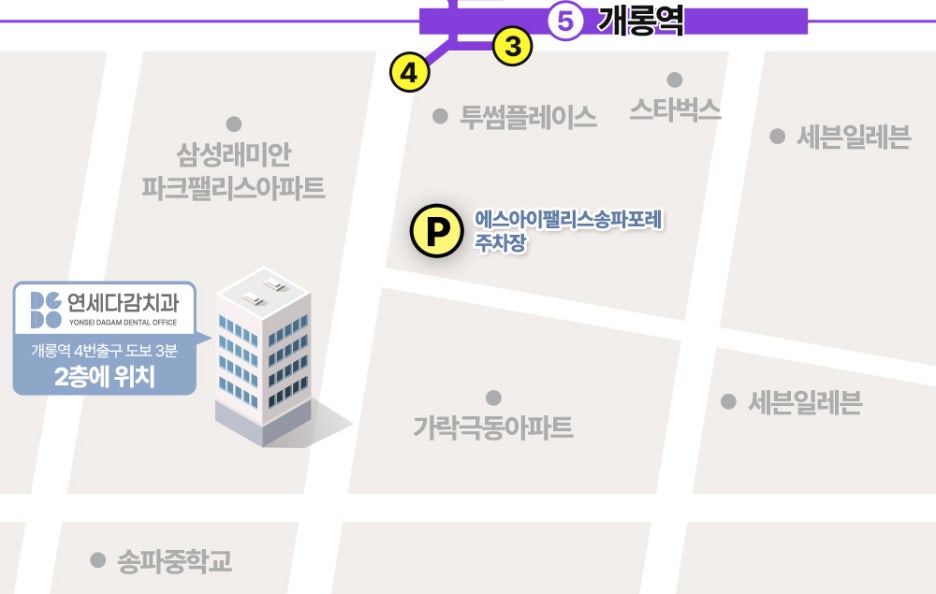
We are Yonsei Dagam Dental Clinic near Garak Market Station.
One of the things parents often wonder about during their child’s tooth development is
when baby teeth appear, when they fall out,
and when permanent teeth come in.
There is always more to learn about raising children..
Still, for a child to grow up healthy and for their teeth to develop properly,
it is important to understand the characteristics of each stage
and provide appropriate care,
so it is good to know.
Baby tooth eruption timing and order
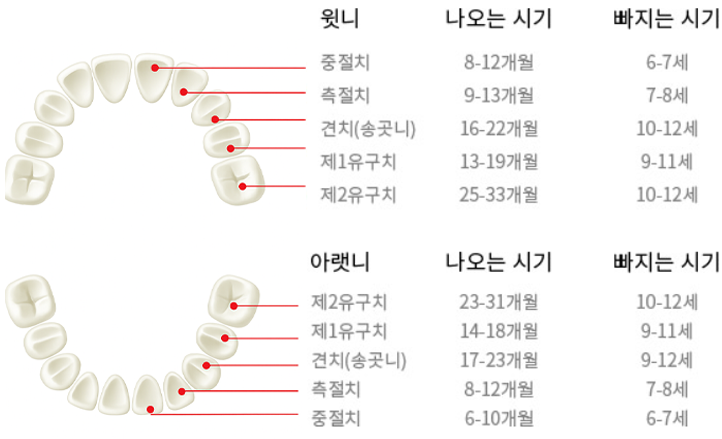
Baby teeth begin to erupt around 6 months after birth
and are complete by around 2 to 3 years of age.
At 6–7 months
they start with the lower front teeth,
followed by the upper central incisors at 8–12 months,
and between 9–12 months, the lateral incisors erupt one by one
starting from the upper jaw and then the lower jaw.
Between 13–19 months,
the first primary molars, called the first baby molars,
grow from the upper jaw down to the lower jaw.
Between 16–23 months,
likewise, the canine teeth, called the baby canines,
grow from the upper jaw.
Finally, between 23–33 months,
this time starting again from the lower jaw,
the second primary molars of the lower jaw,
the second primary molars of the upper jaw erupt,
completing a total of 20 baby teeth.
Because there are individual differences,
a variation of about 6 months before or after
is considered within the normal range.
However, if the first baby tooth does not appear even after 12 months,
or if the baby teeth are not complete
after age 3,
a dental clinic near Garak Market Station recommends
receiving a professional examination.
It is ideal for baby teeth to fall out naturally
Usually, they begin to fall out around age 6
and are lost sequentially until around age 12,
following a pattern similar to the eruption order.
The mandibular central incisors begin to fall out first
at ages 6–7,
and after age 7, the upper front teeth and lateral incisors
fall out at 7–8 years of age.
Both the baby canines and primary molars
fall out between ages 9 and 12.
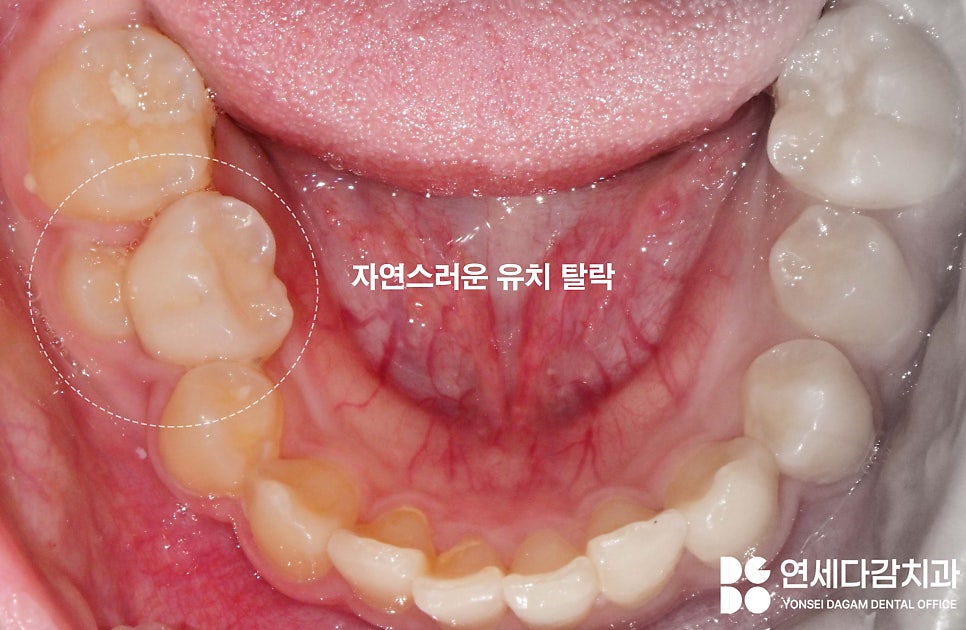
When a baby tooth starts to shake,
it is best to wait until it falls out naturally.
Do not try to pull it out artificially,
and it is better to keep the area around the loose baby tooth clean.
However, if the baby tooth is very loose and the child
has difficulty eating,
or complains of pain,
they can be examined and have the tooth extracted.
Why it is important to carefully monitor the eruption process of permanent teeth
There are quite a few cases where problems occur
in the process of being replaced by permanent teeth.
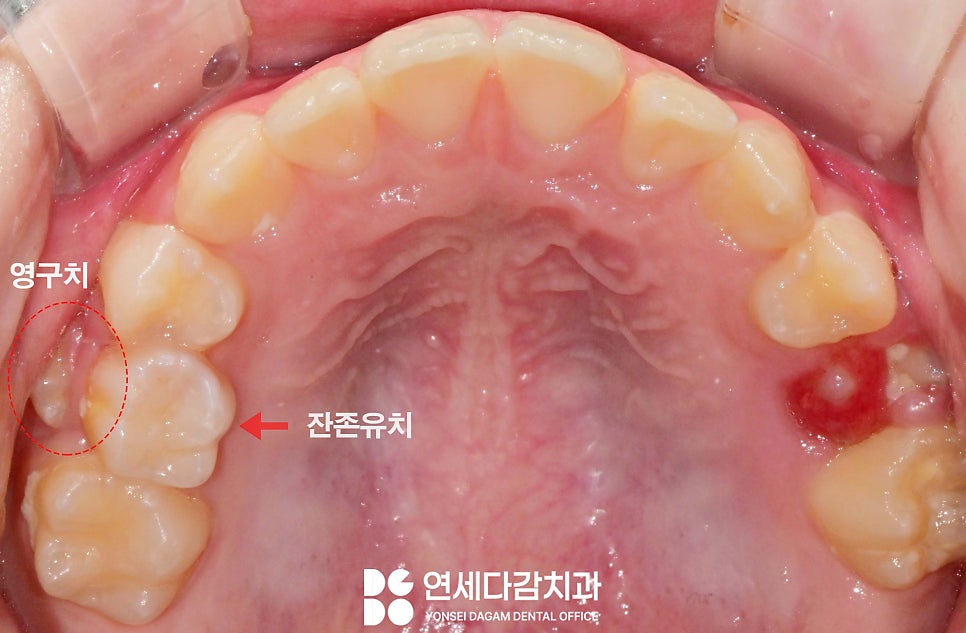
A common problem is when a baby tooth does not fall out naturally
and the permanent tooth erupts in an abnormal position.
If a baby tooth does not fall out on time,
the permanent tooth may come in crooked to the side,
which can make the alignment of the teeth irregular.
Also, if there is not enough space for the permanent tooth to erupt,
it may come in overlapping
or may not erupt at all.
During the time of replacement by permanent teeth,
there are also cases where a baby tooth falls out naturally
while eating,
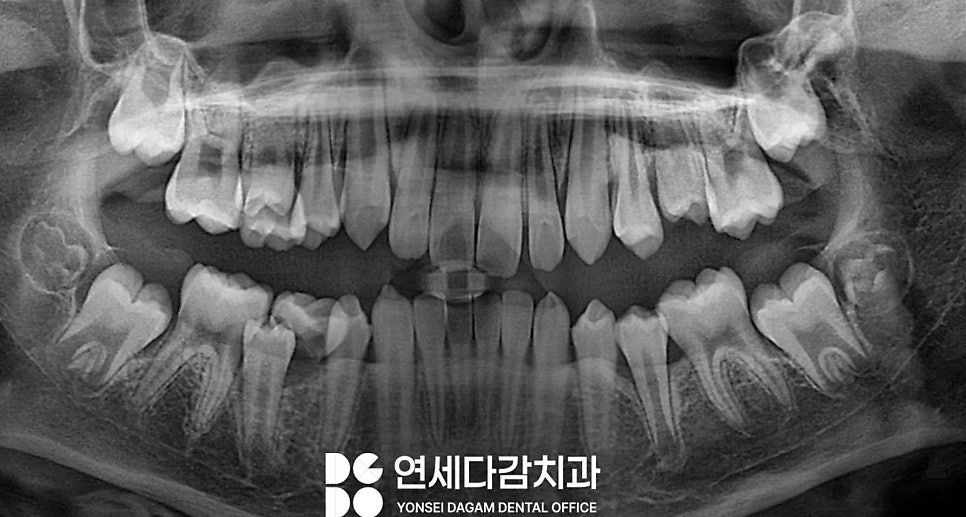
and it is safest to check through an X-ray examination
whether the permanent teeth are showing a normal eruption pattern.
However, if, after the period explained above,
a baby tooth still does not fall out at a dental clinic near Garak Market Station,
it may interfere with the normal eruption of the permanent tooth
and remain in place.
This condition is called retained primary teeth.
To prevent this situation,
regular checkups are essential.
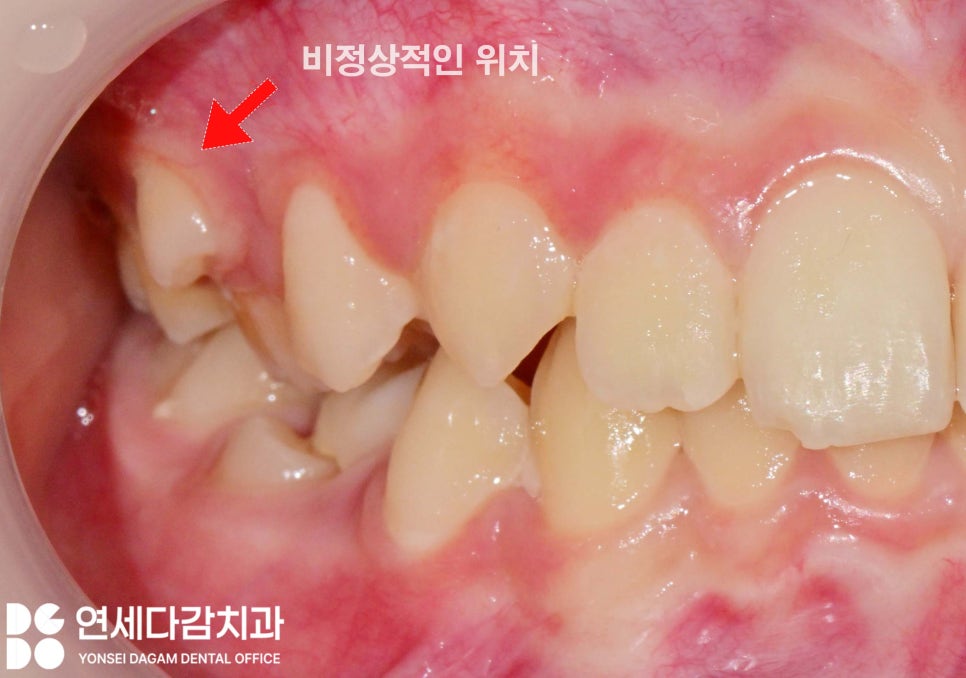
As shown by a dental clinic near Garak Market Station,
it may seem to be coming in in the wrong direction,
like a crooked tooth,
but in some cases it may move into the correct position during eruption,
so it should be observed a little longer,
and if it still is not in a normal direction after the appropriate time has passed,
a measure is needed.
Because a child’s tooth growth process varies greatly from child to child,
regular professional checkups are absolutely necessary.
At Yonsei Dagam Dental Clinic near Garak Market Station,
at each regular checkup,
we analyze panoramic X-ray images
to examine development status and eruption direction.
If a problem arises, we may extract a baby tooth
at the proper time so that the permanent tooth can erupt in the correct position,
or we may provide treatment to secure space.
Permanent teeth are precious teeth that must be used for a lifetime.
Therefore, it is necessary to know the timing of permanent tooth eruption
and manage them carefully.
The first permanent tooth to appear is the first molar,
which begins to grow around age 6.
Because this tooth comes in behind the primary molars,
it is also called the “6-year molar.”
Parents often mistake it for a tooth that appears as baby teeth fall out,
but the first molar is a newly erupting permanent tooth
that is unrelated to baby tooth replacement.
The rest of the permanent teeth erupt naturally
as the roots of the baby teeth are resorbed.
Finally, at ages 11–13,
the second molars erupt starting from the lower jaw,
completing the permanent dentition.
The chewing surfaces of the large molar area
have a bumpy shape,
which makes them a place where food debris can easily remain.
Therefore, it is good to receive preventive treatment such as pit and fissure sealants,
and it is also good to prevent cavities through treatments such as fluoride application.
Above all, the most important thing
is education to help your child develop proper brushing habits.
If brushing education is not going well,
a dental clinic near Garak Market Station may also explain how to teach it.
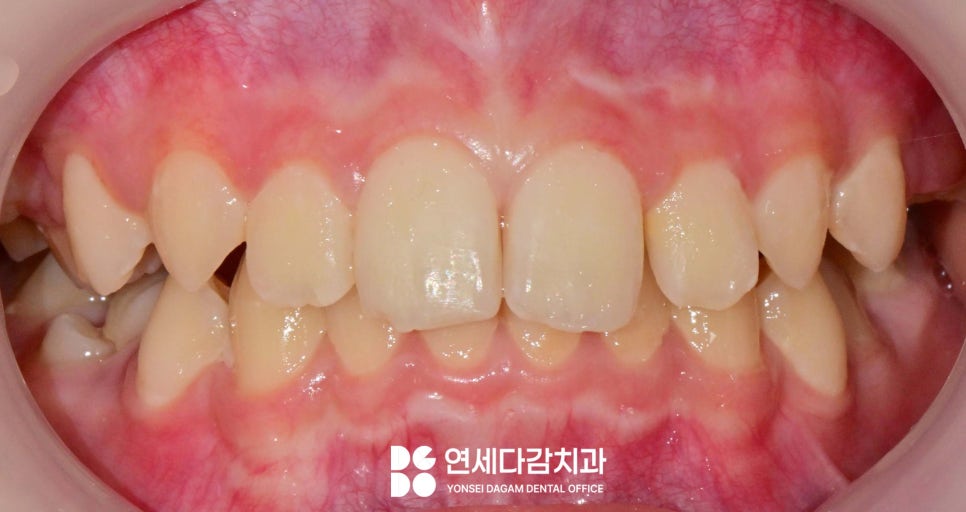
In this way, protecting a child’s dental health from an early age
requires a parent’s attention.
If prevention and treatment are done early,
it can prevent bigger problems later,
and it can also become one of the processes
that affects lifelong oral health.
Therefore, for your child’s sake,
please continue to take an interest in regular checkups and care.
This has been Yonsei Dagam Dental Clinic near Garak Market Station.
Thank you~
25.07.10