Hello.
This is Yonsei Dagam Dental Clinic at Munjeong Station.
These days, like the brightened sunlight,
many people look for teeth whitening
for a bright and radiant smile.
However, whitening cannot be
applied in every situation,
and you need to first undergo
a general oral examination to check
whether your oral condition is suitable.
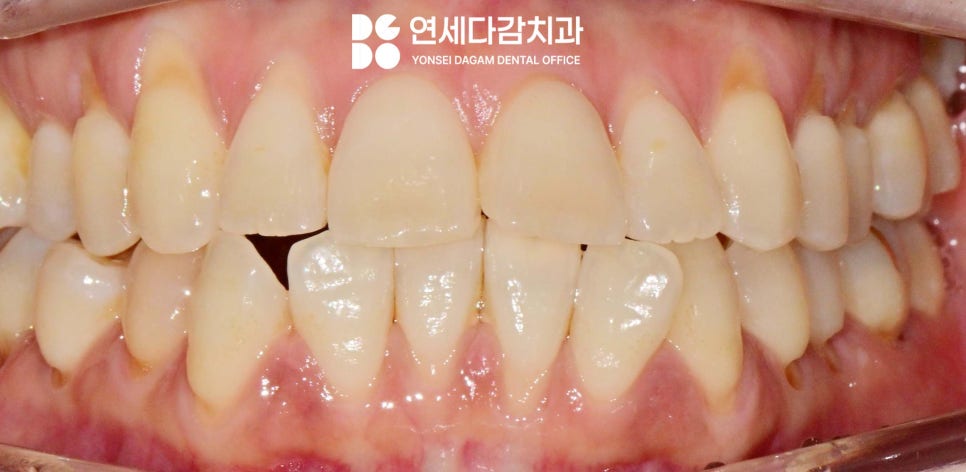
However, if cervical abrasion
and tartar are present,
there are additional considerations.
As for teeth whitening,
there is a post we covered in detail
at Munjeong Station Dental Clinic, so those who have read it will know,
that a clean oral environment must be prepared first.
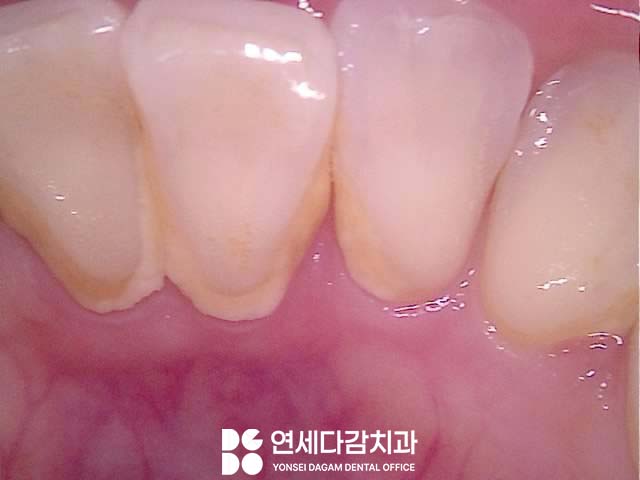
Tartar and plaque can interfere with
whitening agents penetrating properly.
Also, if it is performed
while periodontal disease is present,
it can irritate the gums,
increase sensitivity,
or even worsen periodontal disease.
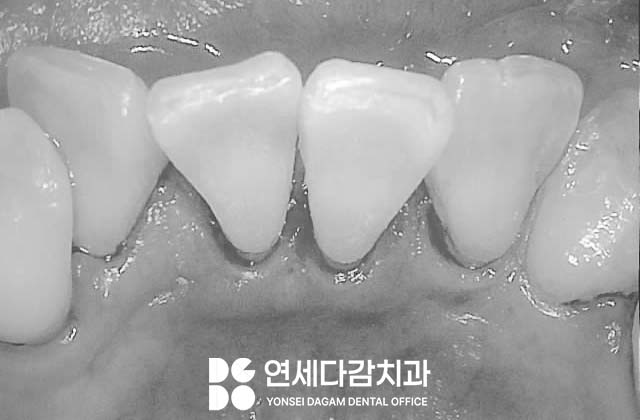
Therefore, it is ideal to clean plaque
and tartar thoroughly through scaling
before proceeding.
To create healthy teeth,
the gums must also be healthy,
so it is recommended to receive scaling
every 6 or 12 months
for periodontal care.
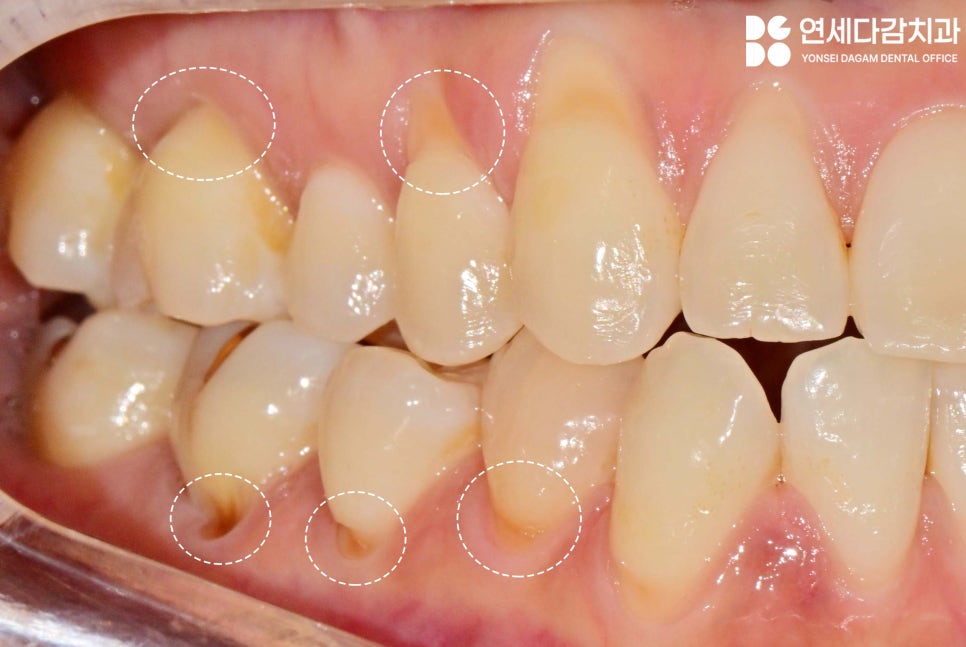
After teeth whitening, the area of
cervical abrasion that shows when smiling
can become noticeable.
Looking at the marked area shown by
Munjeong Station Dental Clinic, you can see that the tooth is worn down in a
concave shape,
and compared with the whitened teeth,
it often stands out even more.
It is like a small stain on a pure white wall
that looks more conspicuous.
💡
What is cervical abrasion?
It refers to a condition in which
the boundary where the tooth and gum meet
is worn down and appears indented.
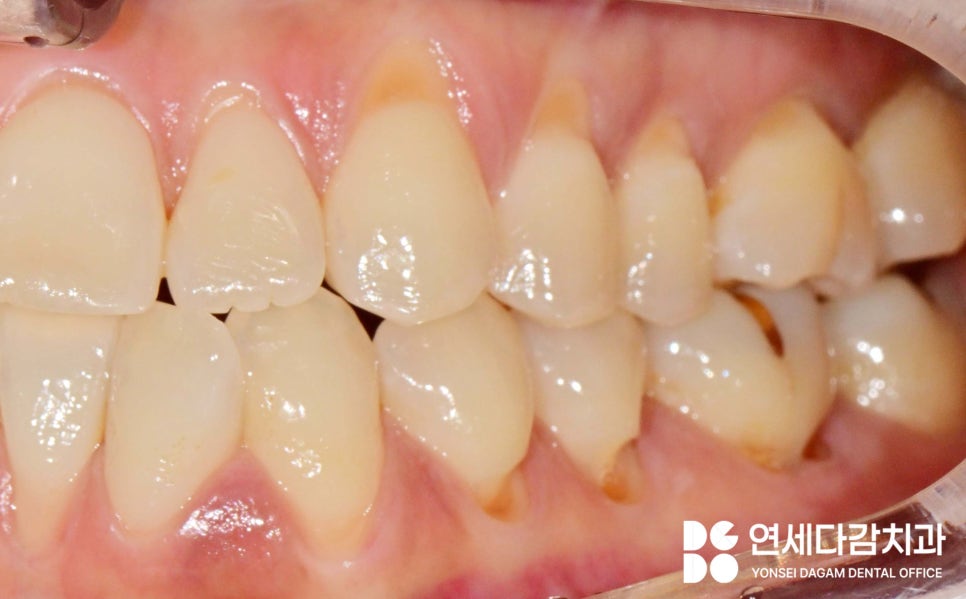
Because the outer layer called enamel is
thin in the cervical area due to tooth structure,
wear occurs relatively easily.
If this is left untreated,
the area will keep chipping away little by little,
and the condition may worsen, leading to a
wedge-shaped bent fracture.
This can happen for various reasons,
and Munjeong Station Dental Clinic
will explain the main causes.
The first is incorrect brushing.
When the bristles are too hard
or you brush with excessive force,
the teeth become worn.
The second is when the force from
teeth grinding or clenching is concentrated.
When force continues to be applied,
the teeth cannot withstand it and gradually
chip away.
Because this happens unconsciously,
a device such as a splint is sometimes worn
to protect the teeth.
Resin vs G.I
The treatment method involves
restoring the area with restorative material
and then shaping it,
and it is mainly divided into Resin and
glass ionomer (G.I).
These two materials each have different characteristics,
so they are often applied differently
depending on the area and situation.
Munjeong Station Dental Clinic
will explain the features of each material.
Resin can achieve a natural color similar
to natural teeth,
so it has excellent aesthetics.
By combining various shades,
a natural result that is almost indistinguishable
from natural teeth can be achieved.
However, the margins of the area filled
with resin may discolor,
so careful management is needed.
Also, because it is a non-covered material,
if it occurs in multiple teeth,
applying it to all areas can be somewhat
burdensome economically.
G.I has excellent adhesion because it has
the characteristic of chemically bonding
to the tooth.
It also slowly releases fluoride,
which helps prevent cavities in nearby teeth.
However, its color is not similar to
natural teeth and it cannot reproduce translucency,
so in terms of aesthetics, it is inferior
to resin.
Unlike resin, G.I is a covered material,
so it is more economical.
Considering these characteristics,
Munjeong Station Dental Clinic
uses them appropriately in combination
depending on the area.
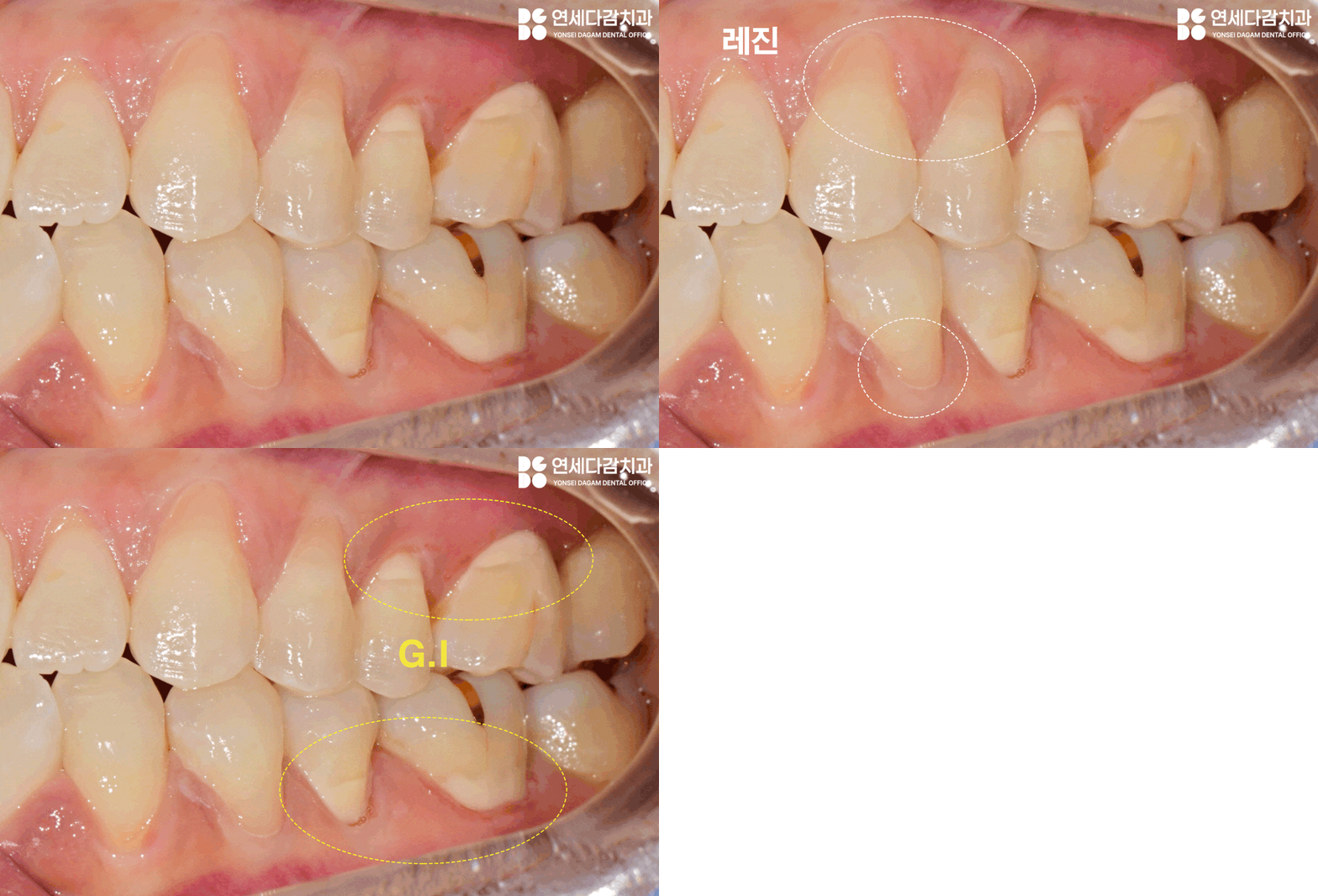
Resin is applied to areas that are clearly
visible when smiling,
while G.I, a covered material,
is applied to molar areas.
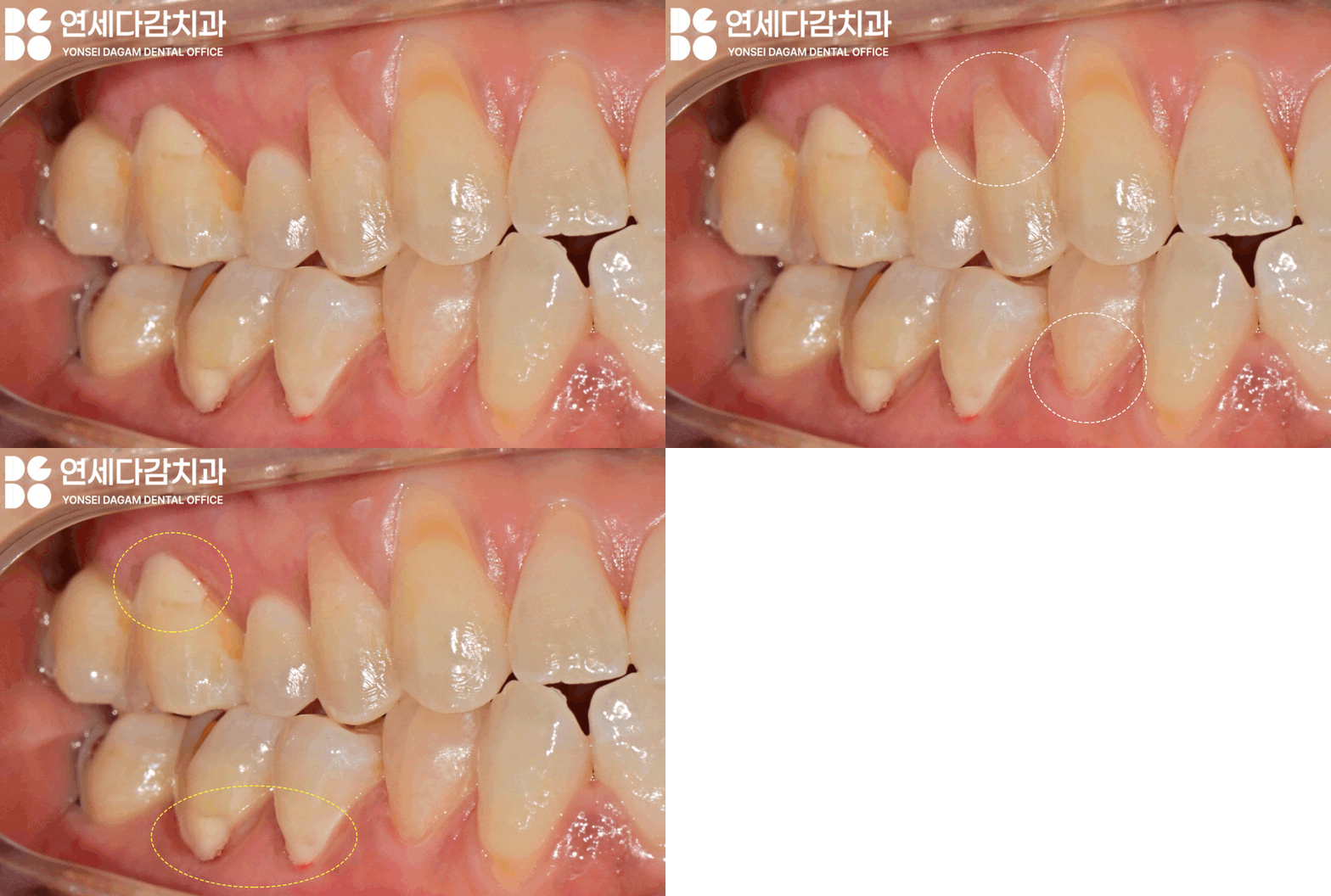
The areas restored with resin can be seen
to reproduce a color very similar to
natural teeth, making them aesthetically stable.
The front teeth are highly visible
when smiling,
so aesthetics were prioritized.
The molar area was treated with G.I,
taking function and cost-effectiveness into account.
In fact, if daily care does not improve,
these materials can come off again at any time.
Therefore, when brushing,
use a soft-bristled toothbrush and a
rotational sweeping method from top to bottom,
and if you have habits such as clenching
or grinding your teeth,
we recommend using a device that can protect the teeth.
This has been Yonsei Dagam Dental Clinic
at Munjeong Station.
Thank you!
25.07.08~25.07.15