Hello.
This is Yonsei Dagam Dental Clinic at Ogeum Station.
Sometimes a child grinds their teeth so severely
that the teeth become worn down and shorter.
Seeing how much shorter they look than expected can be startling,
and many parents worry,
"Could this be a serious problem?"
In most cases, the child does not feel much pain,
and special treatment is often not needed.
At the dental clinic near Ogeum Station, we also explain that
teeth grinding in children is not actually a major problem.
That is because it is one of the natural things
that commonly appears during a child’s growth.
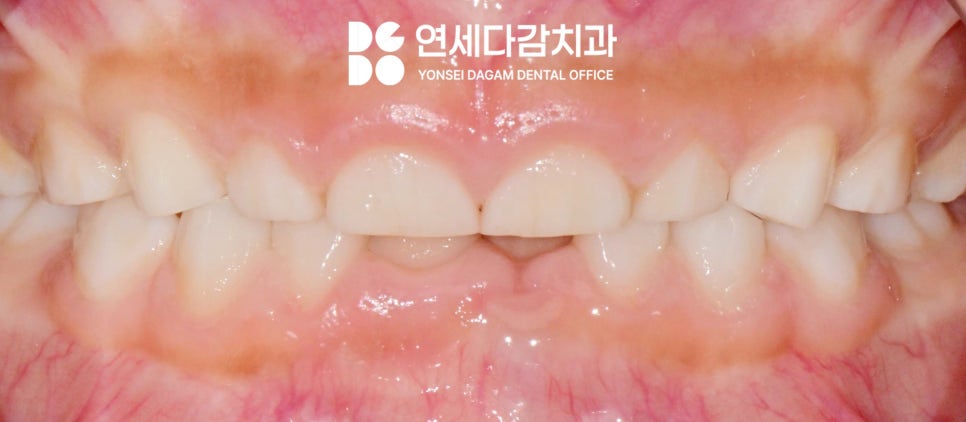
About 70% of children and teenagers
temporarily experience teeth grinding,
and it is a normal reaction that appears during the period when the teeth are being formed.
Why does teeth grinding happen in the first place?
According to research reviewed at the dental clinic near Ogeum Station,
the main onset period is between ages 4 and 5,
and it is frequently observed clinically between ages 7 and 10.
However,
it tends to gradually decrease after ages 9 to 12.
There are several causes
that act in combination.
✔️ During tooth development,
itchiness and discomfort in the gums
can be a cause.
During the period when baby teeth are replaced by permanent teeth,
children may unconsciously grind their teeth
due to the unfamiliar sensation caused by new teeth growing in the gums.
✔️ Emotional factors and
stress relief purposes
can also lead to teeth grinding.
Children, like adults, can experience stress,
and one way to release it may be teeth grinding.
✔️ It can also happen when a child goes to sleep
while in an aroused state
(excited state).
If they fall asleep after intense physical activity,
the brain may not fully transition into a resting state,
which can lead to this behavior.
✔️ Other medical factors include
mouth breathing due to nasal congestion or allergies,
and immaturity of the temporomandibular joint
can also be a cause.
So, does it need treatment?
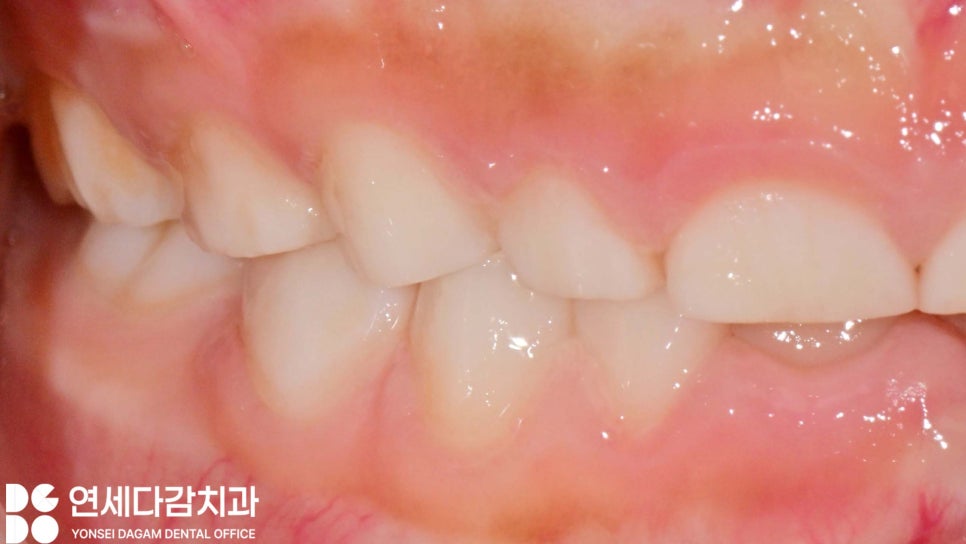
As shown by the dental clinic near Ogeum Station,
even if a child grinds their teeth down to half the size of the tooth,
it is often not considered a problem when the cause is one of those mentioned above.
That is because most pediatric teeth grinding
disappears naturally during growth,
so special treatment is often unnecessary.
Unlike a child whose jaw muscles are weak, an adult’s strong jaw muscles can damage the teeth and temporomandibular joint,
but
children have only about half that level of force,
so the effect on the temporomandibular joint is limited.
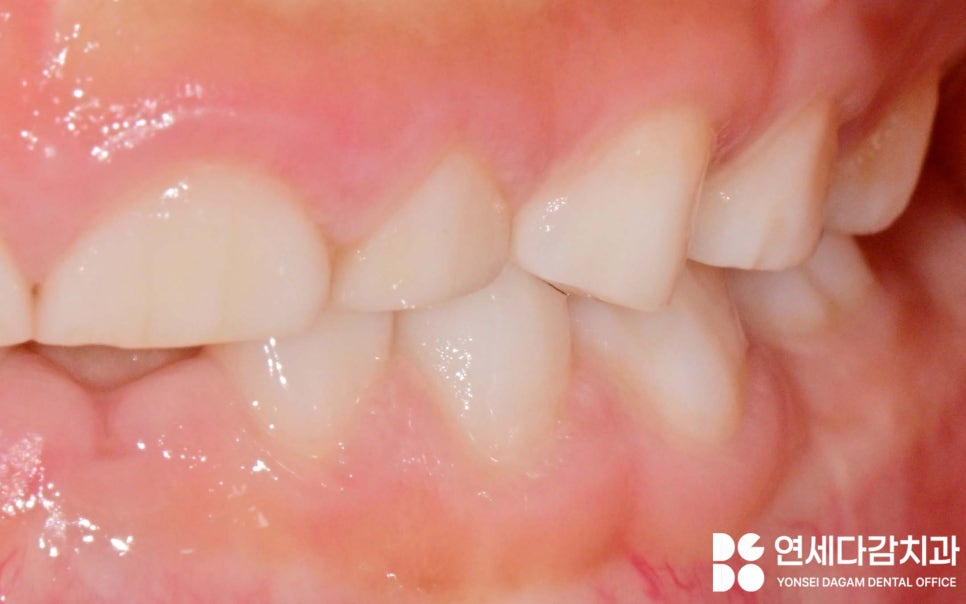
If the child does not complain of any particular pain
and it is judged to be part of the growth process,
special treatment is not necessary,
and because worn baby teeth will eventually fall out,
you do not need to worry about damage to the permanent teeth.
As the child grows,
the development of the jawbone and teeth is completed,
and as stress management improves,
teeth grinding will gradually decrease as well.
When is treatment needed, then?
At the dental clinic near Ogeum Station,
we say special management is needed when:
the child complains of persistent pain in the jaw or teeth.
If bite or occlusion problems are suspected,
or sleep disorders are suspected,
or if there is a pattern that appears to interfere with the normal eruption of permanent teeth,
professional treatment is necessary.
Signs caregivers should observe
If the child complains of jaw pain when waking up in the morning,
or feels discomfort while eating,
please have a proper examination.
An asymmetrical change in facial shape
or noise from the temporomandibular joint also needs to be checked.
At the dental clinic near Ogeum Station, these symptoms are
diagnosed accurately and the appropriate treatment direction is suggested.
The conclusion is that because teeth grinding mostly appears as part of the growth process,
you do not need to worry too much.
Since there are many changes during a child’s growth,
it is important to observe calmly.
If teeth grinding is accompanied by other behavioral changes or signs of stress,
please observe closely as well.
To improve sleep quality,
avoid active behavior before bedtime,
and help manage stress.
Above all, through regular checkups,
please monitor your child’s oral development,
and remember that early detection of problems that arise during that process
and appropriate response
are ways to protect your child’s oral health.
We hope your child can grow healthily with plenty of attention and love.
This was Yonsei Dagam Dental Clinic at Ogeum Station.

25.08.19