At Yonsei Dagam Dental Clinic in Mungjeong-dong
When providing treatment,
one of the common misunderstandings many people have is
that once they receive crown treatment,
no problems will ever arise.
Prosthetics such as crowns
are not actually permanent.
Problems can occur for various reasons,
and after long use, deformation or wear
may develop, making replacement necessary.
In other words, prosthetics also go through
a natural aging process.
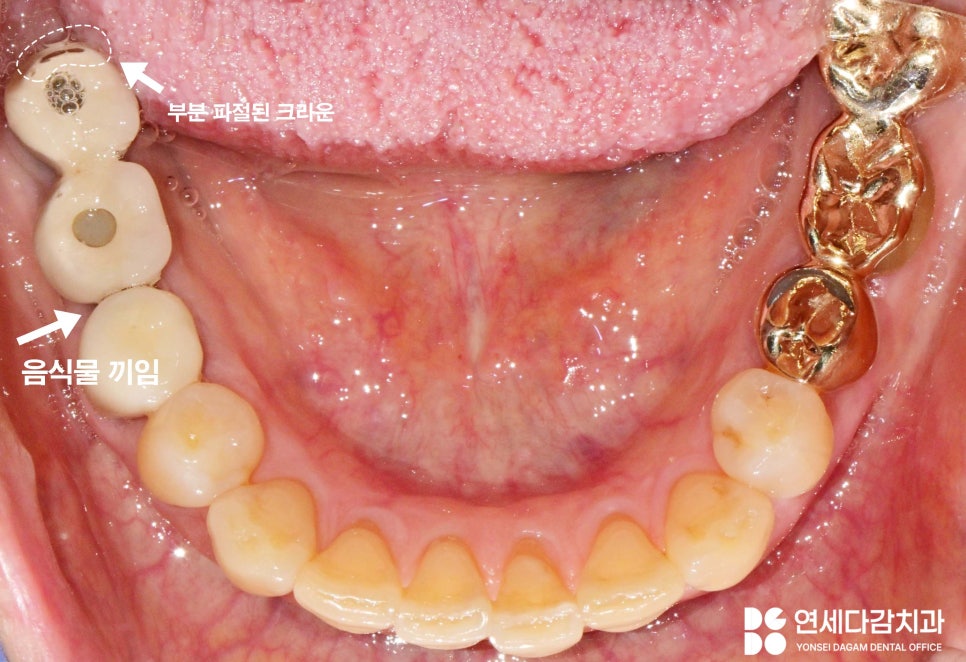
A major feature of old prosthetics is that
the tight contact between teeth decreases,
so food often gets stuck between them,
and chewing function declines.
At a Mungjeong-dong dental clinic,
when looking at prosthetics that are over 15 years old,
you can see that they are badly worn
and chipped.
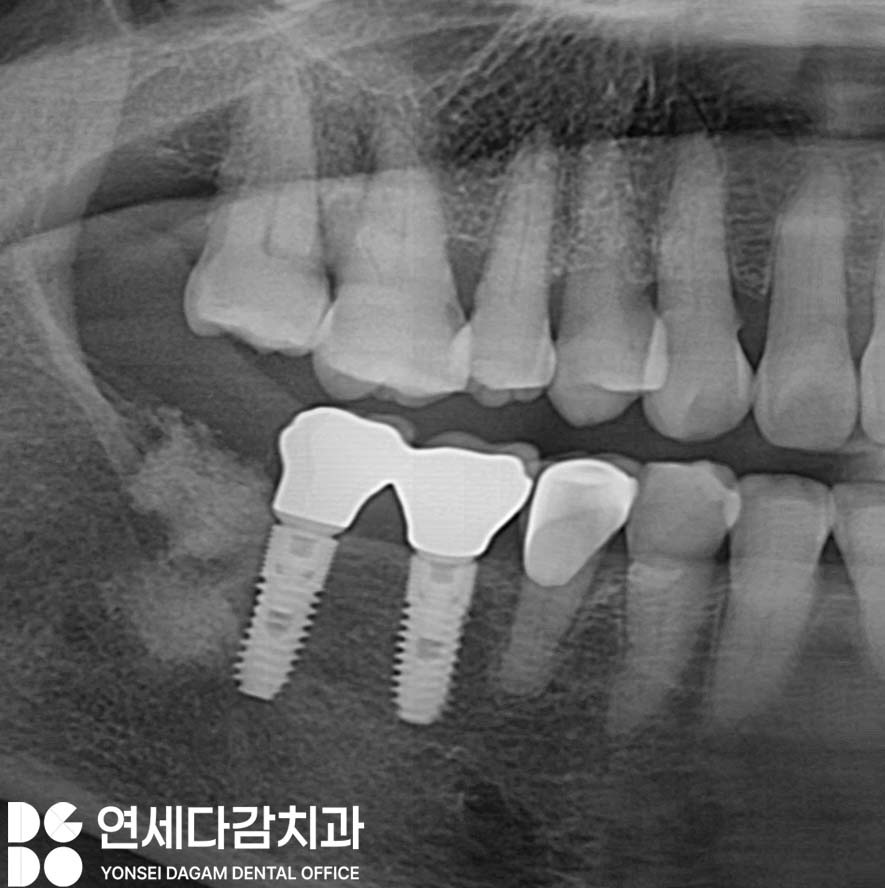
In particular,
if a problem occurs in an implant
that was treated a long time ago,
many people wonder whether it must be removed
and the entire surgical process started again.
Unless the implant placed in the bone
is loose or has an inflammatory issue,
only the crown can be replaced.
To use an analogy from a Mungjeong-dong dental clinic,
it is like replacing only the interior and roof
of a building constructed on a solid foundation
so that it can feel like new.
However, it is necessary to identify the specific structure.
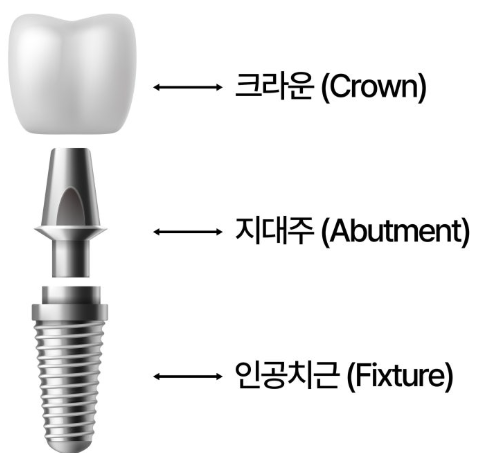
The structure of a general modern implant is
fixture, abutment,
and crown,
all connected with a single screw.
Because it is assembled like LEGO blocks,
it is a structure that can be disassembled
and replaced when necessary.
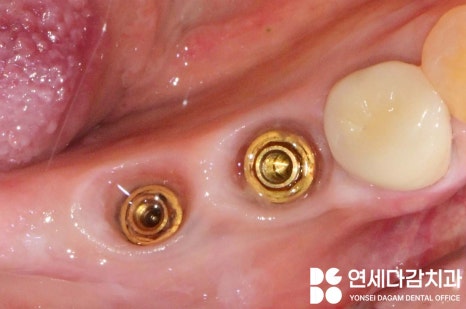
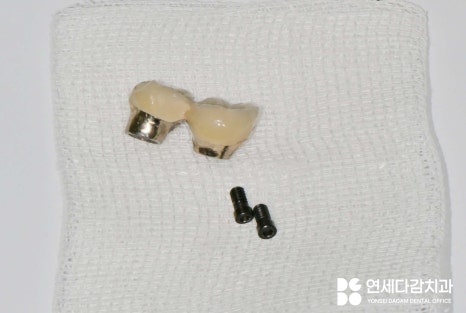
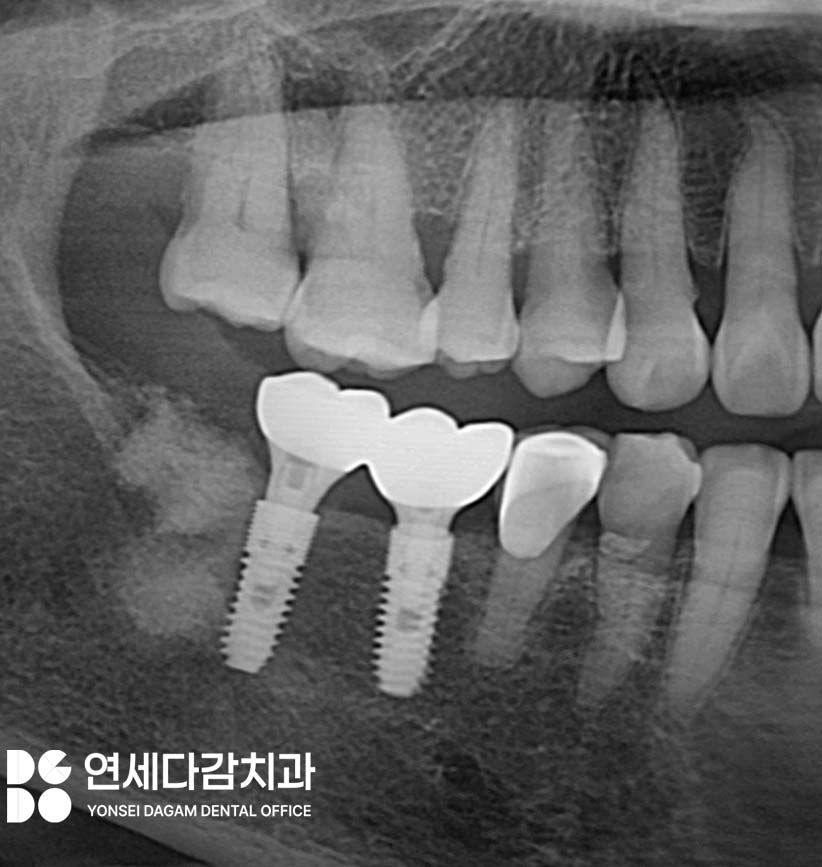
After removing the screw from the old prosthesis,
it appeared to the naked eye at the Mungjeong-dong dental clinic
that it was an external octa fixture.
(An 8-sided connection type
that protrudes outward)
However, it is difficult to determine the exact
structure from appearance alone,
so in situations like this, a periapical X-ray
is taken to accurately check the internal structure
of the implant.
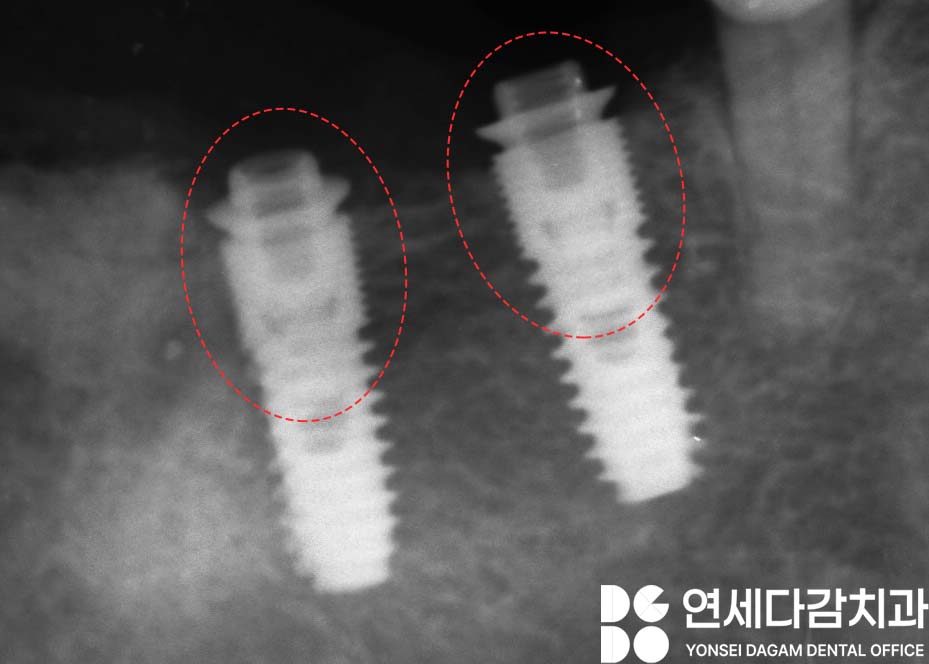
As a result of the check, it was confirmed that
there was one more screw.
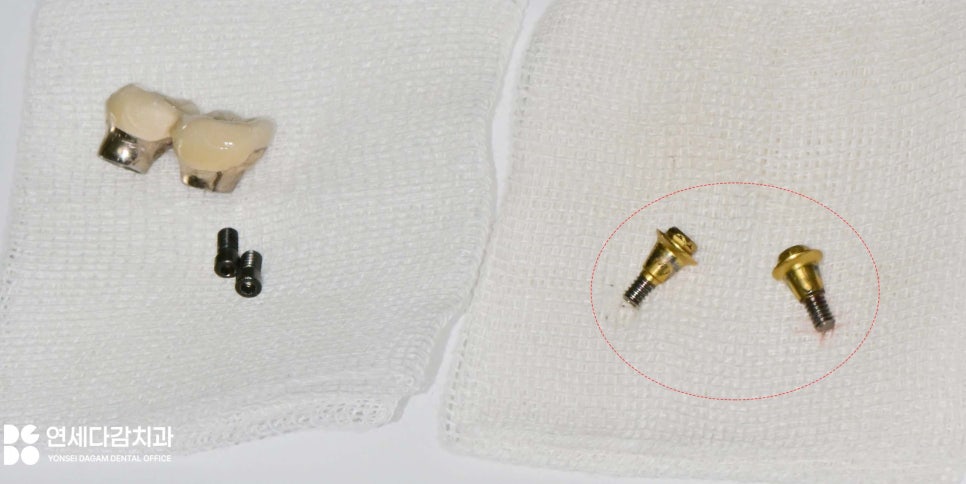
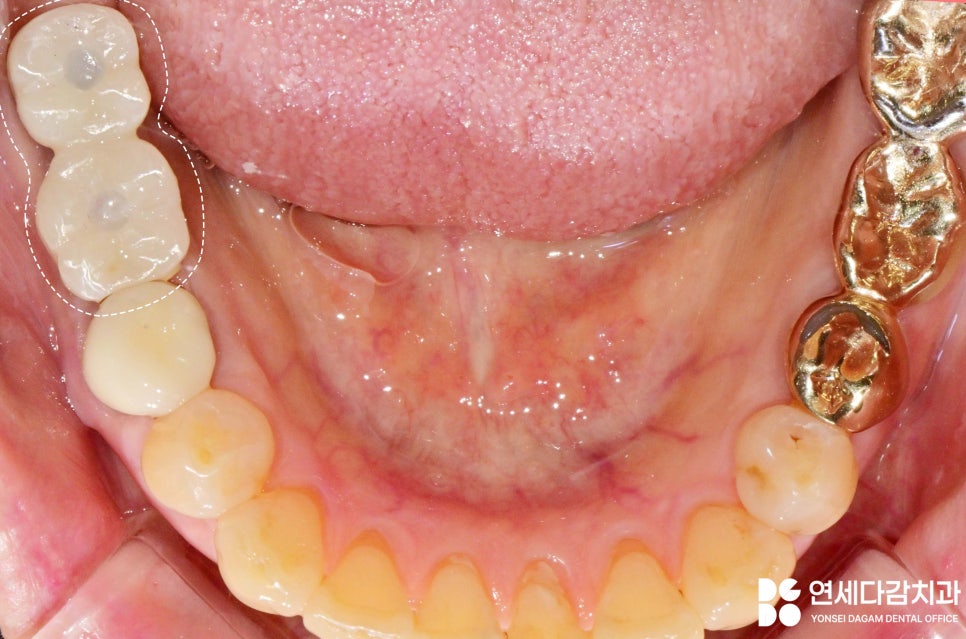
After removing the internal screw as well,
we plan to convert it to an SCRP type
and remake it.
What is the SCRP type?
It is an abbreviation for Screw Retained Prosthesis,
and refers to a type in which the prosthesis attached to the implant
is fixed with screws.
It is a widely used type today,
and implant prosthetics can be repaired anywhere.
It improves convenience when future maintenance
or repairs are needed.
Because the abutment or crown
is directly screwed in and can be removed,
it is easy to detach and reattach the prosthesis,
and cleaning and maintenance are convenient,
which is advantageous for long-term use.
During the replacement process,
not only the condition of the existing implant,
but also the gum condition and the health of adjacent teeth
are important factors that affect the lifespan of the prosthesis.
At a Mungjeong-dong dental clinic,
we aim to support precise fabrication
through this comprehensive evaluation.
This treatment plan can lead to results
that support long-term maintenance.
As shown today at the Mungjeong-dong dental clinic,
many people who thought they would have to start over
from placing a new implant
feel relieved when they learn
that only the crown can be replaced.
However, this is not possible
in every situation.
Older implant fixtures may differ greatly
from those currently in use in terms of size, shape, and form,
so it is important to consult a specialist
who has sufficient knowledge and experience
with that specific system.
In the end, implant prosthetics also need
continuous care and replacement at the proper time
in order to maintain healthy function for a long time.
We hope you can manage oral health systematically
through regular checkups,
and this concludes today’s post from the Mungjeong-dong dental clinic.
Thank you for reading!
25.08.15~25.08.25