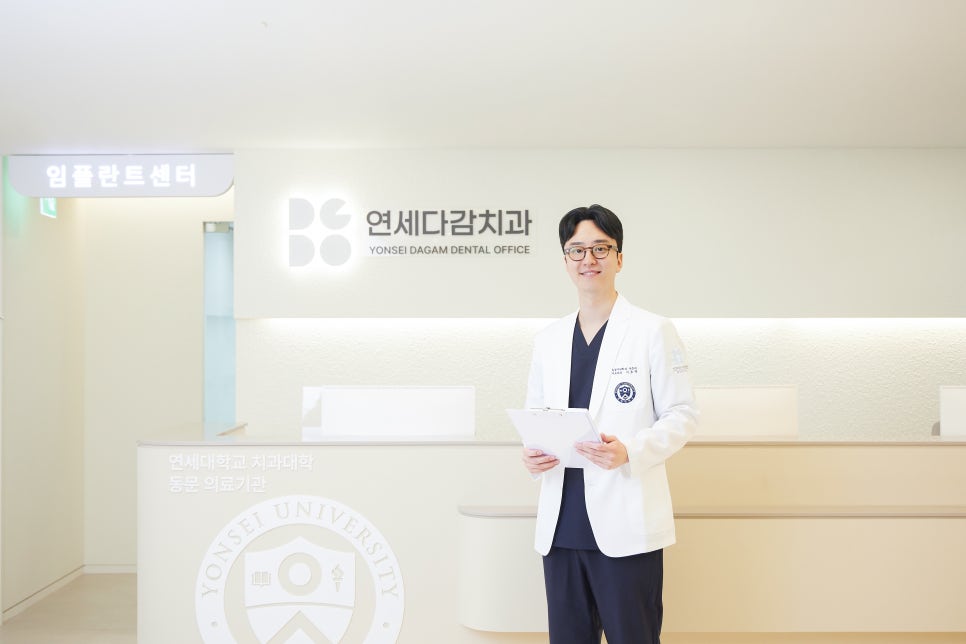
Hello, I’m Director Seo Ho-yeon.
For any reason, if a tooth is lost
or severely damaged,
things that you did not pay much attention to in daily life
can become very uncomfortable.
You may end up chewing only on one side,
or find it difficult to chew at all,
and pronunciation may become unclear when speaking,
or the appearance of your mouth may change, leading to a drop in confidence.
Especially when an empty space is visible while smiling,
it becomes even more noticeable externally.
If you have lost a tooth,
many people consider implants.
But when you are actually about to go to the dentist,
concerns tend to come first.
Whether the surgery will hurt,
whether treatment will take a long time,
and how much it will cost
are all hard to judge.
When you hear what people around you say,
'It takes several months, it hurt and was uncomfortable,
it cost quite a lot.'
Hearing things like that
can make you feel even more uneasy.
Also, deep down,
questions like
'Can it be used for a long time like a natural tooth?
Can I use it like my own?'
start to arise as well.
If you do not know this information accurately,
your anxiety can only increase.
That is why at Yonsei Dagam Dental Clinic,
to help ease your worries even a little,
we will explain basic information step by step,
from situations where implants are needed to the treatment process and care methods.
- When is an implant needed?
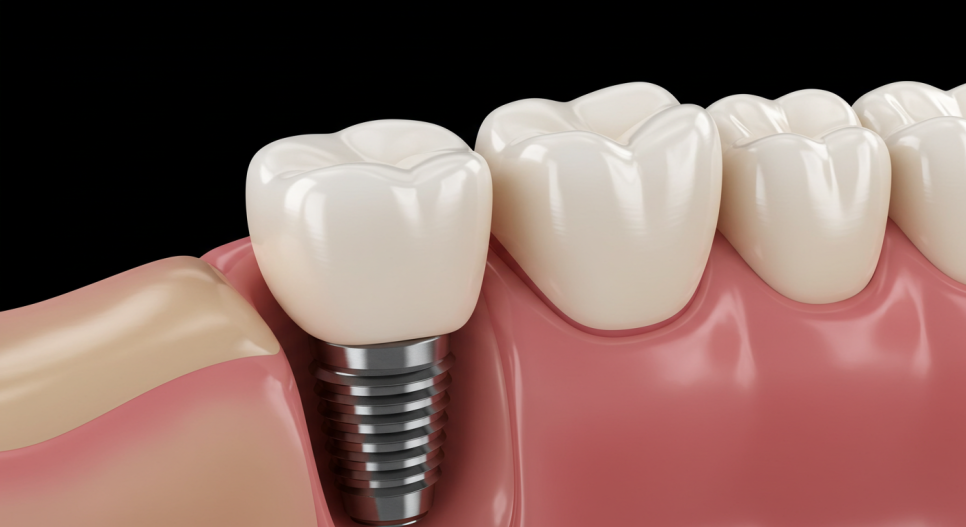
An implant is a treatment considered when a natural tooth is so severely damaged
that it can no longer be saved.
This includes cases where decay has gone too deep and damaged the root,
or when periodontal disease in the gums
causes the tooth to become loose.
Unlike a bridge, there is no need to shave down
adjacent teeth that remain around the area,
and an artificial root called a fixture is placed into the jawbone to secure it
in the space left behind.
It then functions almost the same as a natural tooth,
and if the crown is made nicely, it also provides a natural aesthetic appearance.
In particular, because the chewing force is strong,
one major advantage is that it does not have the discomfort of dentures.
However, if a tooth is left untreated for a long time after extraction,
bone resorption can occur, making the surgery more complex.
Therefore, if you have lost a tooth,
we recommend consulting as soon as possible.
-
Treatment process
Implant placement generally goes through the following steps.
-
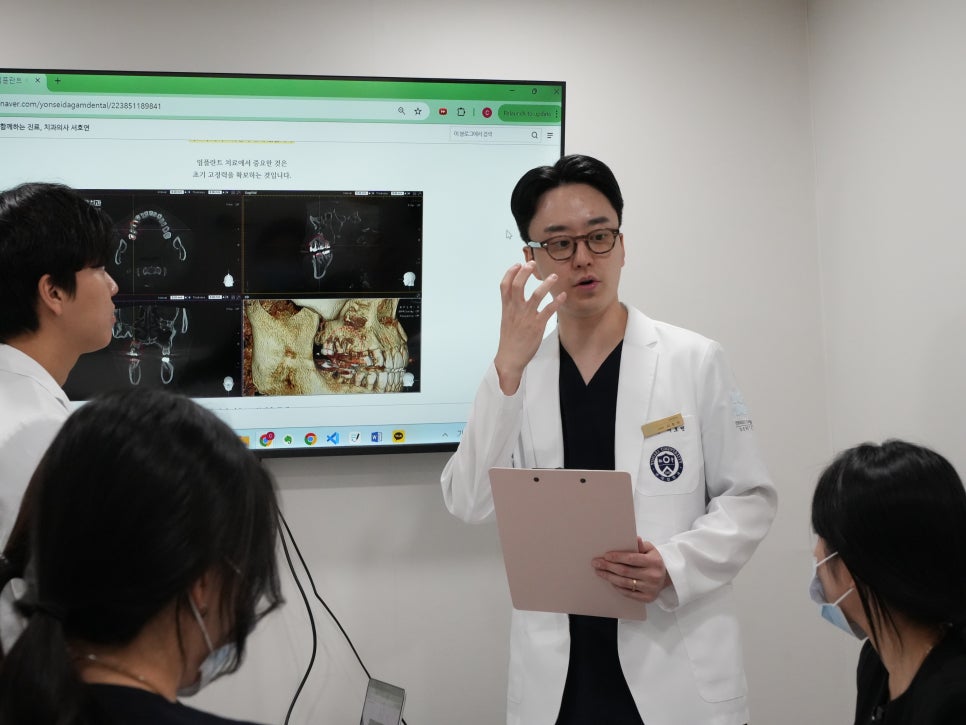
Precise diagnosis
Through X-ray and 3D CT imaging,
the placement site, the amount and quality of the jawbone,
and the locations of the maxillary sinus and nerves are identified.
- Treatment planning
Based on the diagnostic results, it is checked whether bone grafting is necessary,
whether immediate placement is possible,
and, if multiple implants are needed,
how many should be placed at minimum, and so on,
while reviewing the overall schedule.
- Fixture placement
If the plan is well established, the fixture is placed.
Since it takes at least 2 to 3 months for the fixture to firmly integrate with the bone,
a sufficient healing period is provided.
- Prosthesis placement
Once it has integrated well with the bone, an impression is taken
so that the abutment and crown can be made to fit the patient’s oral condition.
When the final prosthesis has been completed,
it is placed and adjusted,
and the treatment is finished.
- Procedure methods
Not all implants are performed in the same way.
There are several methods depending on the individual oral condition,
and below are four of them.
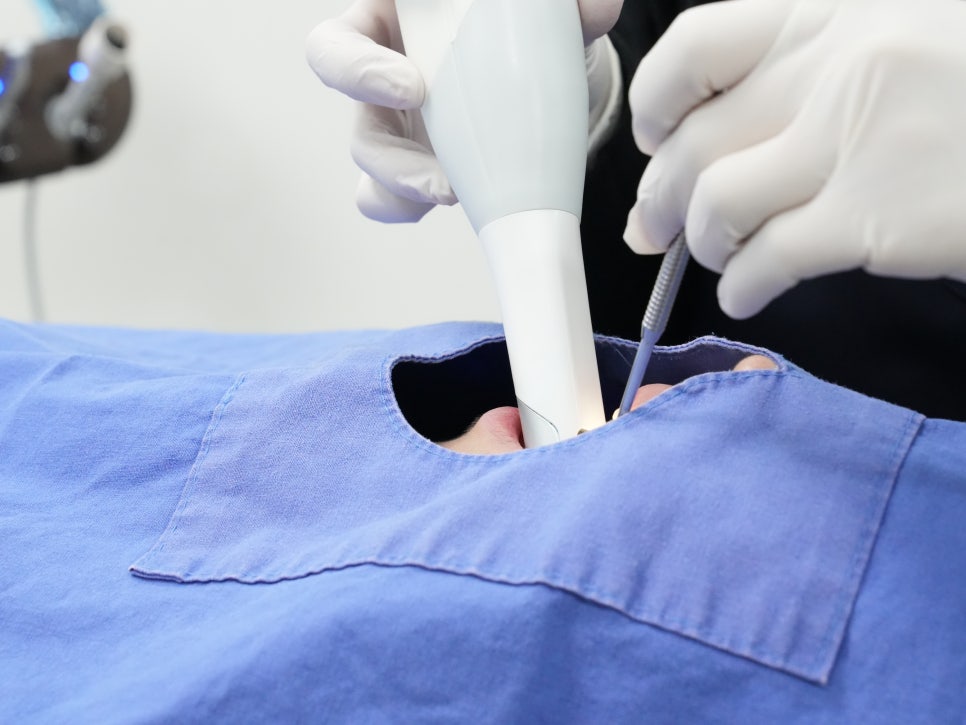
- Navigation implant
(guide implant)
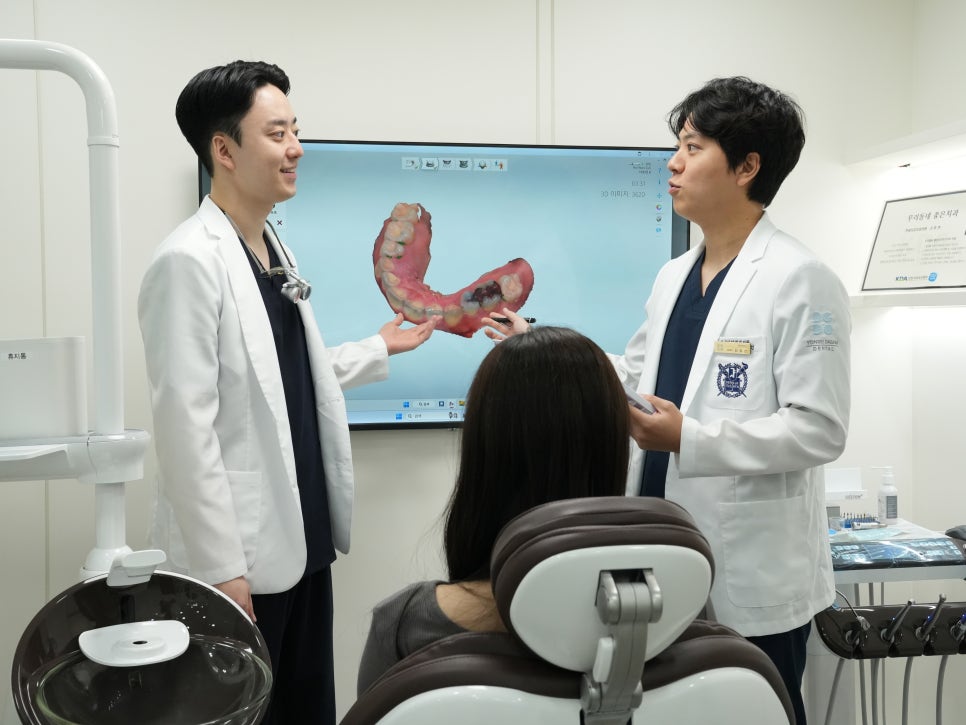
Based on 3D CT and digital scan data,
a virtual simulation is carried out before the actual procedure.
A guide model is then created based on the results,
allowing placement at the correct position and angle.
Because gum incision is minimized,
it has the advantage of reducing pain, swelling,
and recovery time.
- Same-day implant
If the conditions are right, the implant is placed
at the same time as tooth extraction, and a temporary prosthesis is attached.
This is not a method that everyone can undergo,
so please note that it is only possible when the patient is healthy enough.
- Bone-graft implant
If a tooth is left untreated for a long time after extraction,
the jawbone can resorb.
This method is also chosen when bone loss due to periodontal disease
makes surgery difficult.
The process involves reinforcing the foundation by placing autologous bone or artificial bone
in areas where there is not enough bone.
Although the treatment period is longer,
it is a necessary process for safe and durable placement.
- Full-arch implant
(All on 4 / All on 6, etc.)
This refers to a method that supports a full prosthesis with only 4 to 6 fixtures
when most teeth have been lost.
It is much more solid than dentures,
and makes eating and speaking more natural in pronunciation.
It is especially widely used among older adults.
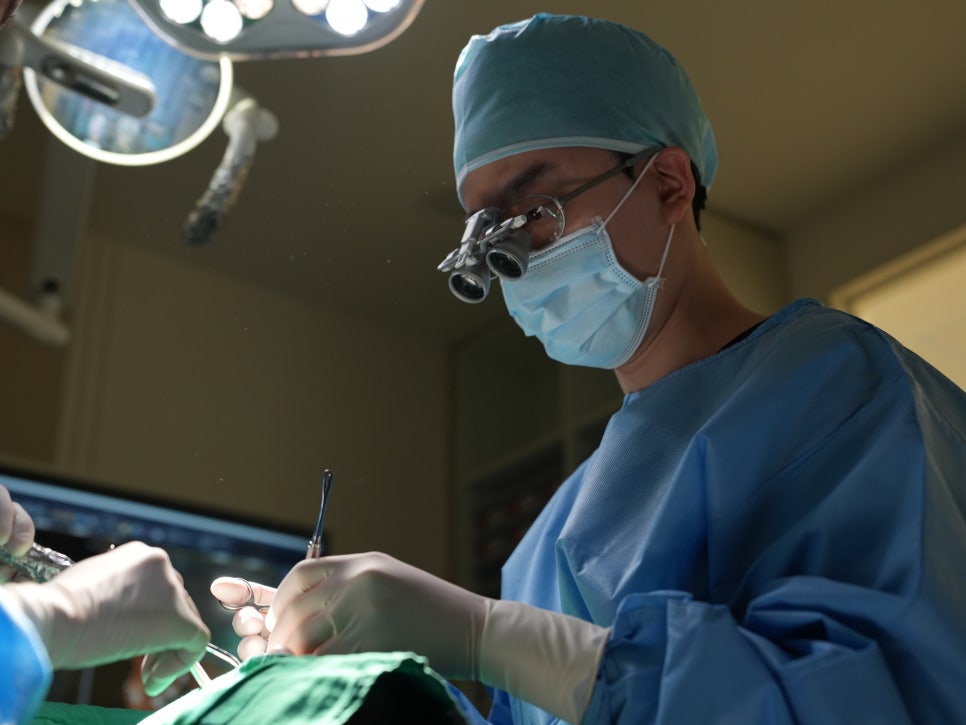
❗ Each method has different advantages and disadvantages.
Also, what can be applied varies depending on the oral condition,
so it is best to decide after 충분한 상담 with the medical staff.
- Precautions before the procedure
Before treatment, a detailed examination is performed
and you will consult with the doctor in charge.
At this time, you must inform them whether you have any underlying conditions
or whether you are taking any medications.
In particular, systemic diseases such as diabetes and hypertension
must be disclosed in advance so that precautions can be taken.
You must fast on the day of the procedure,
and since smoking and alcohol affect surgery,
it is recommended to stop smoking and drinking 1 to 2 weeks before.
- Post-procedure care and maintenance
Once implant placement is complete, careful care
is a key factor directly tied to its lifespan.
On the day of the procedure, bite down on gauze for 2 to 3 hours
and apply cold compresses with an ice pack
so that the bleeding can stop.
For 2 to 3 days, continue cold compresses and take medication regularly
to ease pain and swelling.
Eat foods that are as soft as possible
so that the implant can integrate well with the bone.
In particular, hard and chewy foods
can interfere with recovery or shorten its lifespan,
so please avoid them as much as possible.
After eating, brush gently
and use dental floss and interdental brushes to remove any remaining debris.
Also, once every 6 months to a year,
check for any issues through scaling and regular examinations.
📌 If implants are cared for properly,
they can be used for more than 10 years, much like natural teeth.
It is important to place the implant properly at the beginning,
but care is just as important.
If something goes wrong, reoperation may be necessary,
and reoperation requires considering more factors than the first surgery.
Therefore, please follow the precautions explained by the doctor in charge.
At Yonsei Dagam Dental Clinic, we recommend that you receive regular checkups and scaling
once every 6 months to a year after surgery.
If you have any questions at any time, please ask,
and we will answer in detail and kindly.
This has been Director Seo Ho-yeon.
Thank you.

👉 Naver Appointment Booking
👉 Yonsei Dagam Dental Clinic Website
👉 Yonsei Dagam Dental Clinic KakaoTalk Consultation Channel
👉 Yonsei Dagam Dental Clinic Naver TalkTalk Consultation