Hello.
This is Director Seo Hoyun from Yonsei Dagam Dental Clinic, located near Garak Market Station.
After crown treatment is completed,
many people assume that since the tooth is now covered by a prosthesis,
no cavities will develop
and there will be no more problems.
It is common to encounter this belief.
A crowned tooth is not something that can be used forever without problems.
All treatments are not permanent,
and their lifespan varies depending on how they are maintained!
If prostheses are well cared for,
they can be used for more than 10 years,
but if they are not properly maintained,
problems can return in less than 5 years.
Just as even a good car breaks down quickly if it is not maintained,
prostheses also require continuous care.
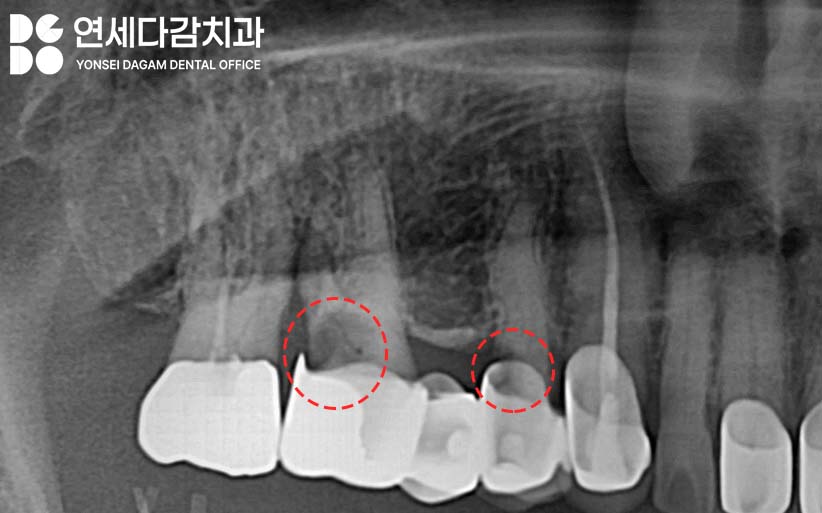
The inside of a prosthesis is often difficult to detect
because it does not show clearly even on X-rays.
Therefore, the area that needs careful attention is
between the prosthesis and the gum.
As marked by Garak Market Station Dental Clinic,
cavities or periodontal disease often develop in this area,
even if the visible area does not seem large,
the problem can progress severely on the inside.
Root caries refers to cavities that develop
in the root area of the tooth below the gum line.
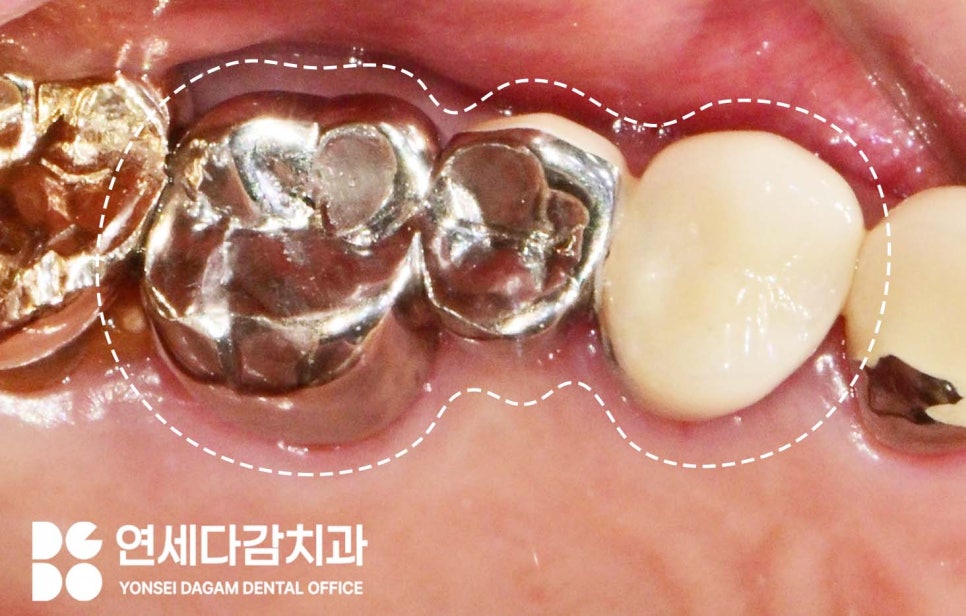
When root caries is observed,
the entire prosthesis needs to be removed and the exact condition of the tooth
must be reassessed.
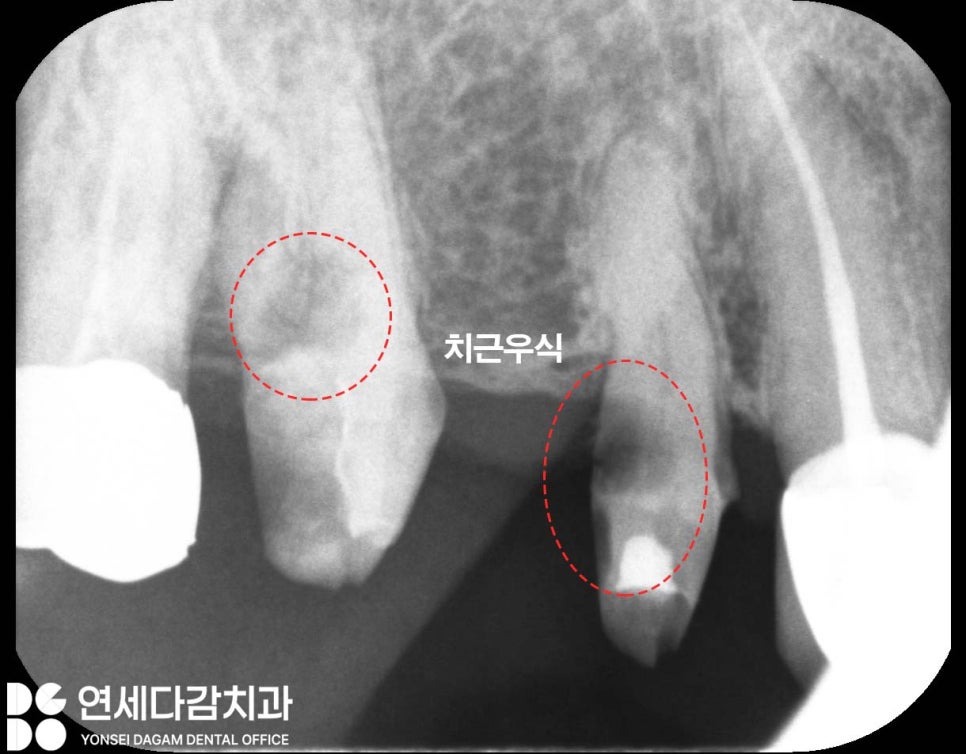
If root caries is severe,
tooth extraction becomes unavoidable.
A crown is one of the treatments used
when the crown portion of a tooth is damaged,
but if decay reaches the root,
it becomes impossible to place a prosthesis.
The area is difficult to treat from the start,
and even if resin treatment or root canal treatment is performed,
the prognosis is not good because the risk of reinfection is high.
At Garak Market Station Dental Clinic,
preserving the tooth is the first priority,
but if preservation is not possible,
extraction may be the preferable choice for oral health.
This is because leaving an infected tooth in place can damage
surrounding bone and tissue,
which may cause even greater problems later.
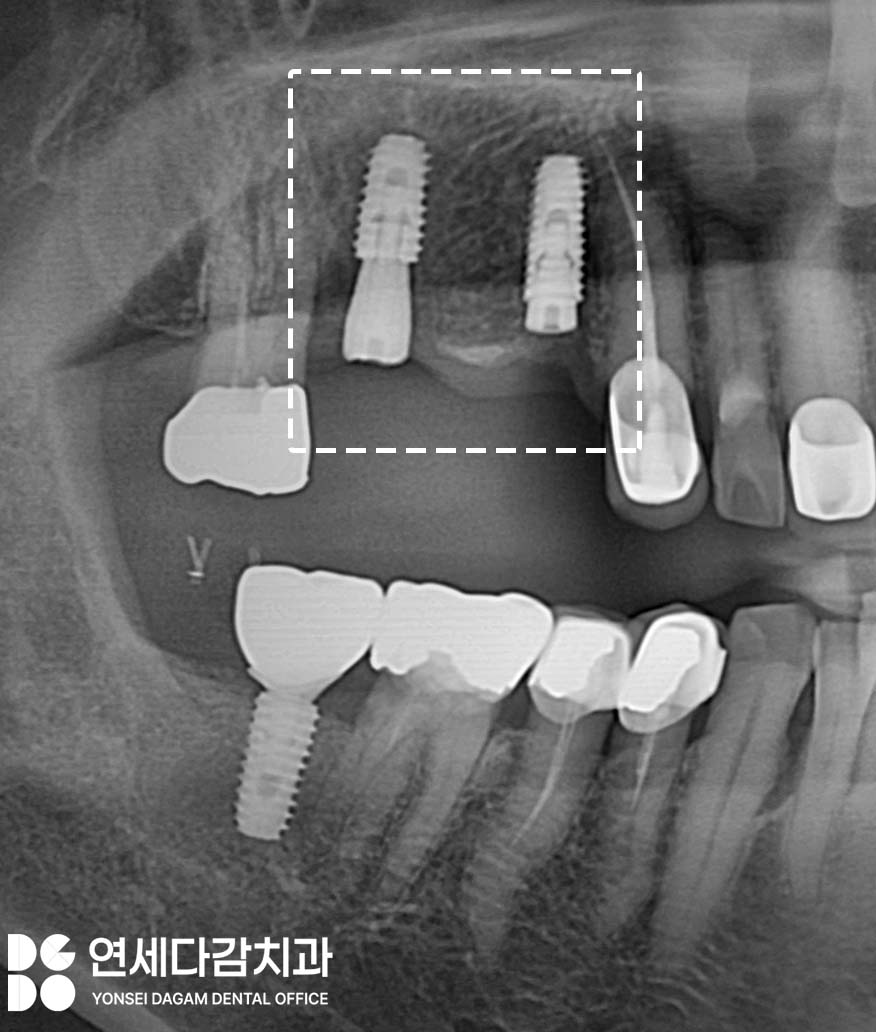
When a tooth is extracted, to restore the missing area,
many people choose restoration with an implant,
which can reproduce the function of a natural tooth with a high likelihood.
Through an immediate implant procedure,
placing the implant in the site where the natural tooth used to be
can help promote faster recovery.
This method has the advantage of minimizing bone loss
and shortening the treatment period.
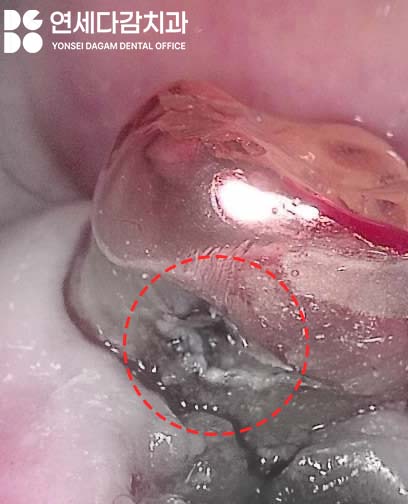
During treatment, cavities were also found on the adjacent surface
of the area next to the crowned tooth,
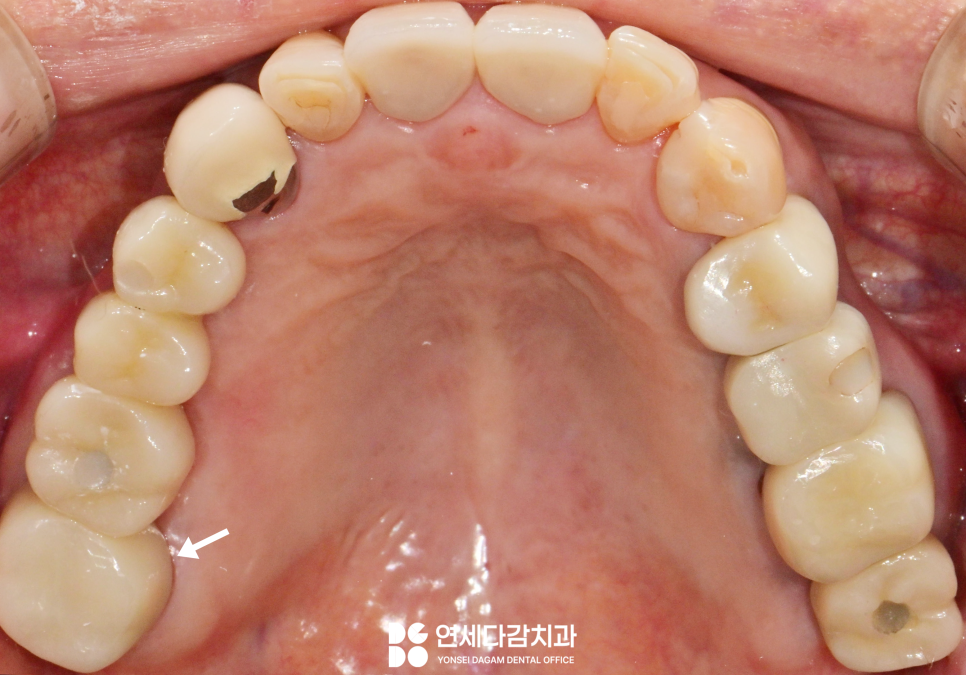
so after treatment, a new crown was made again
in order to preserve the natural tooth as much as possible.
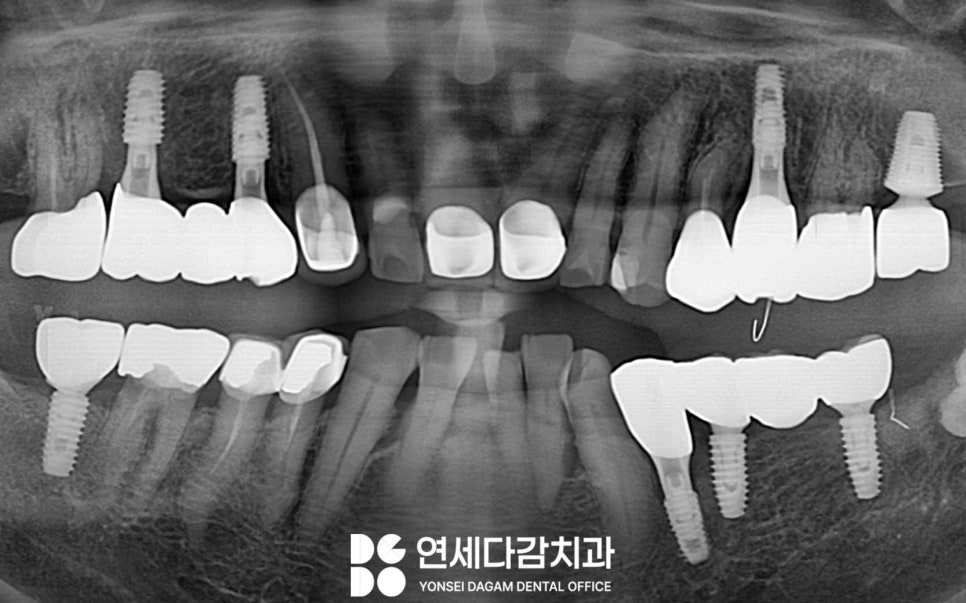
Even if you have been treated with an implant,
it does not mean that you can neglect maintenance.
The maintenance period of any treatment can vary greatly
depending on how well you take care of it.
Implants, unlike natural teeth,
do not develop cavities,
but you should not overlook the fact that periodontal disease can still occur
around the prosthesis.
What Garak Market Station Dental Clinic emphasizes is that
all prostheses require careful care,
just like natural teeth.
Artificial teeth do not mean no care is needed;
in fact, they require even more delicate attention.
Older prostheses in particular
require careful maintenance and may also need replacement.
The gums naturally recede as we age,
and as the oral environment changes accordingly,
prostheses may need to be replaced.
For crowns, the recommended replacement interval is about 10 years.
Of course, depending on maintenance,
they may last longer
or need to be replaced sooner.
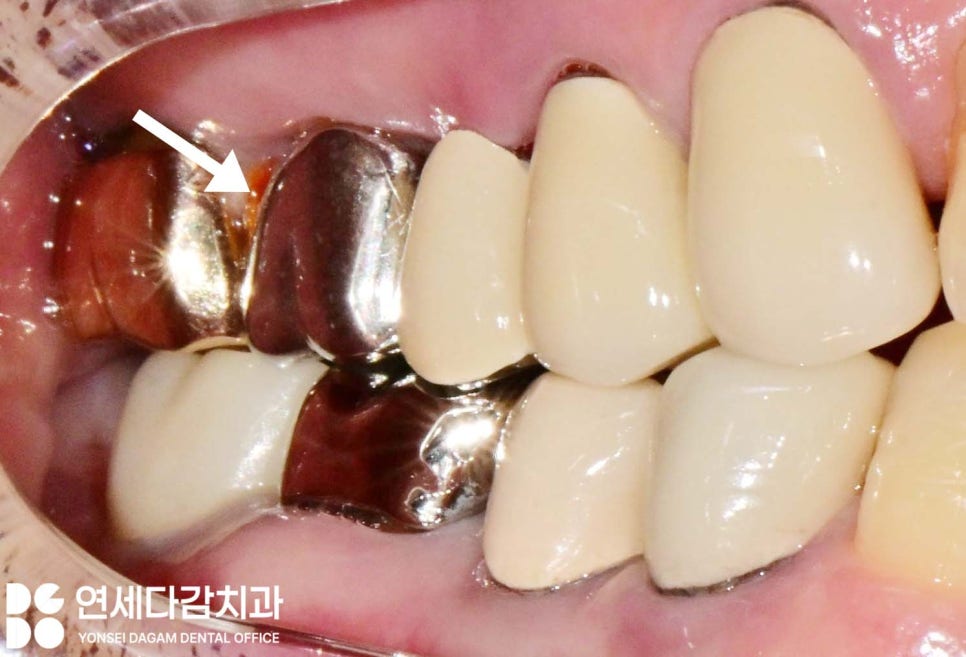
As old prostheses and receding gums create a gap
between the prosthesis and the gums,
it is like wind coming through the gap in an old window,
and food becomes trapped more easily.
The more food that keeps getting stuck,
the higher the likelihood of deep cavities developing.
Therefore, when this happens frequently,
Garak Market Station Dental Clinic considers
it a situation in which replacement is needed.
To use prostheses for a long time,
regular checkups are essential.
Receiving X-ray examinations once every 6 months
and responding as needed after early detection
is very helpful.
Daily oral hygiene is also important,
so when brushing, you should clean between the teeth
and below the prosthesis as well.
At that time, it is good to use a soft toothbrush
and gently brush the area between the prosthesis and the gums at a 45-degree angle.
It is also important to use dental floss or interdental brushes
to keep the spaces between the teeth and around the prosthesis clean.
In particular, bridges are difficult to maintain
with regular dental floss,
so special floss or a Waterpik can be used.
A prosthesis is a valuable treatment that replaces a natural tooth.
However, please always remember the point emphasized by Garak Market Station Dental Clinic:
that it is not permanent,
and I hope you can maintain a healthy mouth
for a long time :)
25.06.25~25.09.29