Some people think cavities are only a tooth problem.
However, cavities do not stay limited to the tooth
and can gradually destroy the surrounding tissues too.
If we summarize how an infection starting in the tooth
spreads to the surrounding tissues at a dental clinic near Garong Station,
when a deep cavity or trauma causes inflammation
to begin in the tooth’s nerve tissue,
called the pulp,
if that inflammation continues, the nerve becomes necrotic,
and bacteria and toxins move along the root canal
to the apex, the tip of the tooth root.
Just like contaminants flowing down through a pipe,
bacteria reach the root tip
and cause inflammation there.
When performing an oral examination at a dental clinic near Garong Station,
this kind of bacterial inflammation
is often seen when it has progressed chronically
and extensively.
That is because it progresses slowly without any symptoms,
so people do not notice it and only later feel pain.
If chronic inflammation continues, the body forms
granulation tissue in that area,
and epithelial cells proliferate within it,
creating a periapical lesion such as a cyst.
Periapical lesion
A periapical lesion is a general term for
an inflammatory lesion that forms around the tip
of the tooth root.
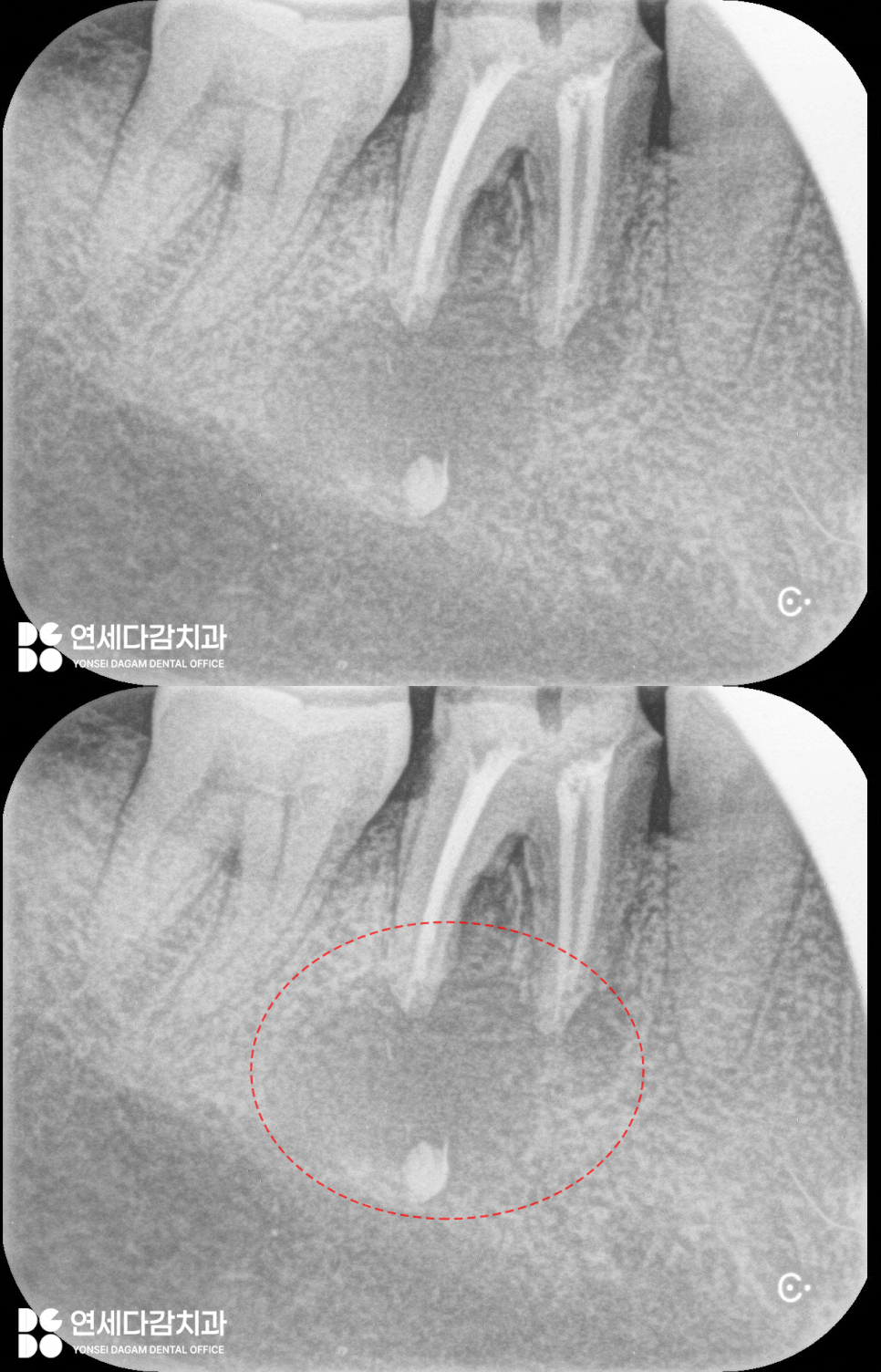
When an X-ray is taken, it appears as a radiolucent
black shadow-like area at the tip of the tooth root.
There are several types of these lesions,
but among them, a periapical cyst
is a commonly found type.
Periapical cyst
A periapical cyst is a sac-like structure
filled with liquid or semisolid material,
and it gradually enlarges while destroying
the bone around the root tip.
It usually grows slowly,
compressing and resorbing the surrounding bone tissue.
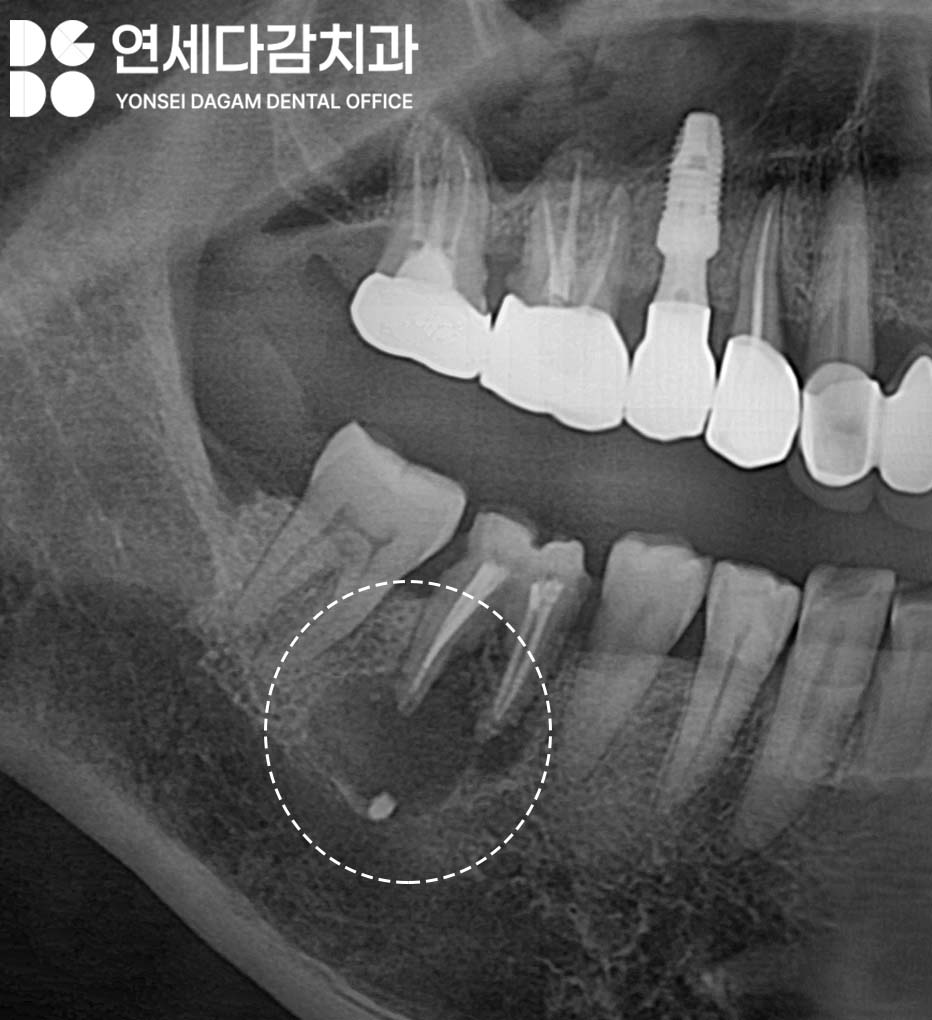
In addition to the causes mentioned in the introduction
at the dental clinic near Garong Station,
if a previously root-canal-treated area
becomes reinfected,
a periapical lesion can develop.
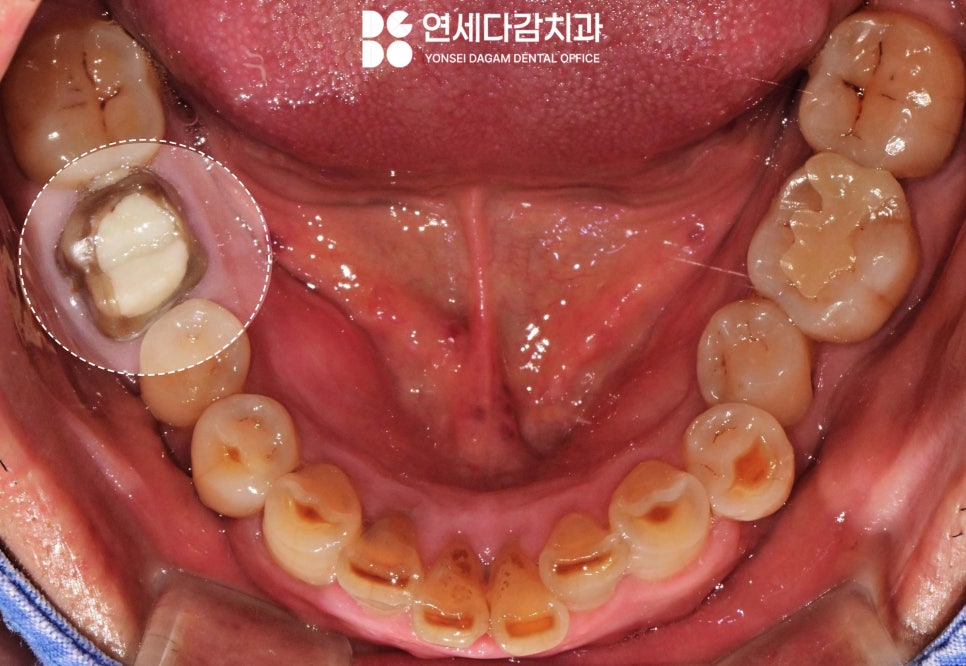
In particular, when the prosthetic restoration
of a tooth with an existing crown falls out,
if it is left detached,
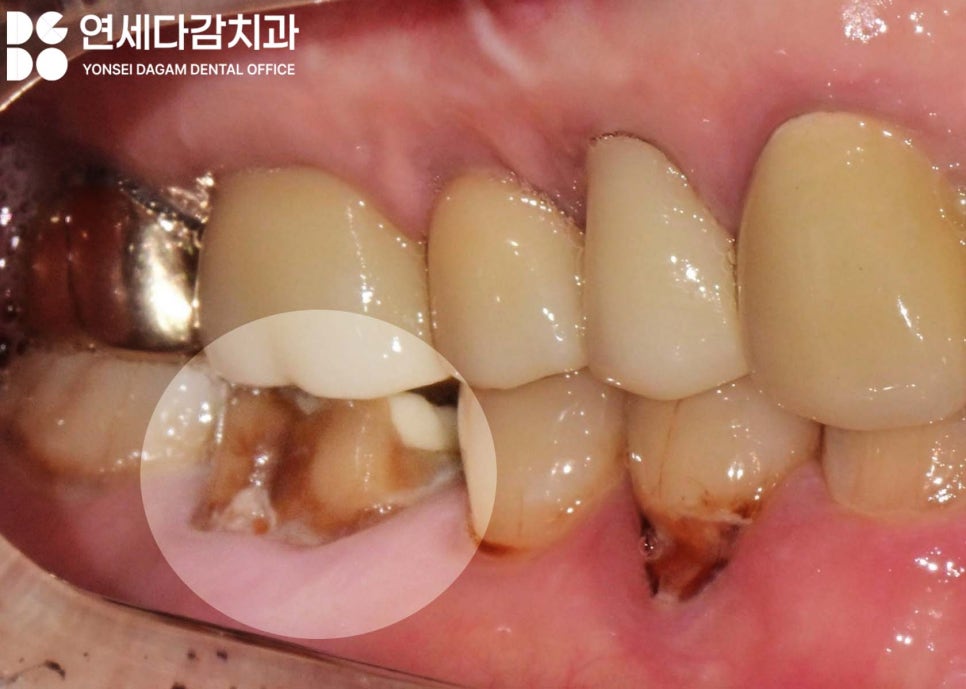
food debris can easily remain behind,
creating an environment where it can be easily and directly infected by bacteria.
Because a tooth that has completed root canal treatment
is in a state where the nerve has been removed,
many patients do not feel any symptoms at first.
That is actually what makes it a problem.
Because there is no pain, the lesion can progress
without being noticed.
To compare it in terms used at a dental clinic near Garong Station,
it is like a building with the alarm system turned off,
making it difficult to notice
when the problem becomes bigger.
If this inflammation progresses chronically
and becomes extensive,
it eventually appears as severe pain.
At that point, even a light tap can cause
unbearable pain,
and once it reaches this stage,
the tooth’s chance of being preserved decreases.
Treatment methods according to symptom range
Treatment for a periapical lesion
depends on the size and location of the lesion
and the condition of the tooth.
When the cyst is only mild in size
and the tooth structure remains relatively healthy,
it may be possible to try preserving the tooth
through root canal treatment.
This involves thoroughly disinfecting
the infected inside of the root canal
and preventing reinfection.
However, if root canal treatment has already been done
and the cyst is large enough
to destroy a wide area of bone,
then a surgical approach is needed.
In moderate cases, apicoectomy can be tried,
using a method that directly removes
the root tip and the surrounding lesion,
and if the lesion has progressed extensively,
the tooth itself is severely damaged,
or severe pain continues,
then extracting the tooth that caused the problem
may be the only solution.
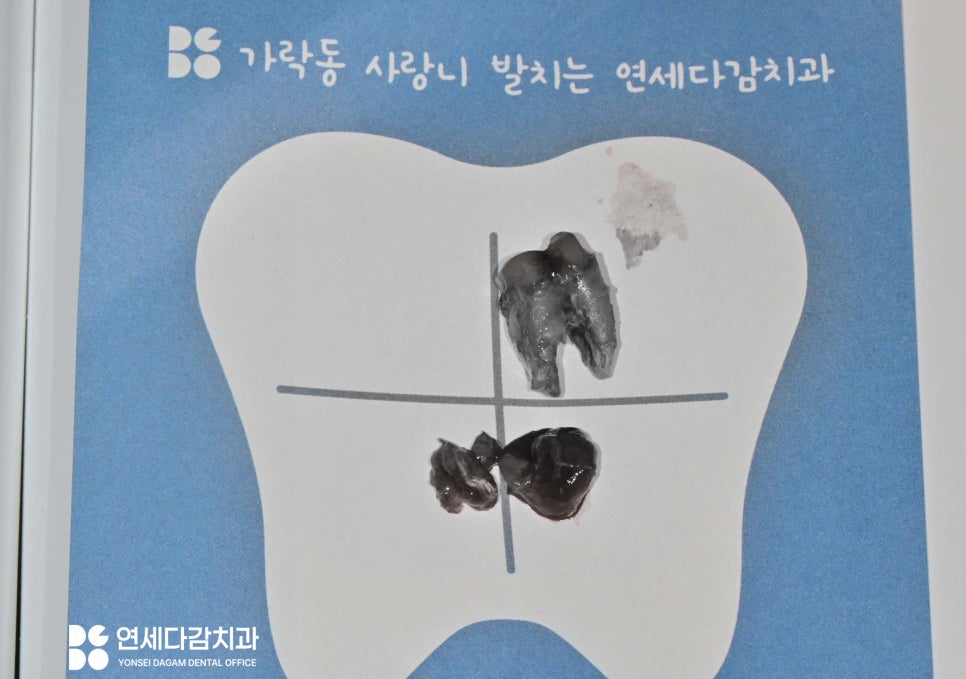
When extraction is performed,
it is important not only to remove the tooth
but also to thoroughly remove
the inflammatory tissue formed at the apex.
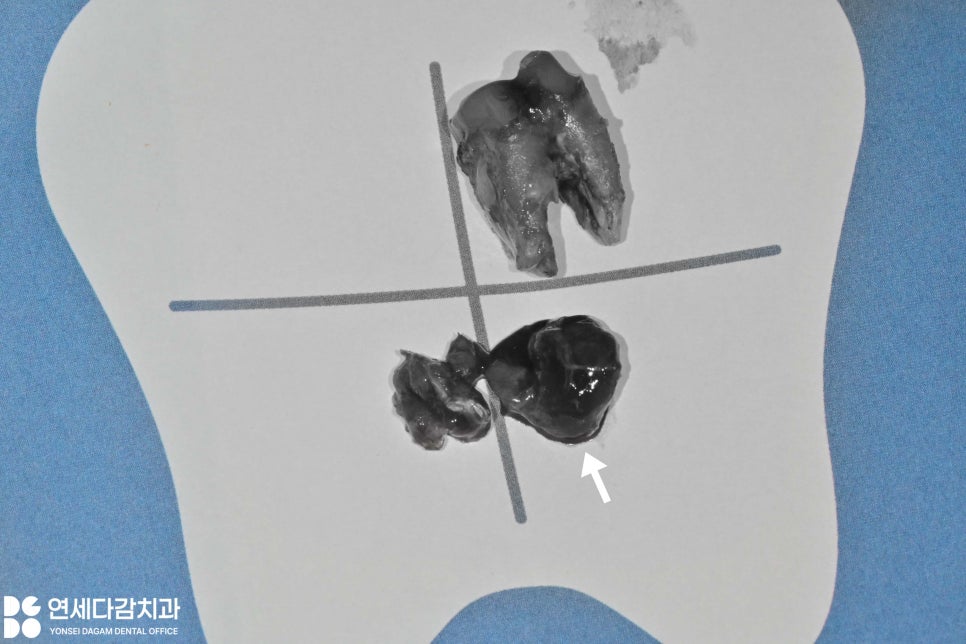
A neatly removed periapical cyst
The extraction socket left behind should be carefully scraped clean
through the curettage process,
and this step must be performed thoroughly
so that recovery after extraction proceeds smoothly
and recurrence can be prevented.
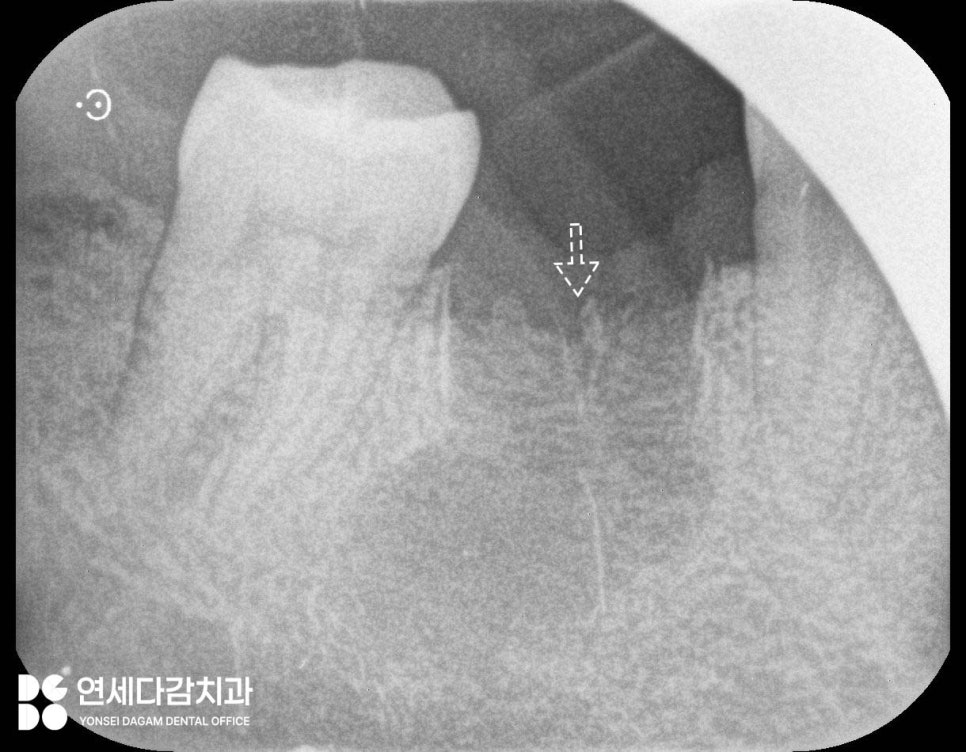
After the procedure, a periapical X-ray is taken
to confirm everything carefully,
then the area is disinfected to finish.
The periapical lesions explained today
at the dental clinic near Garong Station
are mostly preventable conditions.
Not leaving early cavities untreated,
and if there has been trauma, getting regular checkups,
and even after root canal treatment,
monitoring for reinfection
through regular examinations is necessary.
Delaying a small problem
until you eventually lose the tooth
is not desirable for anyone.
We hope you protect your precious teeth
through regular checkups and early treatment.
This was Yonsei Dagam Dental Clinic near Garong Station.
Thank you :)
25.09.23~25.10.01