Has this ever happened to you while eating—
you feel something hard in your mouth,
spit it out, and realize that a restoration you had treated has come off?
This is especially common with inlay-treated areas.
Because there are many different reasons why a bonded restoration may come off,
it is important to first identify the exact cause.
Identifying the Cause of Detachment
The reason Ogeum Station Dental Clinic emphasizes identifying the cause is that,
the treatment approach can change accordingly.
Let’s look at some of the representative causes.
Sometimes it simply comes off because the adhesive has weakened,
but in many cases there is a problem with the tooth itself.
✔️ For example, this can happen when secondary decay develops around an old inlay,
which weakens the inlay’s support.
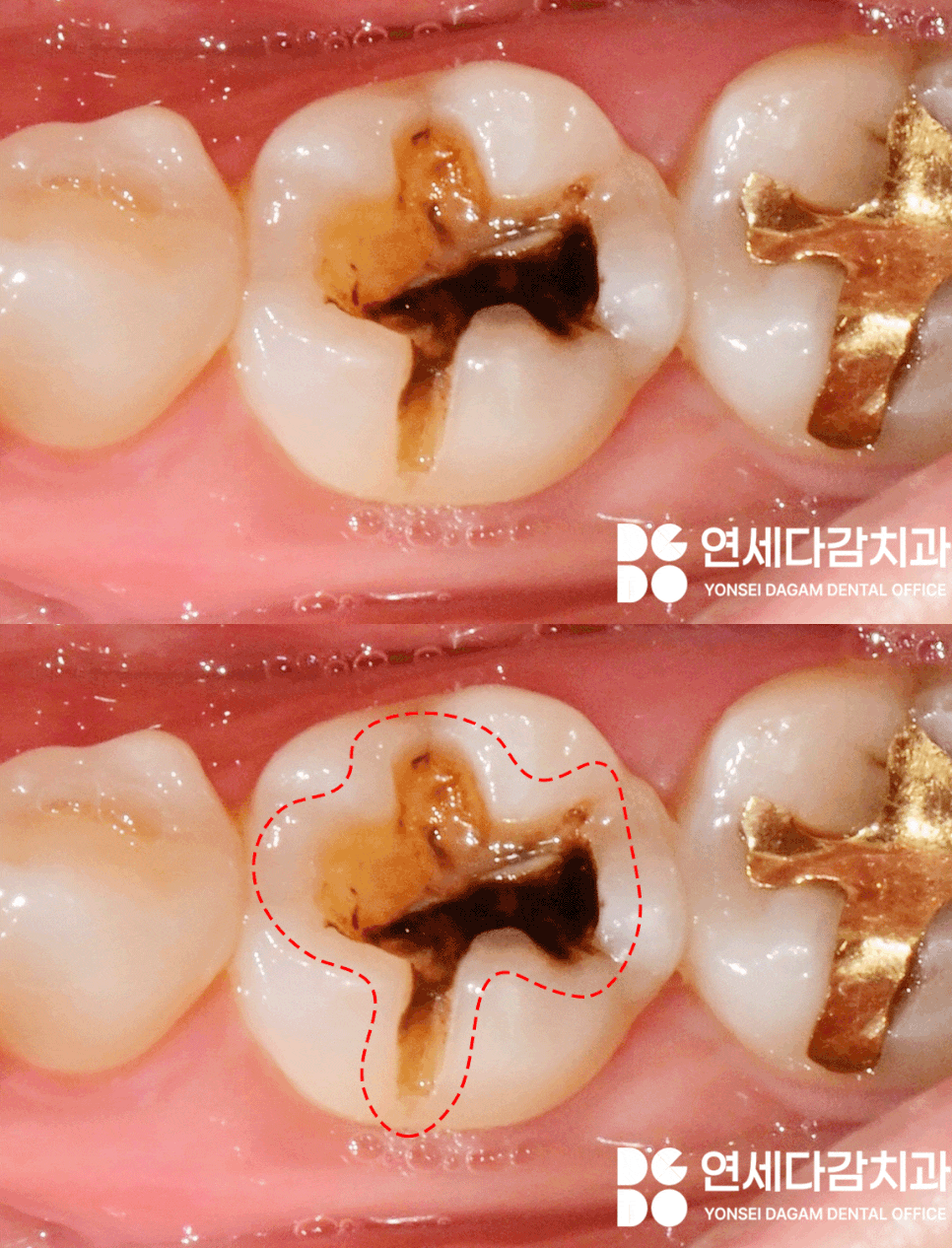
If a microscopic boundary forms between the inlay and the tooth,
bacteria can enter through the gap and cause an infection.
Like water seeping through a small crack in a building wall,
bacteria enter and create cavities from the inside.
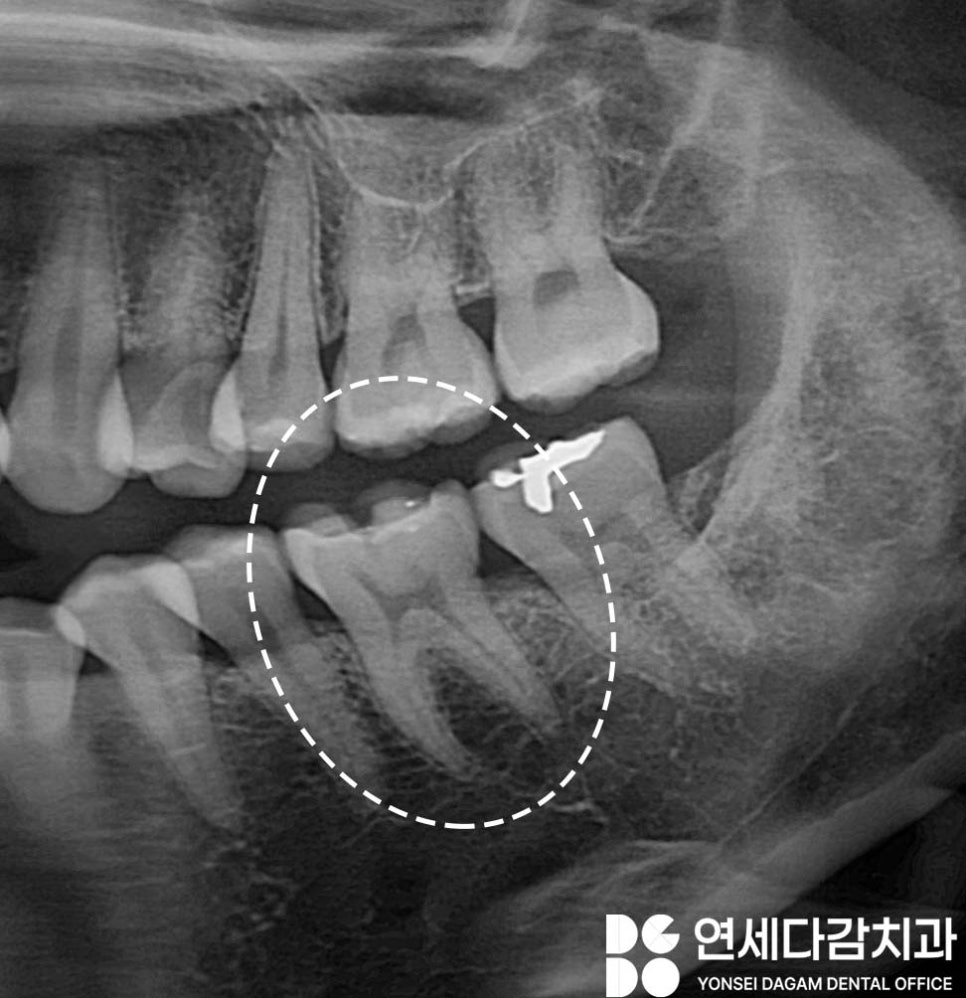
That is why at Ogeum Station Dental Clinic,
it is also important to check the depth of decay through X-rays.
If decay progresses, the tooth structure can weaken,
and crown treatment may be needed.
✔️ In addition to decay, a crack may form in the tooth that had the inlay bonded to it,
causing it to come off.
Although teeth are hard, repeated bite forces can create tiny cracks.
✔️ Also, as the treated area gets older and becomes a high spot in the bite,
every time you chew,
mechanical interference occurs, and the force can cause it to come off.
A high bite refers to a condition in which a specific tooth contacts earlier or more strongly than the others.
Therefore, a bite check is performed to see whether there are any unusually high areas.
The Special Characteristics of Gold Inlays
Unlike other materials,
gold inlays can also become deformed and come off.
Looking at the characteristics of gold inlays,
unlike resin or ceramic materials,
gold is a highly malleable material.
Malleability refers to the property of being able to change shape under external force.
Just as a metal wire can be bent,
gold can also deform when strong force is applied.
At Ogeum Station Dental Clinic, when a gold inlay has come off and the restoration is examined,
it is sometimes seen that the chewing surface is pressed down
or bent.
It is true that it is a durable material,
but unlike other materials that may fracture as a restoration itself,
gold can deform for the reasons above and, if the bite is unbalanced,
it can become a cause of tooth fracture.
Therefore, when an inlay comes off,
the condition of the tooth that had it should be evaluated first!
Cases That Require Retreating
At Ogeum Station Dental Clinic,
after comprehensively judging the tooth condition, the inlay condition,
and the cause of detachment,
if both the tooth and the inlay are intact, it may be finished by bonding it back on.
After applying fresh adhesive and rebonding it,
the bite is adjusted,
then it is polished and finished so that excessive force is not applied.
However, if there is a problem with the tooth or the gold inlay is bent,
a new inlay must be made.
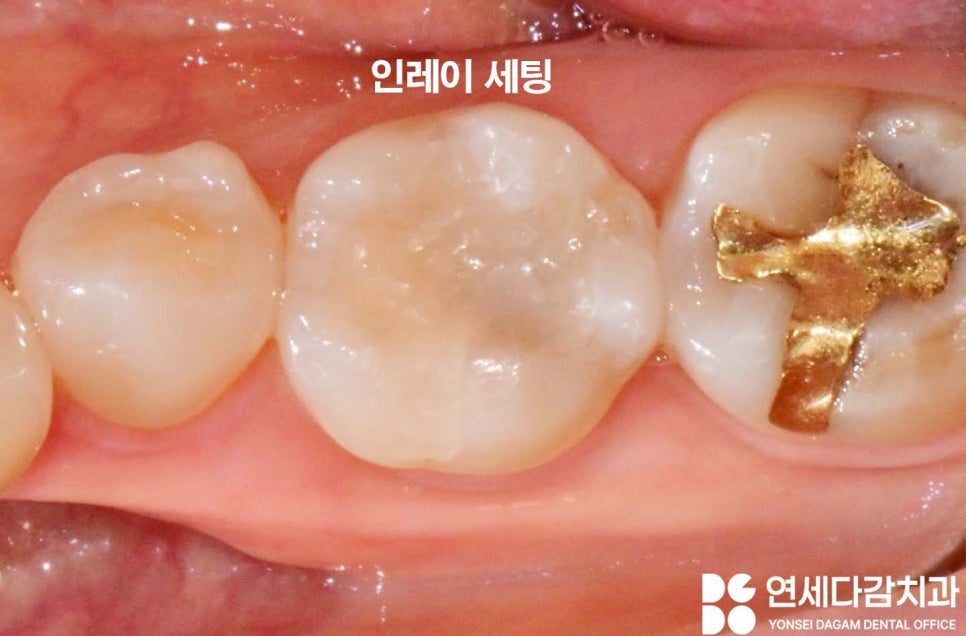
The area with decay is removed,
and after reshaping the tooth into a form that allows the inlay to be retained well,
a new inlay is fabricated.
💡
When remaking it, material selection is also important.
The lower molar area can be a place that is aesthetically visible,
so materials that can reproduce tooth color,
such as resin or ceramic,
may be more suitable.
As can be seen from the content covered by Ogeum Station Dental Clinic,
just because gold is an expensive material does not mean it is always the best choice for treatment,
and you should choose what is appropriate for you by considering bite force, tooth position,
and aesthetic needs.
Above all,
to prevent inlays from coming off, avoid sticky or hard foods,
and with proper daily oral hygiene,
we hope you can also receive regular checkups and manage your oral health!
This has been Ogeum Station Yonsei Dagam Dental Clinic.
Thank you.
2025.10.13~2025.10.20