If the bridge that was placed a long time ago
suddenly starts trapping a lot of food
and becoming loose,
it may not simply mean that the prosthesis has loosened.
There is a high possibility that a problem has developed
around the abutment teeth,
that is, the natural teeth supporting the bridge.
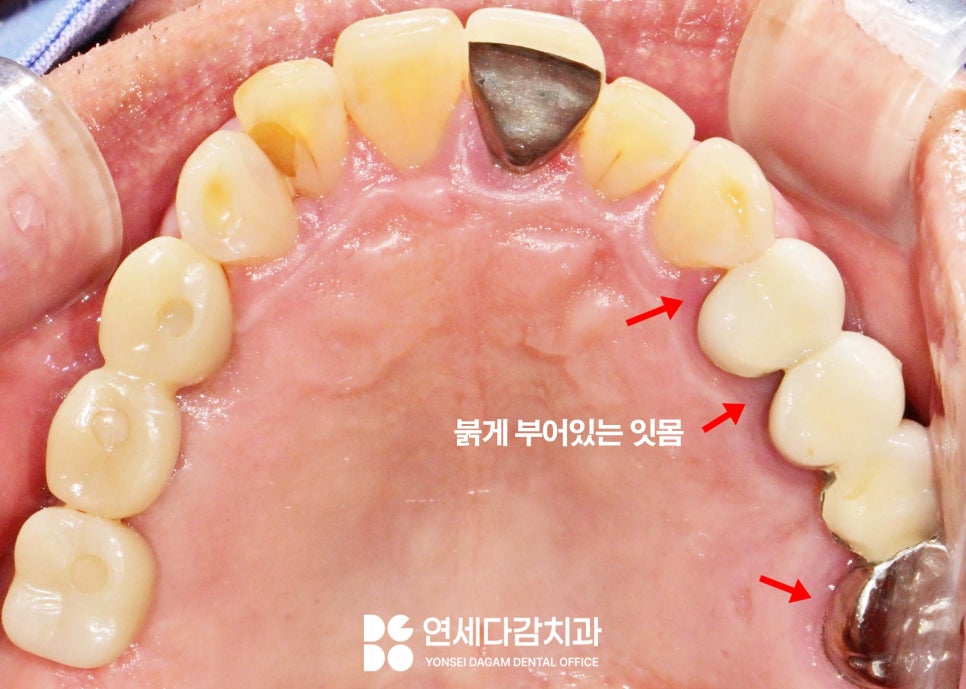
If the gums are swollen
or bleeding occurs when brushing,
you may suspect bone loss caused by inflammation.
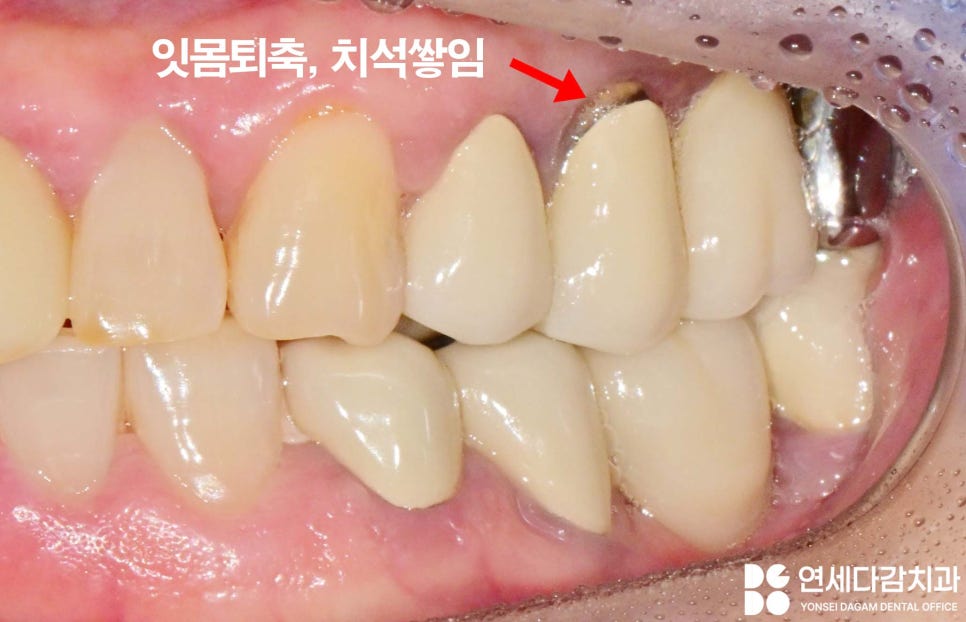
If the gums have receded and
food keeps getting trapped in that area,
it is a condition that requires an accurate examination.
The bridge mentioned at Munjeong Station Dental Clinic
is a treatment that replaces a missing tooth without surgery
by grinding down the natural teeth on both sides
of the missing tooth to use them as supports,
and then placing a prosthesis that connects multiple teeth
on top of them.
In simple terms, it works like building a bridge,
and both supports must be strong
to make the bridge stable.
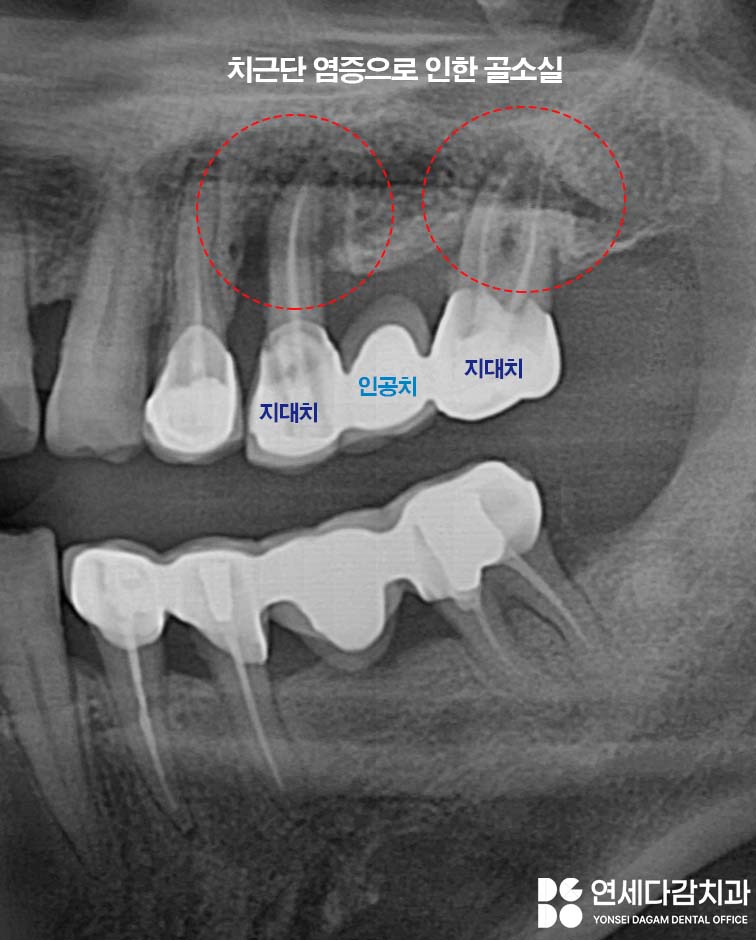
However, if the jawbone around the abutment teeth
begins to dissolve due to inflammation,
the entire bridge area becomes loose.
If even one of the abutment teeth is in relatively good condition,
it may be possible to cut the prosthesis
and treat only the problematic area separately.
This means treating only part of the bridge
without removing the entire one.
However, if both abutment teeth have severe bone loss,
or if their condition is so poor that they fall out on their own
when cut, this approach is difficult.
While the bridge is still connected, the teeth support each other,
but once they are separated,
they may not withstand the pressure
and can come out naturally.
Therefore, if the abutment teeth are no longer functional
after the bridge is removed,
dental implants are considered after extraction.
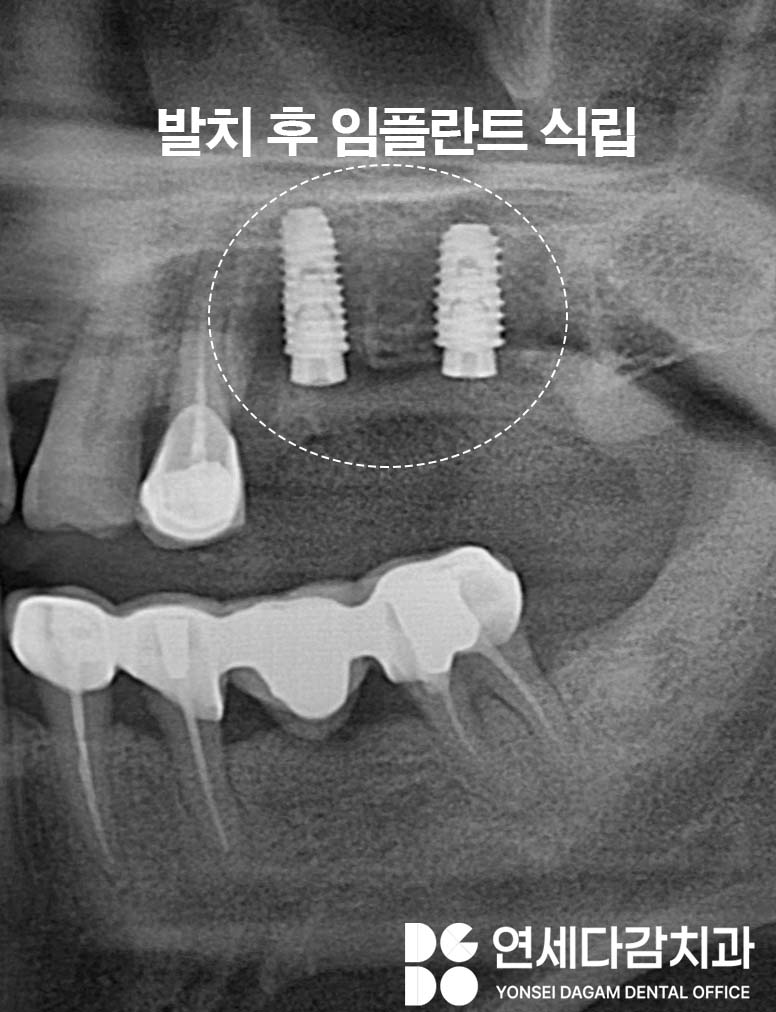
If the bone condition is good,
an implant is often placed on the same day as extraction,
that is, the immediate implant method
is applied.
In this case, faster recovery can be encouraged,
treatment time can be shortened,
and discomfort may be relieved more quickly.
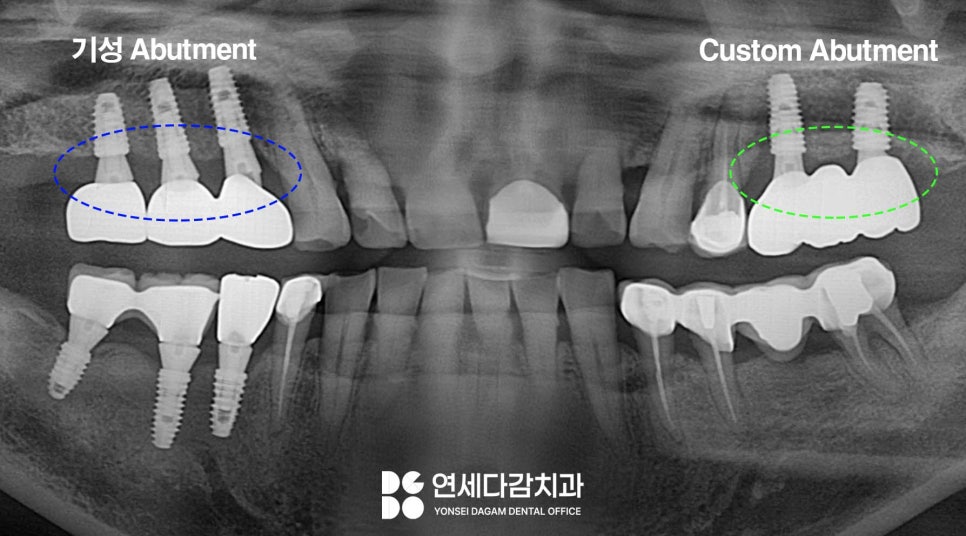
After completing the prosthetic process as well,
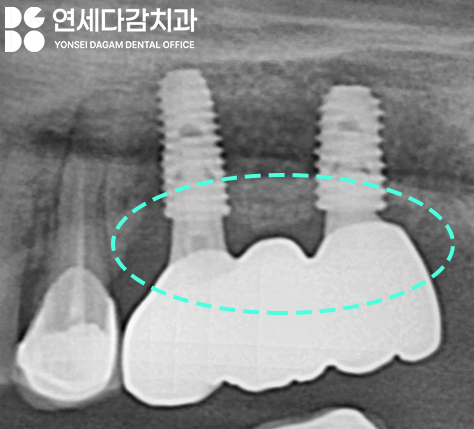
if you look at the X-ray shown at Munjeong Station Dental Clinic,
you can see that the shape of the part
connecting the implant and the crown is different.
This part is called the abutment (= abutment, abutment),
and I will explain in detail why choosing the type matters.
What is different about implant abutments?
💡
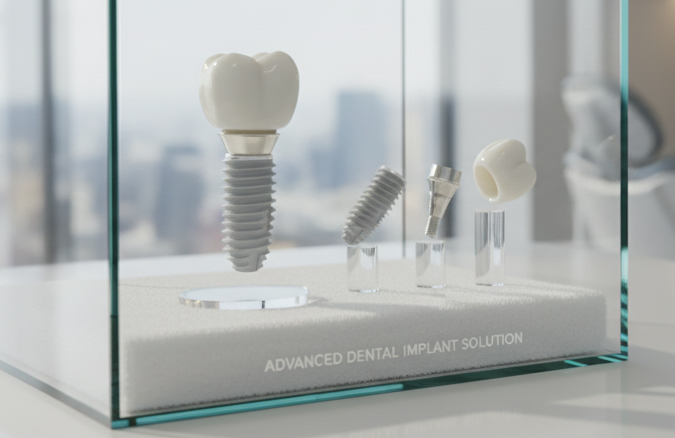
An implant is largely made up of three parts.
The fixture inserted into the bone,
the abutment connected on top of it,
and the visible crown.
The abutment serves as an intermediate pillar
connecting the fixture and the crown,
and there are two types of this part:
standard products and custom-made products.
To explain this difference at Munjeong Station Dental Clinic,
standard abutments are factory-made,
standardized products prepared in advance.
They have the advantage of relatively lower cost,
but they may not match a person's gum shape
or tooth angle perfectly.
Because gum height and thickness differ from person to person,
and the spacing between adjacent teeth also differs,
gaps can form between the prosthetic parts.
On the other hand, custom abutments are individually made
to fit the patient's oral structure.
They are designed to match the gum line and tooth shape,
which increases the fit with the prosthesis.
Why does fit matter?
If there is a tiny gap between the abutment and the crown,
bacteria can enter that space
or food can get trapped there.
To use an analogy from Munjeong Station Dental Clinic,
it is like having a gap between a door frame and a door,
allowing outside air to come in.
When a standard abutment is used,
it was not made to fit your own gums,
so the situation above can occur.
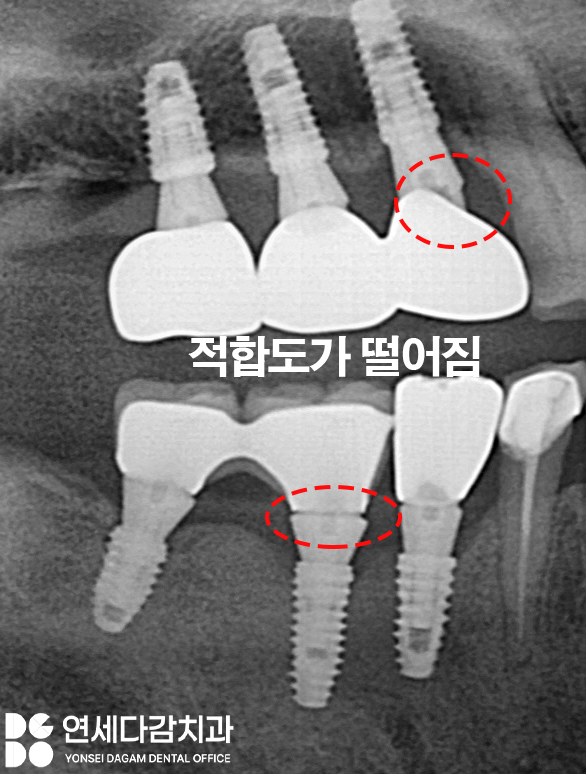
If you look at the area marked on the X-ray,
you can see that the prosthesis appears slightly lifted.
Even if such a minor mismatch may not be visible to the naked eye,
because this shape exists beneath the gums,
it has a high chance of causing problems over time.
If bacteria multiply in the gap,
there may be odor around the implant
or inflammation may develop in the gums.
Food may also get trapped frequently,
causing discomfort.
When these symptoms appear,
it is called peri-implantitis,
and if it becomes severe,
even the bone supporting the implant can be affected,
and eventually the implant may become loose and fall out.
Therefore, at Munjeong Station Dental Clinic,
custom abutments are used
to improve the seal so that no lifted areas form.
Even though today's content may feel somewhat difficult,
there is a reason Munjeong Station Dental Clinic
explains these parts in detail.
Implants are a treatment used for a long time once placed,
so not only the initial cost,
but also the ease of maintenance
and long-term prognosis must be considered together.
Choosing a custom abutment provides a precise fit,
reducing the possibility of food impaction and bacterial infiltration,
and creating an environment that is easier to keep clean.
This also helps prevent peri-implantitis,
contributing to the long-term maintenance of the implant.
I hope you accurately understand the types and differences of abutments
and are able to restore a healthier oral environment!
Thank you.
2025.09.05~2025.12.15