At some point, a tooth begins to hurt
and then the pain gradually gets worse,
sometimes even accompanied by a headache.
Because the pain is so widespread, it can be hard to tell
where it started
or which tooth is actually causing the problem.
When the pain location is not clear like this,
Songpa Station Dental Clinic identifies the cause through several examinations.
Tests to Find the Tooth Causing the Pain
When there is tooth pain, the problem is often not visible
just by looking.
In such cases, a few tests are used
to identify the source tooth.
✔️ The first is the bite test.
A cotton swab or cotton roll is placed
on top of the tooth,
and the patient is asked to bite down lightly.
If sharp pain is felt when biting on a specific tooth,
there is a high possibility that
that tooth has a crack.
✔️ The second is the percussion test.
This is a method of gently tapping the tooth
to check its response.
If pain is felt when tapping,
there may be inflammation in the tooth’s pulp.
When Songpa Station Dental Clinic performs these tests,
there are cases where even a slight press
causes a strong reaction.
When force is applied to the cracked area,
crack gaps open up and sharp pain occurs,
so if this kind of response appears,
we suspect that there may be a crack somewhere in the tooth.
If the crack progresses, the damage can extend
all the way to the tooth’s internal nerve.
When nerve inflammation becomes severe, it can throb even at rest
and may lead to headaches or pain around the jaw.
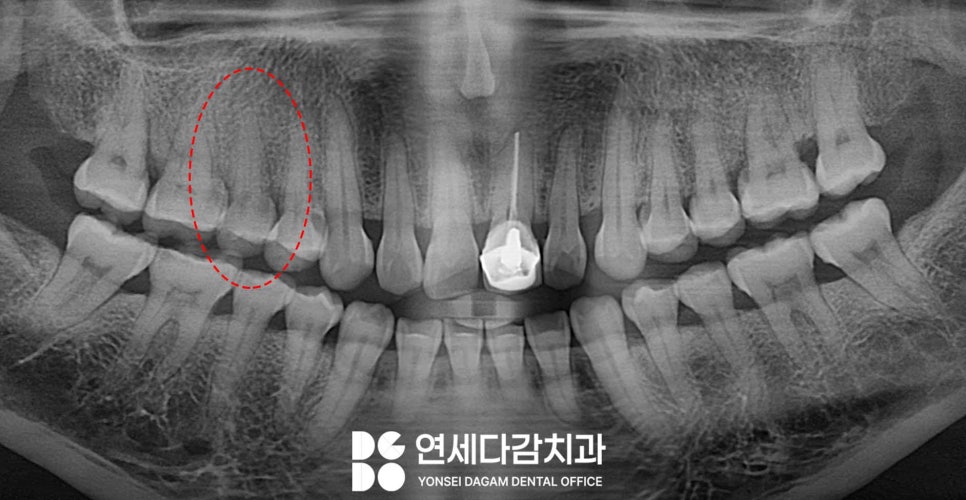
The problem is that if the crack is very small,
it may not be clearly visible
on an X-ray either.
That is why Songpa Station Dental Clinic performs
both the bite test and percussion test together:
to find damage that cannot be seen by the eye.
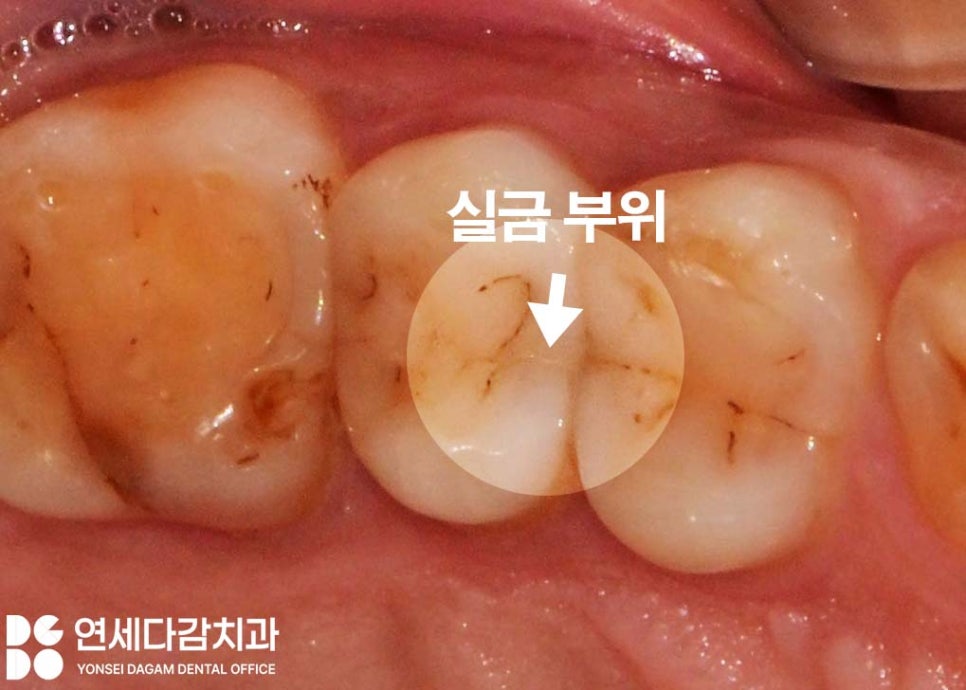
When a crack in the tooth is confirmed,
the treatment method depends on the depth of the crack
and the severity of the symptoms.
If the crack is shallow and the symptoms are not severe,
we may first place a crown to protect the tooth
and observe the course over time.
This is because a crown wraps around and stabilizes the tooth,
helping prevent the crack from widening.
On the other hand, if the pain is severe
or inflammation has progressed to the pulp,
root canal treatment is performed first.
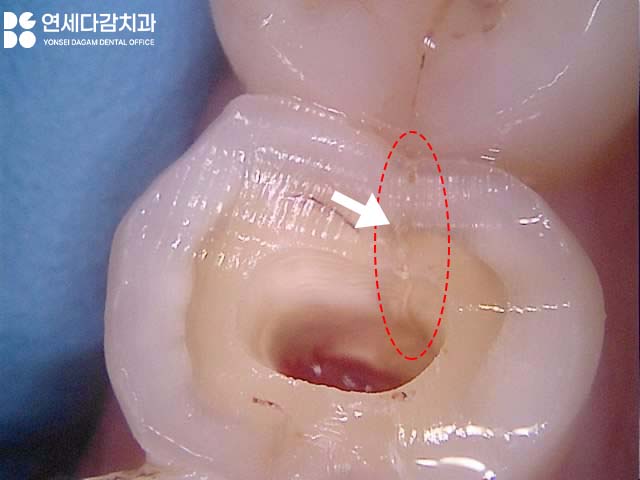
During the root canal treatment process,
crack lines can be seen inside the tooth,
just as marked at Songpa Station Dental Clinic.
Why a Crown Is Essential After Root Canal Treatment
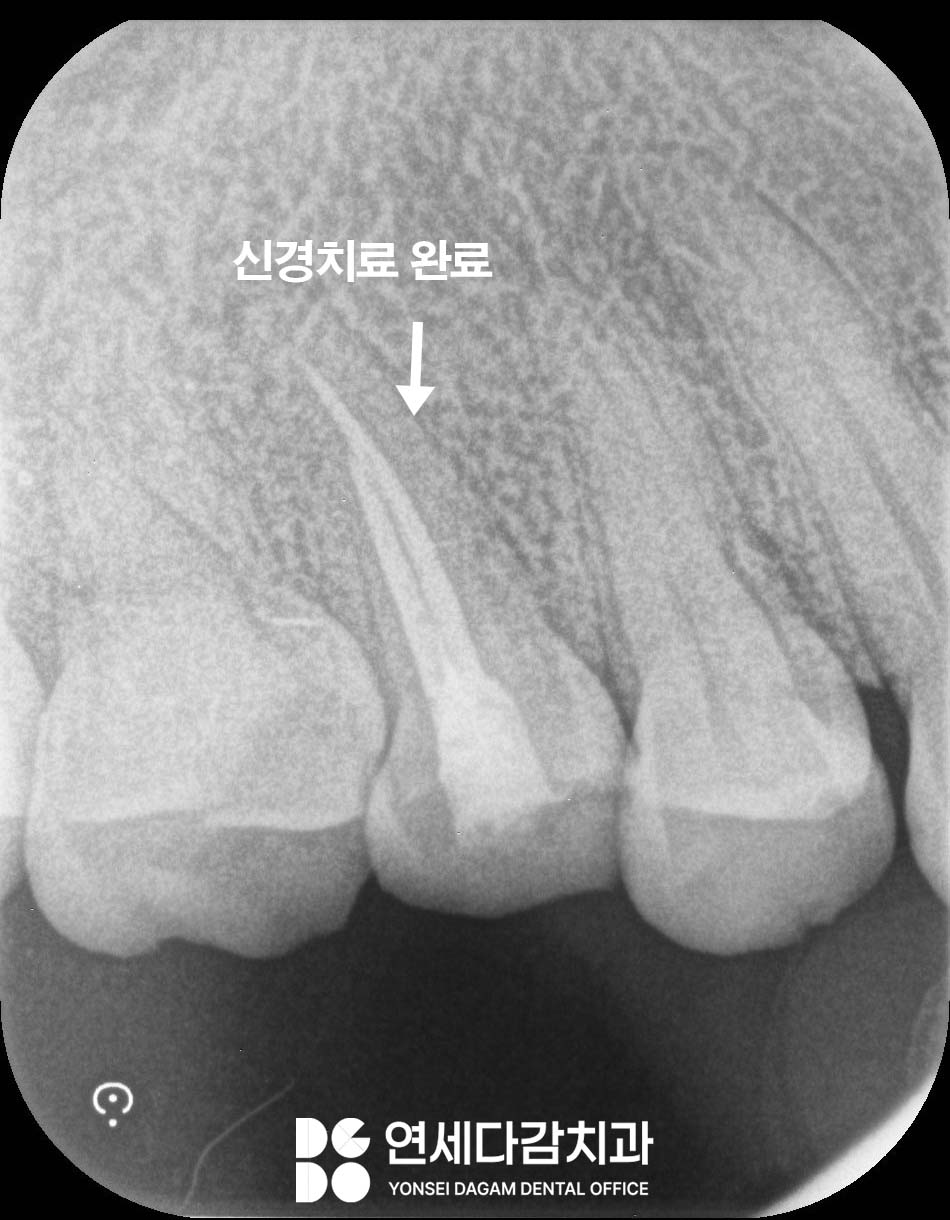
After root canal treatment, the pain goes away,
but the treatment is not completely finished.
Once the nerves and blood vessels are removed,
the tooth can no longer receive nourishment,
so it inevitably becomes structurally weaker.
To compare it,
it is like a hollow tree that may look fine on the outside
but breaks easily when hit.
If the tooth is not protected with a crown,
the root-canal-treated tooth becomes vulnerable to outside force
and is at high risk of fracture when pressure is applied.
The risk is even higher if the tooth already had a crack.
If it leads to a vertical fracture all the way to the tooth root,
the prognosis is not good,
and extraction may become unavoidable,
which could lead to an implant.
That is why we explain that after root canal treatment,
the tooth must be protected by covering it with a crown.
Treatment Cost
Root canal treatment and crown treatment include both items that are
covered by the National Health Insurance and items that are not.
The root canal treatment itself is covered by health insurance,
so the financial burden is relatively smaller.
However, crowns are not covered
and are performed as non-covered treatment.
If you are a foreign national,
you cannot receive benefits from the National Health Insurance,
so both the root canal treatment and the crown must be done
as non-covered treatment.
Therefore, because of cost burden,
some people first proceed with only the root canal treatment
to relieve the pain,
but as explained earlier by Songpa Station Dental Clinic,
if a crown is not placed after root canal treatment,
the risk of tooth fracture increases,
so we recommend completing the final prosthetic restoration if possible.
If treatment has to be delayed for a reason,
it is better to chew on the opposite side until the final prosthetic work is completed,
and it is safer to avoid hard or chewy foods.
In this way, the earlier a tooth crack is found,
the higher the chance of saving the tooth.
If the crack progresses to the tooth root,
extraction may be necessary,
so if a specific tooth feels sensitive
or sharp pain is felt,
please do not delay and get examined.
We hope you can identify the cause through the accurate examinations
explained by Songpa Station Dental Clinic
and receive the appropriate treatment.
Thank you.
Treatment period: 2025.12.02~2025.12.16