During daily life, a sudden stinging
and sharp pain may come and go
intermittently.
It seems like it is fine when eating,
so it does not seem like a tooth problem,
but then one side of the face suddenly feels tingling again.
Even after getting checked because you think it may be a tooth problem,
there is no cavity and the gums are fine..
What on earth is the problem?
At a Munjeong-dong dental clinic, we would like to explain
what you should suspect when you have this kind of unexplained
facial pain.
Facial pain may not be a tooth problem
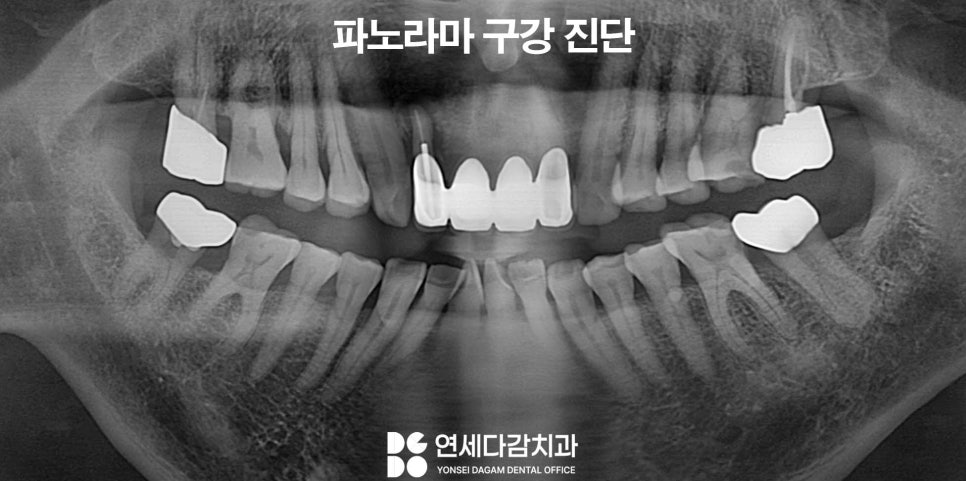
When there is pain in the face or jaw area,
most people first suspect a tooth problem.
This is because cavities, gum disease, and TMJ disorders
are common causes.
However, even after a dental checkup,
if there is no problem with the teeth and
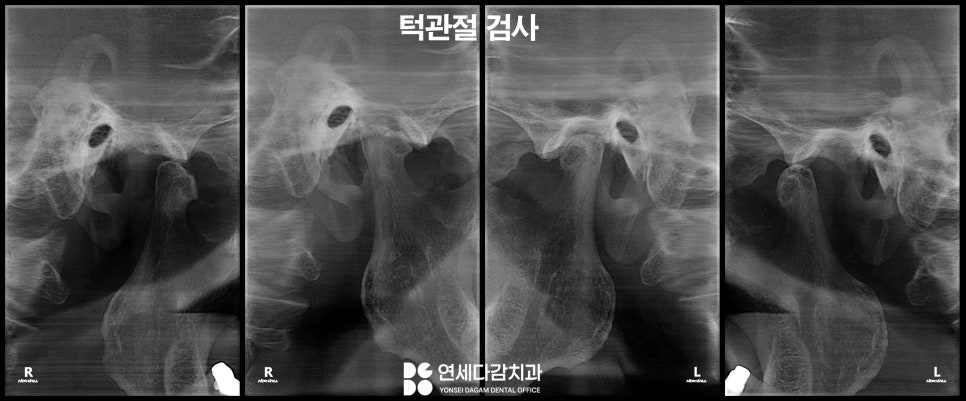
there are no abnormalities in the jaw joint or the chewing muscles,
the masseter and temporalis muscles, then
you need to think about other causes.
What you can suspect at this point
is trigeminal neuralgia.
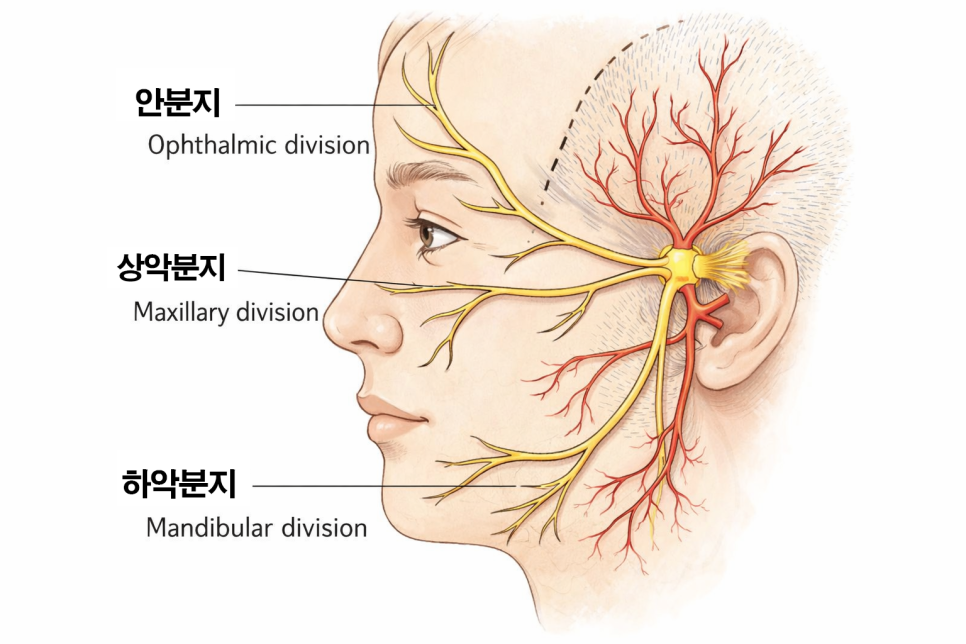
The trigeminal nerve is a cranial nerve
responsible for facial sensation.
As its name suggests, it branches into three divisions
that cover different parts of the face.
The first branch is responsible for the forehead and around the eyes,
the second branch transmits sensation from the cheeks, upper lip, and upper teeth,
the third branch transmits sensation from the jaw, lower lip, and lower teeth.
Thanks to this nerve, we are able to
feel things touching our face
and detect cold and hot sensations.
💡
Trigeminal neuralgia is a pain disorder that occurs when
there is a problem with this trigeminal nerve.
When the nerve is compressed by a blood vessel
or stimulated by another cause,
the nerve malfunctions.
As a result, even without any stimulus,
it sends severe pain signals.
To use a comparison from the Munjeong-dong dental clinic,
it is similar to a broken fire alarm
ringing even though there is no fire.
The nerve sends incorrect signals, so
pain is felt even though there is actually no problem.
Characteristic symptoms
Trigeminal neuralgia has features that
distinguish it from ordinary toothache.
The pattern of pain is unique.
It feels like an electric shock,
or a sharp pain like being stabbed with a knife,
that suddenly appears.
Also, the pain lasts for a short time.
It appears briefly for a few seconds to at most 2 minutes,
then disappears and repeats again.
And it usually occurs on only one side.
It is rare for both sides to hurt at the same time,
and it tends to be concentrated in a specific area,
such as one cheek, the jaw, the upper lip, or the lower lip.
Why it is confused with toothache
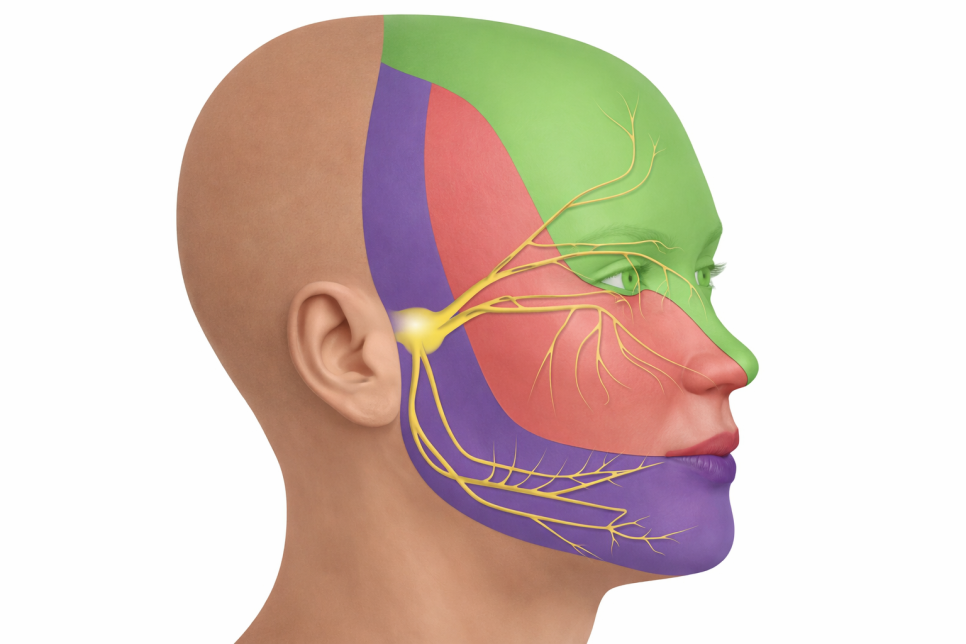
Trigeminal neuralgia is often mistaken for toothache.
This is because the second and third branches of the trigeminal nerve
are responsible for the upper and lower teeth areas.
When pain occurs in this area,
it naturally feels like the teeth are hurting.
So even if you visit several dental clinics
and receive cavity treatment or root canal treatment,
the pain may not go away.
In some unfortunate cases, even healthy teeth are removed.
Therefore, even at a Munjeong-dong dental clinic,
if the cause is difficult to find even after a detailed examination,
trigeminal neuralgia is considered as a possibility.
Treatment methods
The first treatment method for this condition
is medication.
Drugs with anticonvulsant ingredients
are mainly used.
Medications such as carbamazepine or gabapentin
are prescribed.
These medications reduce pain by suppressing
the nerve's overactive response.
At the Munjeong-dong dental clinic,
pain often decreases after about a week
of taking the medication.
If there is no response to medication
or the side effects are severe,
other treatment through the neurology department is needed.
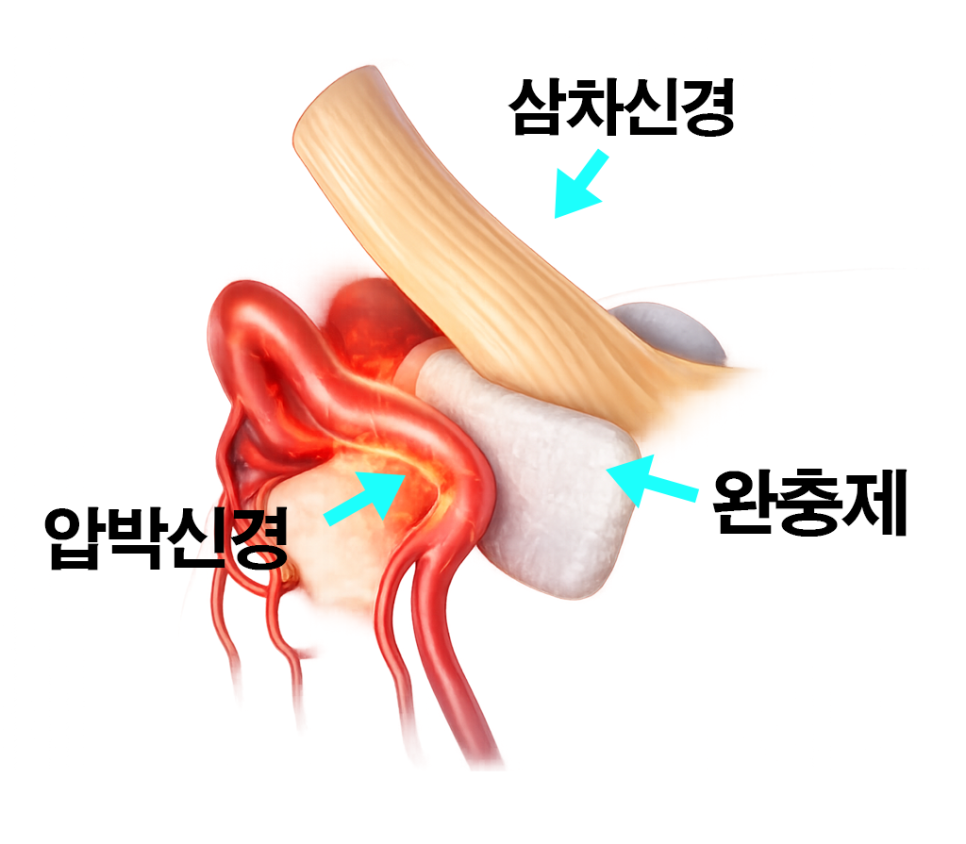
A procedure called microvascular decompression
may be performed, in which the blood vessel compressing the nerve
is separated from the nerve,
and
through radiofrequency thermocoagulation,
part of the nerve is blocked with heat
to prevent pain signals from being transmitted.
Gamma Knife radiosurgery can also be performed
a non-invasive method that uses radiation
to treat the nerve.
Which method is appropriate
depends on the patient's condition and the cause,
so consultation with a specialist is necessary.
Do not leave unexplained pain untreated
As I explained today,
if you have unexplained facial pain,
do not just put up with it and let it pass.
If it does not seem like a tooth problem
but keeps hurting,
there is a possibility that it is trigeminal neuralgia.
As explained by the Munjeong-dong dental clinic,
if you receive an accurate diagnosis,
you can control the pain with appropriate treatment,
so please check the cause first!
Treatment period: 25.12.27~26.01.15