Hello.
I am Seo Ho-yeon,
Director of Yeonse Da-gam Dental Clinic,
a dental clinic in Munjeong-dong.
There are more people than you might expect
who continue living without receiving treatment right away
after losing a tooth.
At first, they may think
that they can simply chew on one side,
or they may continue as they are
because they do not feel particularly uncomfortable
at the moment.
However, the space left by a missing tooth
does not remain unchanged over time.
When a tooth is lost,
the jawbone that once surrounded it
may gradually decrease as well.
The force transmitted to the teeth when chewing
travels through the tooth roots to the jawbone,
but after a tooth is lost,
there is no longer a root remaining in that area.
In addition, if the space left by a missing tooth
is left empty for a long time,
the opposing tooth may move down toward the open space,
a phenomenon known as extrusion.
The surrounding teeth may tilt or the bite may change,
which can result in more factors to consider
when planning an implant later.
Molars, in particular, are teeth that receive
a great deal of chewing force.
Therefore, when planning an implant,
it is important to examine not only the empty space
but also how much jawbone remains
to support the implant.
If an implant is placed forcefully
when there is insufficient jawbone,
the implant may not be sufficiently surrounded by bone,
which can make it difficult to properly
support the forces applied during chewing.
That is why, in an area where a tooth has been missing for a long time,
the amount and shape of the jawbone
should be examined first before implant placement.
Today, through the treatment case of a patient
whose jawbone had become thin after losing a molar long ago,
I will explain why bone grafting was necessary
and how the implant treatment proceeded.
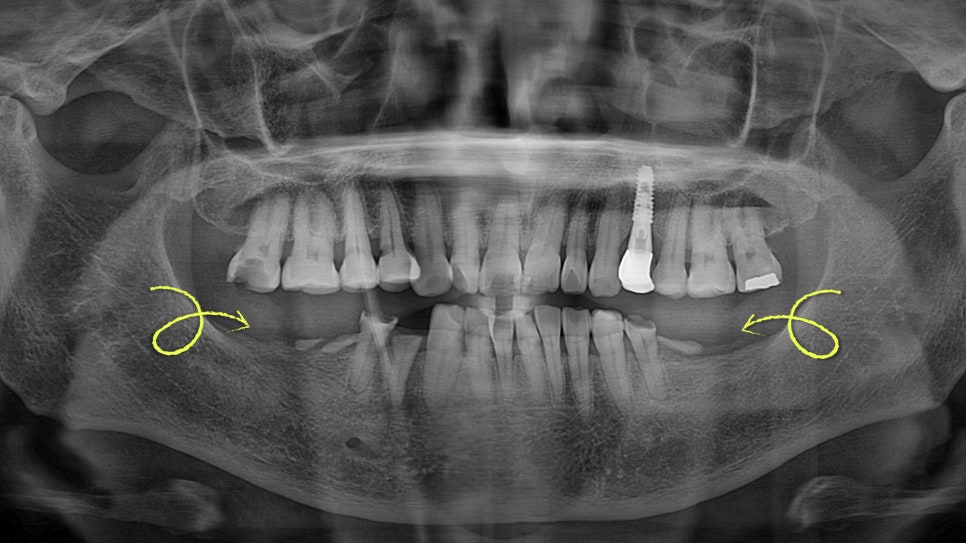
(March 7, 2026)
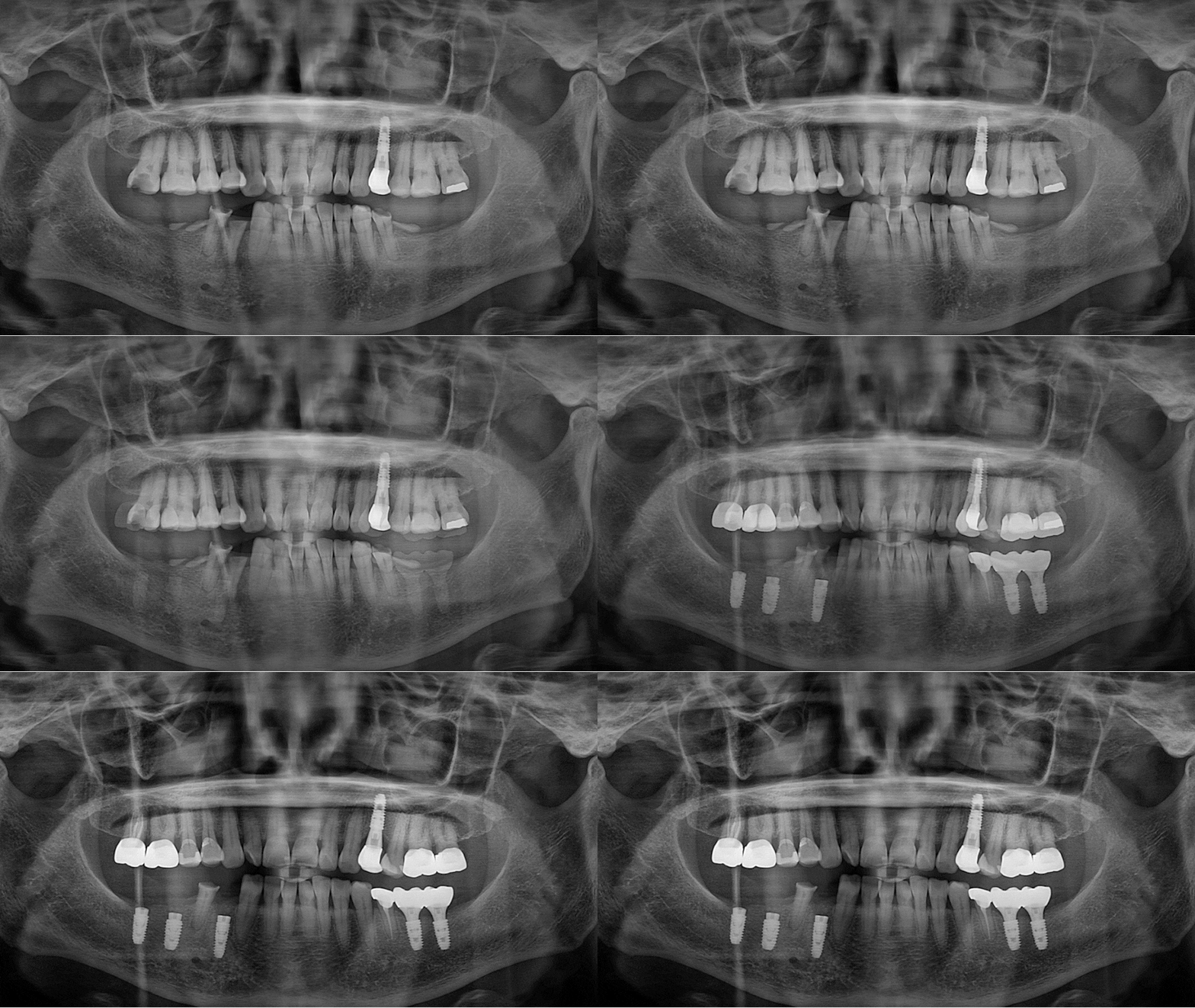
The patient had no molars
on either side of the lower jaw.
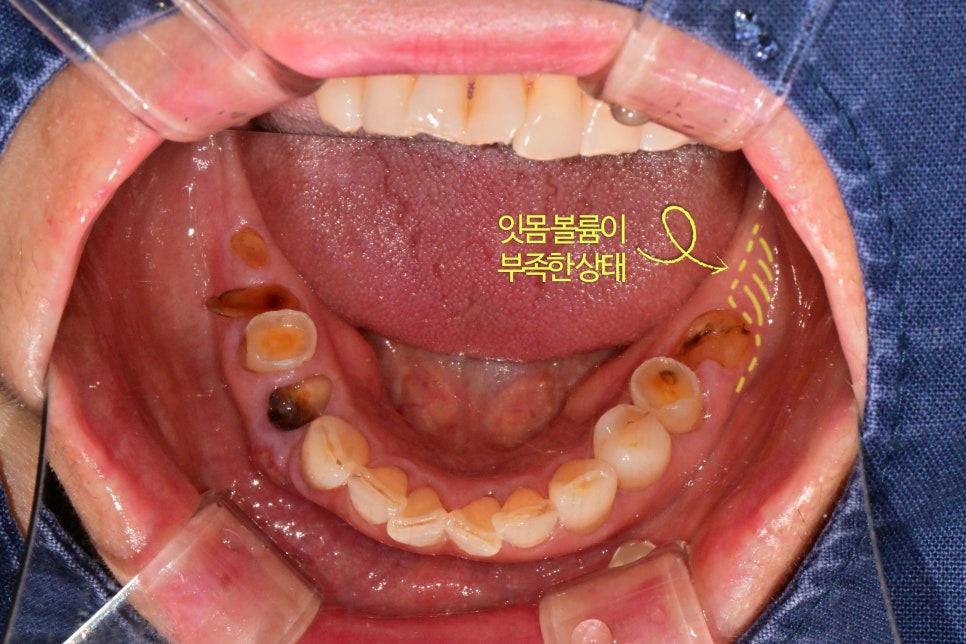
As can also be seen in the photographs,
the patient had considerable tooth wear.
Several teeth appeared to require treatment,
but we first planned treatment for the lower left molar area.
In particular, the patient had spent a long time without a tooth in this area,
so the jawbone had become considerably thin.
Therefore, for this treatment,
we decided to perform bone grafting together with implant placement
to reinforce the deficient jawbone.
Of course, it is difficult to determine whether bone grafting is necessary
simply by looking at the gums.
Even if the gums appear to be present to some extent,
the actual width and height of the bone
must be confirmed through X-rays or a CT scan.
Based on this information, we first examine
where to place the implant,
whether bone grafting is necessary,
and, if it is needed,
to what extent reinforcement should be performed.
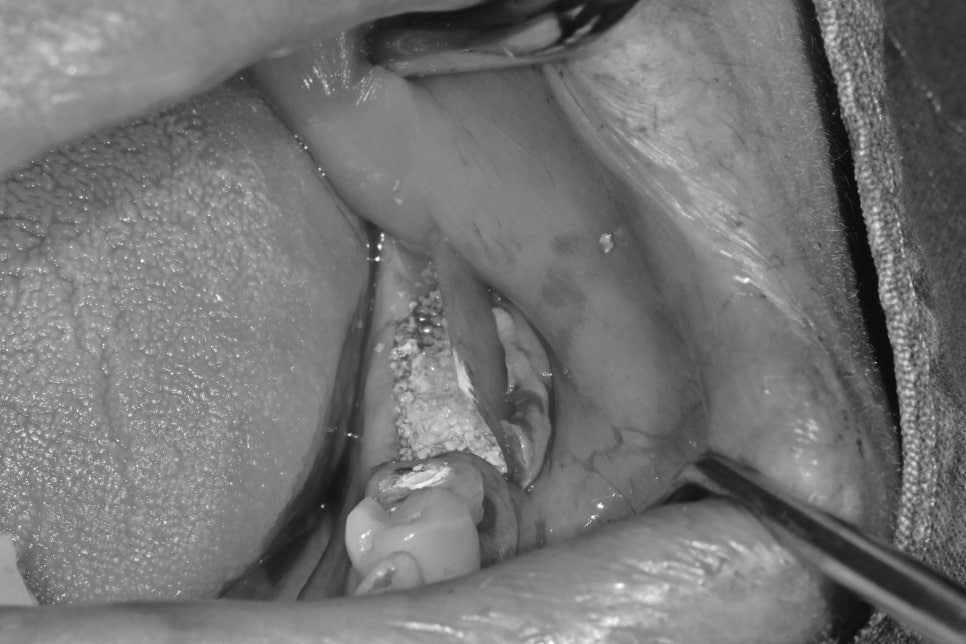
Bone grafting is a treatment performed
when there is not enough jawbone to place an implant.
Bone graft material is added to the deficient area
to create an environment in which the implant can settle securely.
At this time, it is also important to shape the area
so that the grafted bone does not disperse
and can remain in the necessary position.
In this treatment, we used a membrane together with the bone graft material.
What is a membrane?
Yeonse Da-gam Dental Clinic,
a dental clinic in Munjeong-dong
A membrane is a material that helps protect the grafted bone
and maintain the space where bone can form.
In simple terms, you can think of it as covering the bone graft material
to maintain the necessary space.
We filled the necessary area with bone graft material
and covered it with a membrane
to create space in which the bone could settle.
The patient was also given instructions
about postoperative care.
After surgery, it is best to eat on the opposite side
or to focus on soft foods.
You should also take the prescribed medication as directed
and monitor the degree of swelling, pain, and bleeding.
Some discomfort may occur for a certain period.
However, if the pain becomes worse over time,
if pus appears, if there is significant bleeding,
or if you feel that the gums are opening,
you should have your condition checked at a dental clinic.
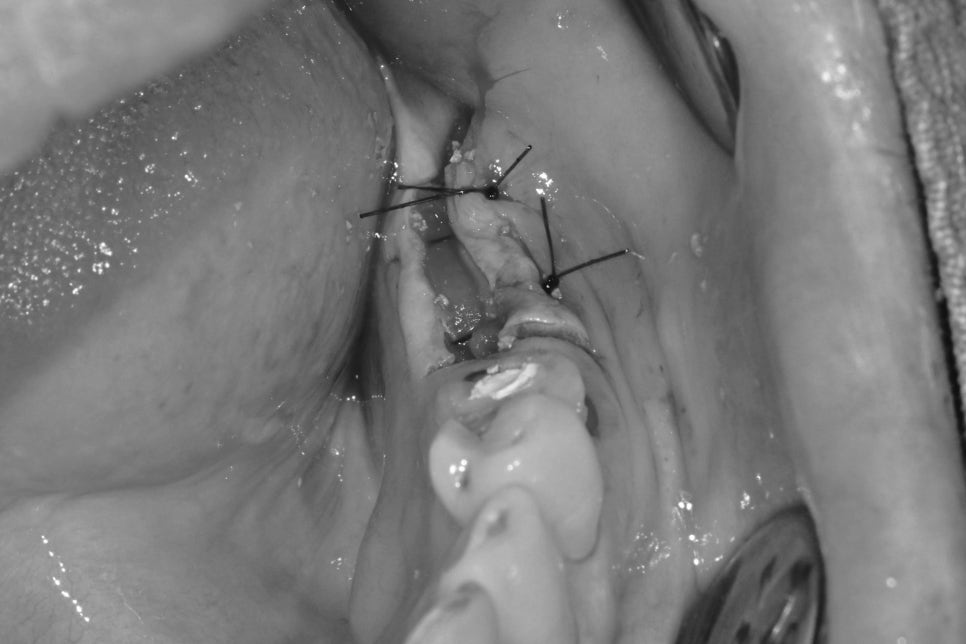
After surgery, we allow time for the gums to heal sufficiently
and monitor their progress.
For this patient as well,
after performing bone grafting and implant placement together,
we finished by suturing the gums.
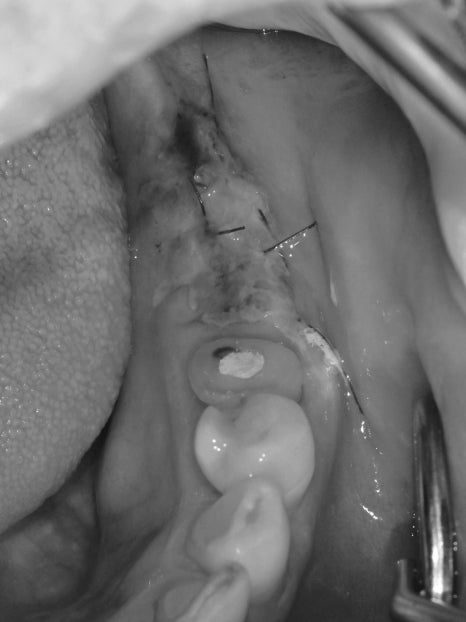
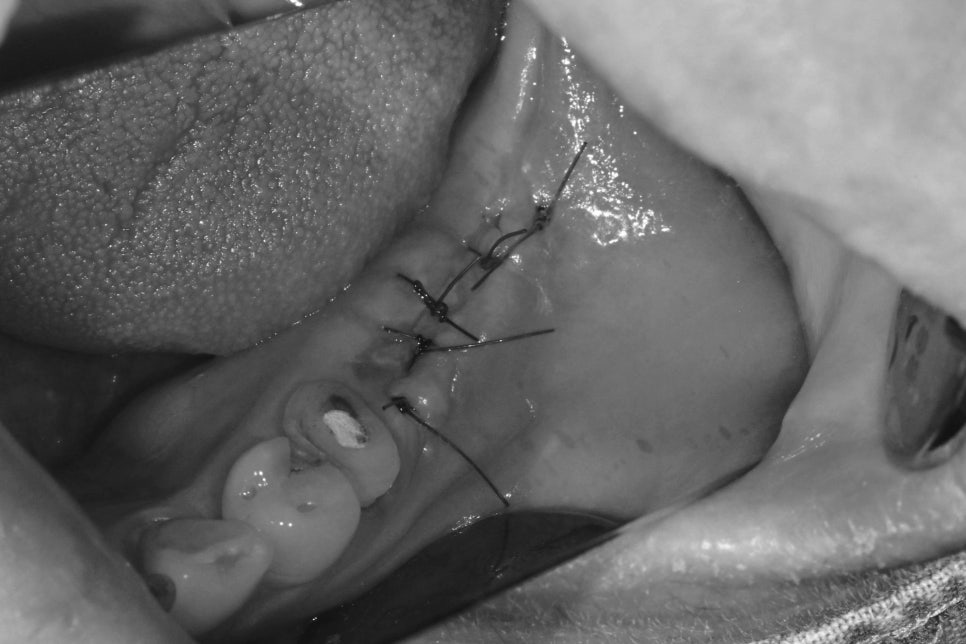
As several days passed after surgery,
the gums gradually began to heal,
and we continued to check the recovery.
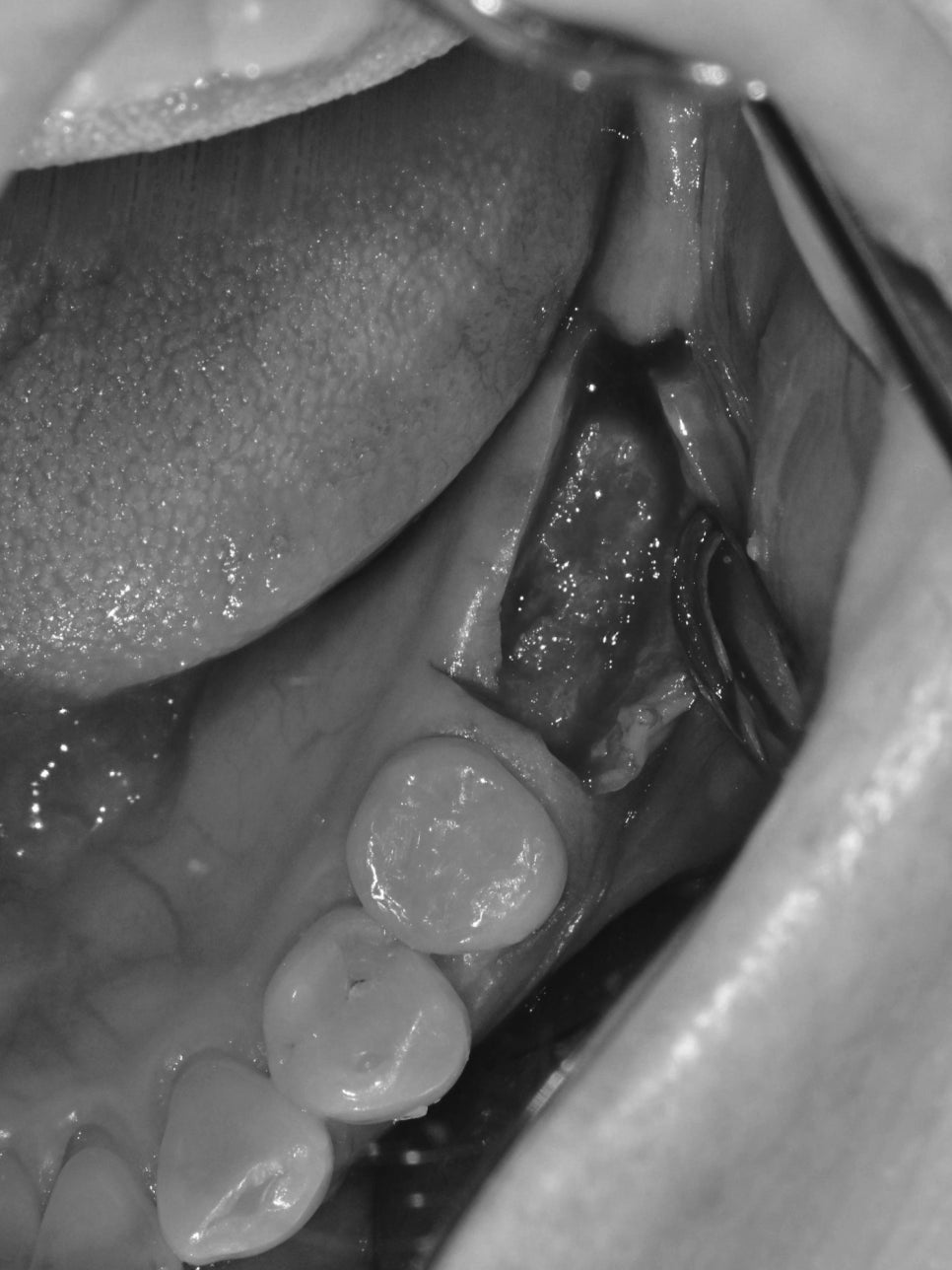
Upon reexamination,
we could confirm that the area where the jawbone had been thin
had been reinforced and had formed more thickly.
Although the jawbone had decreased while the patient was without a tooth,
after checking the condition around the implant following bone grafting,
we were able to connect the prosthesis.
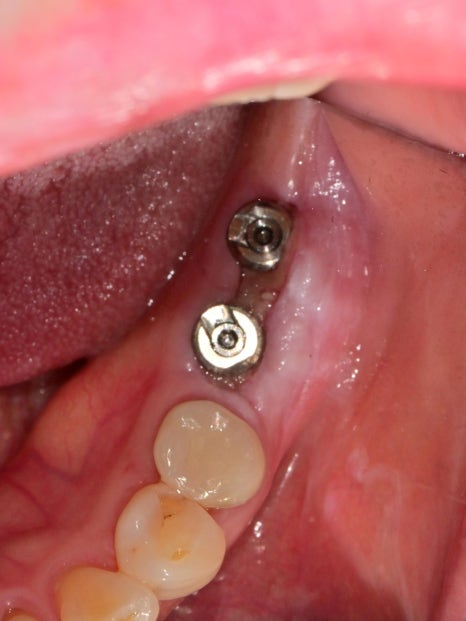
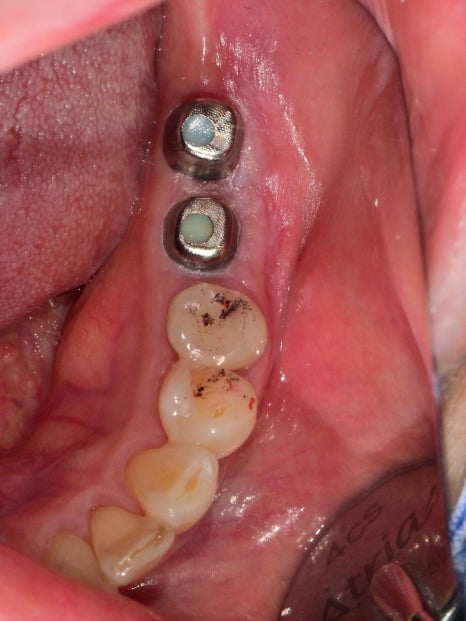
After the second surgery,
we moved on to the stage of fabricating the final prosthesis.
After confirming that a certain amount of thickness
had been secured in the surrounding gums and bone,
we connected the prosthesis and completed the treatment.
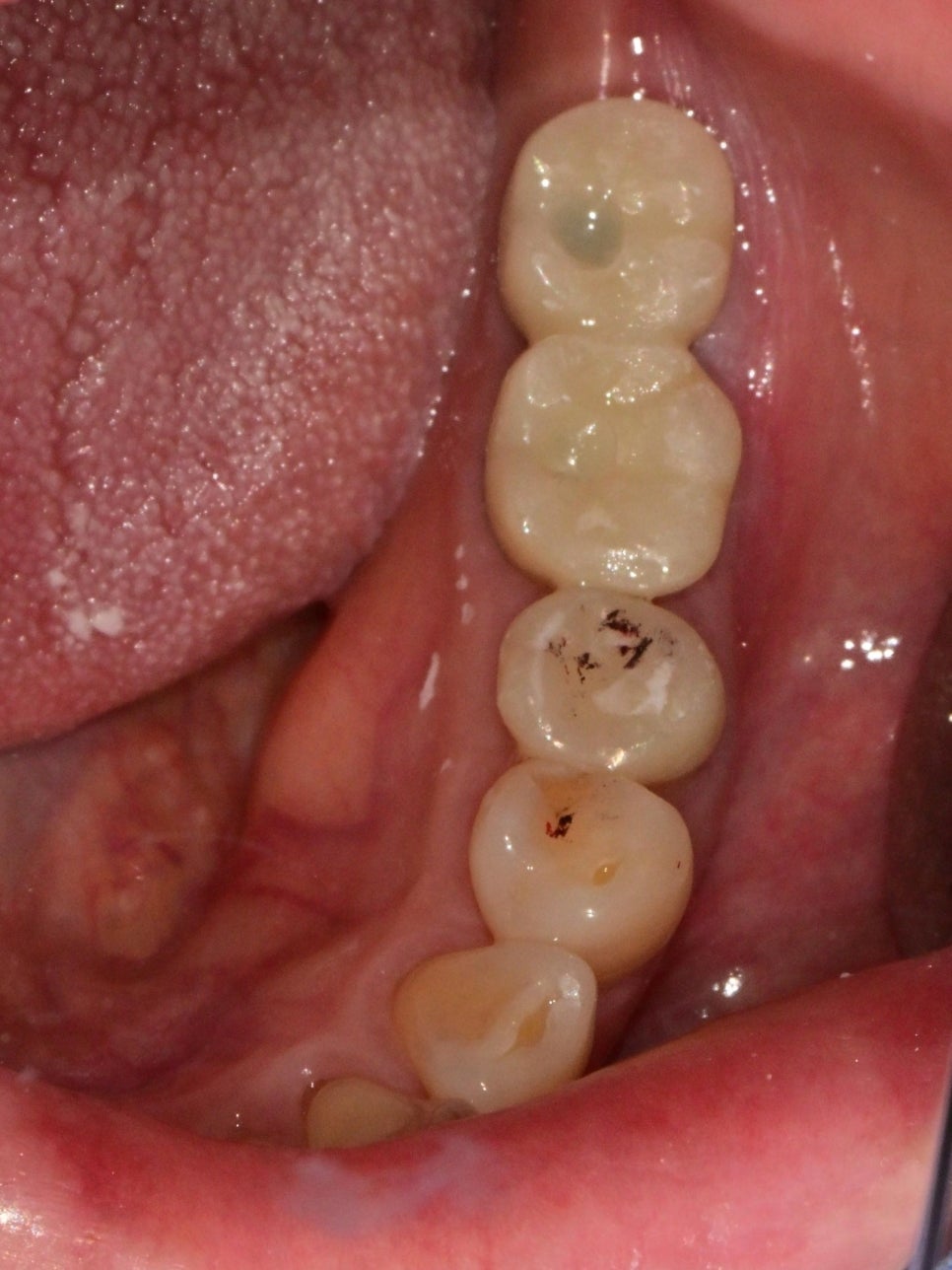
At first, the bone had become thin,
so it was not easy to plan the implant,
but after reinforcing the area around the implant through bone grafting,
we were able to proceed through prosthetic treatment.
The treatment needed for the other teeth
will also be continued step by step
while monitoring the patient’s condition.
When planning implants,
Yeonse Da-gam Dental Clinic in Munjeong-dong
checks digital records and the condition of the mouth,
and explains the patient’s current condition
through consultation.
Above all, we consider it most important
to first examine the patient’s bone and recovery conditions
and develop a treatment plan
within a reasonable range.
If you have been without a tooth for a long time,
or have been told that an implant may be difficult
because of insufficient bone,
we hope you will first have your oral condition checked.
Thank you for reading this lengthy post.
We hope you have a happy day today as well. ^^

[Naver Appointment Booking]
[Yeonse Da-gam Dental Clinic Website]
[Yeonse Da-gam Dental Clinic KakaoTalk Consultation Channel]
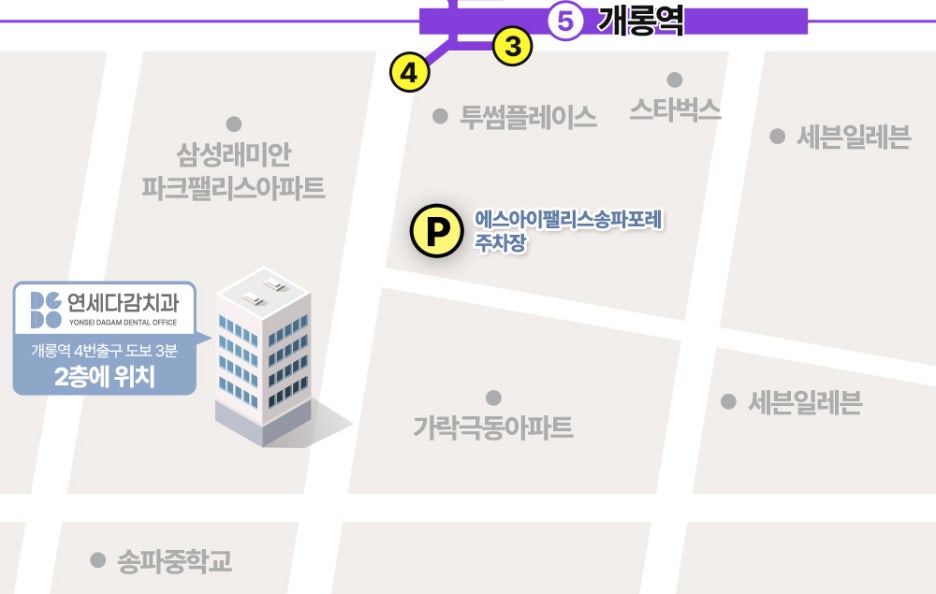
Munjeong-dong Dental Clinic, Yeonse Da-gam Dental Clinic