Cavities: Delaying Treatment Makes It More Painful and More Expensive – What You Should Know at Jonggak Dental Clinic
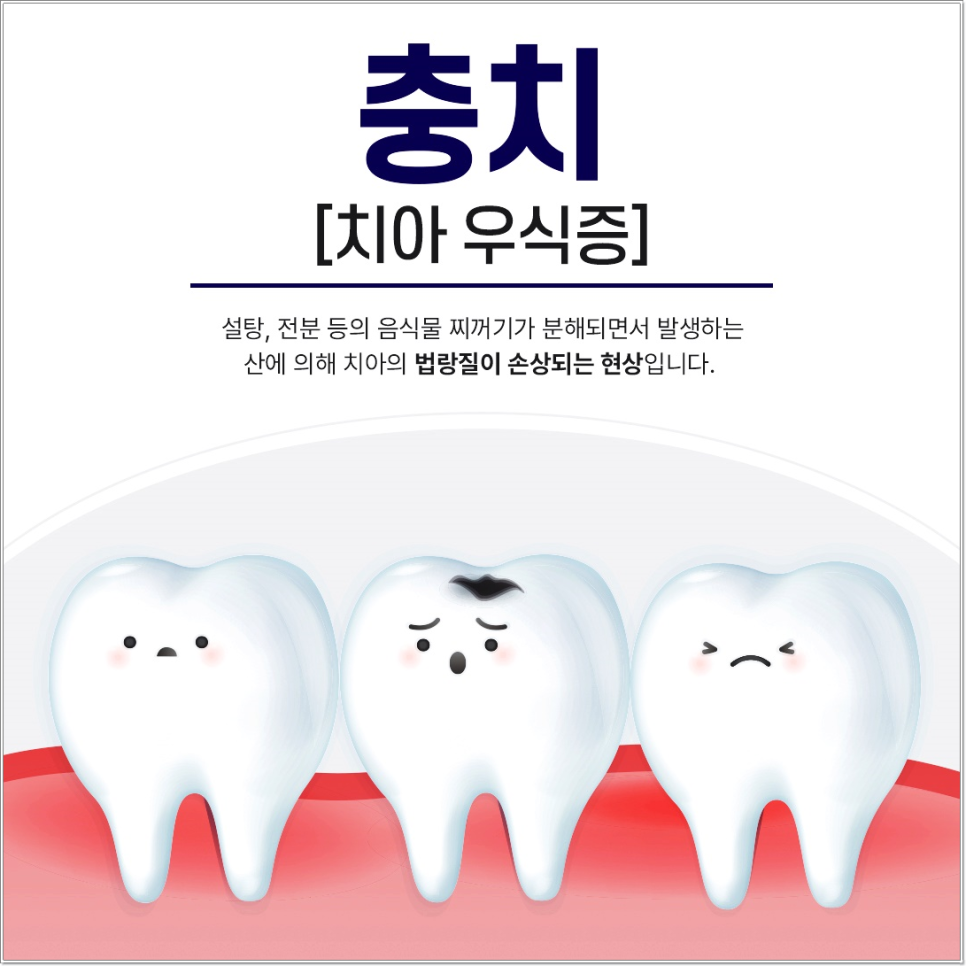
Cavities are a common condition that can happen to anyone, but they are also easily neglected.
Many people who visit Jonggak Dental Clinic say things like, “It was just a little sensitivity, so I put up with it,” or “I didn’t have time, so I delayed treatment.”
But cavities worsen quickly over time, and eventually can lead to root canal treatment or even extraction.
In this post, we’ll go over why cavities are serious, why root canal treatment becomes necessary, and what changes when treatment is delayed.
🔎 Why cavities should not be left alone
✔️ Risks by stage of cavity progression
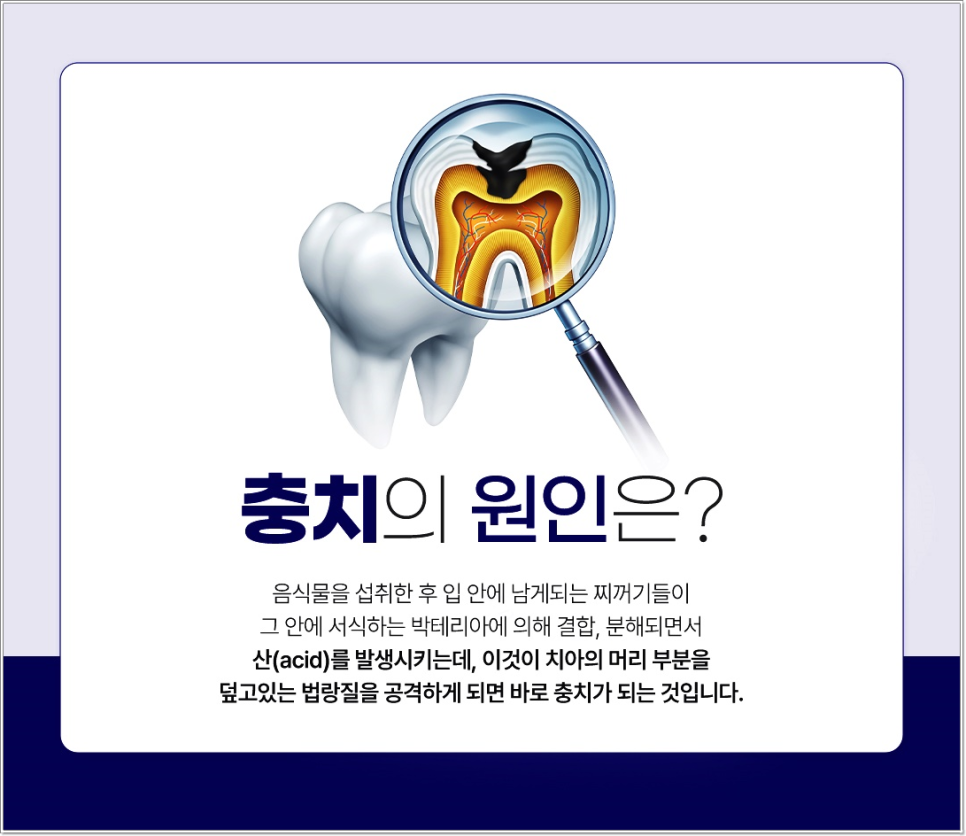
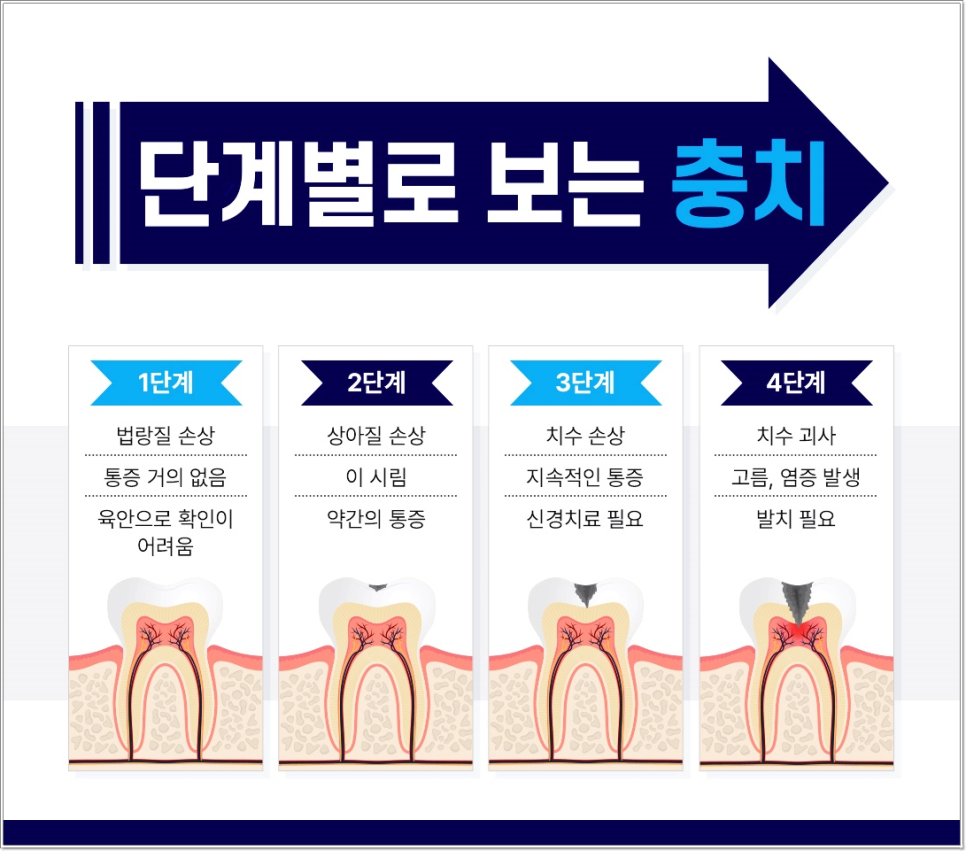
Cavities may look small on the outside, but they spread deeply inside the tooth.
At first, only the tooth surface is slightly damaged and there are no noticeable symptoms, but gradually inflammation spreads to the nerve, causing severe pain and lasting complications.
-
Early cavities are hard to notice because there is little visible change and almost no pain.
-
As cavities progress to the middle stage, sensitivity develops, and discomfort may occur when eating sweet foods.
-
Advanced cavities damage the nerve, causing intense pain, and at that point simple treatment is no longer enough.
In children, the enamel is thinner than in adults, so cavities progress more quickly.
That is why regular checkups are very important, even if they do not seem to hurt often. Children may not be able to express pain well, so parents need to observe them carefully.
⚠️ What happens if cavities are left untreated
If a cavity is left untreated for a long time, inflammation spreads to the tooth’s nerve, and eventually root canal treatment is needed to remove the nerve.
This increases the treatment time, the cost, and the discomfort felt during treatment.
In addition, if the cavity infection spreads beyond the nerve to the root tip, the inflammation can spread to the gums, or the tooth may need to be extracted.
In fact, among those who visit Jonggak Dental Clinic, many often say, “If I had come a little sooner, I might not have needed root canal treatment.”
🧠 Why is root canal treatment necessary?
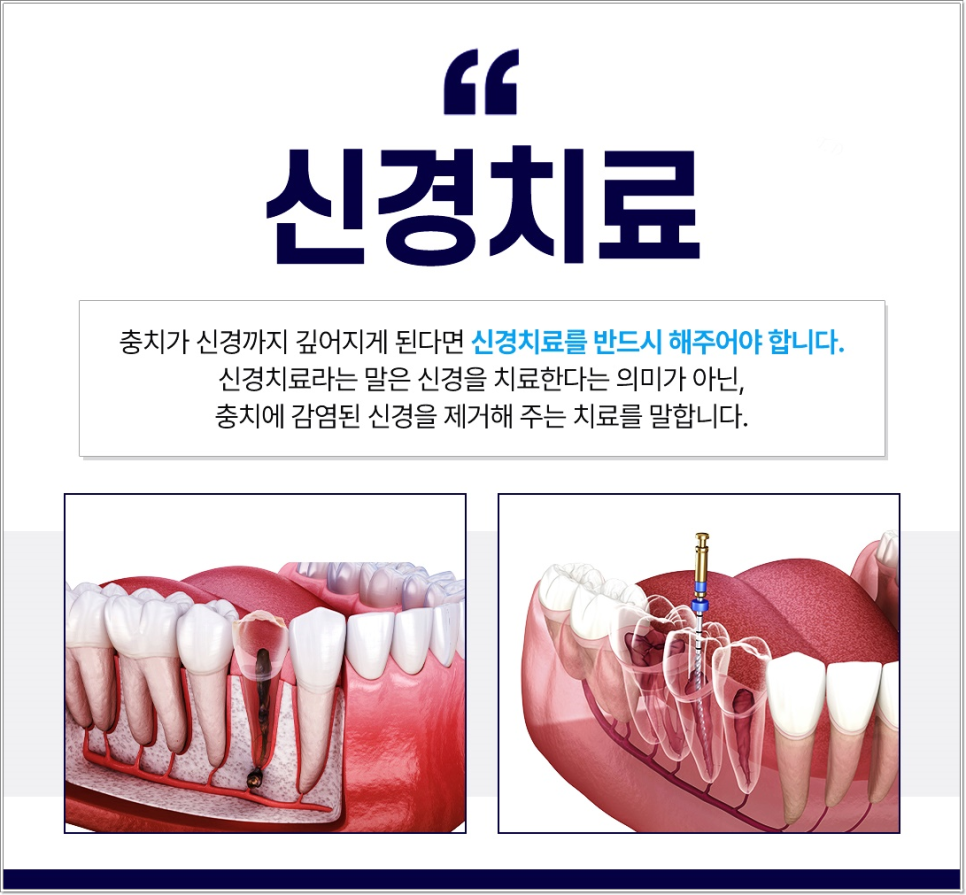
Root canal treatment is called “the last step to saving a tooth.”
It refers to the process of removing the inflamed nerve when a cavity has invaded the tooth’s inner nerve (pulp), disinfecting the inside of the tooth, and sealing it.

🦷 The root canal treatment process is as follows
-
Confirm whether the cavity has reached the nerve through X-ray or diagnosis
-
Remove the infected nerve tissue
-
Clean and disinfect the inside
-
Fill and seal it tightly to prevent bacteria from re-entering
Root canal treatment is a process to save the tooth, but if the tooth is already weakened, it is necessary to protect it with a crown after treatment.
That is because a tooth without its nerve no longer receives nourishment and can become more prone to breaking.

🕐 Why does treatment timing matter?
Some people often say, “I’ll hold off for now and get treated later,” but delaying treatment increases not only pain but also practical burdens.
If treated early, it can end with a simple filling, costs less, and there is almost no pain.
But if you miss the right time, treatment may progress to root canal treatment and even a crown, increasing the burden in terms of time, money, and pain.
Early treatment also means fewer dental visits and faster recovery.
In the end, the longer you delay, the more you lose—please keep that in mind.

✅ How to prevent cavities and check yourself
🔍 If you have these symptoms, it may be a cavity
-
Food gets stuck often, or floss feels caught when you use it
-
You feel sensitivity when eating cold or sweet foods
-
When looking in the mirror, the tooth surface appears black or gray
-
Discomfort or bleeding when brushing
If even one or two of the items above apply to you, it is a good idea to get examined at a nearby dental clinic. Also, pain caused by cavities often appears as repeated sharp or throbbing pain in a specific tooth. It differs from gum disease or jaw joint pain, so an accurate diagnosis is needed.

How to prevent cavities & the importance of regular checkups
-
Brush three times a day for at least 3 minutes
-
Use fluoride toothpaste
-
Brush right after eating sweets
-
Get regular scaling and checkups
Regular checkups give you the chance to find cavities in their early stage and treat them simply.
In particular, checking regularly when there are no symptoms is the best way to prevent them.

💬 Frequently Asked Questions (FAQ)
Q. I have a cavity, but it doesn’t hurt. Do I still need treatment?
→ Yes, asymptomatic cavities may still be progressing inside. Don’t rely only on what you can see on the surface.
Q. How painful is root canal treatment?
→ It is performed under anesthesia, so there is almost no pain during treatment. Pain after treatment usually subsides within a few days.
Q. Does root canal treatment make the tooth unusable?
→ No. If the tooth is protected with a crown after root canal treatment, it can be used for a long time.
📝 Closing: The longer you delay a cavity, the more you lose
Cavities do not heal on their own.
If found and treated early, the treatment scope is smaller, there is almost no pain, and the cost is lower.
But if you delay treatment, it may progress to root canal treatment, a crown, or in severe cases, extraction.
If you are near Jonggak Dental Clinic, why not get a regular checkup now?
Your teeth are part of your health that you should take the best care of yourself.