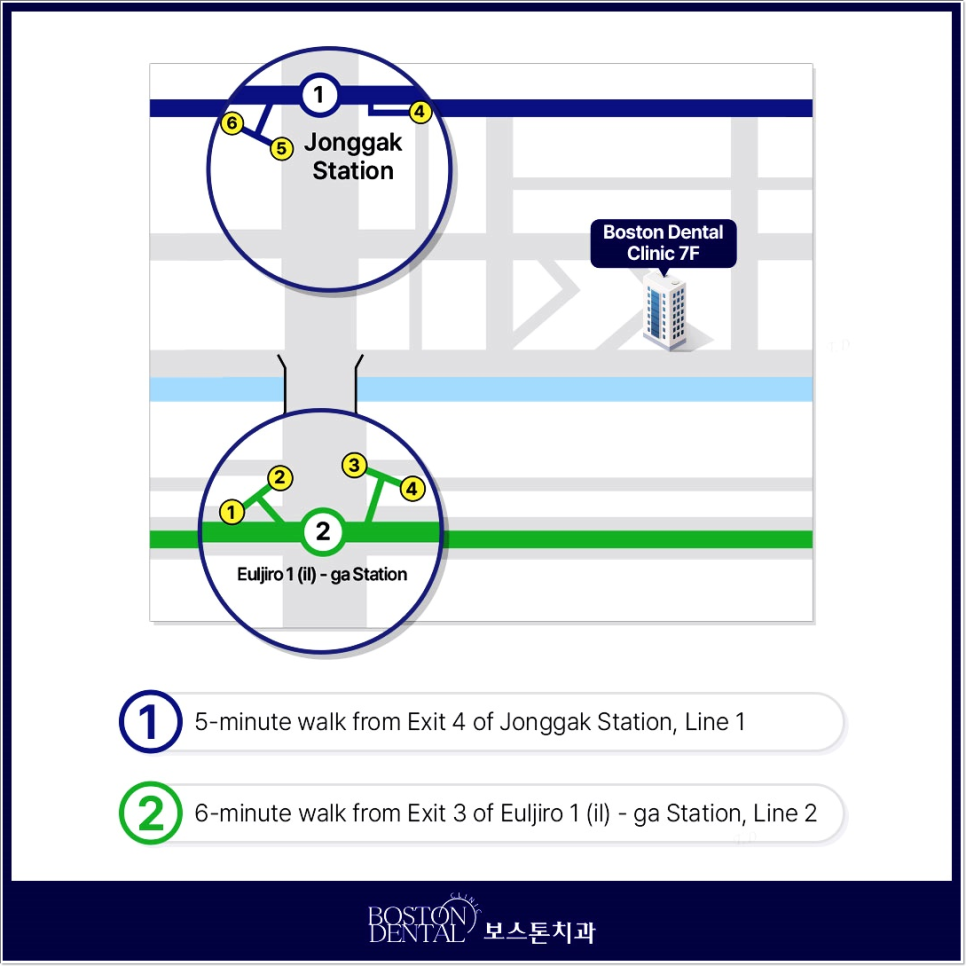
If you are a foreigner living in Korea, you may have difficulty using medical services, especially dental care, because of the language barrier. Communication difficulties can make dental treatment feel even more stressful. But don’t worry! In this post, we have organized all the information you need to know about the five most common treatments at a dental clinic for foreigners in an easy-to-understand way. From cavities to implants, we will help you receive dental treatment without anxiety by covering the key information you should know.
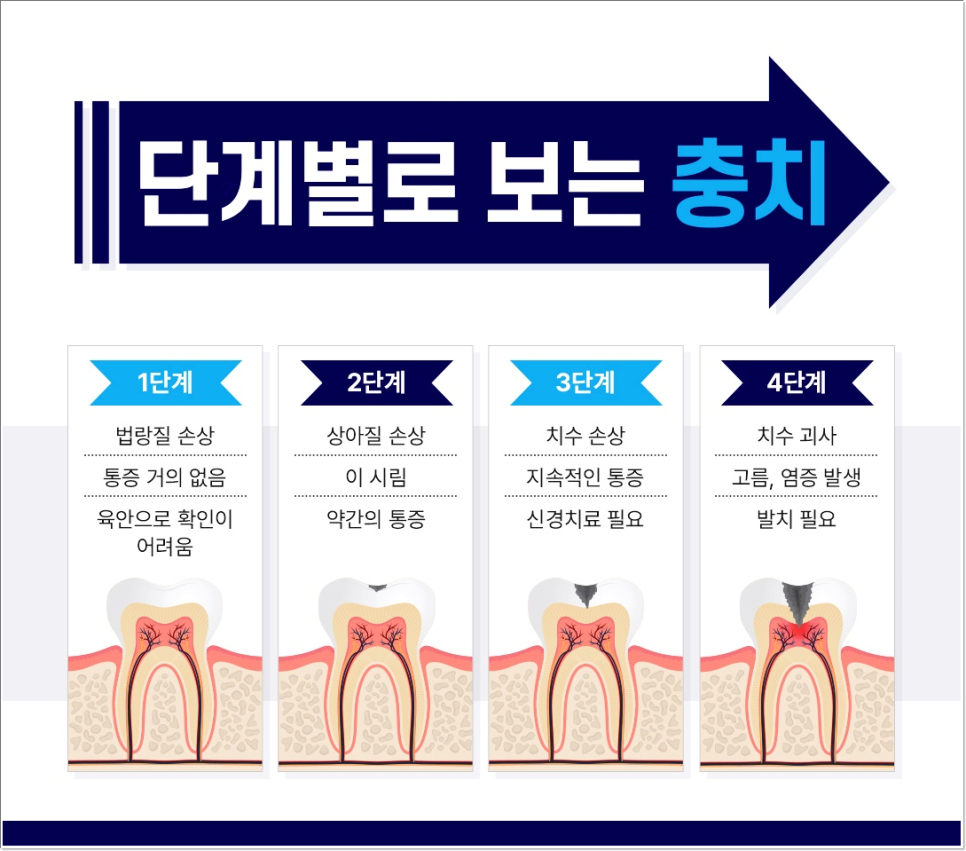
- The Most Common Cavity Treatment at a Dental Clinic for Foreigners
Cavities (dental caries) are one of the most common dental diseases worldwide. A cavity is damage to the tooth enamel caused by acids produced when bacteria living on the tooth surface break down sugars in food.
Symptoms and Progression of Cavities
Early cavities have almost no symptoms, but as they progress, the following symptoms may appear:
Cavities progress as follows:
-
Early stage: White spots appear on the enamel surface
-
Middle stage: The enamel is damaged and the dentin is exposed
-
Severe stage: The infection reaches the pulp (nerve)
Cavity Treatment
-
Resin filling: Mainly used for small cavities, filled with a material similar in color to the tooth. Treatment is completed in one visit.
-
Inlay/Onlay: Used for medium-sized cavities. A precise restoration is made and bonded to the tooth. Usually requires two visits.
-
Crown: A treatment that covers and protects a severely damaged tooth. Requires two or more visits.
-
Crown after root canal treatment: Needed when the cavity has reached the nerve.
Tips for Preventing Cavities for Foreign Patients
-
Brush at least twice a day with fluoride toothpaste
-
Use dental floss and interdental brushes
-
Get regular dental checkups (recommended every 6 months)
-
Limit sugary foods and carbonated drinks
-
Consider fluoride application treatment (commonly offered at Korean dental clinics)
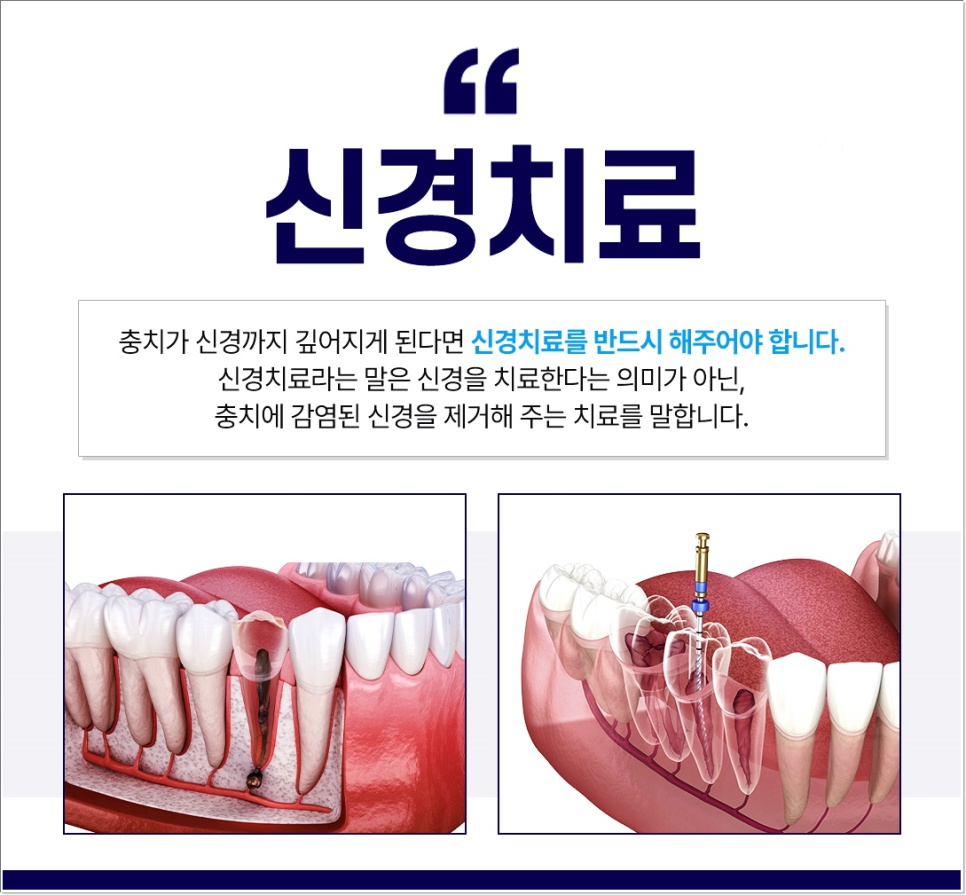
- Root Canal Treatment That Addresses the Cause of Pain
Root canal treatment is a procedure that removes infected nerve tissue from inside the tooth and preserves the tooth.
Symptoms That May Require Root Canal Treatment
You may need root canal treatment if you have the following symptoms:
-
Severe toothache that continues
-
Intense pain with cold or hot food
-
Pain when chewing
-
Tooth discoloration
-
Swollen or painful gums
-
A tooth that has been deeply damaged
Root Canal Treatment Process
In Korea, root canal treatment usually takes place over 2 to 3 visits:
-
First visit: After local anesthesia, the infected nerve tissue is removed and the root canal is disinfected. It is sealed with a temporary filling.
-
Second visit: The root canal is cleaned and disinfected again, then sealed with a biocompatible material.
-
Final visit: Final treatment is performed to protect the tooth with a crown, etc.
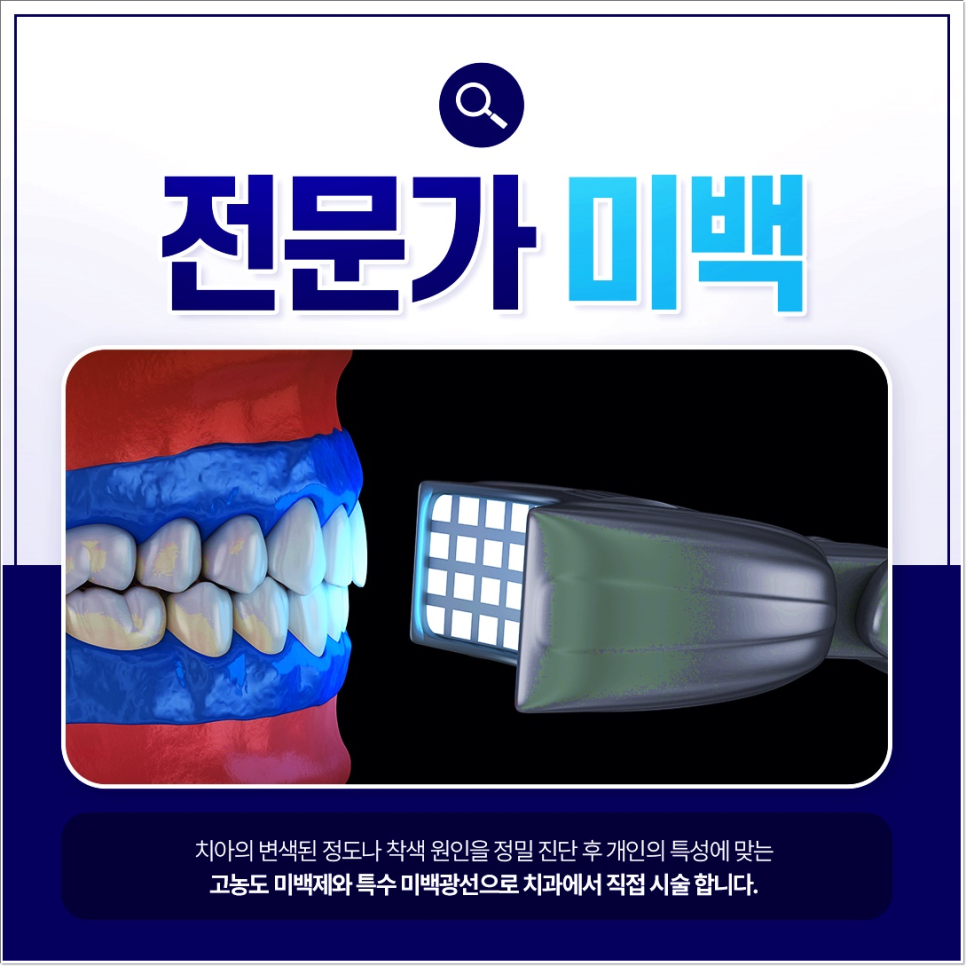
- Teeth Whitening for a Brighter Smile
Korea is world-class in aesthetic dentistry, and teeth whitening technology is also highly developed. Teeth whitening, which brightens teeth discolored by coffee, tea, wine, smoking, and more, is also a popular treatment among foreign patients.
Whitening Methods Available in Korea
- Professional whitening (Office Bleaching):
-
Uses a high-concentration whitening agent and a special light at the dental clinic
-
Takes 1-2 hours, with immediate results
-
Patients with high sensitivity may experience pain
- Home whitening:
-
A custom tray is made at the dental clinic
-
A low-concentration whitening agent is used at home for 1-2 weeks
-
Gradual effect, lower sensitivity
- Combination whitening:
Duration of Whitening Results and Precautions
Whitening effects usually last about 6 months to 2 years, depending on the individual’s lifestyle. Precautions to help maintain the results for longer:
-
Avoid stain-causing foods and drinks (coffee, curry, red wine, etc.) for 48 hours after whitening
-
Refrain from smoking
-
Get regular dental cleanings
-
Maintain thorough oral hygiene
-
If needed, receive touch-up treatment every 6 months to 1 year
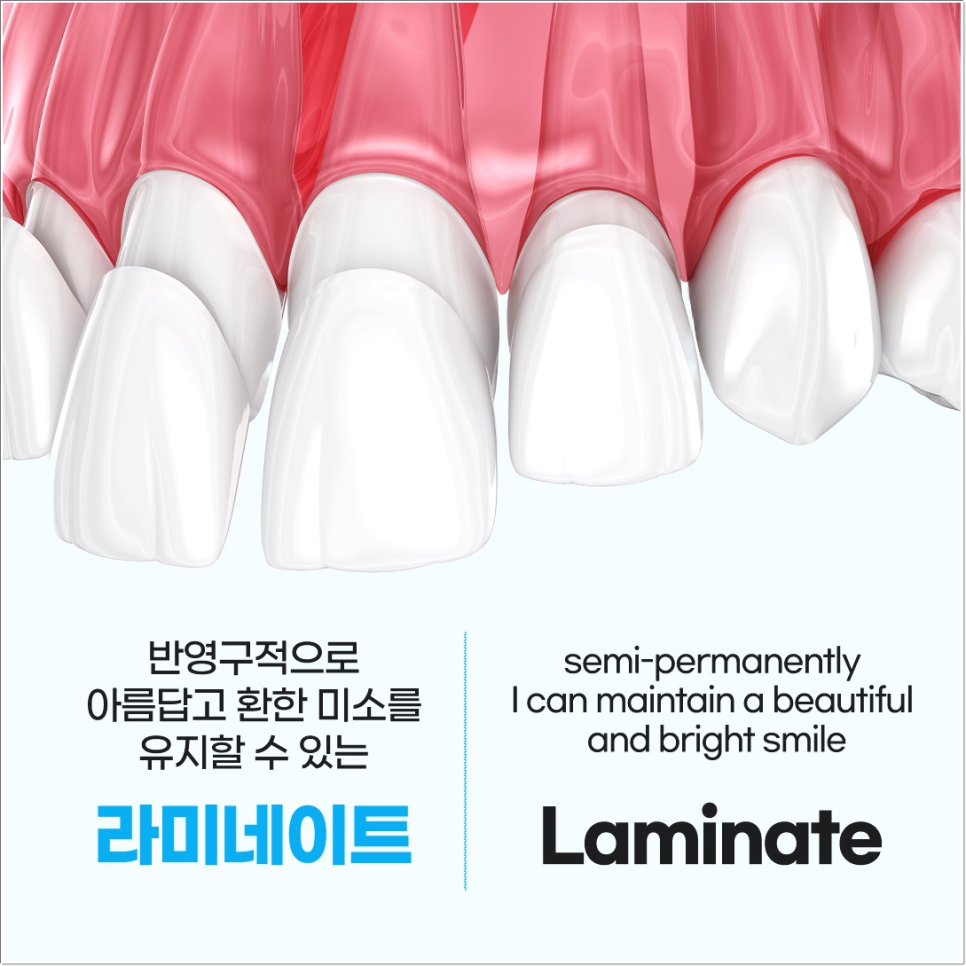
- Veneers That Design the Perfect Smile
Veneers are an aesthetic treatment in which a thin porcelain or composite resin shell is attached to the front surface of the teeth to improve their color, shape, size, and alignment.
Differences Between Veneers and Regular Whitening
Veneer Application Process
-
Consultation and design: Digital smile design considering the patient’s face shape, skin tone, and existing teeth
-
Minimal tooth reduction: The front surface of the teeth is reduced very slightly (0.3-0.5 mm)
-
Impression taking: Taking a mold of the teeth for precise veneer fabrication
-
Temporary veneers: Worn while the final veneers are being made
-
Final attachment: Permanently bonded with a special adhesive (usually after 2 weeks)
How to Care for Veneers
-
Do not bite directly into hard foods
-
Use a night guard if you grind your teeth
-
Get regular dental checkups
-
Maintain proper oral hygiene
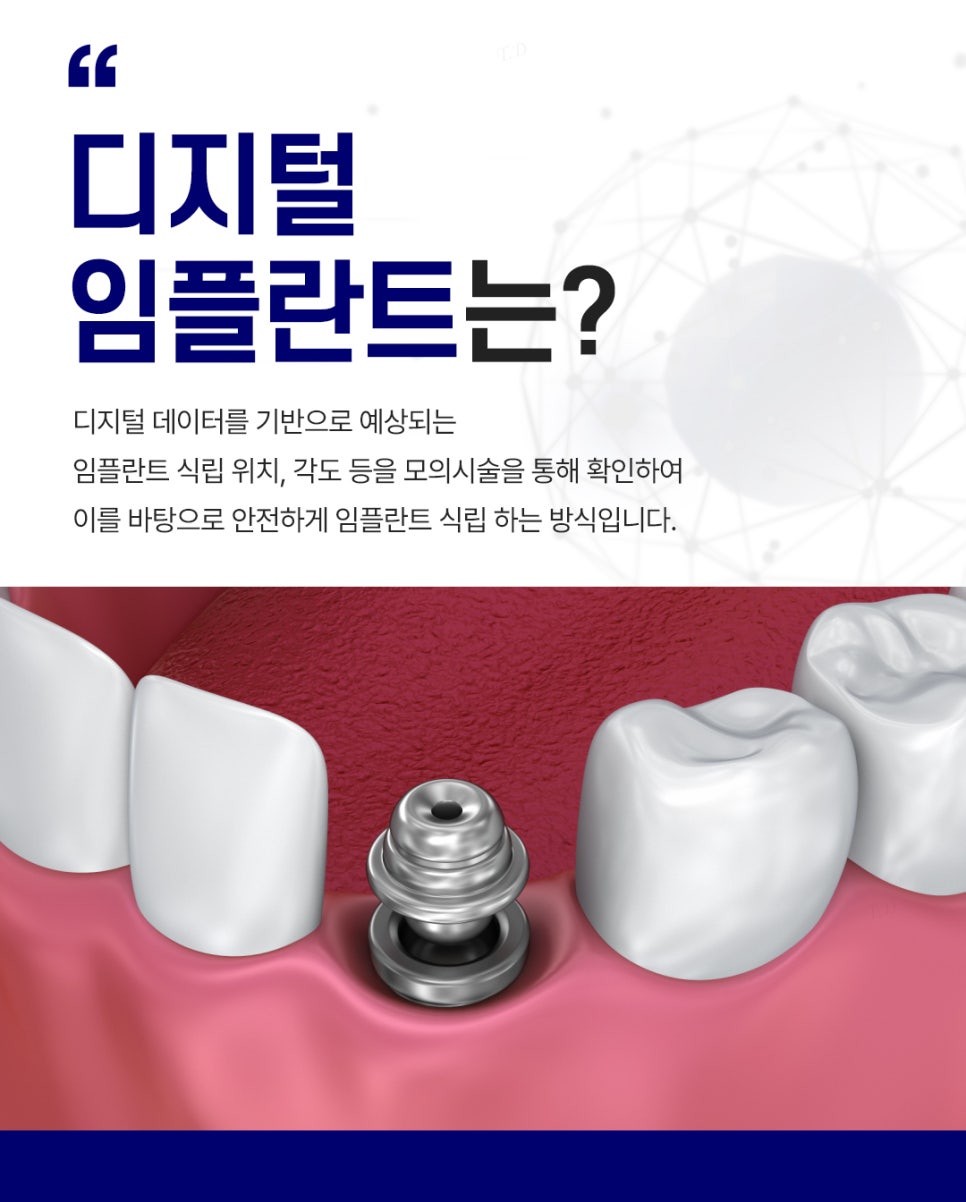
- Missing Teeth Made Natural with Implants
Implants are the most effective way to replace missing teeth.
When Implants Are Needed
-
When a tooth is lost due to an accident or trauma
-
When a tooth must be extracted because of severe cavities or periodontal disease
-
When teeth are congenitally missing
-
When you feel discomfort with existing dentures or bridges
-
When you want to prevent bone loss caused by tooth loss
How to Care for Implants
With proper care, implants can be used for a lifetime:
-
Brush at least twice a day (an implant-specific toothbrush is recommended)
-
Clean around the implant with dental floss and interdental brushes
-
Get regular dental checkups and scaling (every 3-6 months)
-
Be careful with hard foods
-
Use a night guard if you grind your teeth

Even if there is a language barrier, you can still receive the best dental care in Korea with proper preparation and information. Before visiting a dental clinic for foreigners, having basic knowledge of the five treatments explained above can make consultation and treatment more effective. I hope today’s blog was helpful. Thank you!










Previous image
Next image










Previous image
Next image