
Have you ever noticed yellowish teeth while looking in the mirror and felt less confident when smiling?
Tooth discoloration is more than just a cosmetic concern; it can also affect oral health and the impression you make.
Recently, more people visiting Jonggak Dental Clinic have also been taking an interest in whitening treatment.
In this article, we will gradually review the essential information you should know, from the causes of tooth discoloration and whitening treatment methods to post-treatment care following professional whitening.

Causes of Tooth Discoloration – Why Do Teeth Turn Yellowish?
Extrinsic Discoloration
This is the most common cause. It occurs when pigments become deposited on the enamel on the outside of the teeth.
The following everyday factors can contribute:
-
Frequent consumption of staining beverages such as coffee, wine, and cola
-
Nicotine pigment deposits caused by smoking
-
Highly staining foods, such as curry and berries
-
Inadequate oral hygiene
Intrinsic Discoloration
This occurs when the color of the inside of the tooth, namely the dentin, changes. In this case, brushing the outside of the tooth will not resolve the issue, and professional treatment is needed.
-
Taking antibiotics, such as tetracycline, during childhood
-
Nerve damage caused by trauma
-
Changes in tooth tissue color due to aging
-
Genetic abnormalities in tooth structure
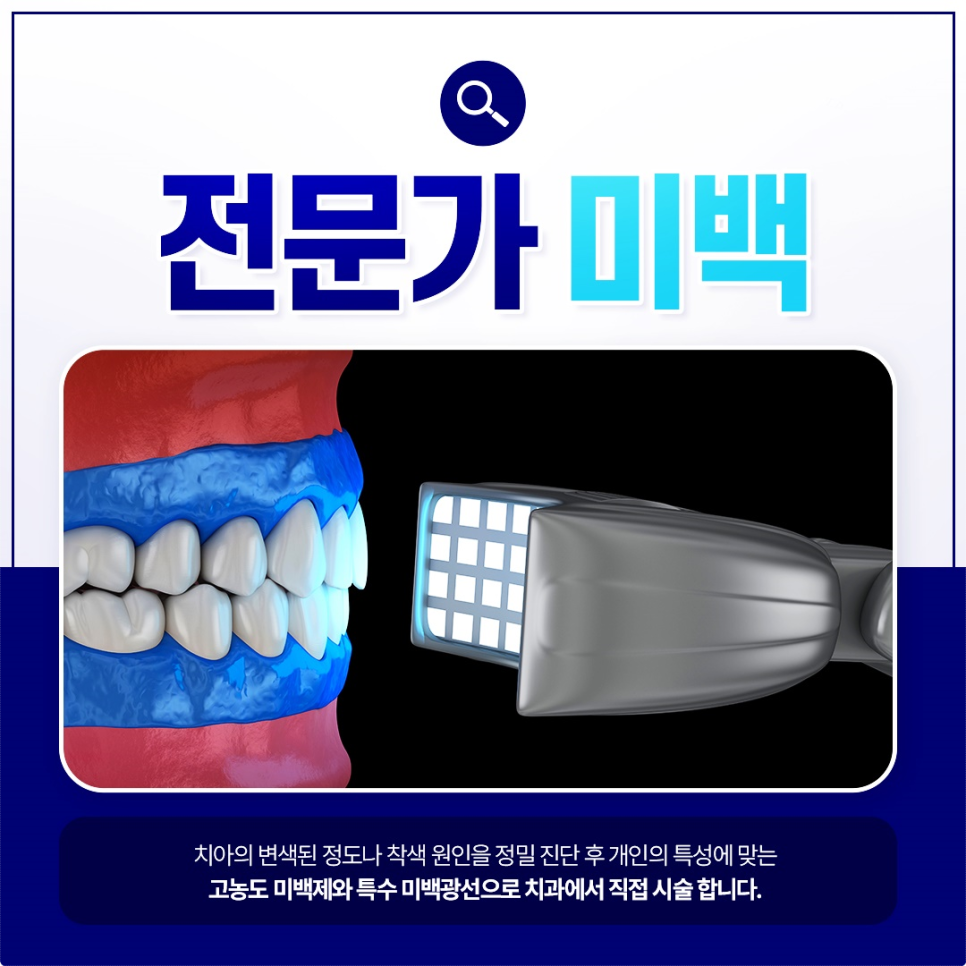
Types and Principles of Whitening Treatment – Professional Whitening
Professional whitening is a whitening treatment performed using high-concentration hydrogen peroxide or carbamide peroxide at a dental clinic.
At a medical institution such as Jonggak Dental Clinic, the procedure is carried out as follows:
-
Preliminary oral examination and assessment of tooth condition
-
Application of a gum-protective agent to minimize irritation
-
Application of a high-concentration whitening agent followed by exposure to a special light
-
Repetition two to three times at 15- to 30-minute intervals
-
Application of a desensitizing agent after whitening and guidance on precautions
The effects of tooth whitening can be seen immediately after treatment, and the brighter shade is maintained for an average of one to two weeks.

Precautions Before Whitening Treatment – Is It Possible for Every Tooth?
Whitening treatment is not applied in the same way to everyone. The following preliminary checks are necessary:
-
If cavities or gum disease are present, whitening can be performed after treatment.
-
Artificial restorations such as implants, laminates, and crowns cannot be whitened.
-
Whitening is not recommended during pregnancy or breastfeeding.
-
If you have severe tooth sensitivity, consultation with your dentist is essential.
An oral examination should always come first before selecting a whitening treatment method, and accurate diagnosis is important for reducing side effects.

Post-Whitening Care – How Can You Keep Your Teeth White Longer?
Foods and Habits to Avoid
After whitening, the enamel may temporarily become more sensitive, so special care is important.
-
Limit consumption of staining beverages such as coffee, black tea, and wine.
-
It is best to quit smoking.
-
Temporarily avoid foods and drinks that are too cold or too hot.
Everyday Care
-
Use a soft-bristled toothbrush and whitening toothpaste.
-
Brush your teeth thoroughly at least twice a day.
-
Prevent staining by using an oral irrigator and dental floss.
-
Regular scaling and ongoing care are needed.

Maintaining these habits can help you preserve the effects of professional whitening for longer.
#JonggakDentalClinic #ToothDiscoloration #TeethWhitening #WhiteningTreatment #ProfessionalWhitening #CausesOfToothDiscoloration #WhiteningTreatmentMethods #TeethWhiteningEffects #ProfessionalWhiteningReview #PostWhiteningCare





























