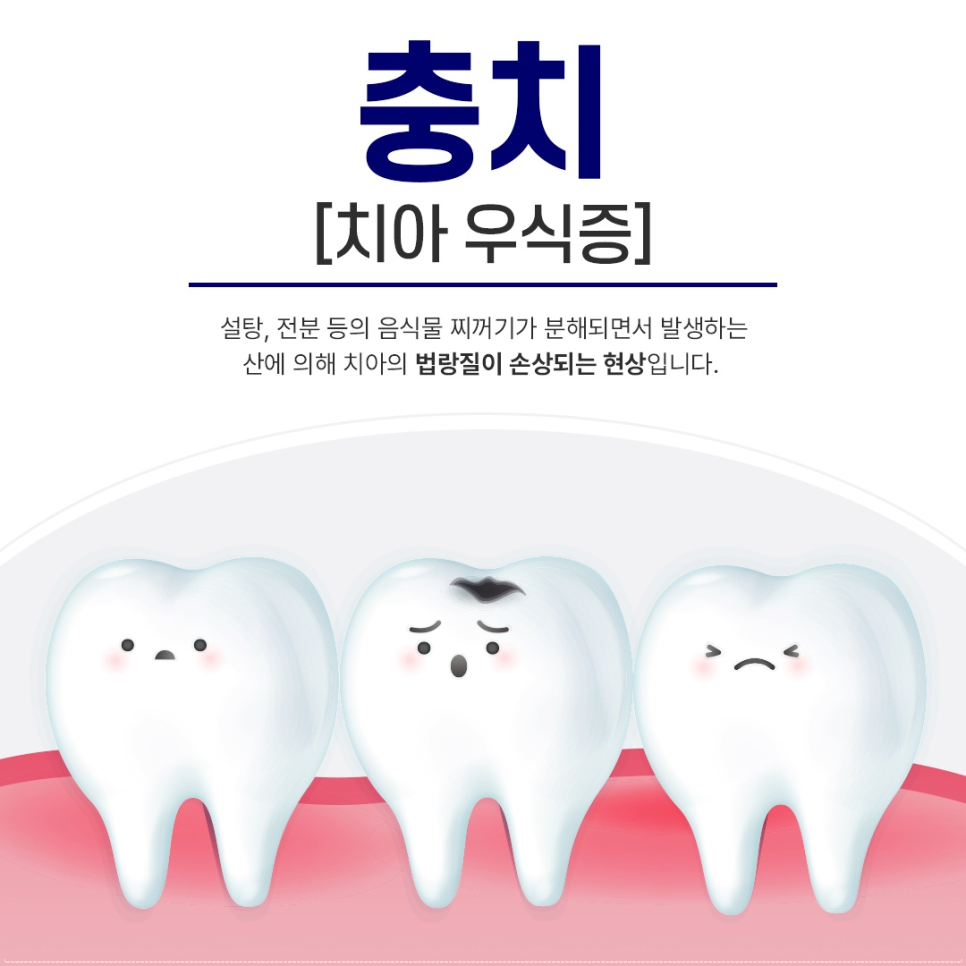
Cavities can make anyone feel concerned. Even if there is no pain, leaving a cavity untreated can lead to more serious problems, so early detection and appropriate treatment are important. Today, Jonggak Station Dental Clinic will explain the essential information you should know about cavity treatment.
Why do cavities develop, and how do they progress?
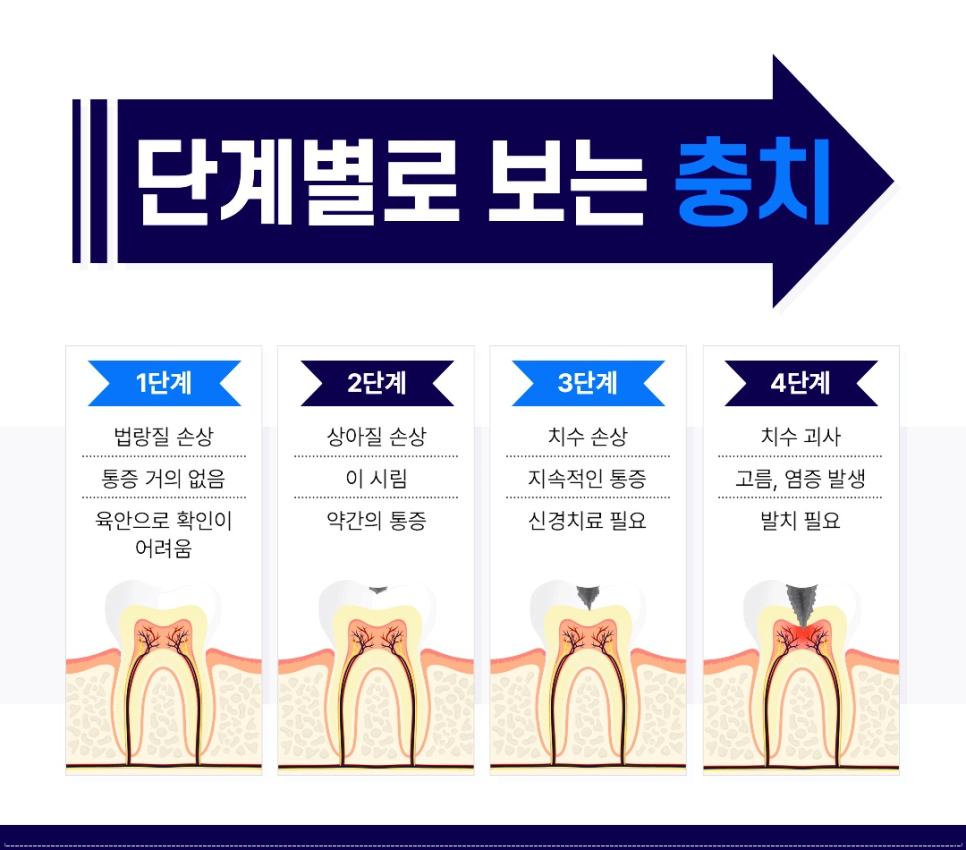
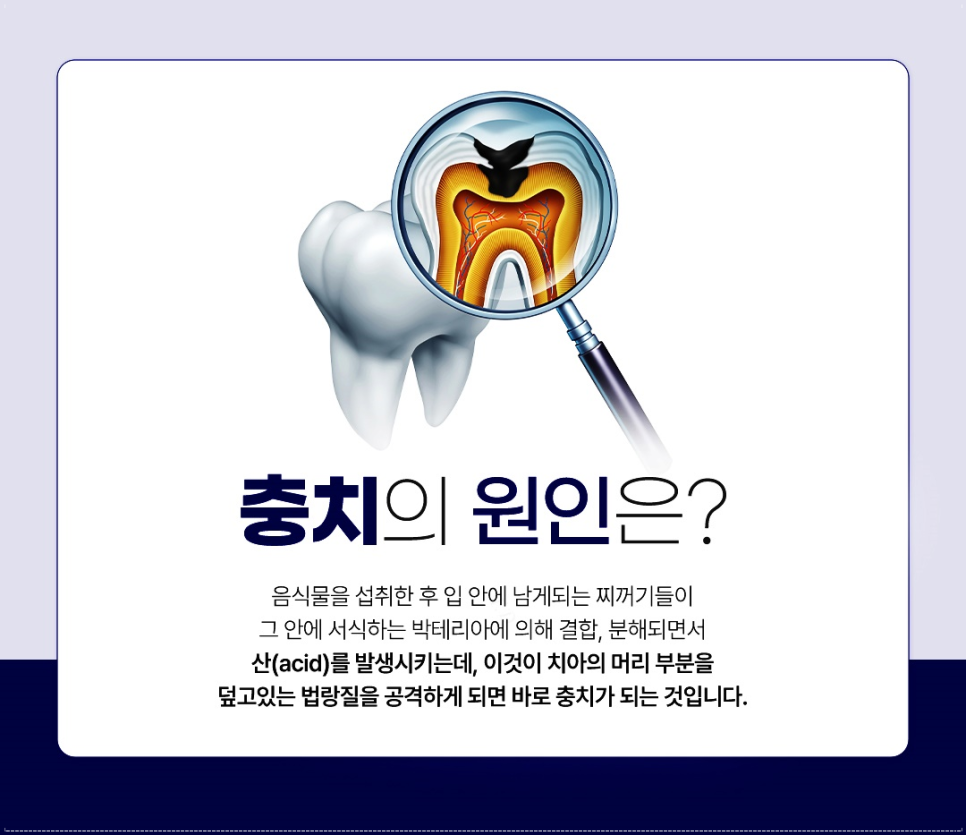
Cavities are not caused simply by eating a lot of sweet foods. They begin when bacteria in the mouth break down sugar or carbohydrates and produce acids, which wear away the tooth enamel. In the early stages, they may not be visibly noticeable, but over time they can progress through the following stages.
1st stage: Enamel cavity
A white, discolored area appears on the outer surface of the tooth, with little or no pain.
2nd stage: Dentin cavity
The cavity penetrates the enamel and progresses into the underlying dentin. The tooth may become sensitive to cold water or sweet foods, and intermittent pain may occur.
3rd stage: Pulpitis
As the cavity progresses deeper, inflammation develops in the pulp, the nerve tissue, causing severe pain or spontaneous pain.
4th stage: Periapical abscess
If the cavity is left untreated, inflammation may develop at the tip of the tooth root and progress to the abscess stage, in which pus accumulates.
What treatment options are available for each stage of a cavity?
Treatment methods vary depending on how far the cavity has progressed. Dental clinics use the following treatments at each stage.
● Early cavity: Fluoride application
When there is no clear damage yet, fluoride may be applied or the chewing surface may be coated to prevent the cavity from progressing further.
● Moderate cavity: Resin or inlay treatment
Even when a cavity has progressed into the dentin, if the area of infection is limited, the affected area can be removed and filled with resin (a tooth-colored restorative material) or an inlay (an indirect restoration). This treatment can be effective.
● Severe cavity: Crown restoration after root canal treatment
When a cavity reaches the nerve inside the tooth, it can be difficult to completely remove the infected area with ordinary filling treatment alone. In this case, root canal treatment is required.
In more severe cases, extraction may also be necessary. After an extraction, treatment such as an implant may be needed to replace the tooth in the area where it was lost.
What is root canal treatment?
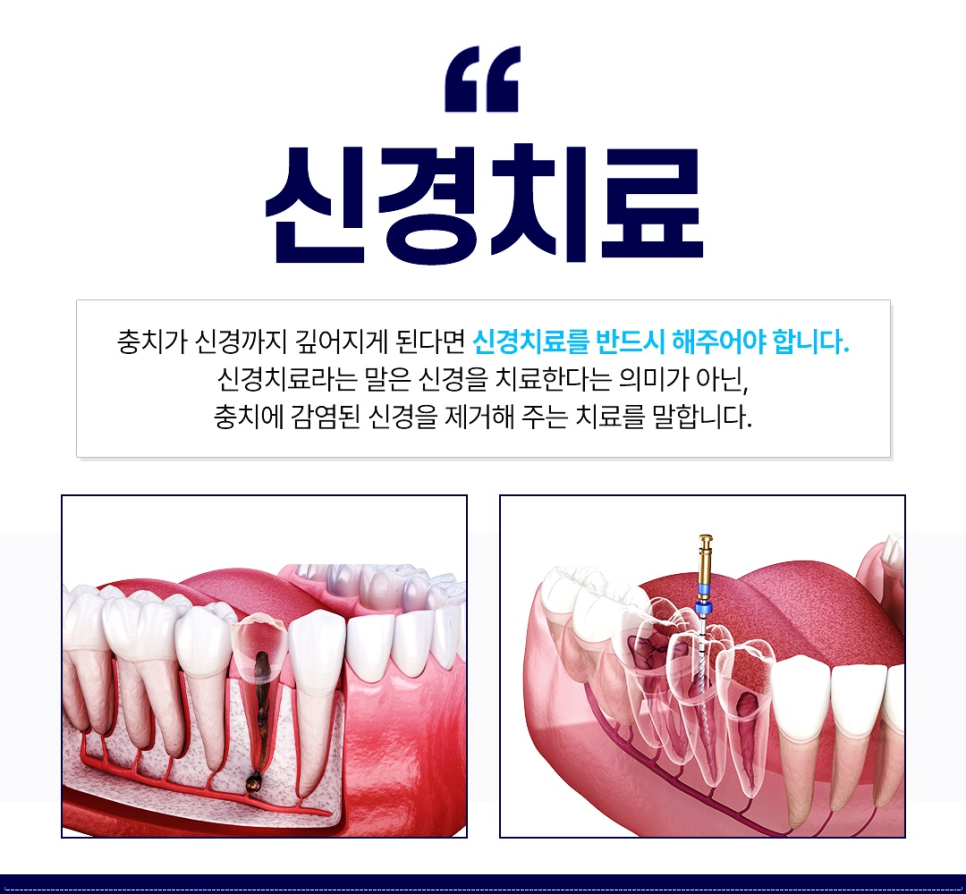
Root canal treatment involves removing infected pulp tissue (nerves and blood vessels), disinfecting the inside of the tooth, and sealing the empty space with a special material. It is a procedure intended to prevent the infection from spreading and preserve the tooth as much as possible.
How is root canal treatment performed?
-
After administering local anesthesia, the cavity is removed and the nerve inside the tooth is exposed.
-
The infected pulp tissue is removed, and the inside of the root canal is thoroughly disinfected.
-
The inside of the root canal is sealed with a biocompatible material.
-
A crown (prosthetic restoration) is then placed to protect the weakened tooth.
How long does root canal treatment take?
Usually, two to three visits are required, but the number of visits may increase depending on the condition of the tooth and the degree of inflammation.

Precautions after root canal treatment
-
Regular checkups remain important even after treatment is complete.
-
A tooth with reduced chewing strength may crack or break, so avoid using it excessively.
-
It is best to avoid hard foods with the treated tooth until the prosthetic restoration, such as a crown, has been completed.
How should you care for your teeth after cavity treatment?
Even after treatment is complete, cavities can develop again in the same area if oral care is neglected. The following lifestyle habits are important.
-
Regular checkups are essential: Having a regular oral examination every six months is the most effective way to prevent cavities.
-
Brush properly: Brush at least twice a day, always brush after meals, and be especially careful not to skip brushing before bed.
-
Make interdental cleaning a habit: Use dental floss or an interdental brush along with your toothbrush to keep areas the toothbrush cannot reach clean.
-
Control sugar intake: Frequent consumption of sweet foods can increase the likelihood of cavities, so caution is needed.


How can you prevent cavities?
Treatment is important, but prevention is the best approach for cavities. Jonggak Station Dental Clinic recommends the following habits.
▸ 1. Learn proper brushing techniques
It is a good idea to learn techniques such as the rolling method or Bass method, which can effectively clean between the gums and teeth.
▸ 2. Get regular scaling
Because tartar cannot be removed by brushing alone, it should be managed through regular professional scaling at a dental clinic.
▸ 3. Maintain healthy eating habits
Excessive snacking, especially sticky or high-sugar snacks, can cause cavities, so it is best to reduce consumption outside of mealtimes.
▸ 4. Use fluoride toothpaste
Fluoride helps strengthen teeth and can be very helpful in preventing cavities.
Cavity prevention comes before treatment
Cavities are easy to leave untreated because they may cause few noticeable symptoms in the early stages, but as they progress, treatment becomes more complex and costs may increase. Therefore, more important than cavity treatment are regular dental checkups and proper oral care. Why not start practicing cavity prevention together today?







Previous image
Next image










Previous image
Next image










Previous image
Next image