Have you ever gone to Jonggak Dental Clinic and felt like what the doctor said sounded like another language? Implant, root canal treatment, laminate... So many terms get mixed together in your head that a lot of people end up not knowing what treatment they actually need. This is especially true if it is your first time visiting a dental clinic, or if you are getting dental treatment after a long time. When the dentist says, "The cavity is deep, so we need to do root canal treatment, and later we may need to place a crown, or we may consider extracting it and getting an implant," patients can feel completely lost. Today, I’ll organize the 5 most commonly encountered dental treatments in a simple and clear way. Once you know when and why each treatment is needed, and how the process works, you won’t feel so overwhelmed at Jonggak Dental Clinic anymore.

Cavity Treatment - The most basic treatment for saving a tooth
At Jonggak Dental Clinic, cavity treatment is exactly what it sounds like: removing the decayed part of the tooth and filling it with an artificial material. When we eat food, bacteria in the mouth break down sugars and produce acid, and this acid slowly dissolves the tooth’s hard enamel, creating a hole. The treatment method changes completely depending on how severe the cavity is, so let’s look at it step by step.
If the cavity is still early, treatment is relatively simple: the dentist removes only the decayed part with a drill and fills it with a material such as resin, amalgam, or an inlay. Resin is a tooth-colored plastic material with good aesthetics, but it is somewhat less strong. Amalgam is silver-colored, so it does not look as good, but it is very durable. An inlay is a precise restoration made of gold or ceramic; it is stronger than resin and more attractive than amalgam, but the fabrication process is more complex.
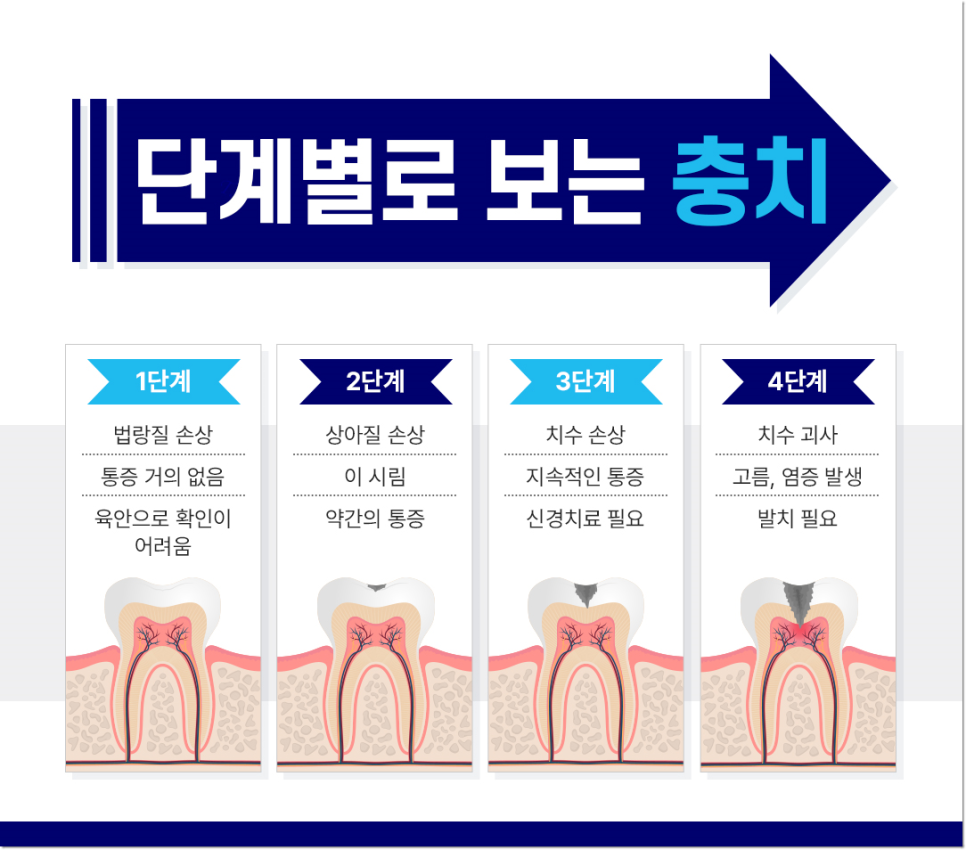
However, if the cavity has become deep and much of the tooth has been damaged, you may need treatment at Jonggak Dental Clinic that protects the entire tooth with a crown. A crown is a treatment that covers the whole tooth like putting a hat on it, protecting it and restoring its function. The key to cavity treatment is early detection. Cavities often cause little pain at first, so they are easy to ignore, but as time passes treatment becomes more complicated and in severe cases root canal treatment may be needed. Finding small cavities early through regular dental checkups and treating them simply is the smartest way to save time, money, and pain.
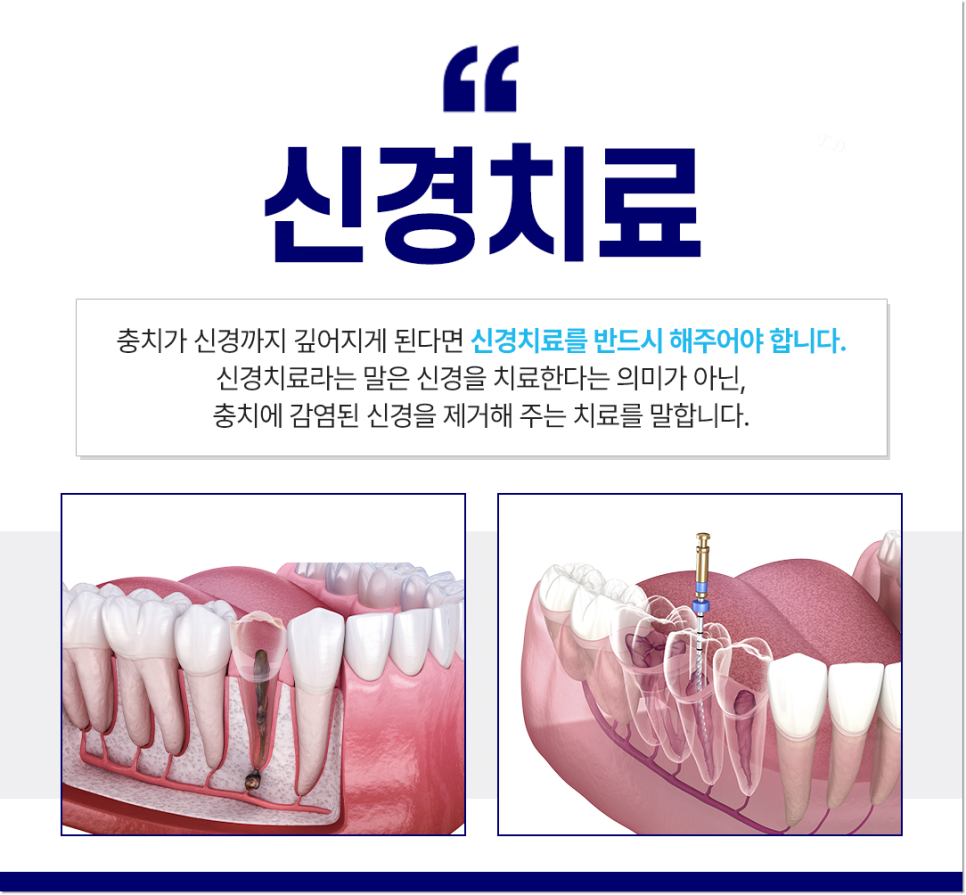
Root Canal Treatment - A precise treatment that reaches deep into the root of the tooth
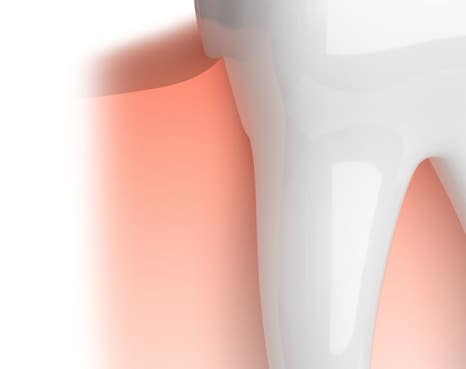
Root canal treatment at Jonggak Dental Clinic is a complex and precise procedure that removes the pulp, the tissue inside the tooth that contains nerves and blood vessels. Many people misunderstand root canal treatment as meaning the tooth is being pulled out, but in reality it is the last effort to save the tooth without extracting it. There are three main situations in which root canal treatment is needed. First, when the cavity has become so deep that bacteria have invaded the pulp. Second, when the tooth has suffered a major impact and the pulp has been damaged. Third, when repeated dental treatments have weakened the pulp.
The root canal process is more complicated than many people expect. First, local anesthesia is given, then a small opening is made in the tooth to access infected or dead pulp tissue. Next, special instruments are used to remove all pulp tissue from the root canals and smooth the canal walls. Because the shape of the root canals differs from person to person and they are very narrow and winding, a high level of skill and experience is required. Once the pulp tissue has been completely removed, the inside of the root canals is thoroughly disinfected with a strong antiseptic, and the empty space is completely filled with a biocompatible material so bacteria cannot enter again.
Teeth that have had root canal treatment at Jonggak Dental Clinic no longer receive blood supply, so they become weaker and more prone to breaking than natural teeth. That is why, in most cases, additional treatment with a crown is needed after root canal treatment to protect the tooth. The treatment period is also long, usually requiring 2 to 4 visits, and in complex cases it may take even longer. Still, if root canal treatment is completed successfully, you can continue using your natural tooth, which often leads to a much better outcome than alternative treatments such as implants or dentures.
 Implant - A treatment to restore lost teeth
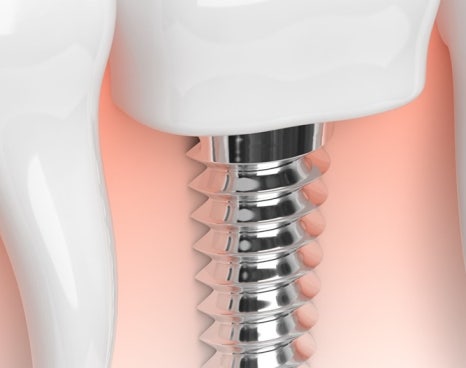
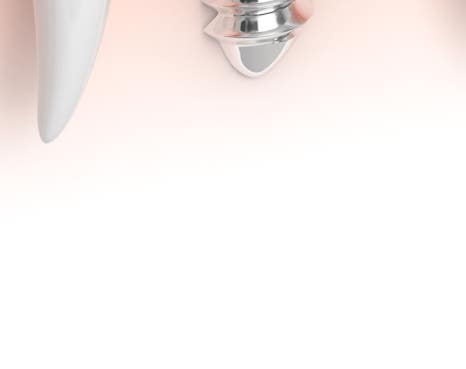
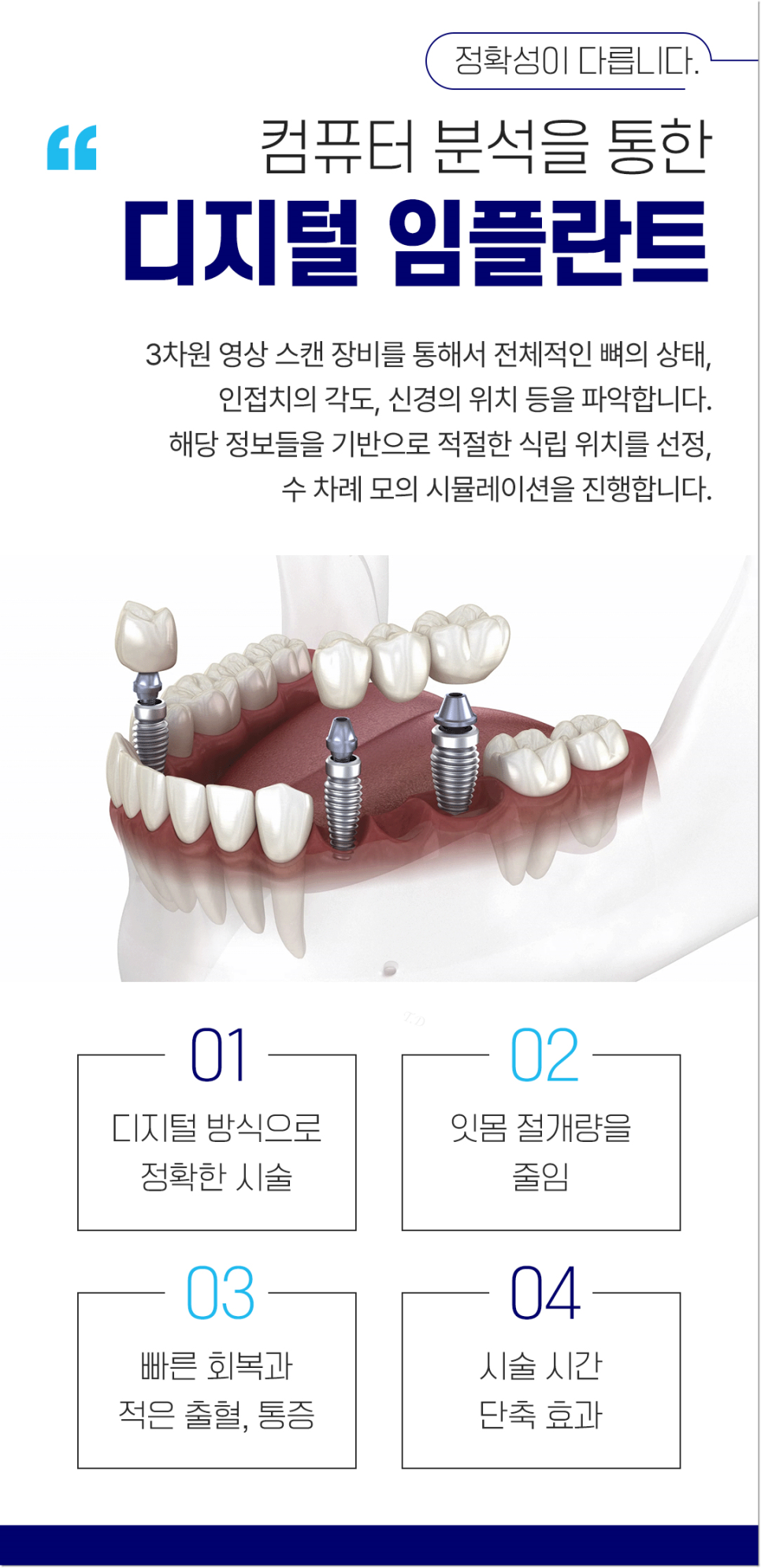
An implant at Jonggak Dental Clinic is a treatment that restores almost the same function as a natural tooth by placing an artificial tooth root in the area where a tooth has been extracted. An implant consists of three main parts: the implant fixture, which is placed directly into the jawbone; the abutment, which connects the fixture and the crown; and the crown, which functions as the actual tooth.
Titanium, the core material used in implants at Jonggak Dental Clinic, has almost no side effects in the human body and has a special property that allows it to biologically bond with the jawbone over time. This is called osseointegration, and after about 3 to 6 months, the implant and bone become fully united and firmly fixed like a natural tooth root. The implant procedure begins with a CT scan to precisely analyze the condition of the jawbone, followed by surgery to place the implant. Then, after waiting for osseointegration to be completed, a crown is placed to finish the treatment.
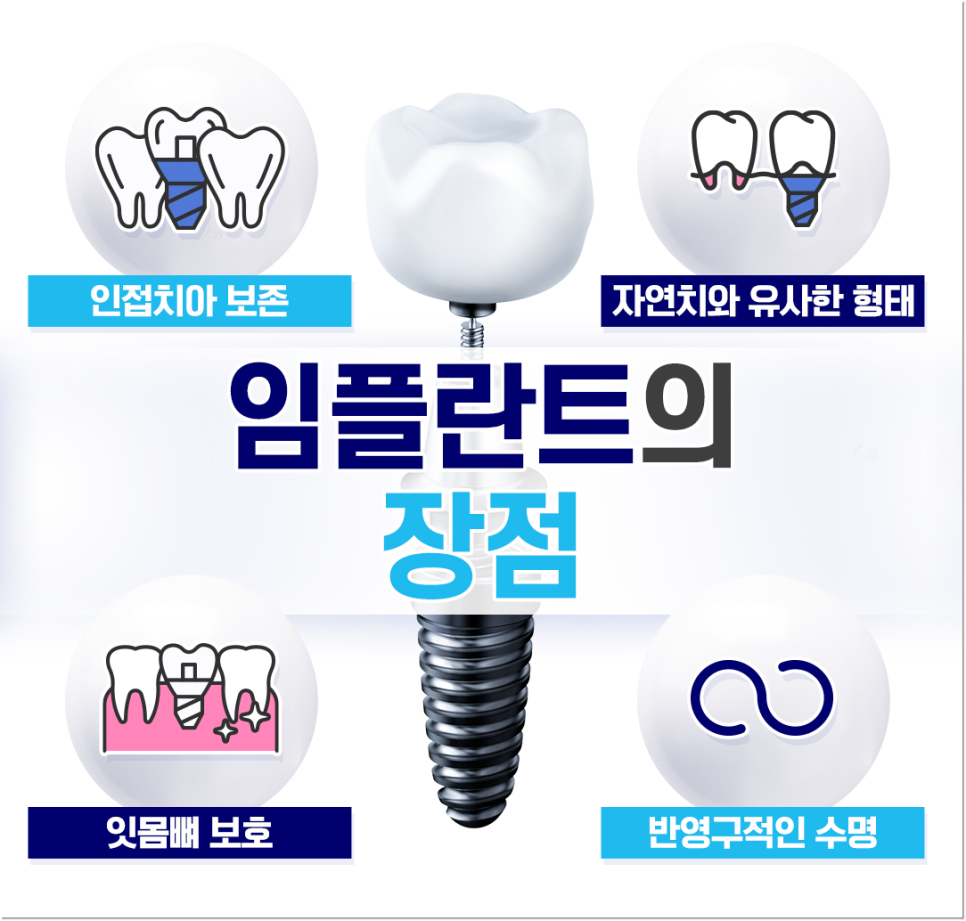
The biggest advantage of implants at Jonggak Dental Clinic is that treatment can be done without damaging the surrounding healthy teeth at all. Traditional bridge treatment involved shaving down the healthy teeth on both sides of the missing tooth to connect them, but implants are placed independently, so they do not put stress on other teeth. Also, because they are fixed directly into the jawbone, they can restore more than 90% of natural chewing force. However, if you have a systemic condition such as diabetes or osteoporosis, or if there is too little jawbone, treatment may be difficult, so it is necessary to check through a proper examination whether an implant is possible.
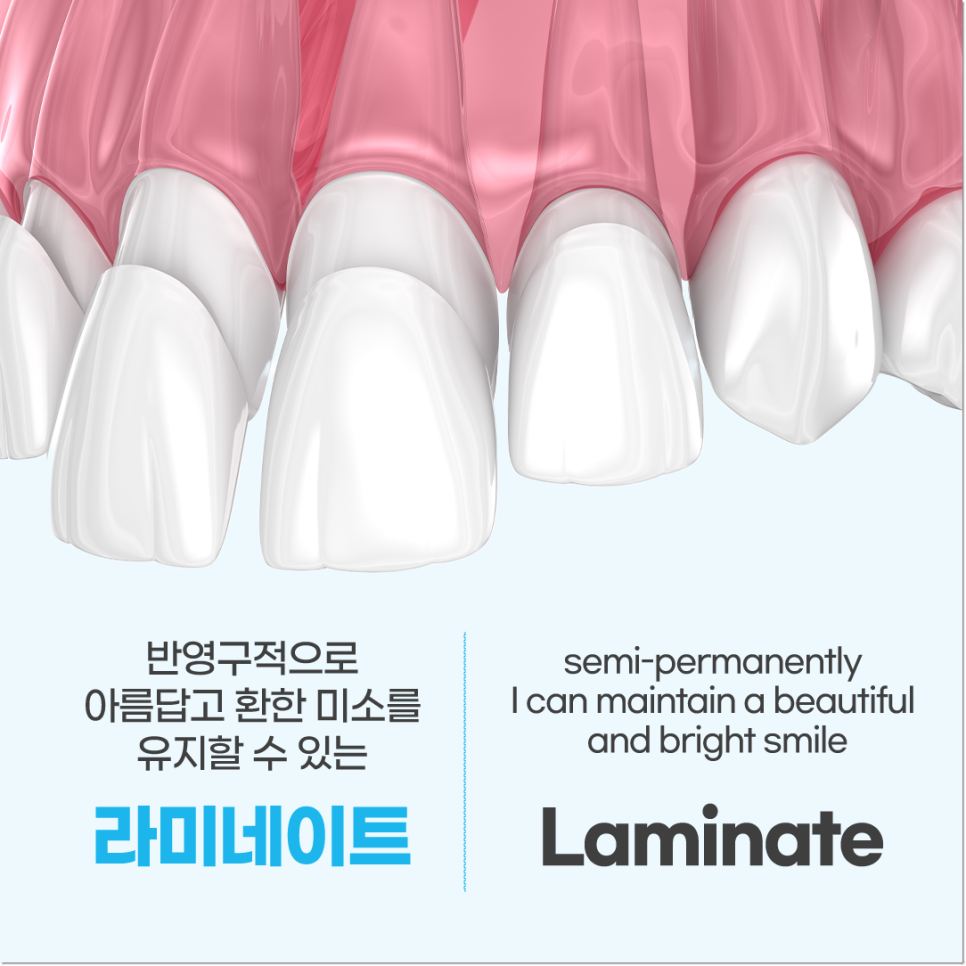
Laminate - A precise aesthetic treatment that dramatically changes the appearance of teeth
Laminate treatment at Jonggak Dental Clinic is a cosmetic procedure in which the front surface of the tooth is shaved very thinly, usually about 0.5 to 1 mm, and a thin porcelain or ceramic shell is precisely bonded to it. It is easy to understand if you think of it as similar to applying artificial nails. Laminate is effectively used when tooth color is naturally dark or yellowish, when there are gaps between teeth, when tooth shape is uneven or the teeth are small, or when the front teeth protrude slightly.
The laminate treatment process is very precise. First, the teeth are accurately molded, and then the dental lab fabricates a laminate tailored to each patient’s teeth. At this stage, the color, shape, and size must be carefully designed to match the patient’s face shape and lip line. Once the laminate is completed, it is permanently attached to the teeth using a special adhesive. Recently, computer-based precision processing technology has made it possible to create even more refined and natural-looking laminates.
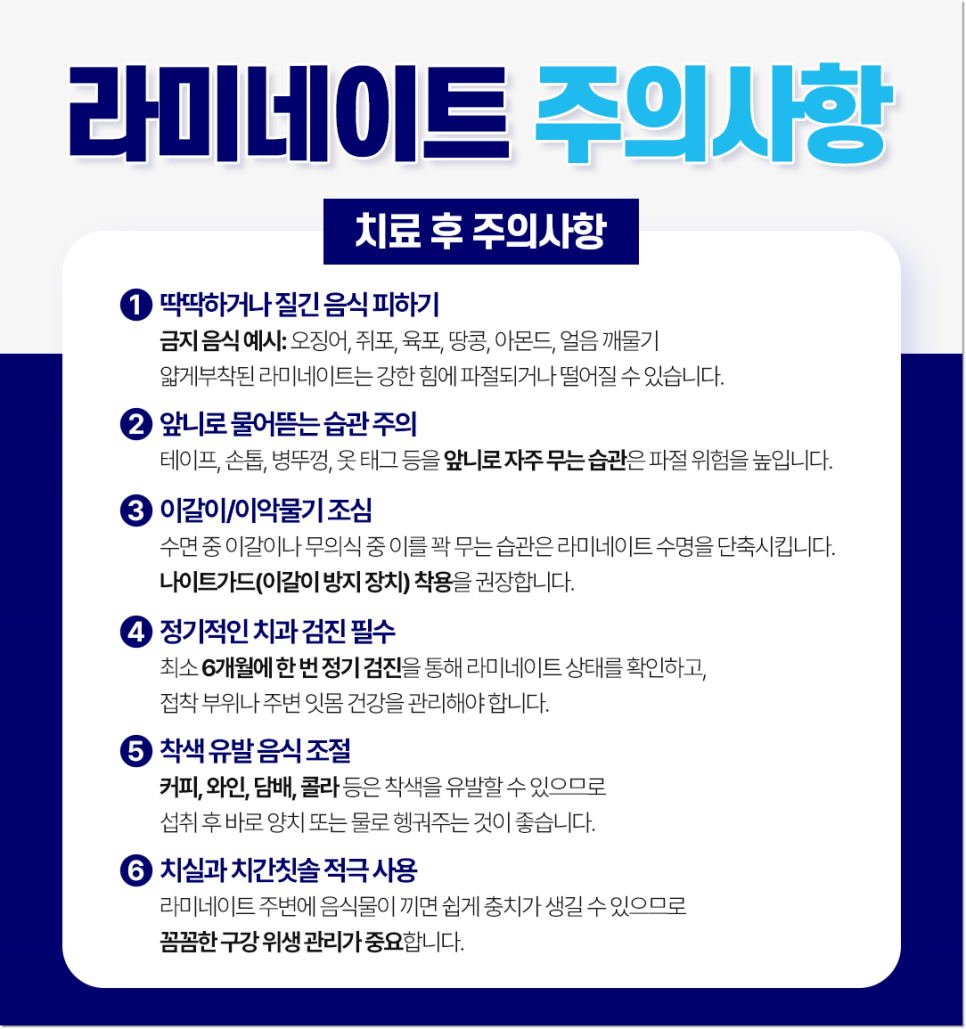
The biggest advantage of laminate is that it can achieve a dramatic aesthetic improvement while preserving as much natural tooth structure as possible. Compared with crown treatment, much less tooth structure is removed, minimizing damage to the tooth. In addition, because color and shape can be adjusted freely, very natural and beautiful results can be achieved. However, laminate also has drawbacks. It is an irreversible procedure because it involves removing tooth structure, so once it is done, it cannot be undone. If you chew hard foods or have a habit of grinding your teeth, there is a risk that the laminate may crack or come off. Also, if the tooth color is too dark or the damage is severe, laminate may have limitations, and crown treatment may be more appropriate.

Teeth Whitening - A treatment that naturally brightens the original teeth
Teeth whitening at Jonggak Dental Clinic is a treatment that chemically breaks down staining substances deposited on the surface or inside the teeth, making the teeth whiter than their original color. Our teeth naturally become more yellow with age, and they are also stained by beverages and habits such as coffee, tea, wine, and smoking. Teeth can also become dark due to certain antibiotics taken during childhood or due to trauma. Teeth whitening improves these various stains and creates a brighter, more youthful smile.
Teeth whitening is generally divided into two methods. The first is professional whitening done at the dental clinic (in-office whitening), which uses a high-concentration whitening agent and can show immediate results in just 1 to 2 hours. Because it is performed safely at the clinic with the gums protected, the risk of side effects is low and the results are clear. The second is home whitening, in which the clinic makes a custom tray and the patient uses a lower-concentration whitening agent consistently for 2 to 4 weeks. The results are not immediate, but the whitening is gradual and natural, and the cost is relatively lower.
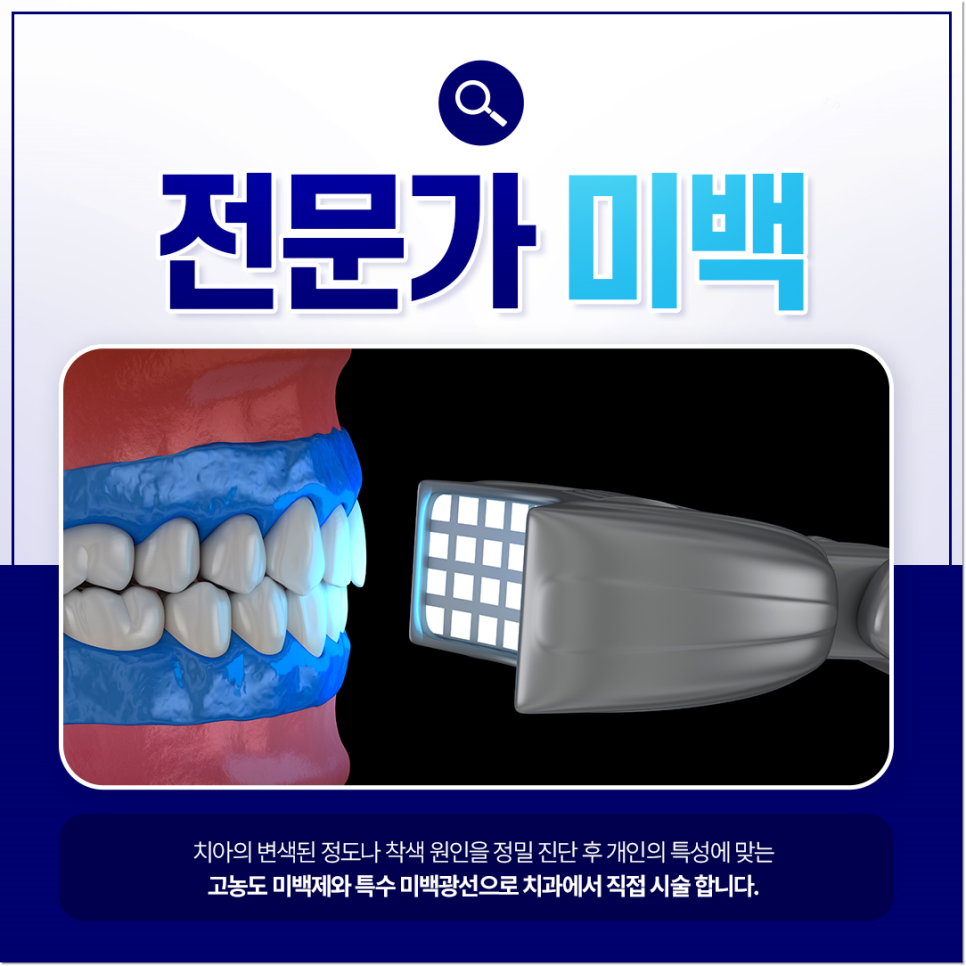
There are a few things you should know before getting whitening treatment. First, whitening only works on natural teeth. Existing cavity treatment materials, crowns, and laminates do not whiten, so there may be a color difference after whitening, and those restorations may need to be remade. Second, the whitening effect is not permanent. Over time, the teeth gradually return to their original color, so ongoing care is needed. Third, if the teeth are severely discolored or naturally very dark, whitening alone may not produce satisfying results. In such cases, other treatment options such as laminate or crowns may need to be considered.
So far, we have looked in detail at the five major treatments at Jonggak Dental Clinic. Each treatment has different purposes and indications, so the most important thing is to choose the right one based on your own dental condition and needs. Cavity treatment and root canal treatment are essential treatments for managing disease, with the main goal of restoring healthy tooth function. Implants are restorative treatments that replace lost teeth, while laminate and whitening are cosmetic treatments that improve the appearance of the teeth.
The most important thing in dental treatment at Jonggak Dental Clinic is prevention and early treatment. If regular dental checkups and scaling help you find and solve problems early, you can avoid more complex and difficult procedures. It is also important to have a thorough consultation with your dentist and establish the treatment plan that is most appropriate for your situation. Sometimes you may need to choose between several treatment options, so please understand the advantages and disadvantages of each treatment well and make a careful decision. Do not forget that healthy teeth affect not only chewing function, but also a confident smile and overall quality of life.