If you have ever experienced tooth pain, you probably know just how uncomfortable it can be. If you feel a sharp pain every time you chew, or if a throbbing sensation keeps recurring even when you are doing nothing, there is a high chance that a problem has developed in the nerve inside the tooth. In such cases, what is needed is tooth nerve treatment, also known as root canal treatment. If the damaged nerve caused by decay or trauma is left untreated, it can lead to a situation where the tooth must be extracted, which is why root canal treatment is sometimes called the last option for saving a tooth. Many people ask questions such as, “Does it really hurt?” or “How much does root canal treatment cost?” In reality, thanks to anesthesia and systematic diagnosis, the procedure is now much easier than before. Today, we will provide a comprehensive guide to the necessity and process of tooth nerve treatment, as well as aftercare and prevention at Jonggak Station Dental Clinic.
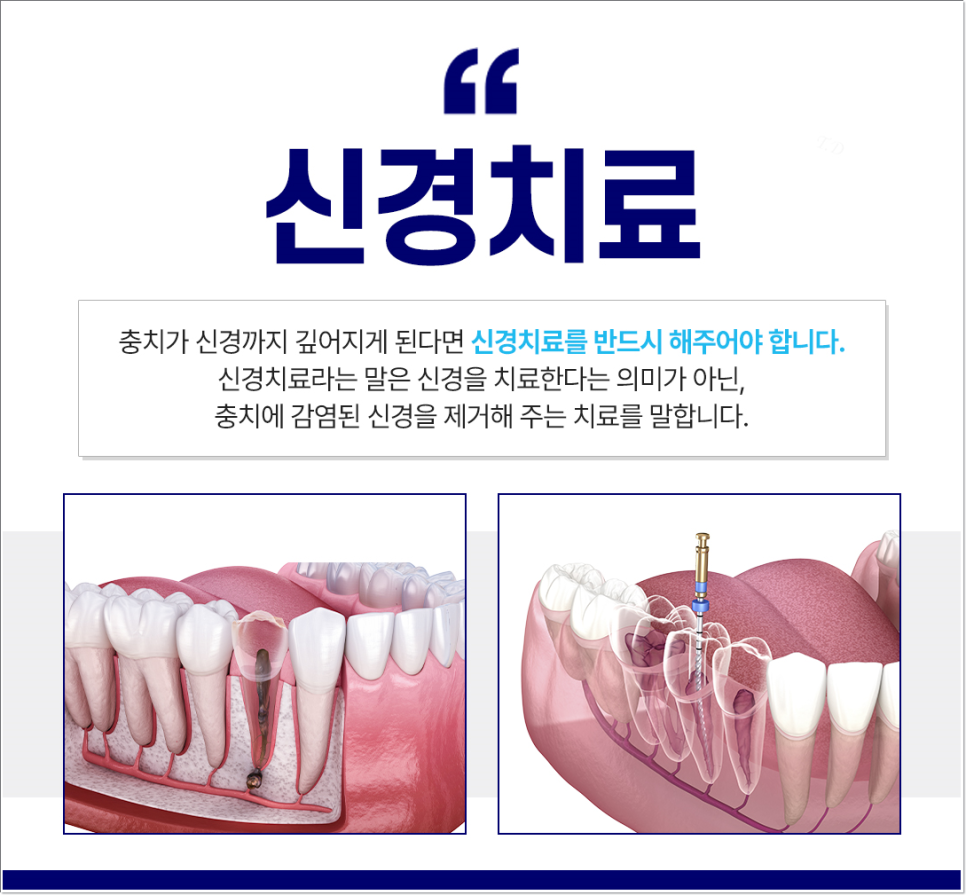
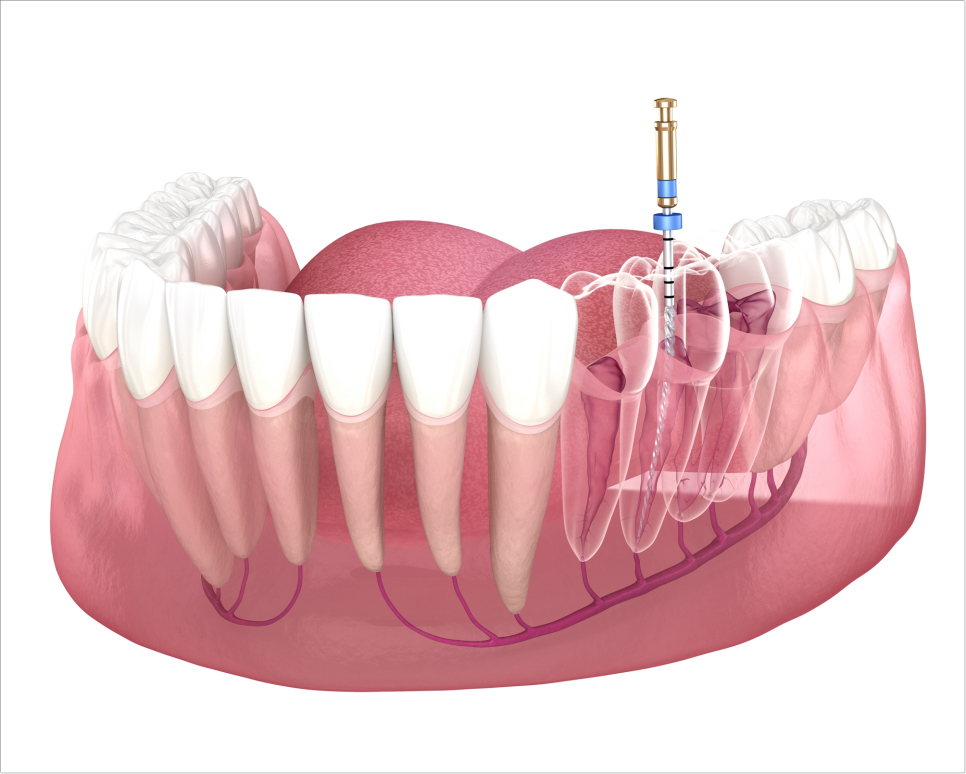
What is tooth nerve treatment at Jonggak Station Dental Clinic? Simply put, it is a treatment that removes the nerve and blood vessels inside a tooth when they have been infected by bacteria or damaged, then disinfects the empty space and fills it with a special material to preserve the tooth. Common causes include decay reaching the nerve, a tooth cracking or breaking due to trauma, or the nerve weakening after repeated dental treatment. Symptoms may include extreme sensitivity to cold or hot food, persistent pain even at night, pressure pain when chewing, and swollen gums with pus formation. In these situations, simple cavity treatment alone cannot solve the problem, and root canal treatment must be performed at the right time to save the tooth. Therefore, tooth nerve treatment plays an important role in preventing extraction and allowing you to use your natural teeth for as long as possible.

When tooth nerve treatment is needed at Jonggak Station Dental Clinic
Main causes
-
When decay has progressed to the nerve
-
When a tooth has broken or cracked due to trauma
-
When the nerve has weakened after repeated dental treatment
Typical symptoms
-
Extreme sensitivity to cold or hot food
-
Severe pain that continues even at night
-
Pressure pain when chewing
-
Gum swelling and pus formation
The tooth nerve treatment process at Jonggak Station Dental Clinic is carried out systematically. The first step is an accurate diagnosis, in which the extent of the damage is confirmed through X-rays or 3D imaging. Next, local anesthesia is administered, which greatly reduces the pain that patients worry about. After that, the damaged nerve is removed, and the inside of the root canal is thoroughly cleaned to eliminate bacteria. Then the root canal is tightly filled with a special material to prevent reinfection. Finally, a crown prosthesis is placed to protect the weakened tooth and restore chewing function and aesthetics. Each step requires precision and careful attention, and if it is not performed properly, retreatment may be necessary, so skilled technique is important.
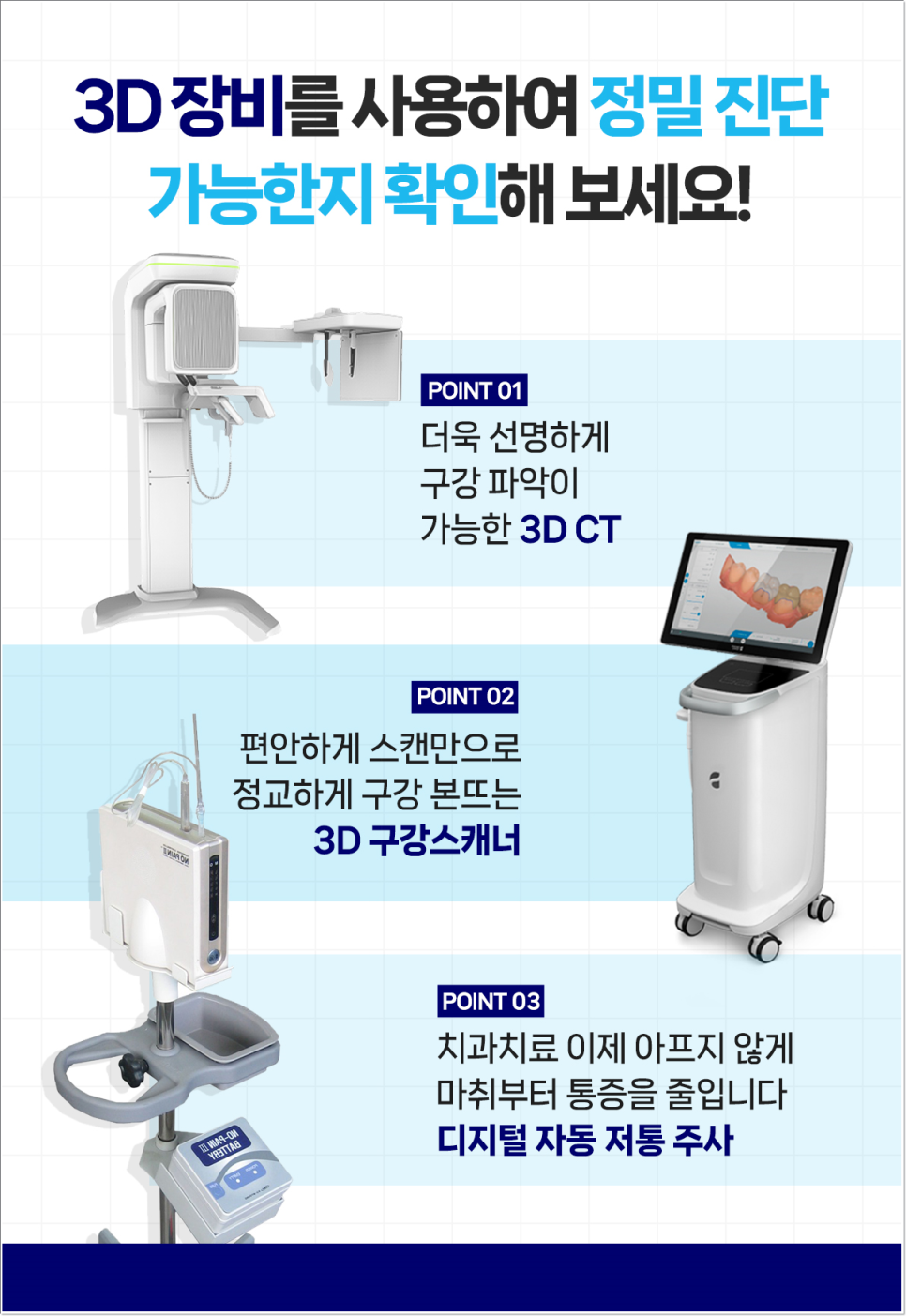
As many people’s reviews show, root canal treatment can be quite painful, so anesthesia before treatment and a systematic treatment plan are especially important. Jonggak Station Dental Clinic uses 3D imaging diagnosis to examine the structure of the tooth root much more precisely than conventional 2D X-rays, allowing hidden inflammation and complex root canals to be diagnosed without missing anything. It also uses a digital automated low-pain injection system to help prevent pain during treatment. Thanks to these technologies, patients can achieve safer and more predictable results. However, since these methods are not applied the same way in every situation, it is best to confirm the treatment that is appropriate for you through a consultation with a dental professional.
After tooth nerve treatment, aftercare is essential. Without proper management, even a treated tooth can develop problems again. First, brush thoroughly at least twice a day, and use dental floss and interdental brushes to reduce bacteria. In the early stage after treatment, it is safer to avoid hard or sticky foods and get into the habit of chewing on the opposite side. It is also important to check the condition of the crown and the health of the gums through regular checkups. For prevention, regular oral examinations, using fluoride toothpaste, reducing sugar intake, maintaining proper brushing habits, and wearing a mouthguard during sports activities can all be helpful. With this kind of care, you can preserve the treated tooth at Jonggak Station Dental Clinic for a long time and also help prevent problems in other teeth.
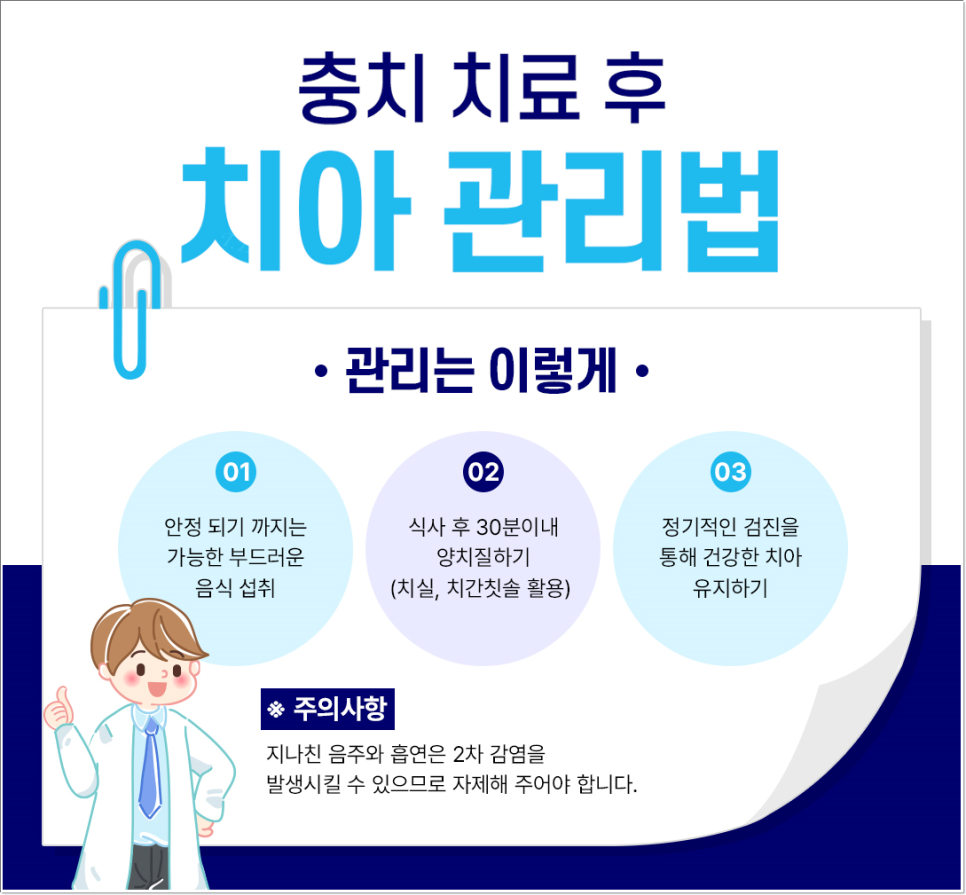
Immediate care methods (first week after treatment)
-
Avoid hard or sticky foods
-
Chew on the opposite side of the treated tooth
-
Take the prescribed medication exactly as directed
Long-term care methods
-
Brush thoroughly at least twice a day
-
Use dental floss and interdental brushes regularly
-
Regular checkups every 3 to 6 months are essential
-
Reduce sugar intake
Frequently Asked Questions (FAQ)
Q. Is tooth nerve treatment at Jonggak Station Dental Clinic really painful?
A. Because anesthesia is administered before treatment, there is almost no pain during the procedure. After treatment, there may only be mild discomfort for 2 to 3 days.
Q. How long does a tooth last after root canal treatment?
A. With proper aftercare, it can be used for more than 20 years.
Q. Is a crown necessary?
A. In the case of molars, a crown is needed because chewing force is strong. For front teeth, the decision depends on the extent of the damage.
In conclusion, tooth nerve treatment at Jonggak Station Dental Clinic is a very important treatment that can save a tooth without extracting it. Root canal treatment is now performed much more comfortably and precisely than before thanks to pain management and advances in modern technology, and if thorough aftercare and regular checkups are continued after treatment, healthy teeth can be maintained for a long time. Costs vary by clinic, so the exact amount should be confirmed through a consultation, but compared with losing a tooth, its value is clear. If you are currently experiencing discomfort from tooth pain, we recommend that you do not hesitate and visit a nearby dental clinic for a consultation. Healthy teeth are directly connected to quality of life, so it is best to start taking care of them today.
#종각역치과 #치아신경치료 #근관치료 #치아통증 #신경치료과정 #치아사후관리










Previous image
Next image










Previous image
Next image










Previous image
Next image