�
After implant treatment at Jongno Dental Clinic, you may have believed it was a permanent solution, but unexpected problems may have arisen, leaving you disappointed and anxious. We fully understand how you feel. Many people choose implants expecting to use them stably for life, but sometimes they face symptoms that make them consider re-placement. This article will take a closer look at the main reasons that lead to the decision to re-place an implant and the specific symptoms for those who are currently considering implant re-placement.
�
�
When implant re-placement is needed, our body sends various signals. If the symptoms below feel familiar, it may be time to consult the medical staff at Jongno Dental Clinic right away.
�
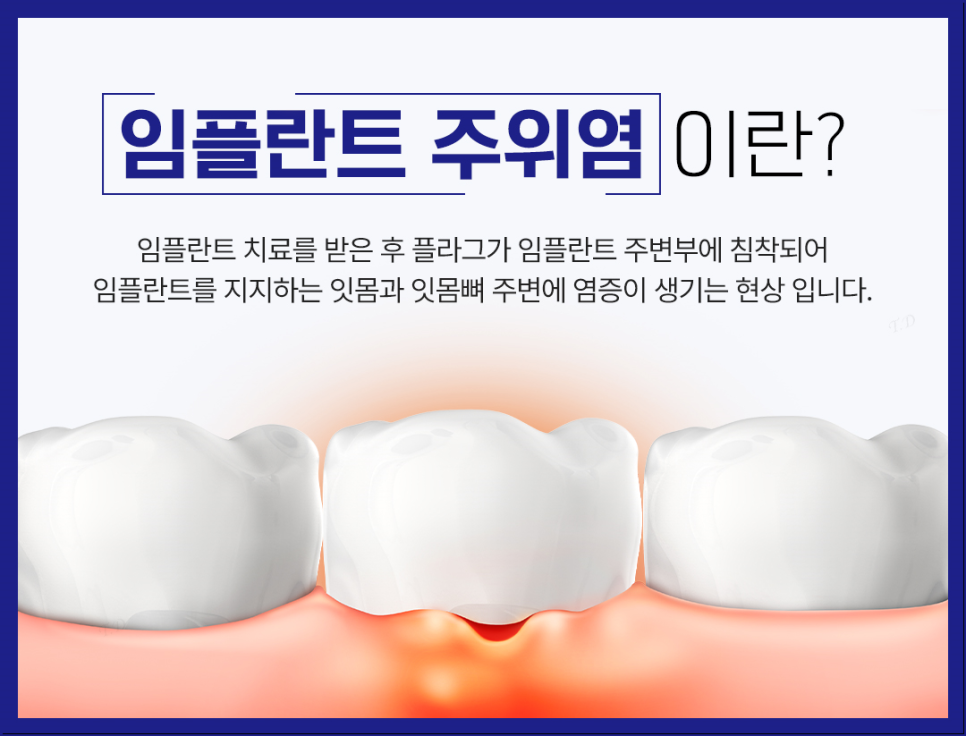
- Persistent swelling and bleeding: If the gums around the implant turn red or swelling continues, inflammation such as peri-implantitis should be suspected. Frequent bleeding during meals or brushing is a clear sign that gum health is worsening.
�
- Pain that does not go away: If pain does not subside or worsens even months after treatment, beyond the early stage, it may be a nerve issue or failure of osseointegration rather than simple inflammation.
�
- Looseness and instability: If the implant feels loose or unstable when chewing, there is a high possibility that the bond with the bone has weakened or that there is a problem with the screw (fixture).
�
- Prosthesis damage or looseness: If the prosthesis (crown) breaks or the screw loosens, causing discomfort while chewing, this is a clear sign that implant re-placement at Jongno Dental Clinic should be considered.
�
�
Four decisive failure causes that lead to implant re-placement
The reasons why a Jongno Dental Clinic implant that has already been placed fails are complex. To avoid repeating the same mistakes during re-placement, it is necessary to know the underlying cause accurately.
�
- Lack of patient care: The main culprit is 'peri-implantitis'
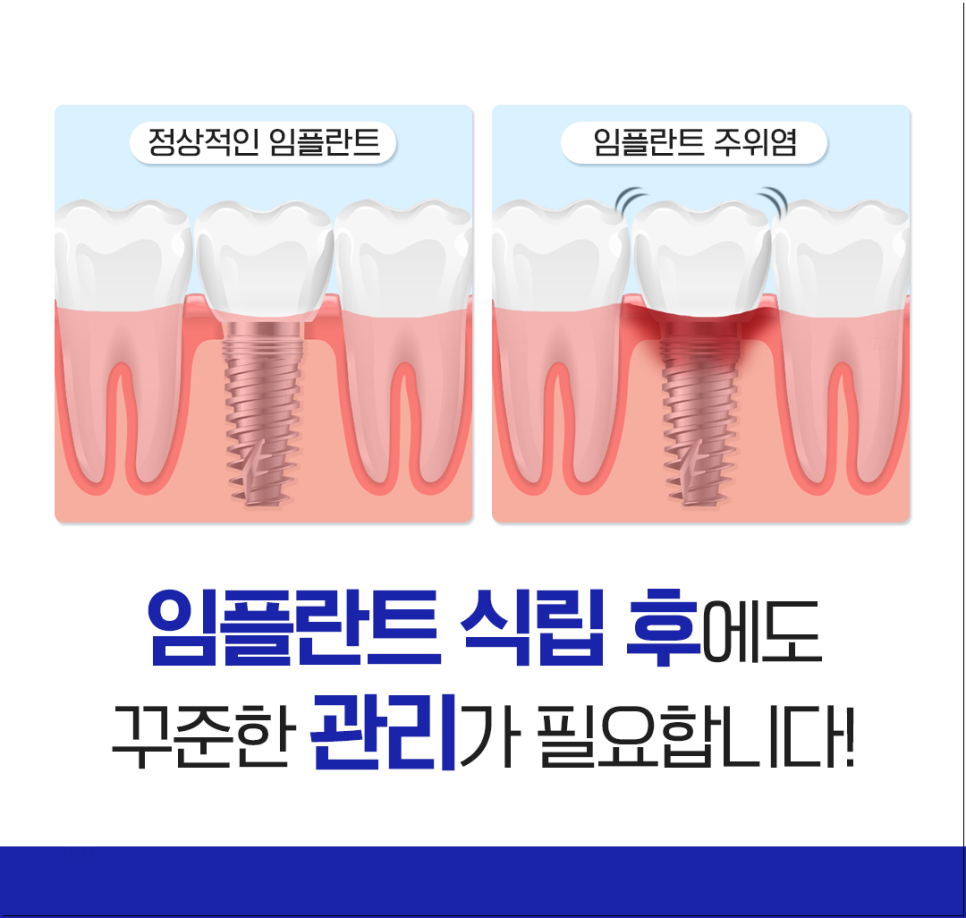
The most common cause of failure is poor oral hygiene management by the patient. Peri-implantitis is similar to periodontitis in natural teeth; as plaque and tartar build up, inflammation spreads to the gums and jawbone around the implant, causing bone loss. This is the most direct cause of implant failure. In addition, smoking interferes with the healing process and increases the risk of inflammation, and systemic conditions such as diabetes can also weaken immunity and raise the likelihood of implant failure.
�
- Treatment failure: Incorrect 'position and angle'
Problems during the initial treatment process can lead to implant re-placement in the long term. If the implant is placed in the wrong position or at the wrong angle, it cannot properly withstand chewing forces and becomes unstable. If the implant is too short or too thin, stability decreases, and if there is a risk of nerve damage, aftereffects such as pain or numbness may remain after placement.
�
- Prosthetic problems: Broken or ill-fitting 'occlusal imbalance'
The prosthesis is a key part that replaces the function of a tooth. If the occlusion (bite) is not accurate when the prosthesis is fitted, excessive pressure is applied to certain areas, causing the prosthesis to fracture or loosen. Strong impacts such as teeth grinding habits or eating very hard foods can also damage the prosthesis and lead to re-placement.
�
- Biological failure: The foundation of the implant, 'failure of osseointegration'
Failure of osseointegration is a serious problem in which the Jongno Dental Clinic implant does not properly bond with the bone and becomes loose or falls out. If the condition of the bone was not accurately assessed during the initial treatment, or if there was not enough gum bone grafting, integration becomes difficult. The risk is also higher when the patient has low bone density or reduced healing ability.
�
�
Implant re-placement at Jongno Dental Clinic is much more difficult than the first treatment. To avoid re-placement and achieve stable results, several conditions should be carefully considered.
�
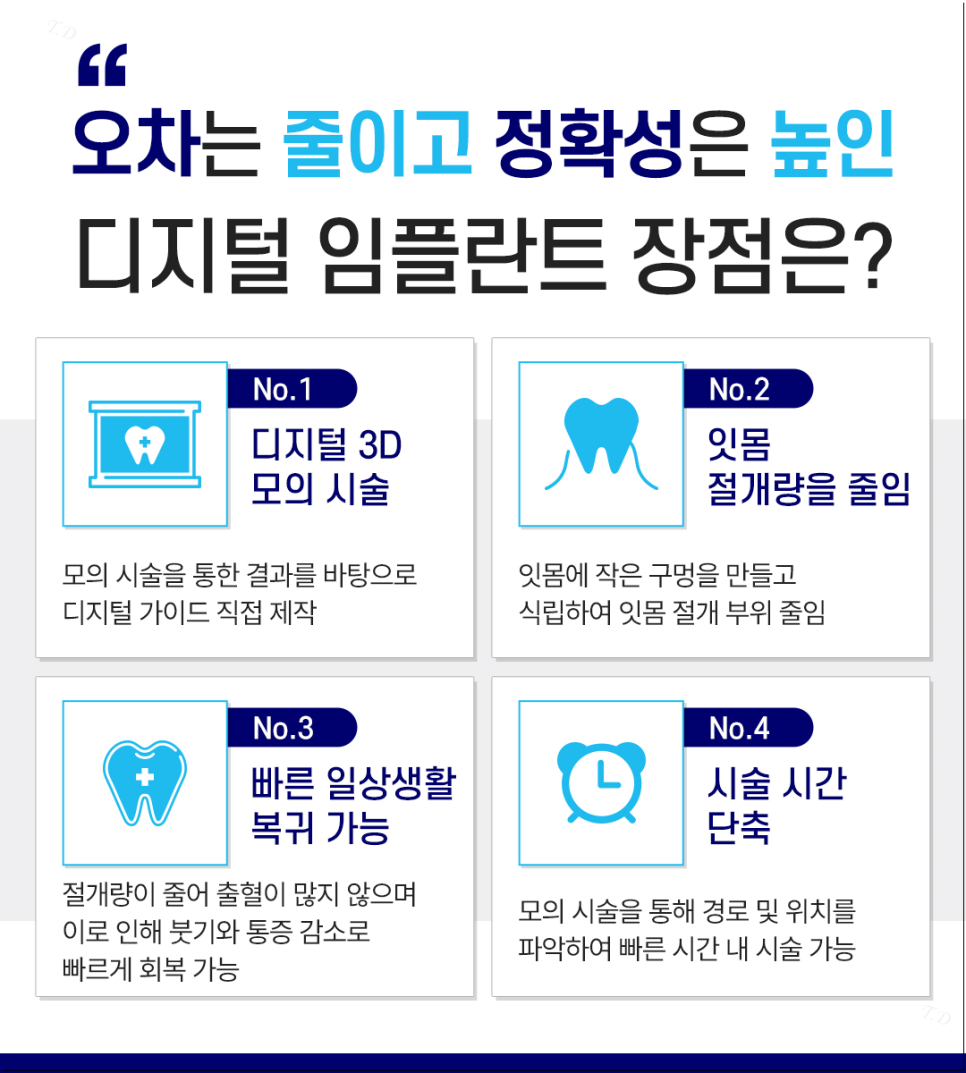
First, an accurate diagnosis of the cause of failure is essential. Through precise equipment such as 3D CT, the causes of failure, including inflammation, bone loss, and nerve position, must be thoroughly analyzed.
�
Second, the skill of the medical staff must be confirmed. Re-placement is a high-difficulty treatment that involves removing the existing implant, eliminating inflammation, and bone grafting, so it is important to choose experienced medical staff with extensive clinical experience, such as oral surgery specialists.
�
Third, a systematic treatment plan at Jongno Dental Clinic must be established. Whether implant re-placement is needed, as well as any additional bone grafting and inflammation treatment, an optimal customized plan suited to the individual’s oral condition must be created to increase the success rate.
�
Implant re-placement at Jongno Dental Clinic is not something to fear, but a process for a new beginning. Accurately analyzing the cause of failure and consulting with experienced medical staff at Jongno Dental Clinic to establish the best treatment plan for your situation is the first step toward stable re-placement.
�


Previous image
Next image
�