Hello, this is Gangnam Leon Dental Clinic 😊
When many people consider wisdom tooth extraction,
they usually come in thinking only about the lower wisdom teeth.
This is because pain caused by wisdom teeth often occurs in the lower jaw,
and the upper jaw may not have any noticeable symptoms,
so it seems natural to think that way.
However, for wisdom teeth that appear likely to cause problems later,
we recommend extracting both the upper and lower wisdom teeth.
Typical cases are as follows.
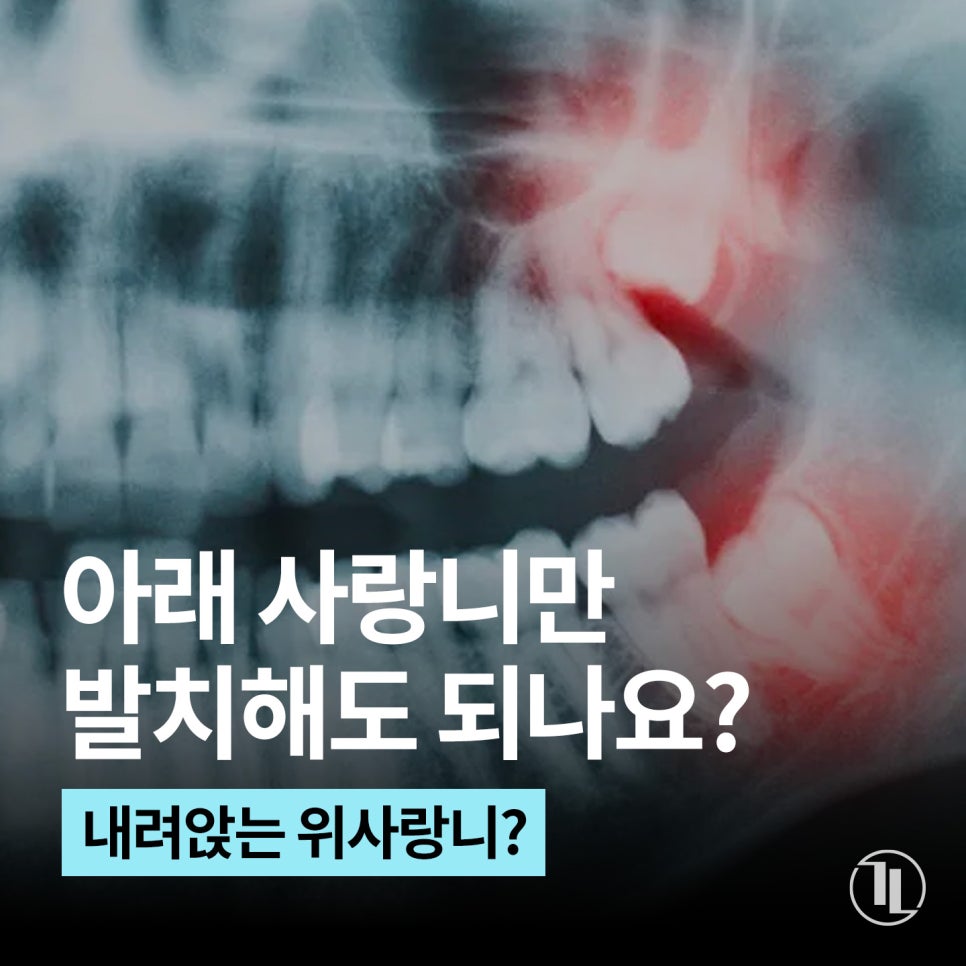
The upper wisdom tooth gradually sinking down
Our oral cavity is structured so that the teeth in the maxilla and mandible
contact each other.
This helps maintain balanced teeth in terms of normal alignment and functional occlusion.
Maintaining the correct bite and alignment by contacting each other,
as well as preventing disease,
is also important for a healthy oral structure.
If only the lower wisdom teeth are extracted,
a representative problem that can occur
is this very 'alignment.'
An upper wisdom tooth with no opposing tooth
can gradually descend over time,
and various problems can arise at that point.
The following patient came to Gangnam Leon Dental Clinic
with pain in the upper gum,
after having the lower wisdom teeth extracted but not the upper ones.
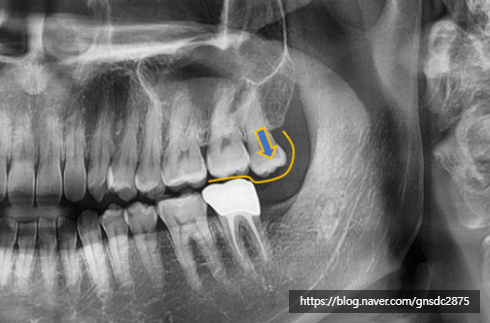
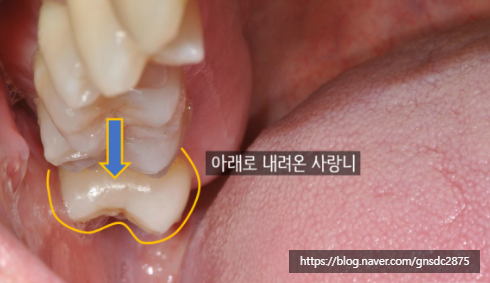
Even in the photo, the upper wisdom tooth has descended quite a lot.
With no lower tooth to bite against,
the upper wisdom tooth had gradually moved downward and was irritating the gum.
Even if it is just one tooth,
once it moves away from its original position,
it affects the surrounding area
and gradually affects the overall structure,
so discomfort is inevitable.
If this is left as it is and continues irritating the gum,
the wound can start as stomatitis
and develop into gum inflammation.
The upper wisdom tooth that was causing the problem was neatly extracted,
and the treatment was completed.
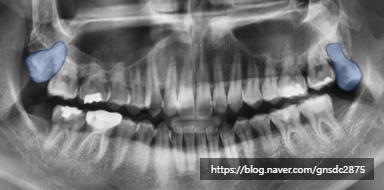
When an upper wisdom tooth descends,
due to the difference in height from the neighboring teeth, food can easily get trapped between them,
and because hygiene management is not easy,
tooth decay can also occur.
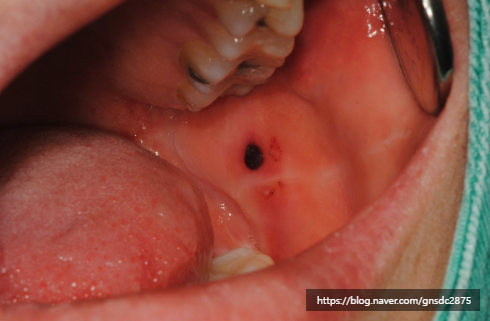
Or, due to changes in the alignment of the teeth,
a person may frequently bite the cheek and develop a hematoma.
Wisdom teeth that do not need to be extracted
are not recommended for extraction;
however, wisdom teeth that may cause problems later
are recommended for extraction in both the upper and lower jaws.
Most wisdom teeth do not erupt properly,
and even when they do erupt properly,
they are located at the very back of the mouth,
so they are not easy to care for and can cause various problems.
If you have any questions about wisdom tooth extraction,
please feel free to leave a comment!
Gangnam Leon Dental Clinic
Integrated front-tooth treatment, Newtis
This integrated front-tooth treatment covers everything from spot tooth treatment to gum grafting, tooth shaping,
gum contouring, teeth whitening, gum whitening,
front-tooth resin treatment, orthodontics, and Newtis Lami.






Previous image
Next image