Hello, this is Gangnam Leon Dental😊
These days, when people think of teeth whitening,
there are many at-home teeth whitening kits,
so many people do it themselves at home.
However, professional teeth whitening
and DIY teeth whitening are definitely different.
Today, we’ll look at the differences between professional whitening and DIY whitening,
and the Newtis whitening process
at Gangnam Leon Dental.
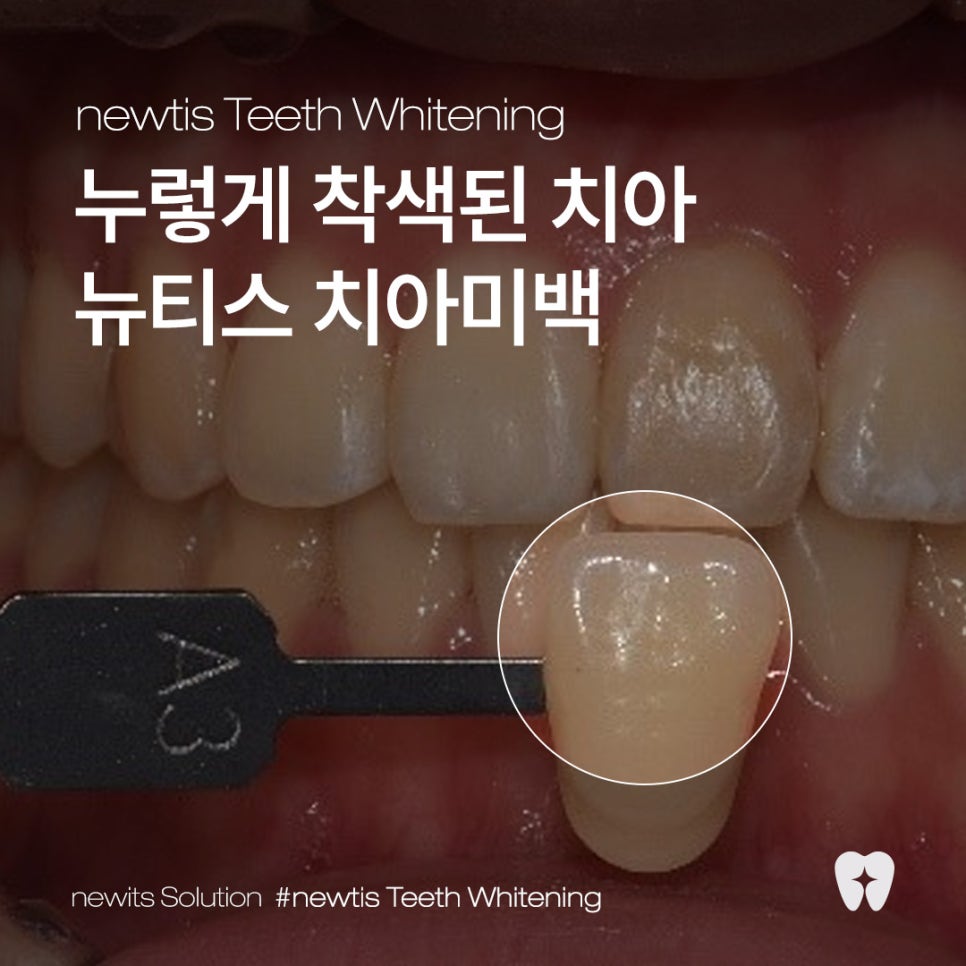
The main cause of tooth staining
Tooth discoloration can make you feel less confident when smiling or speaking.
In particular, if you have an important event coming up,
such as a wedding, job interview, or blind date,
yellowed teeth can be hard to ignore.
The gradual yellowing of teeth
is caused not only by highly staining foods like coffee and wine,
but also by various other factors.
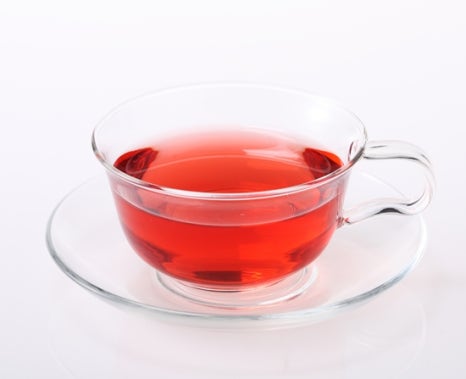
✅ Pigment buildup from coffee, wine, carbonated drinks, and similar beverages
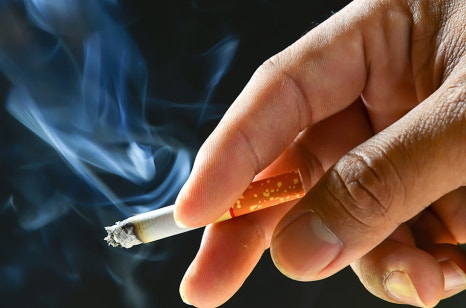
✅ Nicotine staining from smoking
✅ Internal discoloration caused by antibiotic use
✅ Natural changes due to aging


DIY teeth whitening vs. professional teeth whitening
As at-home teeth whitening kits have become widely available,
many people wonder about
the effectiveness and safety of DIY whitening
compared with professional whitening.
Would at-home whitening be better?
Teeth whitening results vary depending on the condition of each person’s teeth,
the cause of discoloration, and lifestyle habits,
but in general they are as follows.
| DIY Teeth Whitening | Category | Professional Teeth Whitening |
|---|
| Used independently at home | Treatment location | Performed by a professional at a dental clinic |
| Low-concentration hydrogen peroxide or sodium bicarbonate, etc. | Materials used | High-concentration hydrogen peroxide with light exposure |
| About 30 minutes to 1 hour per session | Treatment time | About 15 minutes per session |
| Gradual effect | Whitening effect | Fast effect |
| - Lower cost<br>- Not restricted by time or place | Features | - Fast effect<br>- Professional diagnosis and management |
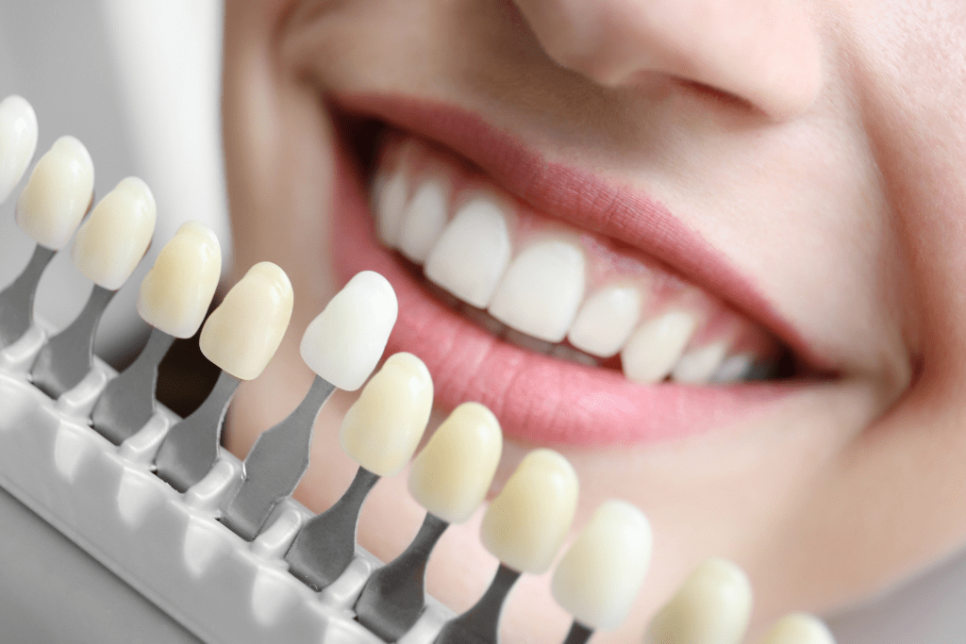
Newtis teeth whitening process
▼Watch Gangnam Leon Dental Newtis Teeth Whitening Vlog▼
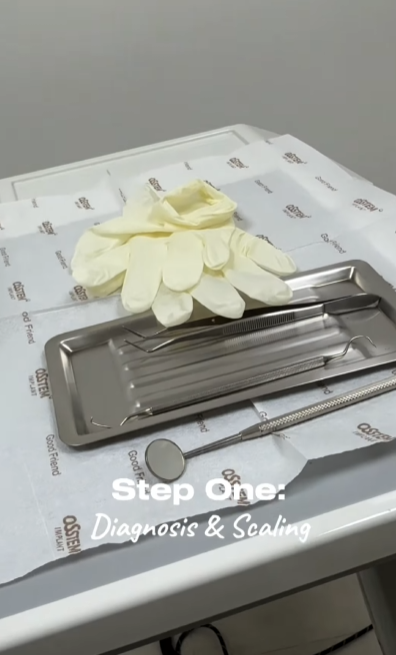
1️⃣ Diagnosis and scaling
Before teeth whitening, we check the exact tooth shade,
examine the oral condition,
and perform scaling to help prevent infection.
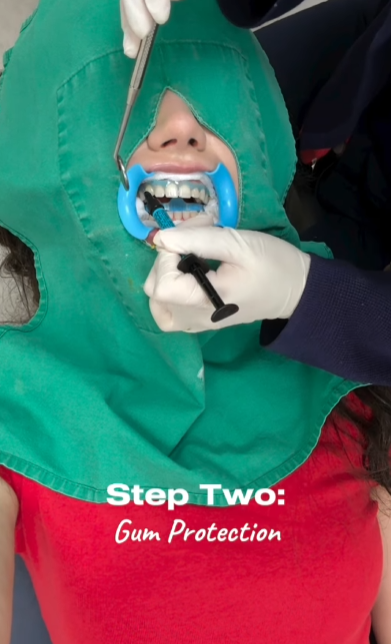
2️⃣ Apply gum protector
If the whitening agent comes into contact with the gums,
the gums may be damaged,
so we apply a protective agent to prevent injury to the gums.
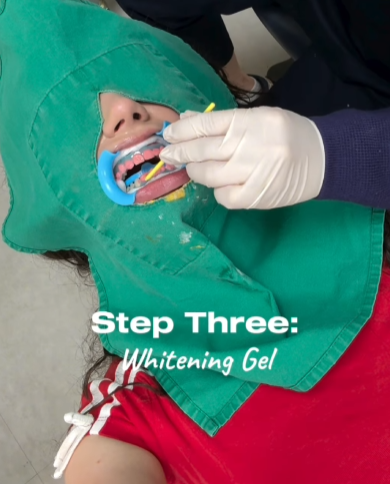
3️⃣ Apply the whitening agent
The whitening agent is applied to the surface of the teeth.
Usually, the medication is applied to 12 teeth in total,
from canine to canine on both the upper and lower arches.
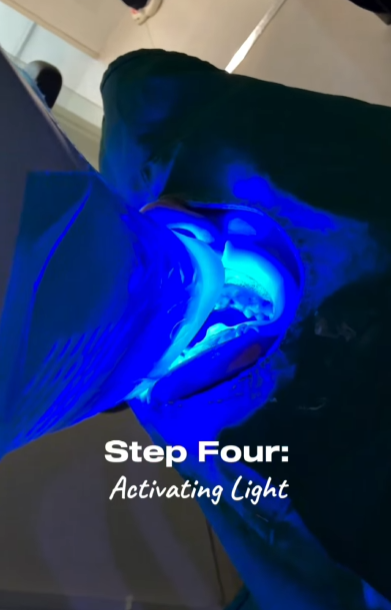
4️⃣ Special light exposure
After the whitening agent is applied,
a special light is directed at the teeth using a whitening device
so the whitening agent can absorb into the teeth properly.
Usually, one session takes about 15 minutes.
If it is planned for three or more sessions,
two sessions may be completed on the same day as a one-day treatment,
and the remaining visits are scheduled for later.
Side effects of teeth whitening?
Teeth whitening is a safe procedure,
but depending on the individual, the following side effects
may occur.
✅ Tooth sensitivity
You may temporarily become sensitive to cold water
or air.
✅ Gum irritation
If the agent touches the gums,
there may be temporary redness or soreness.
(**In the case of professional teeth whitening,
a protective agent is applied first
to protect the gums.)
How long does teeth whitening last?
Professional whitening generally lasts 1–2 years or more on average.
However, because the foods we eat every day
may be highly pigmented, and smoking and other habits
can discolor teeth again,
teeth can easily become stained again even after whitening.
To help prevent this,
after eating staining foods or smoking,
it is best not to forget to brush your teeth.
Q. How many whitening sessions are needed to see results❓
We usually recommend three sessions for teeth whitening.
However, since the degree of whitening varies by person,
the number of sessions may increase or decrease.
Q. Can I drink coffee after teeth whitening❓
For 2–3 days after whitening, the tooth color continues to gradually brighten,
and drinking coffee during this period may reduce the effect.
Therefore, it is best to wait about 2–3 days before drinking it.
Q. When can I eat after teeth whitening❓
For the first 2 hours after teeth whitening,
it is best to avoid eating if possible.
Since the 24–48 hours after treatment are an important period
during which the whitening agent’s effect is maximized,
avoiding smoking and foods that contain a lot of pigment
will help maintain the results.
✅ Rinse with water after consuming staining foods
✅ Reduce smoking or quit smoking
✅ Prevent staining with regular scaling
✅ Drink beverages using a straw
If you want quick results in a busy daily life
and have room in your budget, professional dental whitening may be a good option.
If you can manage care consistently
and want to reduce the cost burden,
diy teeth whitening may be better.
Choose the method that suits you and proceed with whitening,
then maintain the results through proper care afterward.
If you have any other questions about teeth whitening,
please leave a comment!
Gangnam Leon Dental
Integrated anterior treatment, Newtis
This is an integrated anterior treatment that covers treatment for white spot lesions,
gum grafting, tooth contouring,
gum contouring, teeth whitening, gum whitening,
front tooth resin treatment, orthodontics, and Newtis lamination.


Previous image
Next image