Hello, this is Gangnam Leong Dental Clinic🙂
As the new year begins, with a new school semester, permanent teeth eruption,
and increased health management needs overlapping,
interest in children’s sealants naturally tends to rise.
Today, we’ll look at the right timing for your child’s sealant treatment,
insurance coverage, and how to care for sealants afterward.
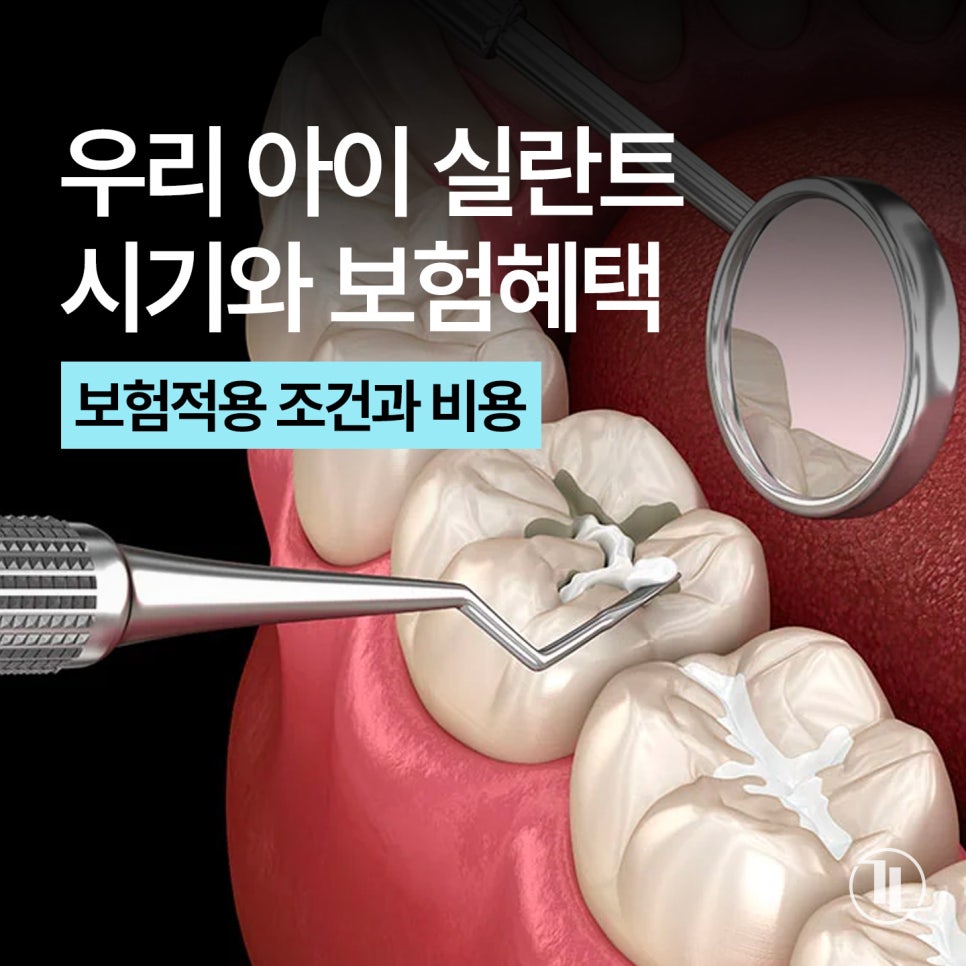
What is a sealant?
A sealant is a treatment that prevents cavities by filling the deep grooves of molars
with a special material.
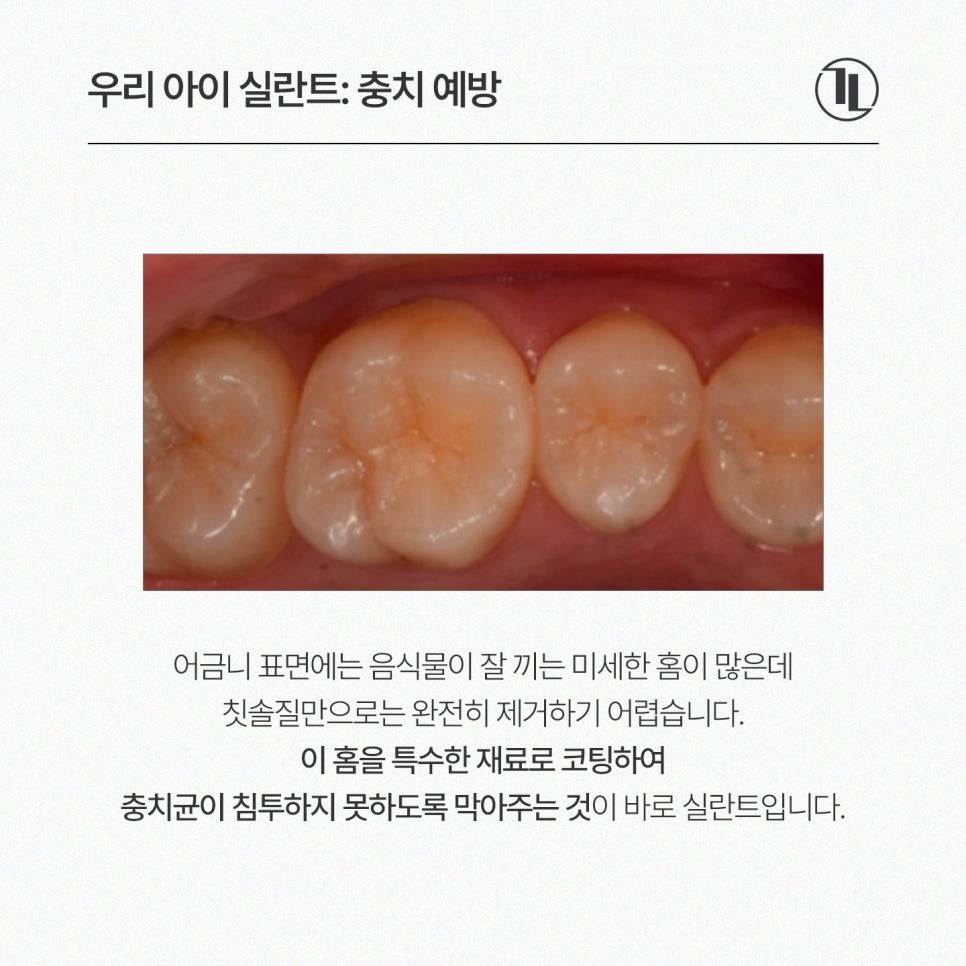
Molars have uneven chewing surfaces,
so food gets stuck easily,
and because they are difficult to care for with brushing alone,
they are the area where childhood cavities most often occur.
Sealants are a representative preventive treatment that places little burden on children
because they protect the grooves without grinding down the teeth.
Children often have:
✅ 아직 a weak brushing habit
✅ frequent sweets and snacks
✅ deep grooves in their molars
By physically blocking cavity-causing bacteria from entering the grooves,
sealants increase the preventive effect against cavities.
What are the insurance coverage conditions and cost for sealants?
Children’s sealants are a preventive treatment covered by the National Health Insurance.
✅ Eligible for coverage
❌ Not covered
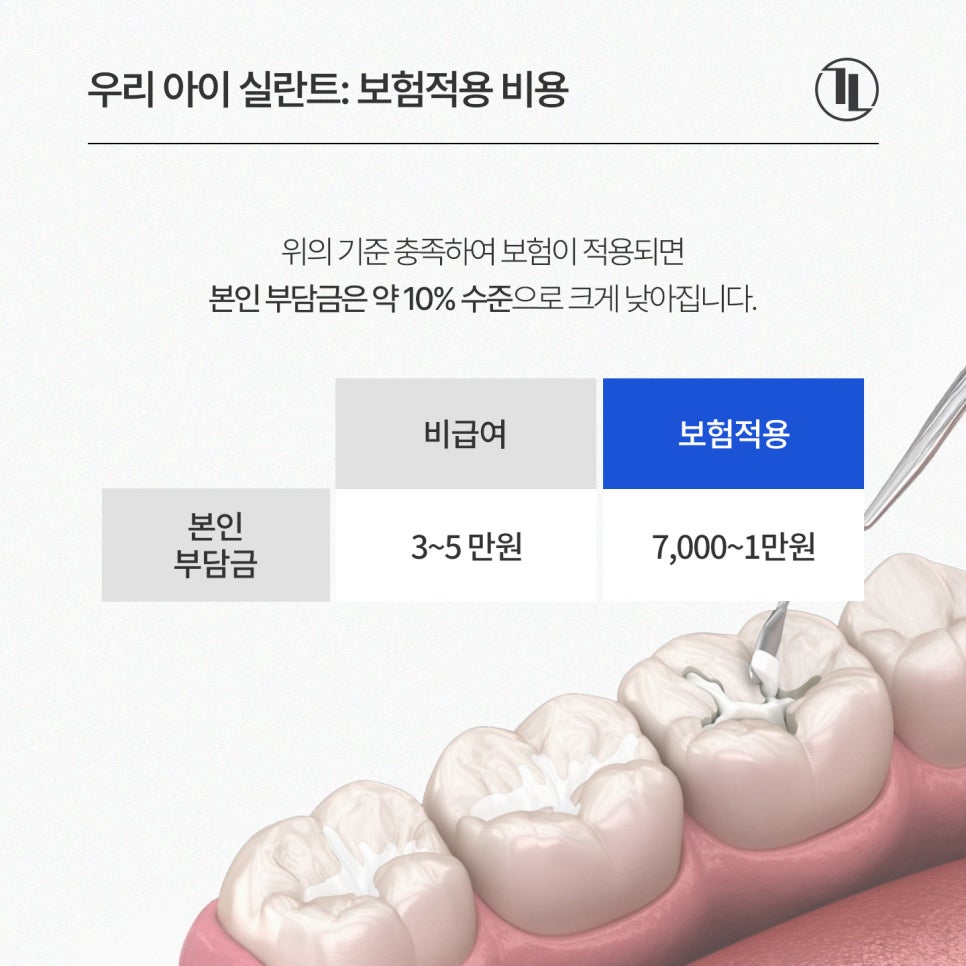
When insurance applies,
out-of-pocket costs are greatly reduced to about 10%,
so if the above criteria are met,
▲ the insured cost per tooth is about 7,000–10,000 KRW,
and ▲ the non-insured cost is 30,000–50,000 KRW per tooth.
Children’s sealants are considered a treatment with a very high preventive effect relative to cost.
When should my child get a sealant?
: Timing for the procedure
The best time for sealant treatment is when the permanent molars erupt.
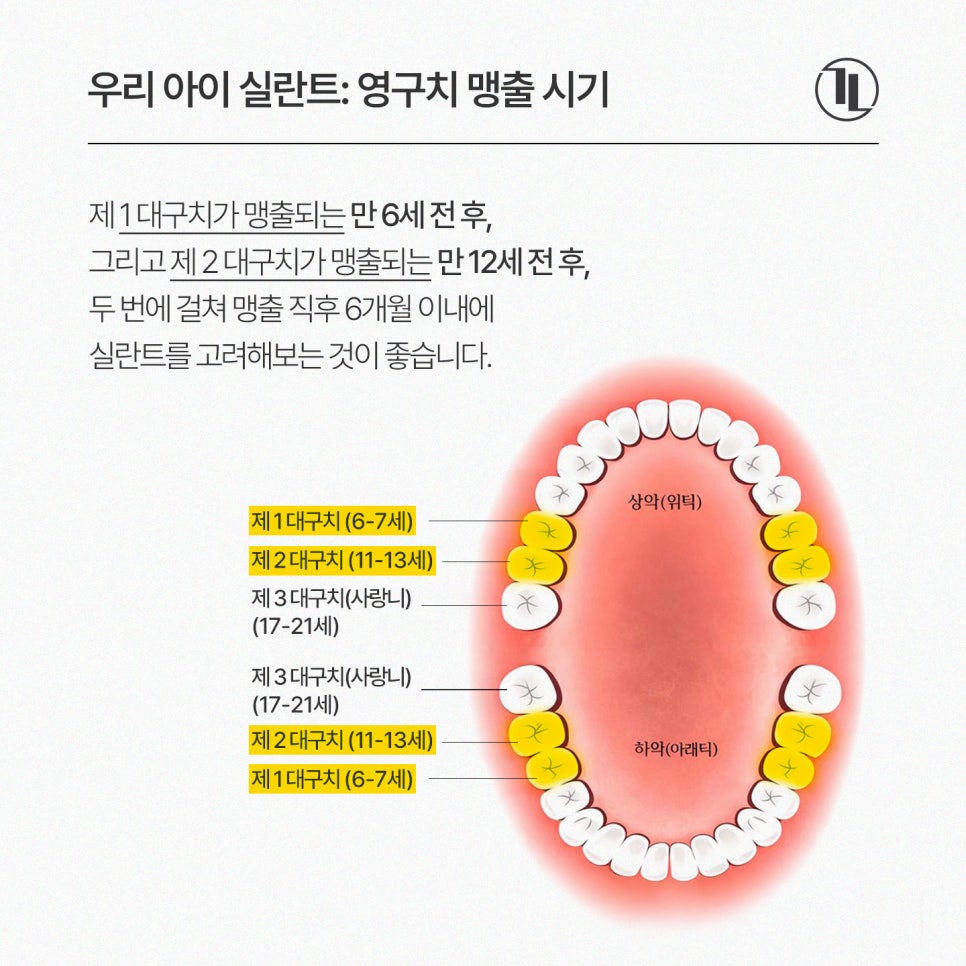
Most deciduous teeth begin to be replaced by permanent teeth at around age 6–7,
and this is the golden time to care for and check a child’s teeth.
| Item | First permanent molar | Second permanent molar |
|---|
| Eruption time | Age 6–7 | Age 11–13 |
In particular, right after permanent teeth erupt,
the tooth structure has not fully hardened yet,
so it is relatively vulnerable to external irritation.
If sealants are placed on the molar grooves where food tends to get stuck during this period,
effective prevention is possible.
Therefore, around age 6, when the first molar (first permanent molar) erupts,
and around age 12, when the second permanent molar erupts,
it is good to consider sealants within 6 months after eruption,
and to maintain them through regular checkups every 6 months to 1 year.
Sealant procedure
The sealant procedure is simple
and there is almost no pain.
No anesthesia is needed,
and it usually takes about 5–10 minutes per tooth.
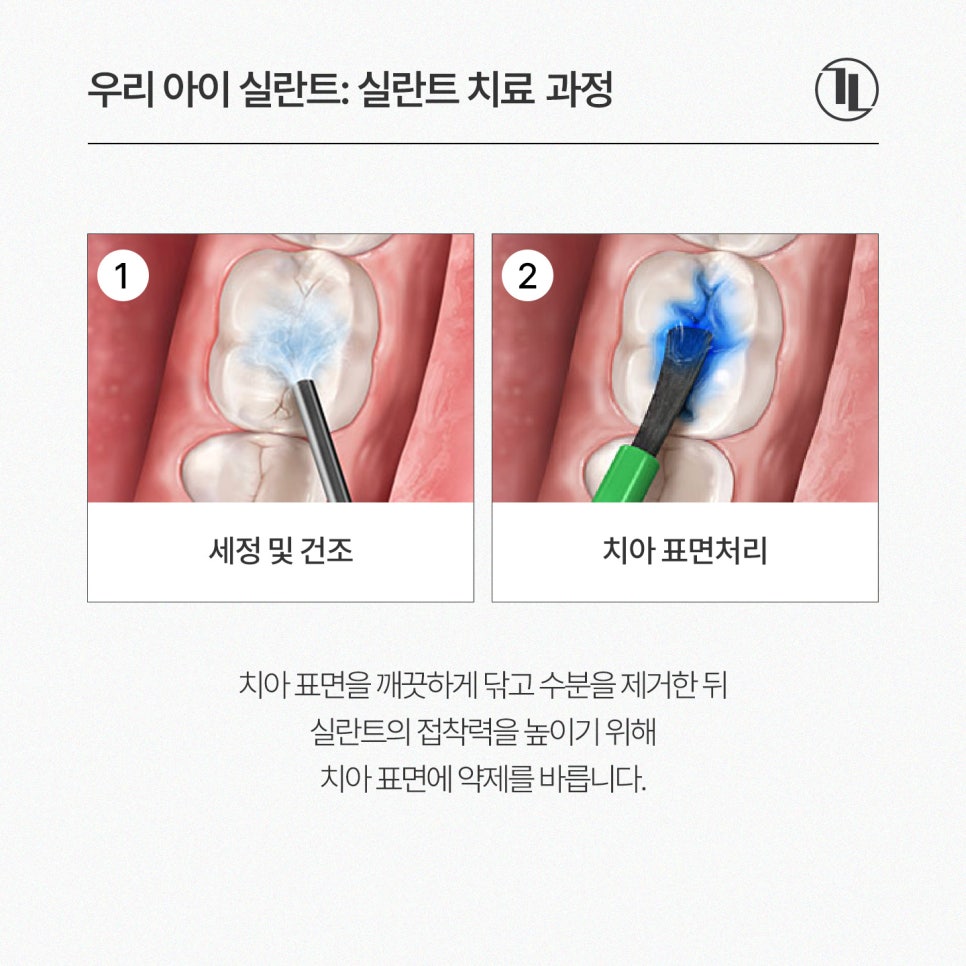
① Cleaning and drying
The tooth surface is cleaned thoroughly
and moisture is removed.
② Tooth surface treatment
A medicament is applied to the tooth surface
to improve the sealant’s adhesion.
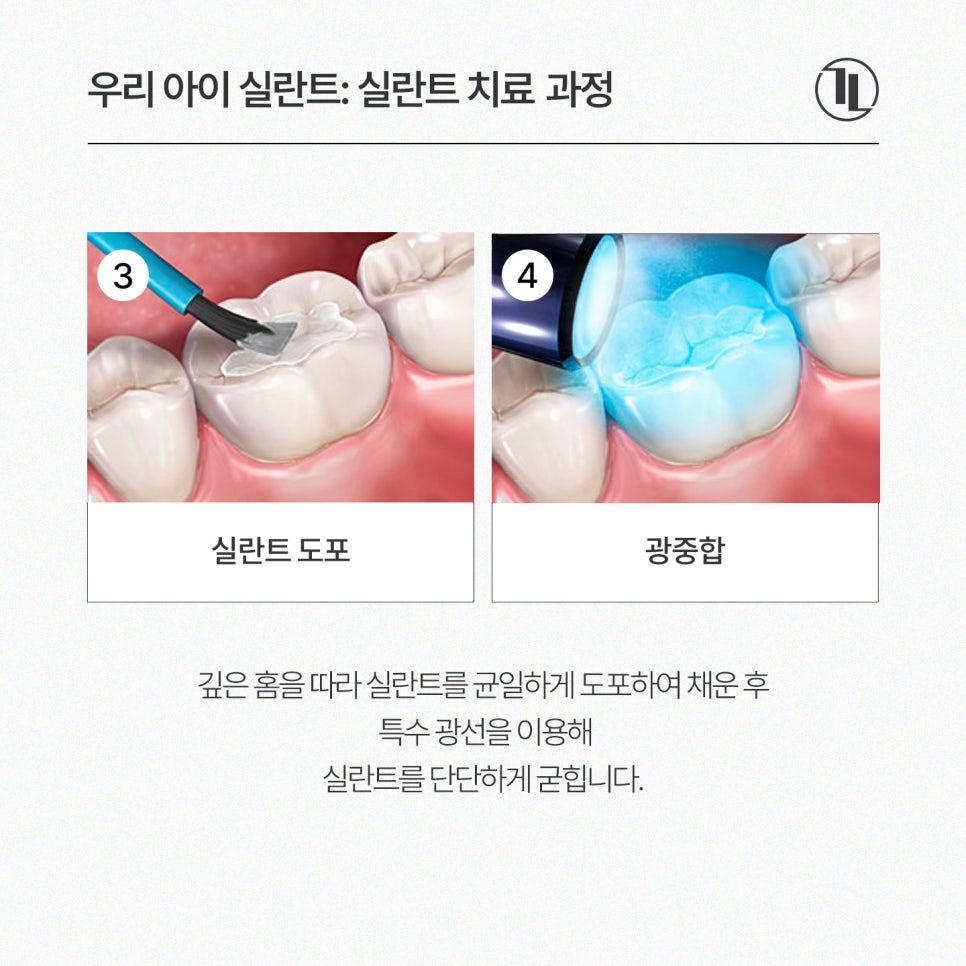
③ Sealant application
The sealant is applied evenly
along the deep grooves to fill them.
④ Light curing
A special light is used
to harden the sealant.
⑤ Bite check and finishing
After checking that there is no discomfort when biting,
the procedure is completed.
How to care for sealants afterward
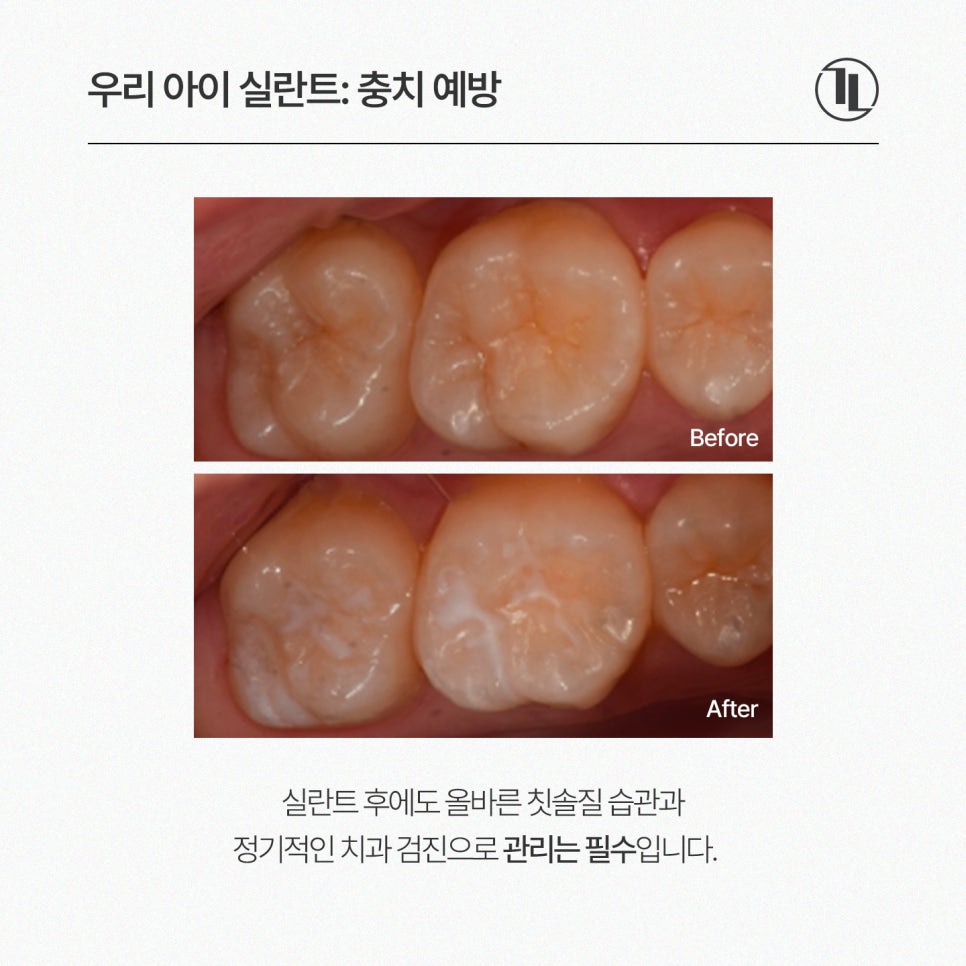
A sealant is not something you do once and finish;
care is also important.
✔️ Regular dental checkups
✔️ Be careful with hard foods
✔️ Maintain proper brushing habits
If a sealant partially comes off,
simple repair treatment is possible.
Sealant FAQ
✋ If I get sealants, can I neglect brushing?
No.
Sealants protect the groove areas of molars,
where cavities are likely to develop,
but cavities can also form on the sides of teeth
and near the gums.
Therefore, proper brushing and regular checkups are still essential after sealants.
✋ Can a sealant fall off?
Yes.
Depending on a child’s biting force and eating habits,
it may partially come off.
However, if it does come off, it is not a major problem,
and if it is found during a regular checkup,
simple repair treatment can be done.
✋ Will the child feel pain during the sealant procedure?
Sealant treatment does not require anesthesia
and there is almost no pain.
Because the tooth is not ground down,
most children can receive treatment without much discomfort.
✋ What is the difference between sealants and fluoride treatment?
The two treatments have different roles.
✔️ Sealant: physically blocks the grooves of molars to prevent cavities
✔️ Fluoride treatment: strengthens the tooth surface to help prevent cavities
Using them together increases the preventive effect against cavities.
Today, we looked at children’s sealants.
As a preventive treatment rather than a cavity treatment,
it is most effective to proceed within 6 months after the permanent molars erupt,
and insurance coverage helps reduce the cost burden.
If your child needs a sealant, don’t miss the timing
and be sure to make use of the insurance benefits.






Previous image
Next image