Hello, this is Gangnam Leon Dental Clinic🙂
Have you ever felt a foreign-body sensation on the inside of your lip one day?
It doesn’t hurt, but you keep biting it,
and then one day it seems to burst and disappear,
but a few days later, it appears again in the same spot!
Did it happen because you were tired?
Could it be a malignant tumor?
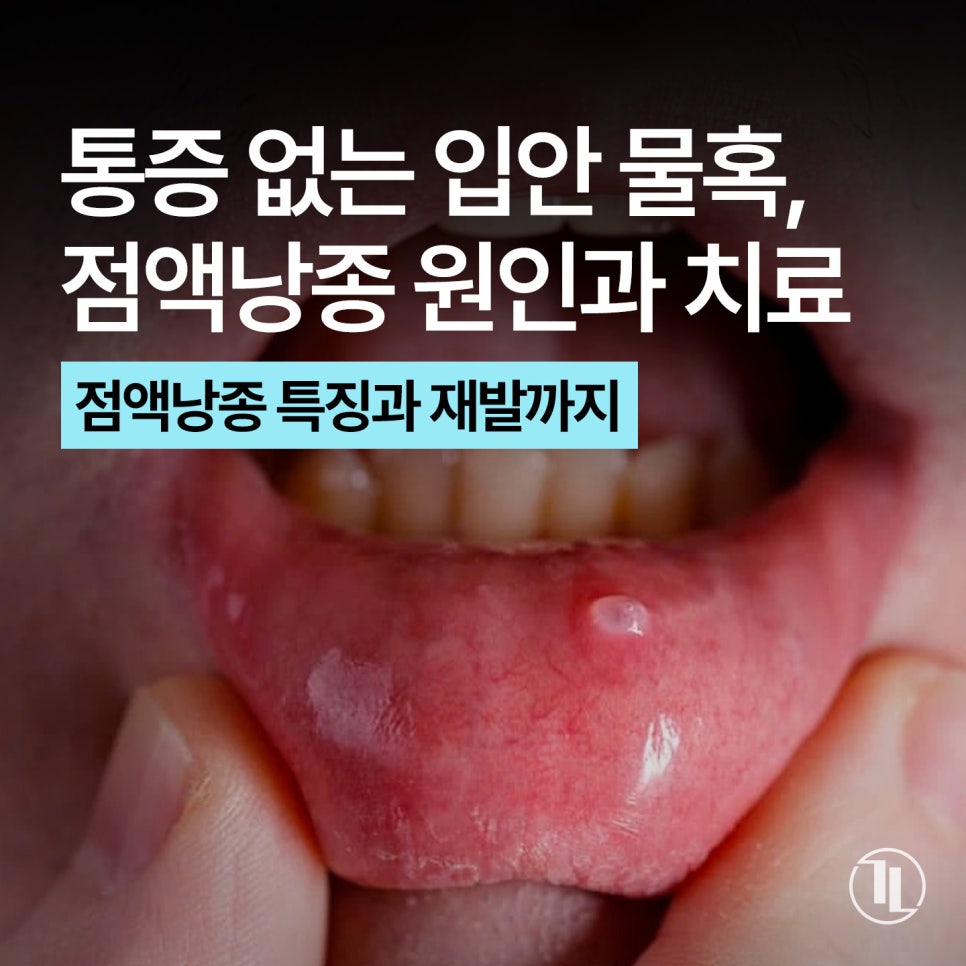
Today, we’ll take a look at a transparent, soft cyst in the mouth,
a mucocele,
and learn about its causes, features, and treatment.
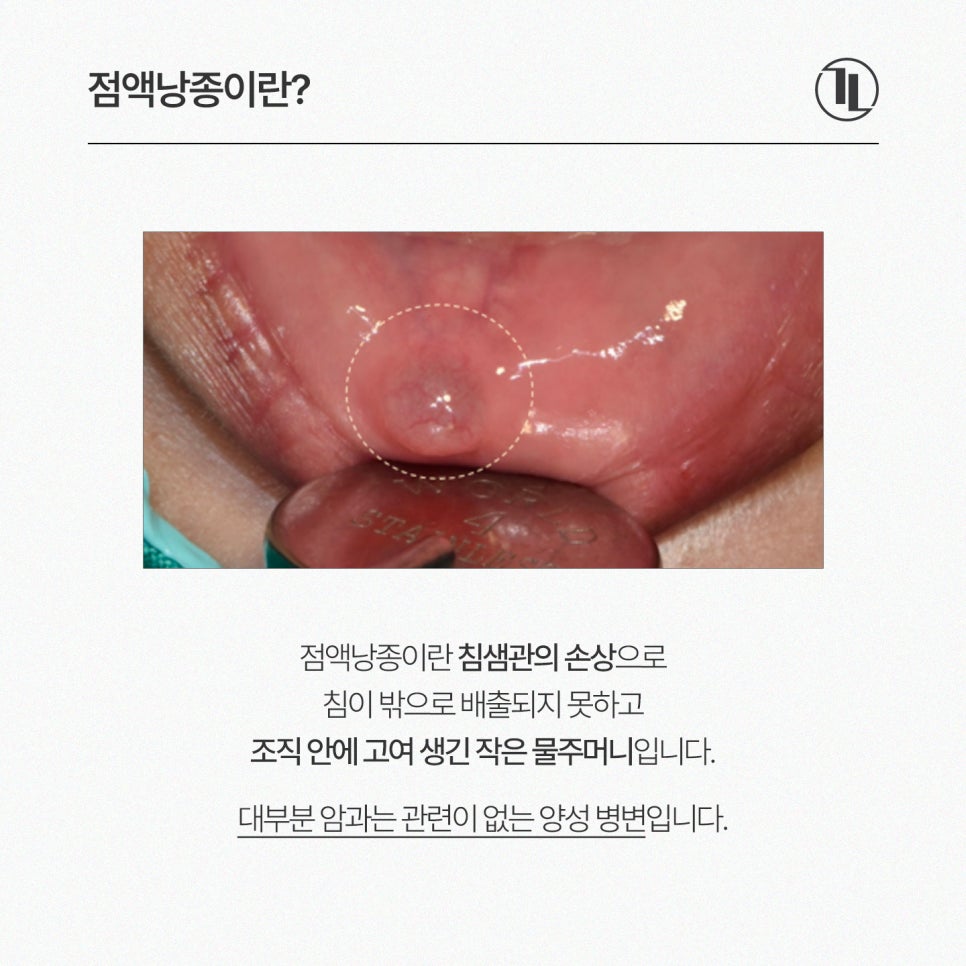
What is a mucocele?
Simply put, a mucocele is
a small sac formed when saliva cannot drain out
and collects inside.
There are many small salivary glands
that produce saliva in our mouths.
That saliva enters the mouth through small ducts,
but if you bite your lip or suffer an injury,
those ducts can be damaged.
Then the saliva cannot come out,
so it collects in the tissue and swells up like a water-filled sac.
This condition is medically called a “mucocele.”
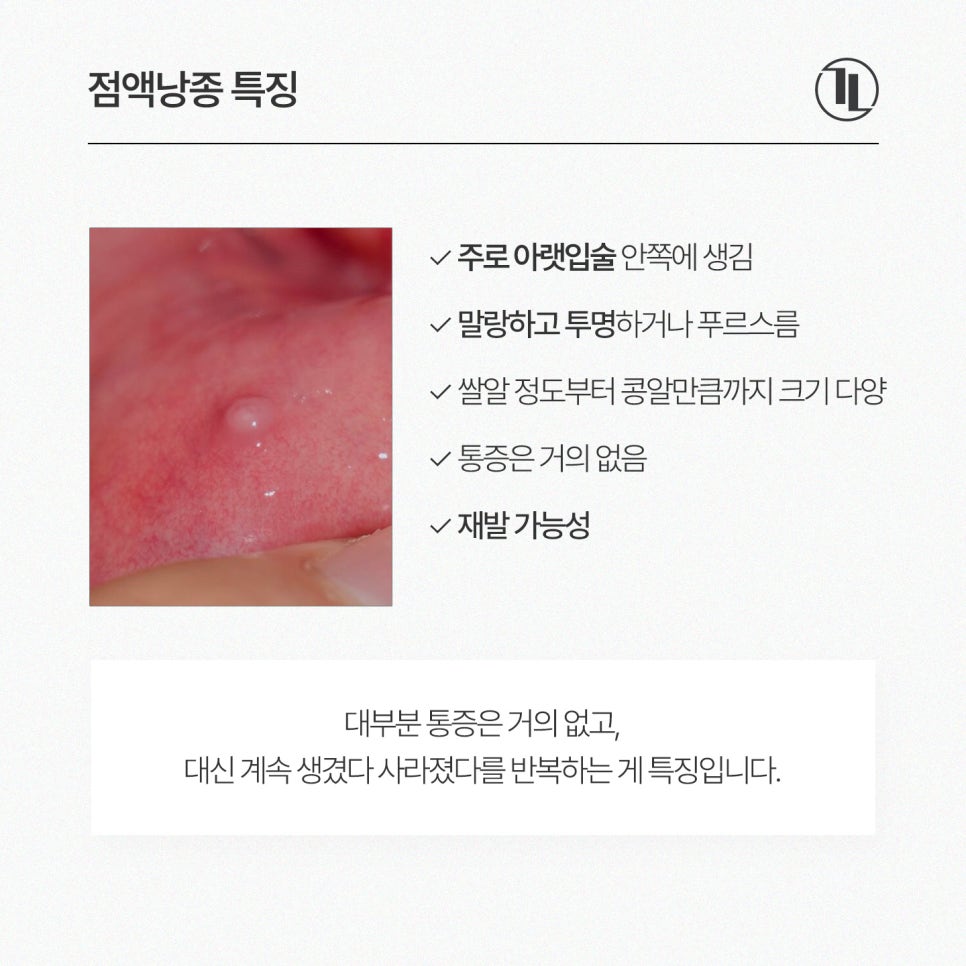
Features of a mucocele
Most mucoceles occur
on the inside of the lower lip.
They can also appear under the tongue or on the inside of the cheek.
When touched, they feel soft and have relatively clear borders.
Their color may appear transparent or bluish.
Most cause little to no pain,
but they are characterized by changes in size or repeated recurrence.
Since most are benign lesions and not related to cancer,
you do not need to worry excessively.
✔️ Mainly occurs on the inside of the lower lip
✔️ Soft and transparent or bluish
✔️ Varies in size from about a grain of rice to a bean
✔️ Almost no pain
✔️ Can recur
(may burst and then return)
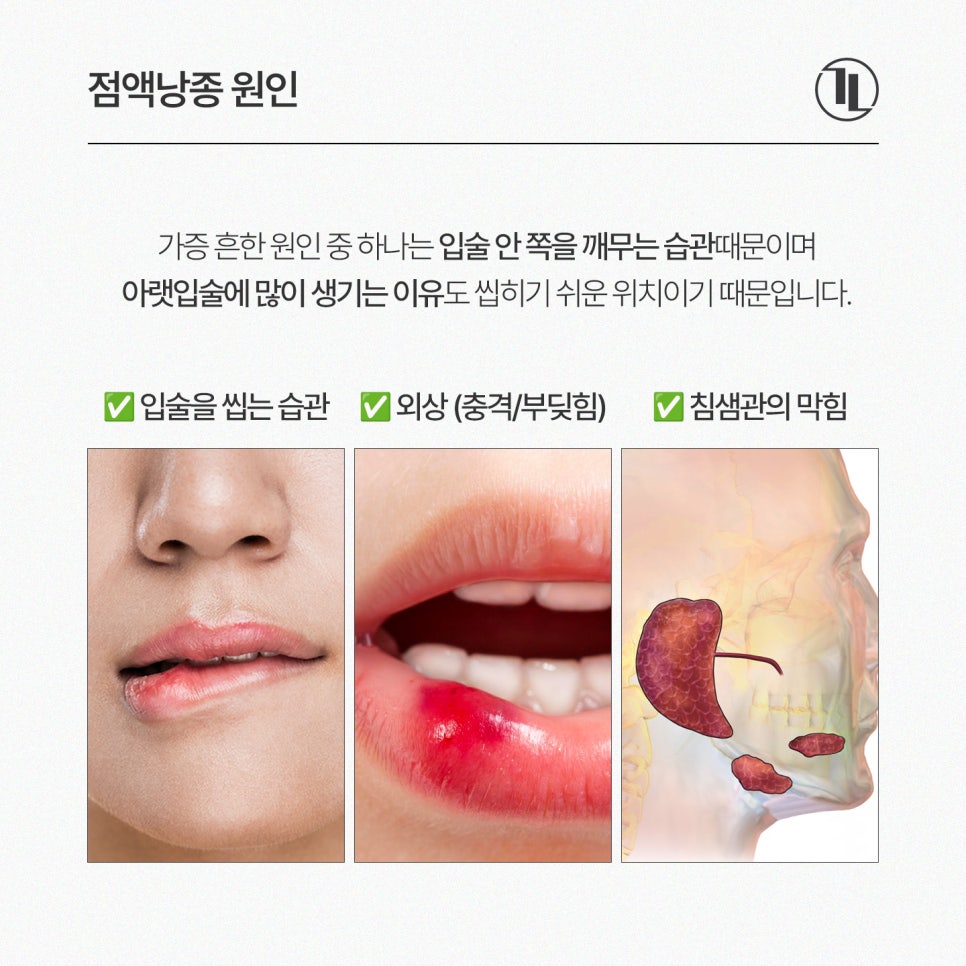
Causes of a mucocele
As briefly explained earlier,
mucoceles mostly occur when saliva (secretion) cannot be discharged normally.
Specifically, the causes include the following.
✅ Habit of biting the lip
One of the most common causes,
if you repeatedly bite the inside of your lip without thinking,
the small ducts of the salivary glands can be damaged.
Especially if you tend to bite your lip when you are stressed or tense,
mucoceles often develop.
The reason they often appear on the lower lip is
because it is an easy place to bite.
✅ Trauma (impact/collision)
If you receive a blow during exercise
or bite the inside of your mouth hard while eating tough food,
the salivary duct can burst or become blocked.
Repeated irritation from orthodontic appliances or sharp edges of teeth
can also be a cause.
✅ Blockage of the salivary duct
The passage through which saliva flows may also become blocked
due to mucus or inflammation.
In this case, saliva cannot drain out
and gradually collects inside, forming a cyst.
Although relatively rare,
salivary stones can also be involved.
If the same area is repeatedly irritated,
the likelihood of recurrence increases.
A mucocele is not simply a sac filled with fluid;
it is a state in which saliva has already seeped into the surrounding tissue,
so if the salivary tissue that caused it remains,
it can come back again.
Natural healing of a mucocele
Small mucoceles may burst on their own
and disappear.
However, if the salivary gland that caused it remains in place,
there is a chance of recurrence.
That is why many people experience it healing and then returning again.
At this time,
✔️ if it keeps appearing in the same spot
✔️ if it remains for more than a few weeks
✔️ if it gradually gets larger
we recommend visiting a dental clinic or getting examined.
Treatment for a mucocele
Most mucoceles heal on their own,
so if there are no special symptoms, they may simply be observed over time.
However, if they recur, get larger,
and cause discomfort, treatment may be considered.
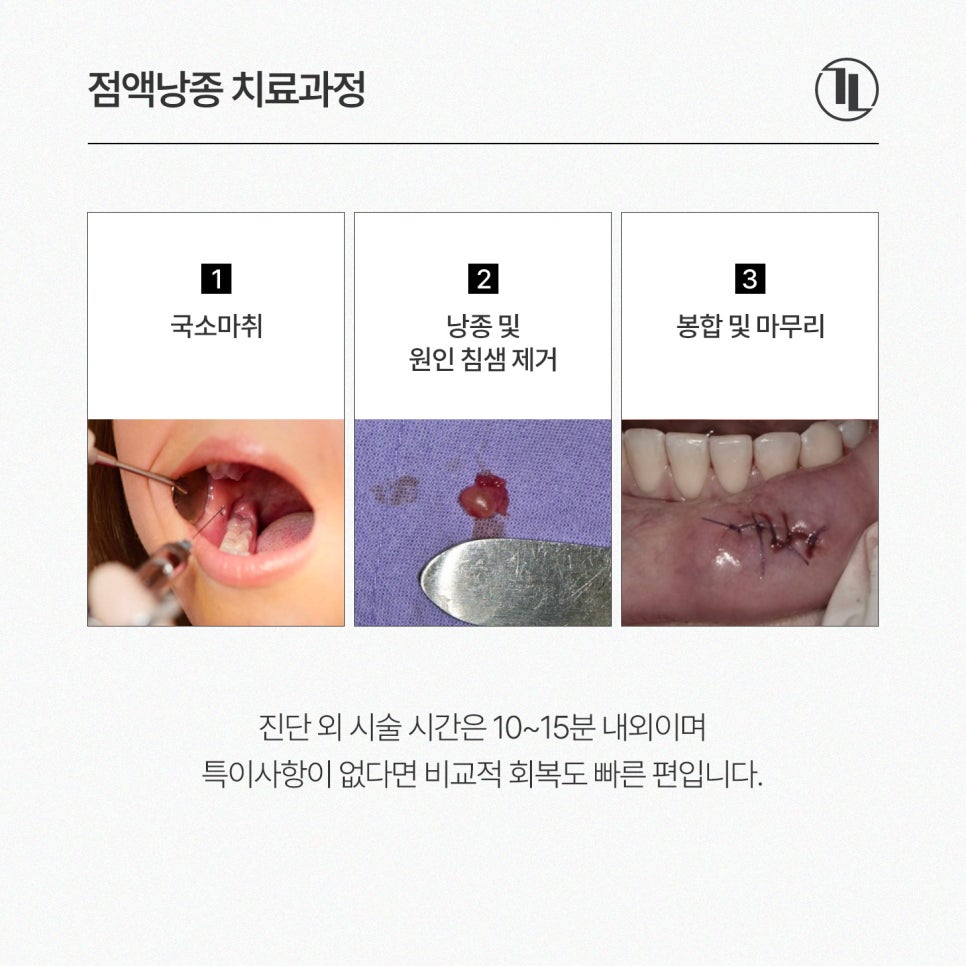
Excluding the diagnosis, the procedure takes about 10–15 minutes,
and if there are no special concerns, recovery is relatively quick.
① Examine the lesion and make a diagnosis
The location, size, and duration are checked
to determine whether it is a mucocele.
② Decide whether to observe it over time
If the size is small and there is little discomfort,
you may wait for it to resolve naturally for a certain period.
③ Local anesthesia
To minimize pain,
local anesthesia is administered to the area.
④ Removal of the cyst and the causative salivary gland
To reduce recurrence, not only the fluid-filled sac
but also the damaged salivary gland is removed.
⑤ Suturing and finishing
Today we learned about mucoceles.
If the cyst is not large or causing discomfort,
removal is not essential, and in most cases it heals on its own.
However,
✔️ if it gradually gets larger
✔️ if it does not heal naturally over time
✔️ if its location is unusual
✔️ if pain, inflammation, or bleeding is present
it is necessary to differentiate it from other conditions,
so it is a good idea to visit a dental clinic and get a diagnosis.
If you have any other questions about mucoceles,
please feel free to contact us!






Previous image
Next image