Hello, this is Gangnam Leong Dental Clinic🙂
When you drink cold water,
have you ever felt your teeth become sensitive in a way that feels different from before?
If it is only a temporary symptom, that is a relief,
but if it happens every time,
it may not be simple sensitivity and could be caused by oral health issues directly related to dental wear, early tooth decay, and similar problems.
In this post,
let’s look at why tooth sensitivity occurs,
treatment methods,
and prevention and management.

Why teeth feel sensitive
: The structure of the tooth
The reason teeth feel sensitive when drinking cold food or beverages
is easy to understand by looking at the structure of the tooth.
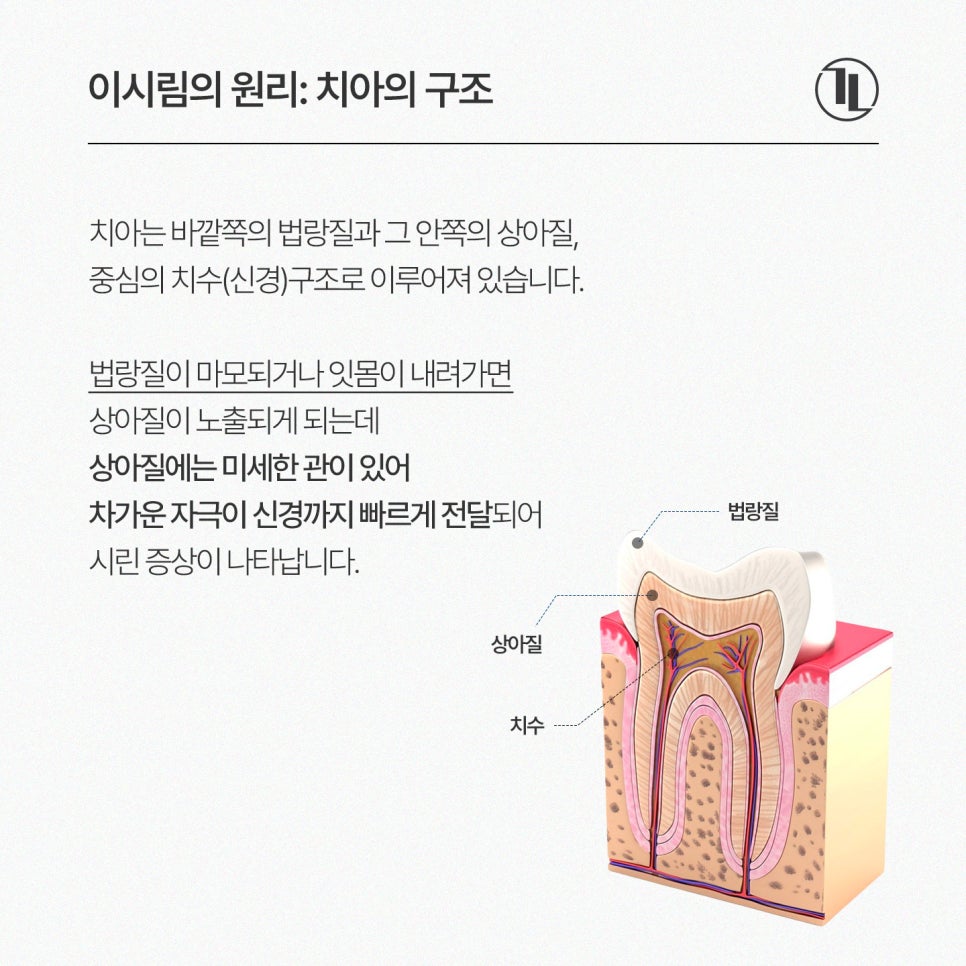
A tooth is made up of the outer enamel, the inner dentin,
and the central pulp (nerve) structure.
In a normal state, the enamel protects the tooth,
but when the enamel wears down or the gums recede,
the dentin becomes exposed.
Dentin has tiny tubes,
so cold stimuli are quickly transmitted to the nerve,
causing sensitivity.
In some cases, not only cold foods but also
sweet foods, hot foods, and cold air
can trigger a sensitive response.
Main causes of tooth sensitivity
Situations such as dentin exposure,
which cause tooth sensitivity,
can happen for a variety of reasons.
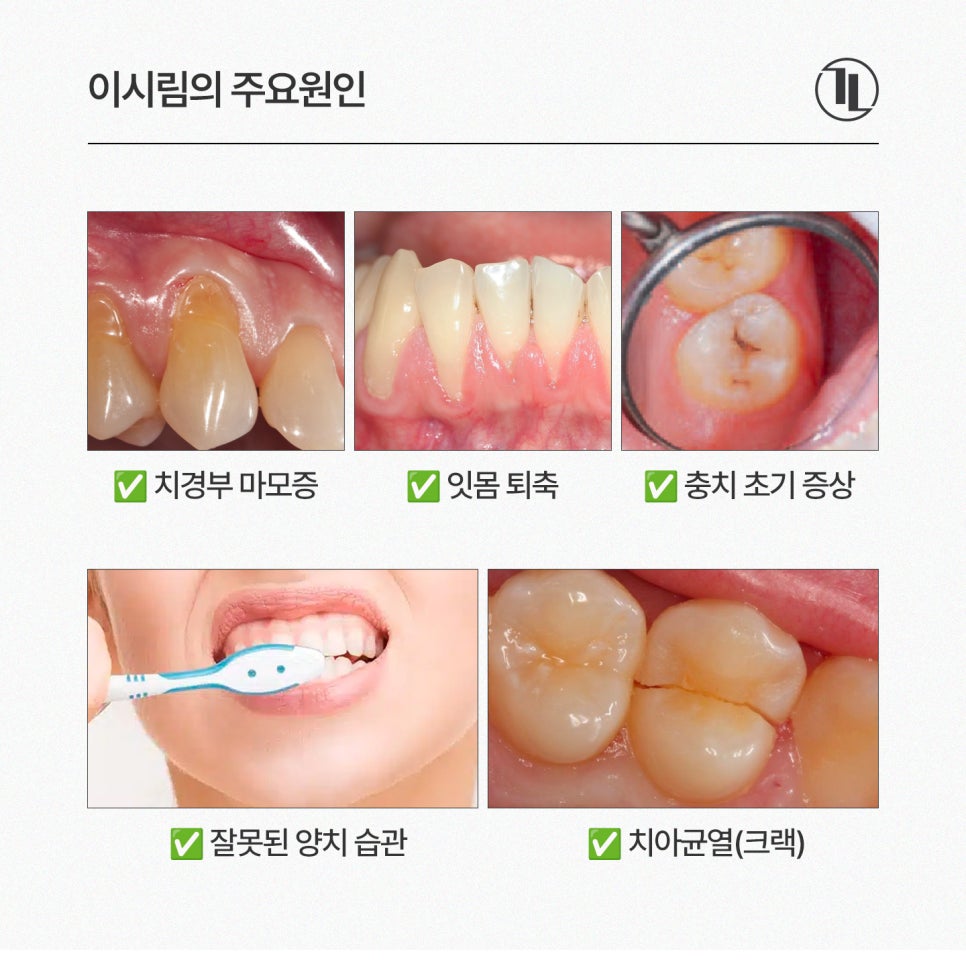
✅ Cervical abrasion
This is a condition in which the boundary area between the tooth and gums
wears into a V-shape.
It is often caused by strong brushing,
using a hard toothbrush,
or excessive bite forces such as teeth grinding/clenching.
✅ Gum recession
When the gums recede and the roots of the teeth become exposed,
they become sensitive to external stimuli
and sensitivity can occur.
It is mainly related to periodontal disease or aging.
✅ Early signs of cavities
As cavities progress, the protective layers of the tooth are damaged,
which can make the tooth sensitive to cold water.
In the early stages, pain may be mild,
but if left untreated, it can lead to severe toothache.
✅ Improper brushing habits
Even if it is not cervical abrasion,
if you brush too hard
or use a highly abrasive toothpaste,
the tooth surface may wear down and sensitivity may occur.
✅ Tooth crack
Even when there is a tiny crack in the tooth that is not easily visible,
cold stimuli can be transmitted to the nerve,
causing sensitivity.
Treatment for tooth sensitivity
Treatment methods vary depending on the different causes
explained above.
Therefore, an accurate diagnosis comes first.
① Examination and detailed diagnosis
Based on the symptoms reported by the patient,
the condition of the teeth and gums is examined
to determine the actual cause.
② Customized treatment
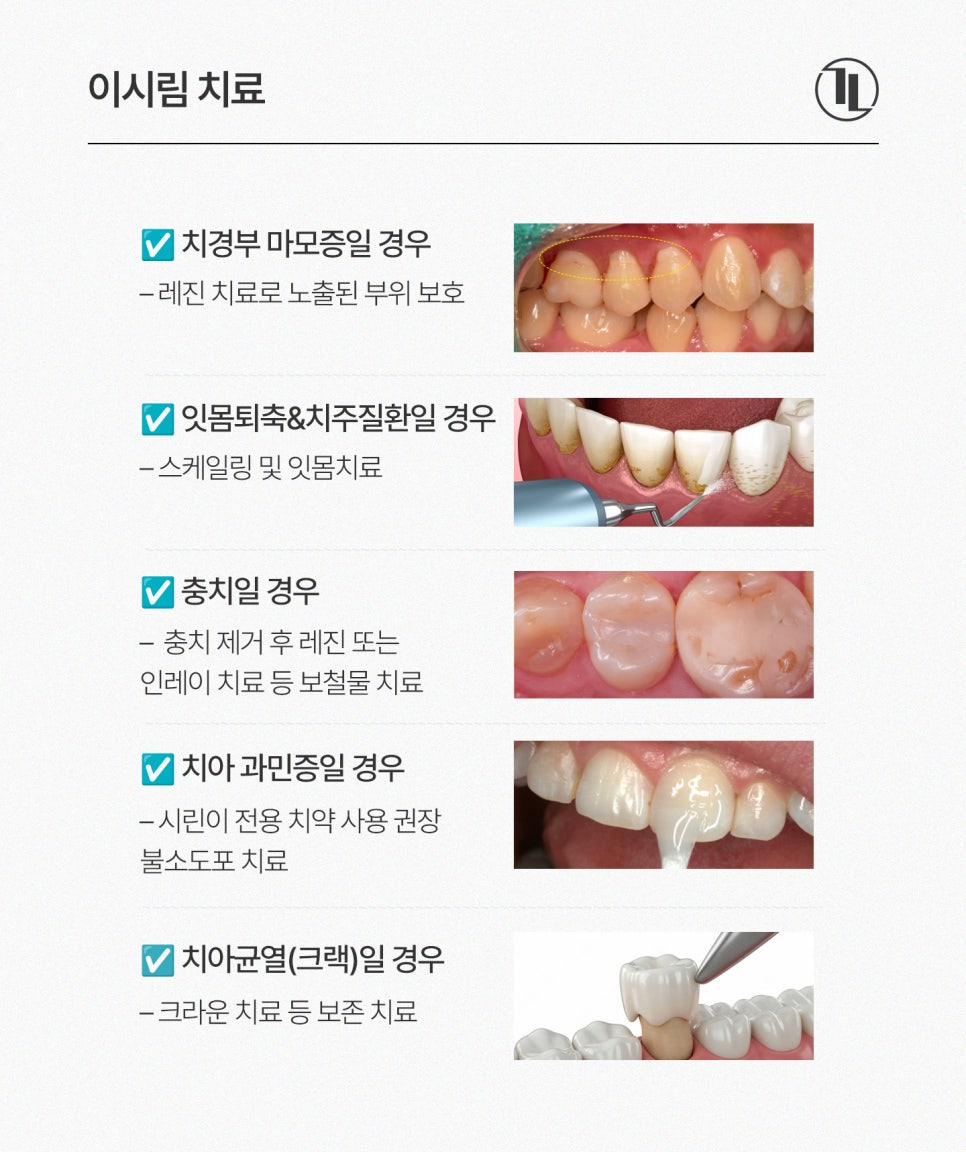
👉 If it is cervical abrasion
Protect the exposed area with resin treatment
👉 If it is gum recession / periodontal disease
Scaling and gum treatment
👉 If it is cavities
Restorative treatment such as resin or inlay treatment
after removing the cavity
👉 If it is tooth hypersensitivity
Recommend using toothpaste for sensitive teeth
Fluoride application treatment
👉 If it is a tooth crack
Conservative treatment such as crown treatment/root canal treatment
If there are problems maintaining tooth protection
because of teeth grinding/clenching habits,
a night guard can be used,
or additional sensitivity relief treatment may be performed if needed.
③ Prevention and management education
To prevent recurrence after treatment,
we explain lifestyle management methods.
- Use a soft toothbrush
- Proper brushing method
- Use toothpaste for sensitive teeth
- Regular dental checkups
How to prevent and manage tooth sensitivity
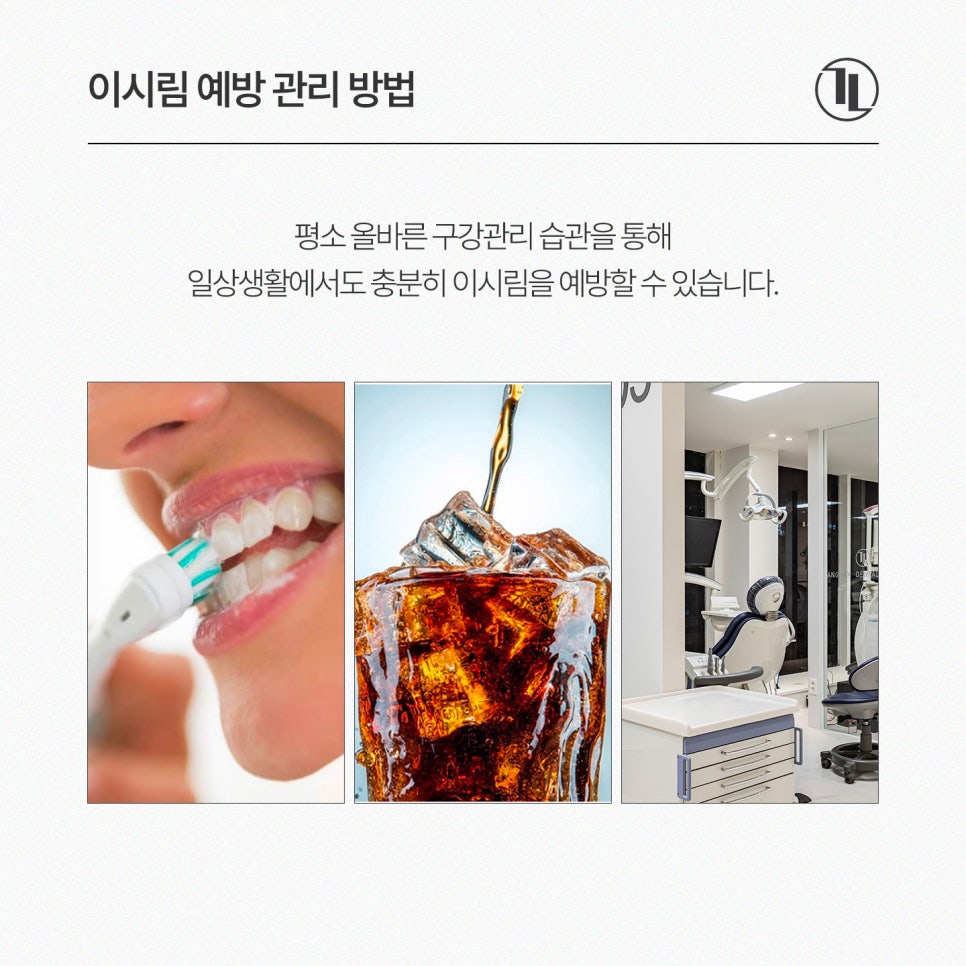
With proper daily oral care habits,
you can sufficiently prevent tooth sensitivity in everyday life.
✅ Proper brushing habits
Use a soft toothbrush
and brush gently without applying too much force.
✅ Care after consuming acidic foods
Carbonated drinks or acidic foods
can weaken the tooth surface,
so rather than brushing right after consuming them,
it is better to rinse with water.
✅ Regular dental checkups
Through regular dental checkups,
cavities and gum disease can be detected early
to help prevent sensitivity symptoms.
⚠️ In these cases, dental treatment is necessary!
If any of the following apply,
it is best to get a dental checkup as soon as possible.
❗ If sensitivity symptoms are gradually getting worse
❗ If there is pain even with hot foods
❗ If strong pain is felt in a specific tooth
❗ If there is pain even without any special stimulus
These symptoms may be a sign
not of simple sensitivity,
but of cavities, tooth cracks, or gum disease.
Today, we looked at the causes, treatment,
and management of tooth sensitivity.
Feeling tooth sensitivity when drinking cold water
is something many people experience.
However, if the symptom repeats and gradually worsens,
it may be a warning sign of a dental health problem.
We recommend identifying the exact cause
and improving the symptom through appropriate action,
prevention, and management.





Previous image
Next image