Hello, this is Gangnam Leong Dental Clinic😊
If it seems like the bleeding does not stop after wisdom tooth extraction,
it is only natural to feel anxious.
In most cases, it stops naturally over time,
and a small amount of blood seeping out for about one to two days after extraction
is part of the normal recovery process.
However, if hemostasis does not work properly,
anxiety increases and recovery can also be affected.
In particular, if the blood clot is dislodged due to improper care,
it can lead to dry socket,
so caution is needed.
In this post, we will go over the causes and solutions when bleeding does not stop after wisdom tooth extraction,
as well as what a hemostatic agent is
and why hemostatic agents are used!
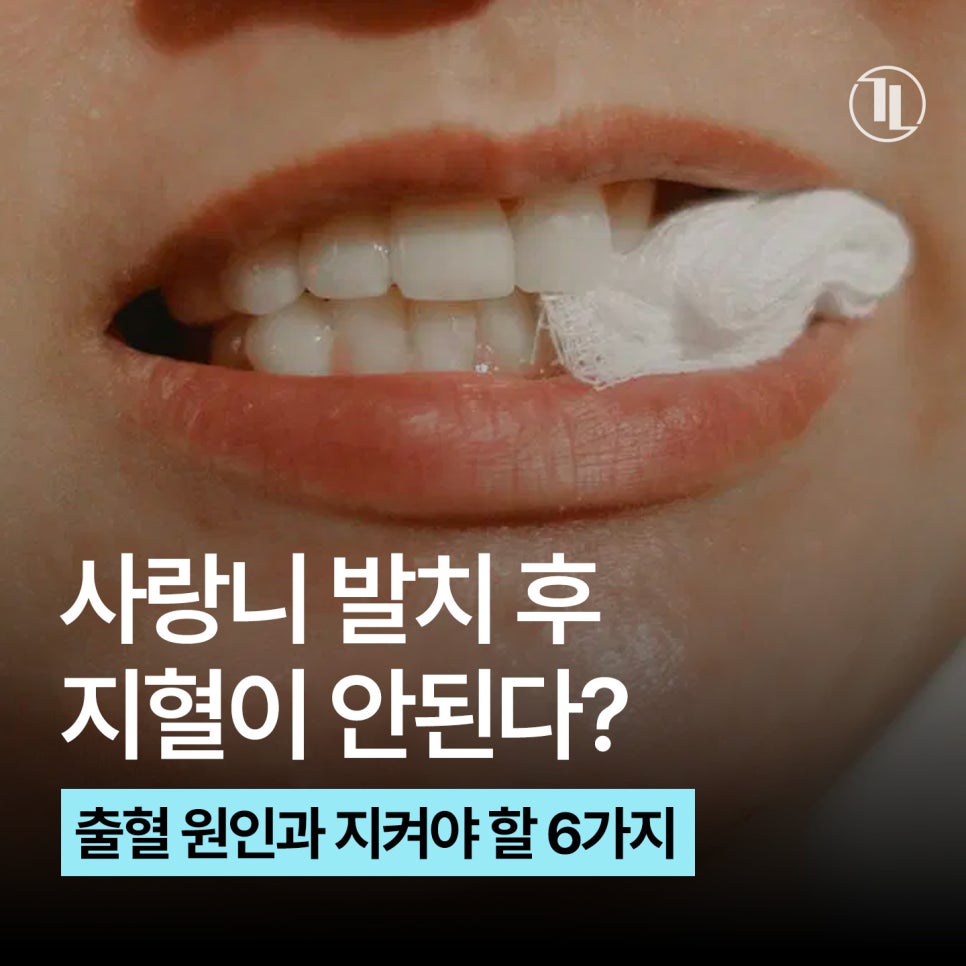
Wisdom tooth extraction: hemostasis not working
Why is that?
After wisdom tooth extraction, a blood clot forms at the extraction site,
protecting the wound and helping it heal.
However, in the following cases,
bleeding may continue.
✅ When gauze pressure is not applied properly
If you eat without biting on the gauze,
or if you bite the gauze too lightly and it shifts out of place,
the pressure effect is reduced,
and bleeding may continue.
✅ When the blood clot falls off because you spit frequently
Spitting out blood and saliva that seep out
creates pressure inside the mouth,
which can dislodge the blood clot formed at the extraction site.
If the blood clot disappears, the wound is no longer protected,
and bleeding starts again.
✅ When using a straw
Using a straw also creates negative pressure in the mouth,
making the blood clot more likely to come off.
This is a major cause that increases the risk of rebleeding and dry socket.
✅ Delayed recovery due to smoking/drinking
Smoking constricts blood vessels,
which interferes with blood flow and slows tissue recovery.
Alcohol dilates blood vessels,
which can trigger bleeding again or interfere with hemostasis.
Both make it harder for a blood clot to form,
and are major causes of failed hemostasis and delayed recovery.
✅ Blood pressure increase due to excessive exercise
When you exercise, blood pressure and heart rate rise,
placing pressure on the bleeding area again.
As a result, bleeding that had stopped may start again.

In other words, the core issue is not simple bleeding,
but rather a situation where the blood clot cannot remain stable.
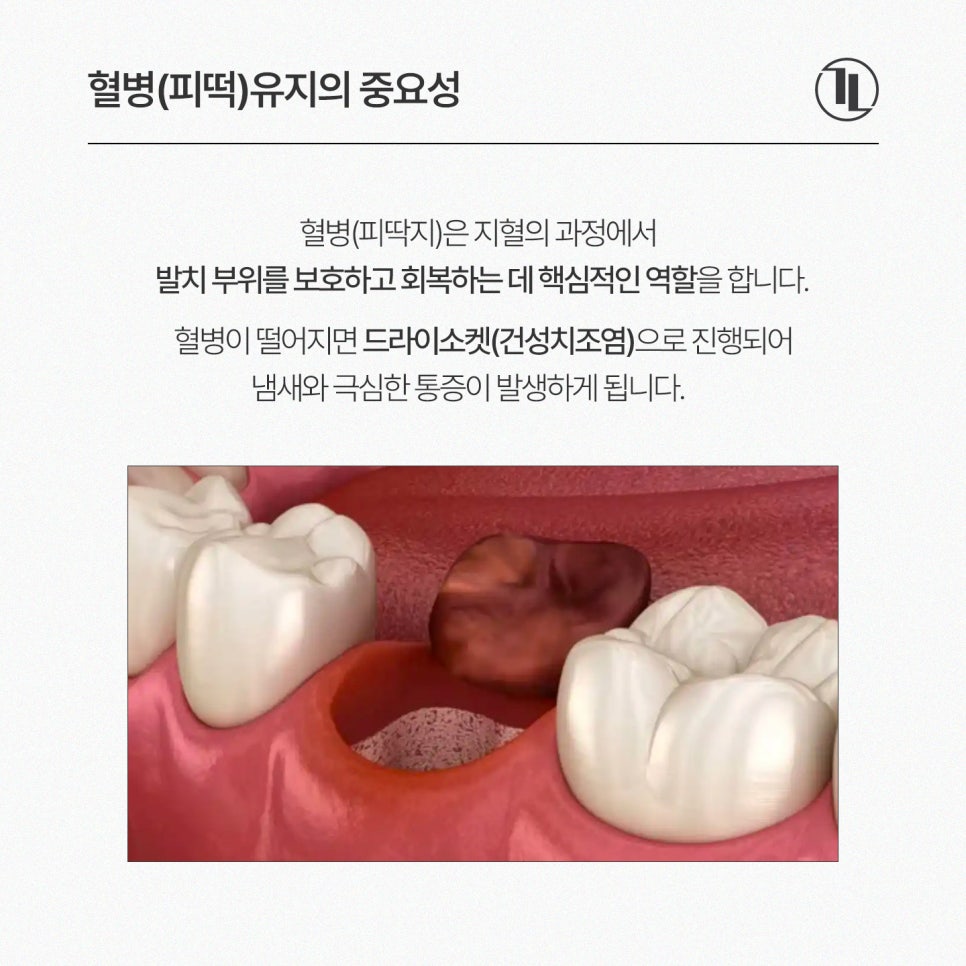
The importance of keeping the scab after wisdom tooth extraction
Hemostasis is not just about stopping the bleeding;
it is a key process that forms a blood clot (scab) to protect the extraction site
and support healing.
✔ The blood clot protects the wound and helps prevent infection
✔ It serves as the starting point for gum and bone regeneration
✔ It reduces pain and increases recovery speed
On the other hand, if hemostasis does not work properly,
it may progress to dry socket (alveolar osteitis).
Because this causes severe pain and delays treatment,
initial hemostasis management is very important.
6 things you must follow
for hemostasis after wisdom tooth extraction
If the bleeding does not stop on the day of wisdom tooth extraction,
it is necessary to check whether you are following the precautions below.
✅ Bite down firmly on the gauze (for at least 2 hours)
Place the gauze so that it covers the extraction site properly,
and bite down firmly for at least 2 hours or longer.
After that, it is normal for a small amount of blood to continue seeping out,
and you may use the spare gauze we provided
to perform a second round of hemostasis.
✅ Swallow blood/saliva instead of spitting
To avoid negative pressure,
swallow blood and saliva rather than spitting them out.
✅ Do not use a straw
Likewise, to avoid negative pressure inside the mouth,
avoid using a straw for at least a few days.
✅ Avoid smoking/drinking
It is best to refrain from smoking and drinking for at least one week,
or up to two weeks if possible.
✅ Use cold compresses to help constrict blood vessels
Cold compresses constrict blood vessels,
which helps reduce bleeding and swelling.
From after the extraction until about two days later,
apply cold compresses intermittently for 10 to 15 minutes at a time
to reduce bleeding and swelling.
✅ Limit exercise and excessive activity
For proper rest and recovery,
it is best to avoid aerobic exercise and strength training at the gym
for at least 3 to 7 days after extraction.
Using a hemostatic agent after wisdom tooth extraction
In cases accompanied by gum incision, such as impacted wisdom teeth,
a hemostatic agent may be inserted
to reduce the likelihood of bleeding and help with smoother hemostasis.
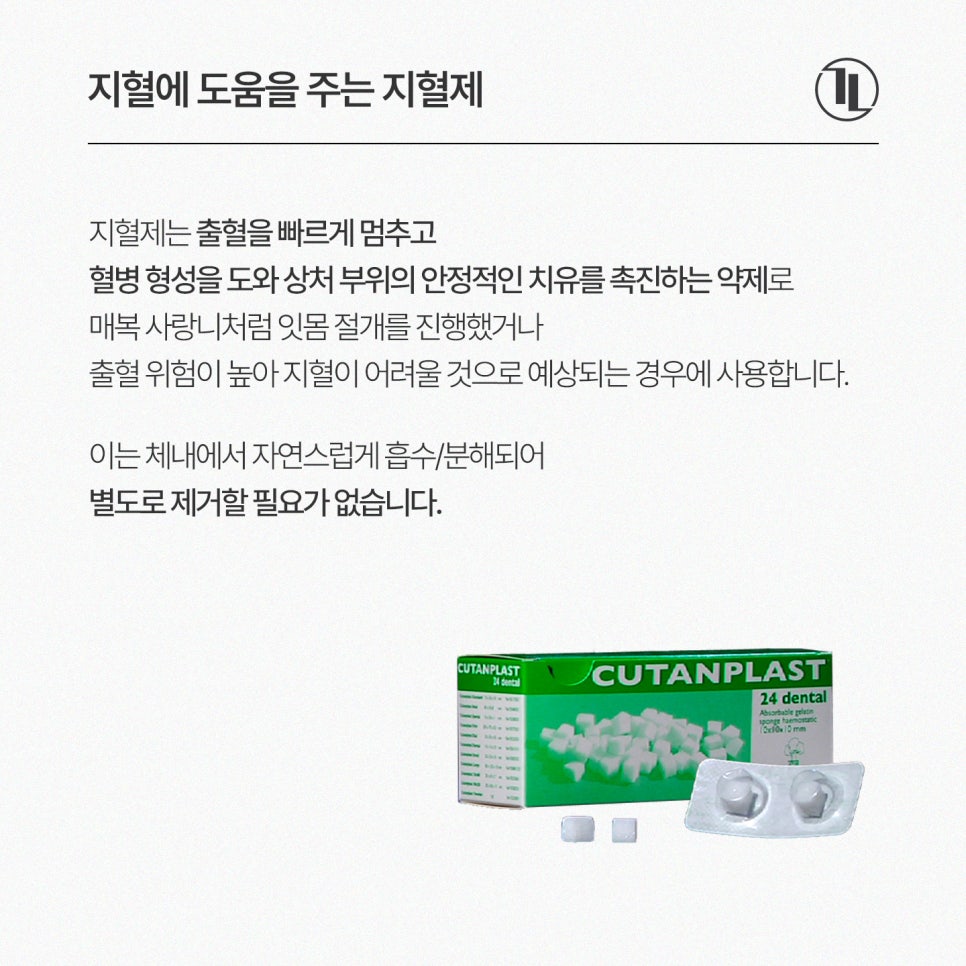
What is a hemostatic agent?
A hemostatic agent is an absorbable medical material
that helps bleeding stop more quickly after extraction.
Made of a soft sponge or gel-like material,
it does not cause much discomfort even when placed in the extraction site,
and is naturally absorbed/broken down by the body,
so it does not need to be removed separately.
📌 How hemostatic agents work and their effects
📌 Situations in which they are used
-
Difficult extractions (such as impacted wisdom teeth)
-
When bleeding is heavy or continues for a long time
-
When blood clot formation is difficult
General gauze 🆚 hemostatic agent
Bleeding warning 🩸
When you need to return to the hospital
In the following cases,
you must visit the hospital.
💥 If bleeding does not stop for more than 6 hours
💥 If blood keeps flowing instead of just pooling
💥 If severe pain or a bad odor is present
This may be a sign of a complication,
rather than simple bleeding.
In that case, contact the dental clinic,
check your symptoms and condition again,
and then visit.
Key summary for faster recovery
after wisdom tooth extraction
For a faster recovery after wisdom tooth extraction,
it is important to properly maintain hemostasis and daily habits.
🟢 3 things you must follow
-
Maintain gauze pressure for at least 2 hours
-
Keep the blood clot in place (do not spit)
-
No smoking/drinking for at least one week
🔴 Behaviors to avoid
Hemostasis after wisdom tooth extraction
is not just routine care, but the beginning of recovery.
Especially when bleeding does not stop well,
rather than waiting blindly,
it is important to review the points above
and respond with the proper method.
Even so, if the bleeding continues,
be sure to visit the dental clinic
and receive appropriate care.





Previous image
Next image