Hello, this is Gangnam Leong Dental Clinic 😀
Front tooth discoloration is not just a cosmetic issue.
It can be an important sign that reflects the internal condition of the tooth.
In particular, discoloration caused by nerve damage or necrosis
should not be improved with regular teeth whitening.
The cause should be identified and treated accordingly.
In this article, we will look at the causes of front tooth discoloration
and learn about nonvital teeth and nonvital tooth whitening.
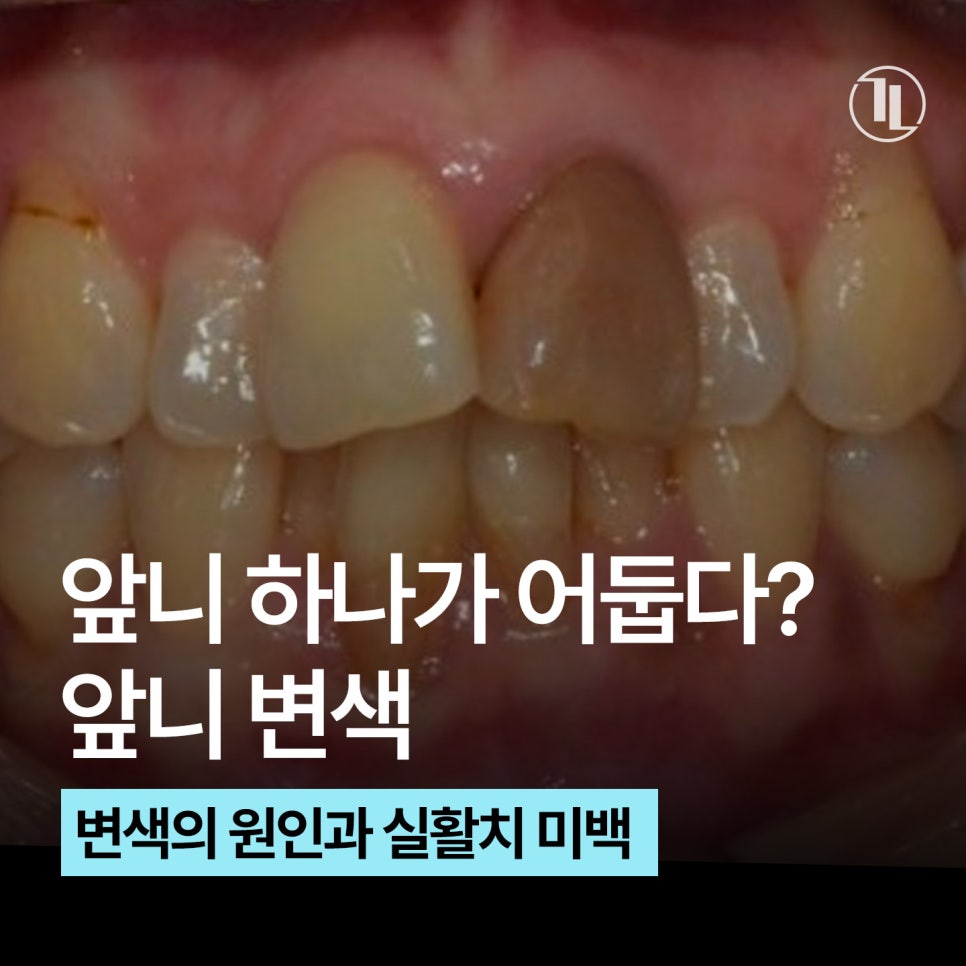
Causes of Front Tooth Discoloration
My front tooth has turned dark!
Depending on the cause of front tooth discoloration,
the treatment approach is completely different.
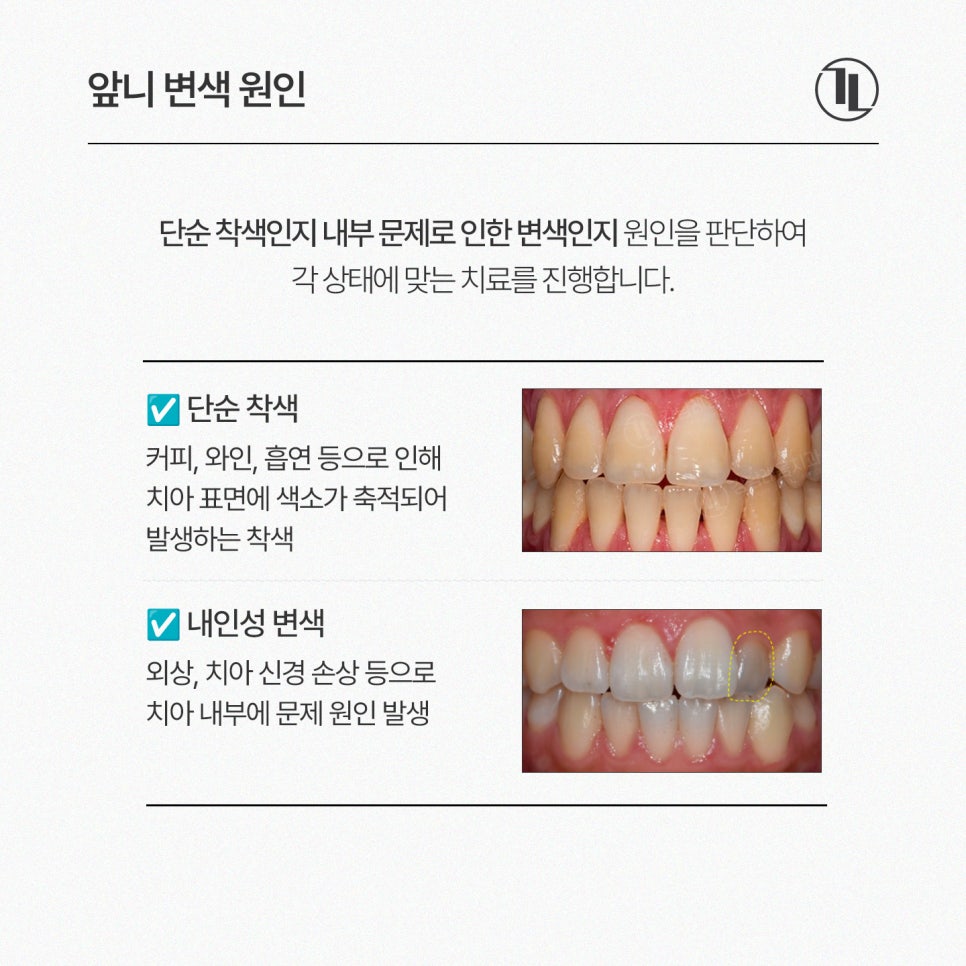
The key to treatment is determining whether it is simple staining or internal discoloration.
✅ Simple staining
Staining caused by pigments accumulating on the tooth surface
due to coffee, wine, smoking, and similar factors
👇
In this case, the issue is more about surface staining on the tooth
than a problem with the tooth itself,
so it can be improved relatively simply with scaling and teeth whitening.
✅ Internal discoloration
This begins inside the tooth
and requires identifying the cause and proceeding with appropriate treatment.
① Nerve necrosis (pulp necrosis)
Due to lesions such as cavities,
the tooth nerve becomes necrotic, causing internal tissue breakdown.
Microbleeding may occur,
and as blood components break down, the pigments produced may
penetrate the dentin of the tooth, gradually turning it gray or darker.
② Discoloration after root canal treatment
After root canal treatment, issues with nutrition supply to the tooth or
residual nerve tissue and blood components in the treated tooth
may change the tooth color.
③ Discoloration caused by internal bleeding after trauma
When the tooth is impacted,
internal bleeding can occur,
and blood components likewise seep into the dentin,
causing discoloration.
👇
After appropriate treatment for each cause is performed first,
if it is judged that improvement is possible with nonvital tooth whitening,
the procedure is carried out.
Nonvital Tooth Whitening
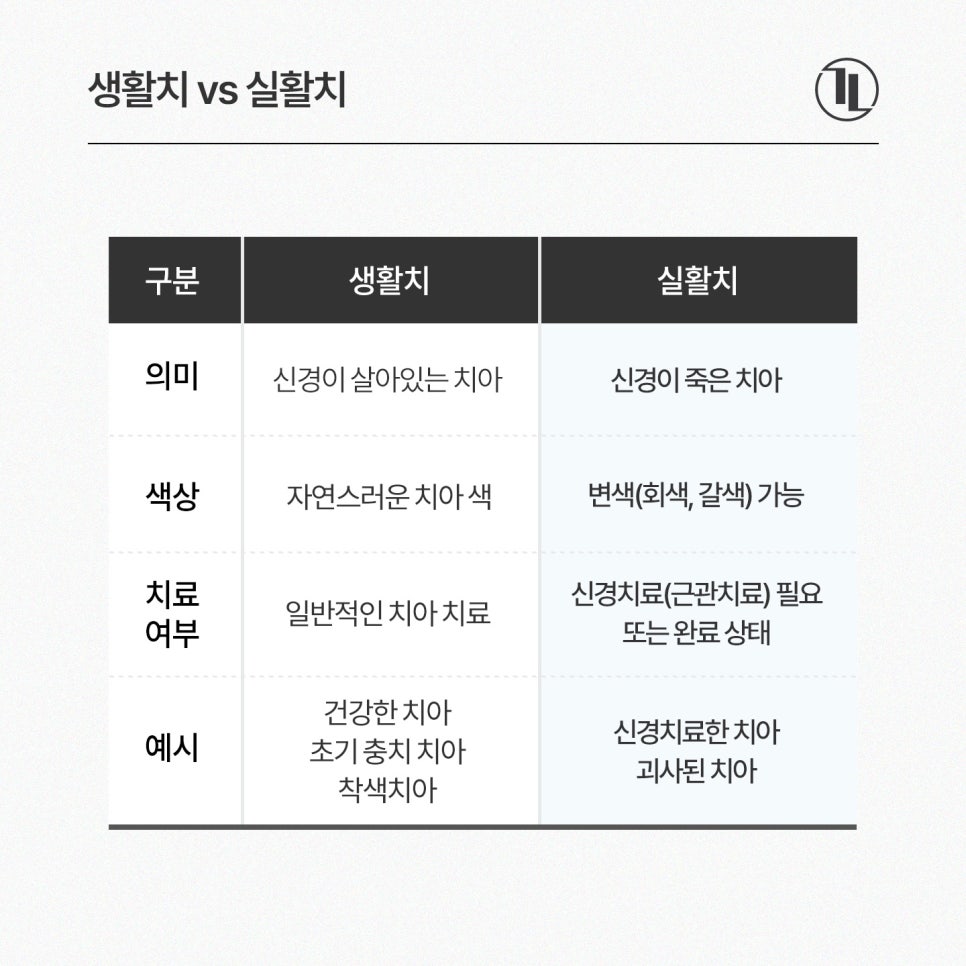
What is a nonvital tooth?
Here, a nonvital tooth refers to a tooth
whose internal nerves and blood vessels
have lost function.
This includes not only cases where the nerves and blood vessels
have been removed through root canal treatment,
but also cases where vitality has been lost naturally
after nerve necrosis due to trauma or infection.
Because the cause is internal, nonvital tooth whitening
is a whitening treatment performed inside the tooth rather than on the outside.
While regular teeth whitening applies whitening agents to the surface of the tooth,
nonvital tooth whitening applies whitening agents inside the tooth
to improve internal discoloration.
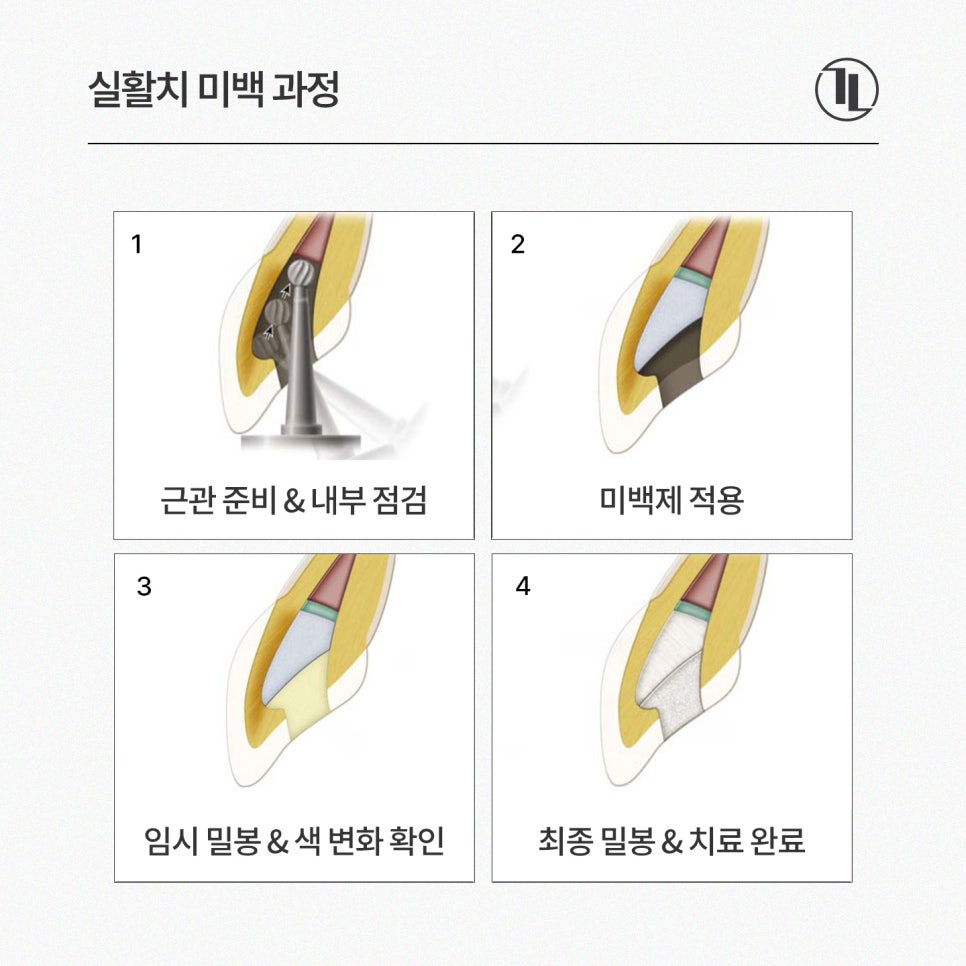
① Precise diagnosis and examination
A detailed examination is performed
to check the internal condition of the tooth
and whether root canal treatment has already been done.
② Checking the root canal condition and cleaning the inside
If the existing root canal treatment is incomplete,
retreatment may be performed.
The inside of the tooth is cleaned thoroughly
to create an environment suitable for whitening.
③ Applying the internal whitening agent
After securing a pathway for the agent to enter the inside of the tooth,
the whitening agent is placed inside.
For nonvital tooth whitening, sodium perborate
and distilled water are mixed and used.
④ Temporary sealing and observation
The whitening agent is kept in place for a certain period of time
while color changes are monitored.
Usually, the patient visits at one-week intervals
to check the condition.
⑤ Color check and repeated treatment
Until the desired color is reached,
the agent is replaced about 2 to 3 times
and treatment is repeated.
**The number of sessions may vary depending on the condition of the tooth.
⑥ Final sealing and completion
Once the target color is reached,
the inside is finally sealed to complete the treatment.
If necessary, additional prosthetic treatment
such as a crown may also be considered.
👉 This is not a treatment that ends in one session.
It is a method of gradually improving the color
through multiple repeated sessions.
Can Nonvital Tooth Whitening
Sometimes Be Impossible?
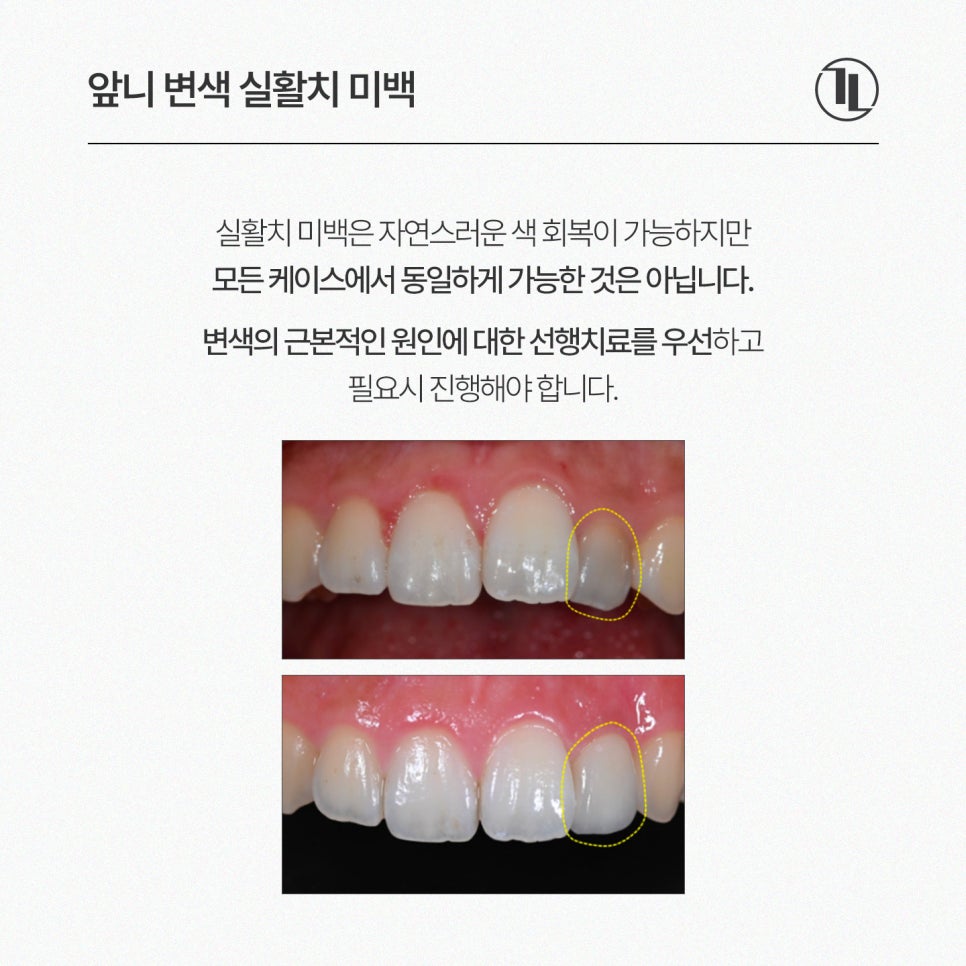
Nonvital tooth whitening has the advantage of
allowing a natural-looking color recovery,
but it is not possible in every case.
In cases where there is nerve damage
and root canal treatment has not been performed in time,
there are also cases where the whitening agent for nonvital tooth whitening
cannot be inserted at all.
Depending on the condition,
it is important to first treat the underlying cause of the discoloration
before proceeding if necessary.
That is why an accurate diagnosis and examination are most important.
Front tooth discoloration may be the result not simply of a change in color,
but of a change in the internal condition of the tooth.
In particular, discoloration caused by a nonvital tooth
cannot be resolved with regular whitening,
so it is important to proceed with treatment based on an accurate diagnosis.



Previous image
Next image