Hello, this is Gangnam Leon Dental Clinic😊
The two biggest concerns after wisdom tooth extraction are
'Pain' and 'bleeding.'
In particular, bleeding control during the recovery process is
closely related to pain and complications,
so if bleeding does not stop easily or the pain is severe,
it is natural to feel anxious.
Today, we will look at the hemostatic agent used to help control bleeding,
and learn about its role, usage criteria,
insurance coverage, and cost.
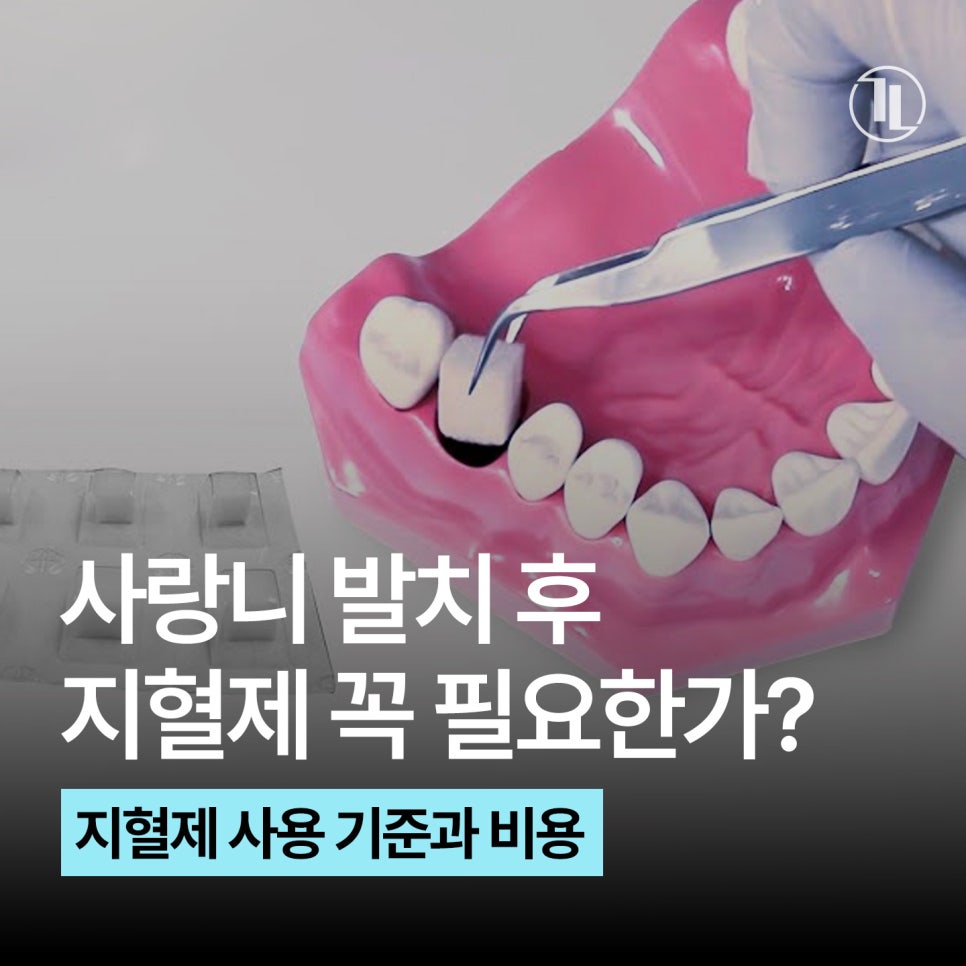
What Is a Hemostatic Agent
A hemostatic agent is a medical material used after wisdom tooth extraction
to help stop bleeding quickly.
It is mainly made of gelatin or collagen,
which encourages blood to clot,
and it is inserted into the extraction site and
absorbed naturally without separate removal.
In other words, it does not simply block blood;
it helps recovery by promoting blood clotting.
✅ Roles of a Hemostatic Agent
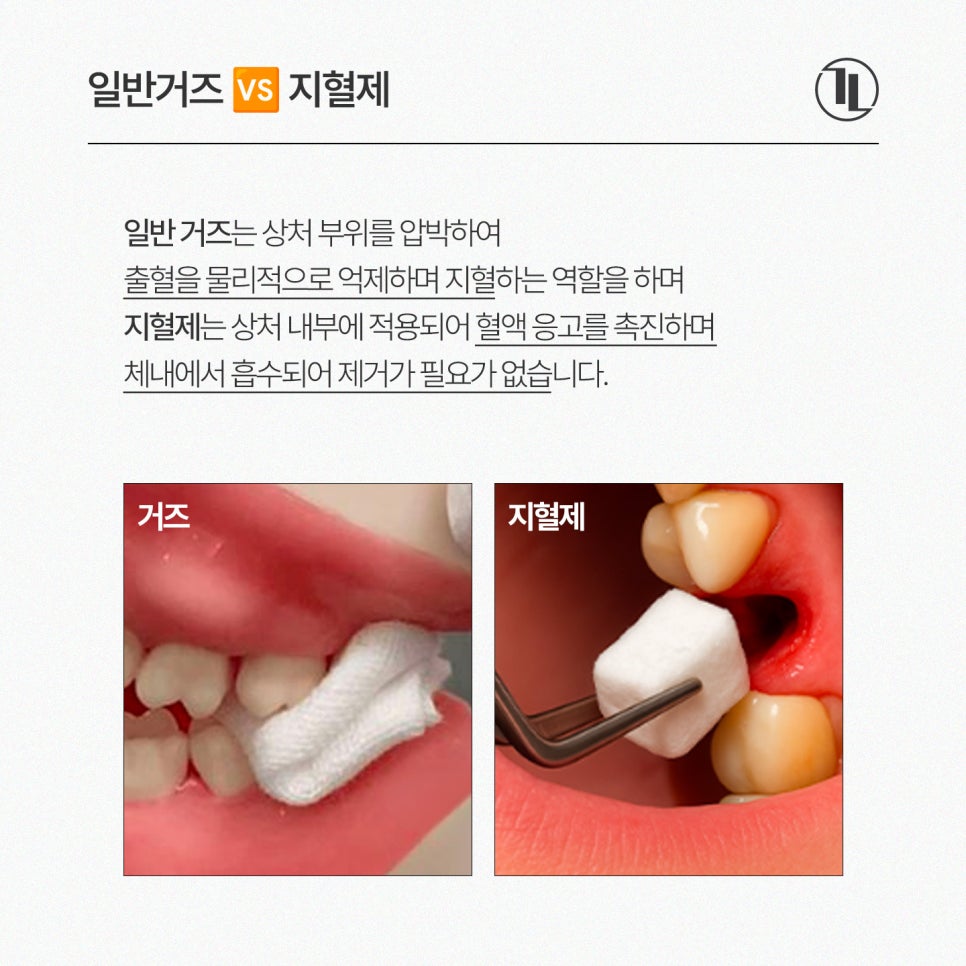
Regular gauze 🆚 Hemostatic agent
In general, basic bleeding control is achieved by
pressing on the area with gauze.
However, because a hemostatic agent works directly from inside,
there are the following differences.
| Gauze | Category | Hemostatic agent |
|---|
| External pressure for hemostasis | Role | Promotes internal clotting + protection |
| Removal required | Removal | Naturally absorbed |
👉 In other words, if bleeding is judged to be difficult to control,
it is used as an additional supportive measure.
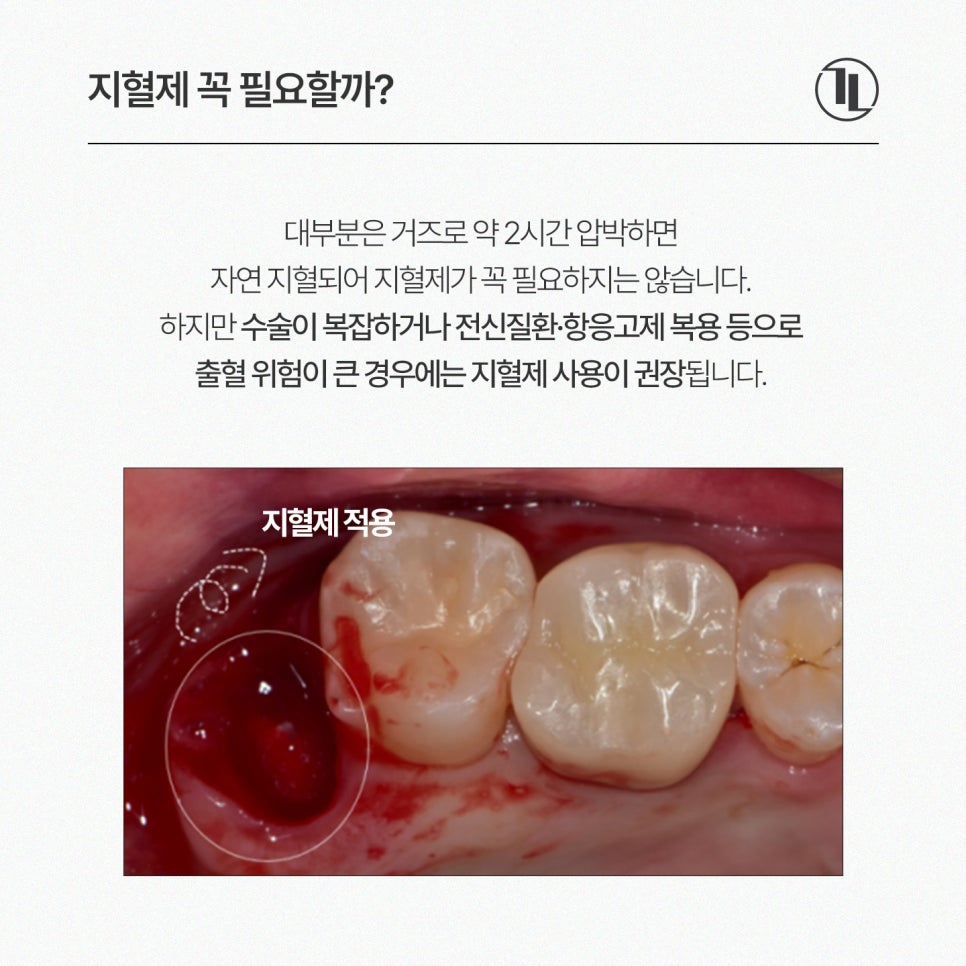
Criteria for Using a Hemostatic Agent After Wisdom Tooth Extraction
Do I really need a hemostatic agent?
It is not necessary in every case.
In most cases, bleeding stops naturally when the area is pressed with gauze
for about 2 hours.
Whether a hemostatic agent is needed depends on factors such as the patient's extraction difficulty,
bleeding condition, and overall health.
✅ In surgical extractions
In difficult wisdom tooth extractions, such as surgical extractions that involve
a gum incision or suturing,
the likelihood of using a hemostatic agent is higher.
This is because ✔blood loss ✔time required for hemostasis ✔possibility of inflammation
increase.
This applies to most impacted wisdom teeth.
✅ In patients with systemic conditions
For patients taking anticoagulants (such as aspirin, warfarin, etc.)
or those with weakened blood clotting function,
or in cases where systemic conditions such as diabetes or high blood pressure cause
greater bleeding or longer time needed for hemostasis,
making clot formation difficult,
use of a hemostatic agent is recommended.
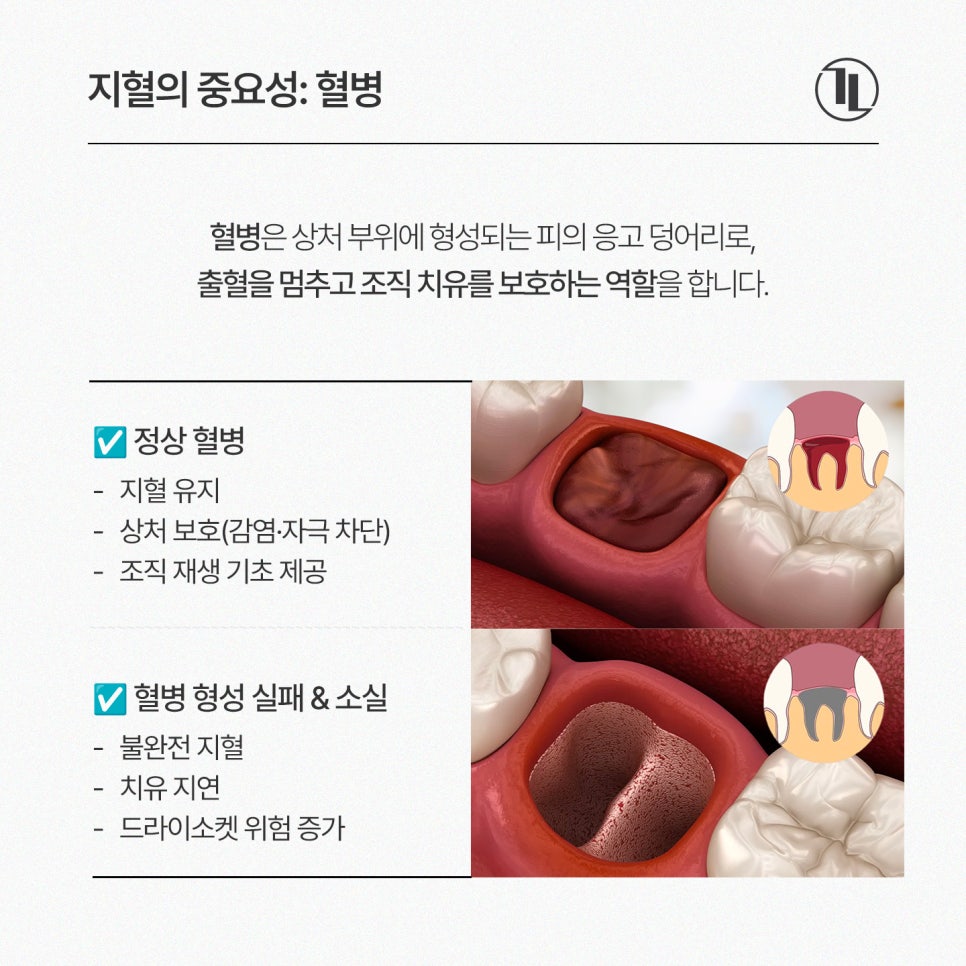
The Importance of Hemostasis
: Maintaining the blood clot
If hemostasis is delayed, the clot (scab)
may not form properly,
which can lead to problems such as dry socket.
What is a blood clot?
A blood clot simply refers to the scab that forms on a wound.
Medically, it is a mass formed during the blood clotting process,
and it plays an important role in stopping bleeding
and protecting the wound.
A blood clot must form properly in the extraction site
for bleeding to stop.
If this clot does not form properly or falls off,
the following problems may occur.
✅ Problems caused by failure or loss of clot formation
-
Persistent bleeding (delayed hemostasis)
-
Increased risk of secondary infection
-
Increased risk of dry socket (alveolar osteitis)
Cost of a Hemostatic Agent for Wisdom Tooth Extraction
: Is it covered by insurance?
Most hemostatic agents are
non-covered items not reimbursed by insurance,
and although it varies by dental clinic,
the average cost may be about
KRW 30,000 to 50,000 per unit.
After wisdom tooth extraction
Tips for proper bleeding control🏷
Regardless of whether a hemostatic agent is used,
basic care is the most important.
Even one wrong habit can cause bleeding to start again.
✔ Keep biting firmly on the gauze for at least 2 hours
✔ Swallow saliva/blood instead of spitting it out
✔ Do not use a straw
✔ Start with soft, lukewarm foods
✔ Avoid alcohol/smoking for one week
✔ Avoid exercise/sauna for one week
✔ Take prescribed medication on time
But the bleeding still won't stop😢!
After 2 hours of gauze pressure on the day of extraction,
it is okay if a small amount of blood continues to seep out,
but
🩸 if bleeding does not stop for more than 6 hours
🩸 if the amount is heavy enough for blood to flow
🩸 if severe pain and foul odor are accompanied
please share your symptoms with the dental clinic
and visit if necessary according to the guidance.
The use of a hemostatic agent after wisdom tooth extraction
depends on the patient's extraction difficulty and overall health.
In particular, for extractions with more bleeding or higher difficulty,
such as impacted wisdom teeth,
it may help improve the stability of recovery.
Please receive sufficient guidance before the extraction
and have a comfortable treatment experience.







Previous image
Next image