Hello, this is Gangnam Leon Dental Clinic 😃
If one day you feel a small bump or lump on your tongue that was not there before,
that can be quite surprising.
In this post, we will talk about
papilloma on the tongue, which appears on the surface of the tongue
without any particular pain.
Let’s look at its symptoms, causes,
and the removal process.
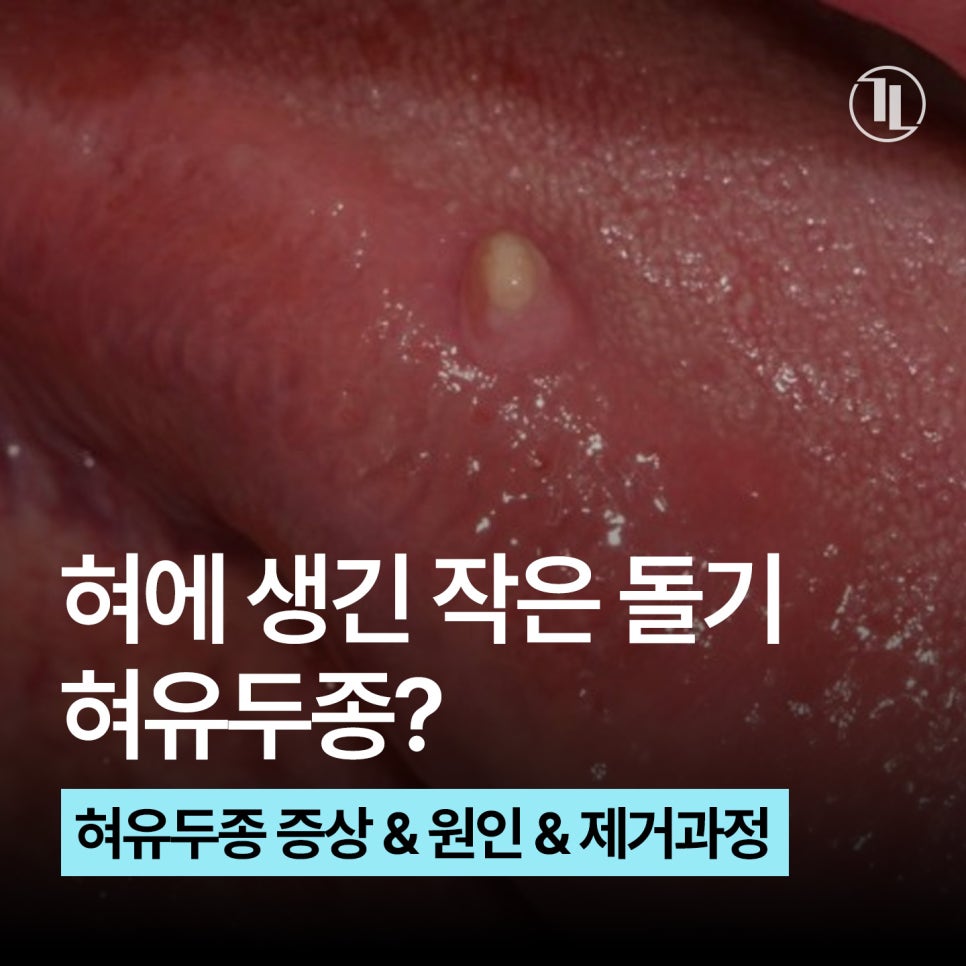
Tongue papilloma 🧐
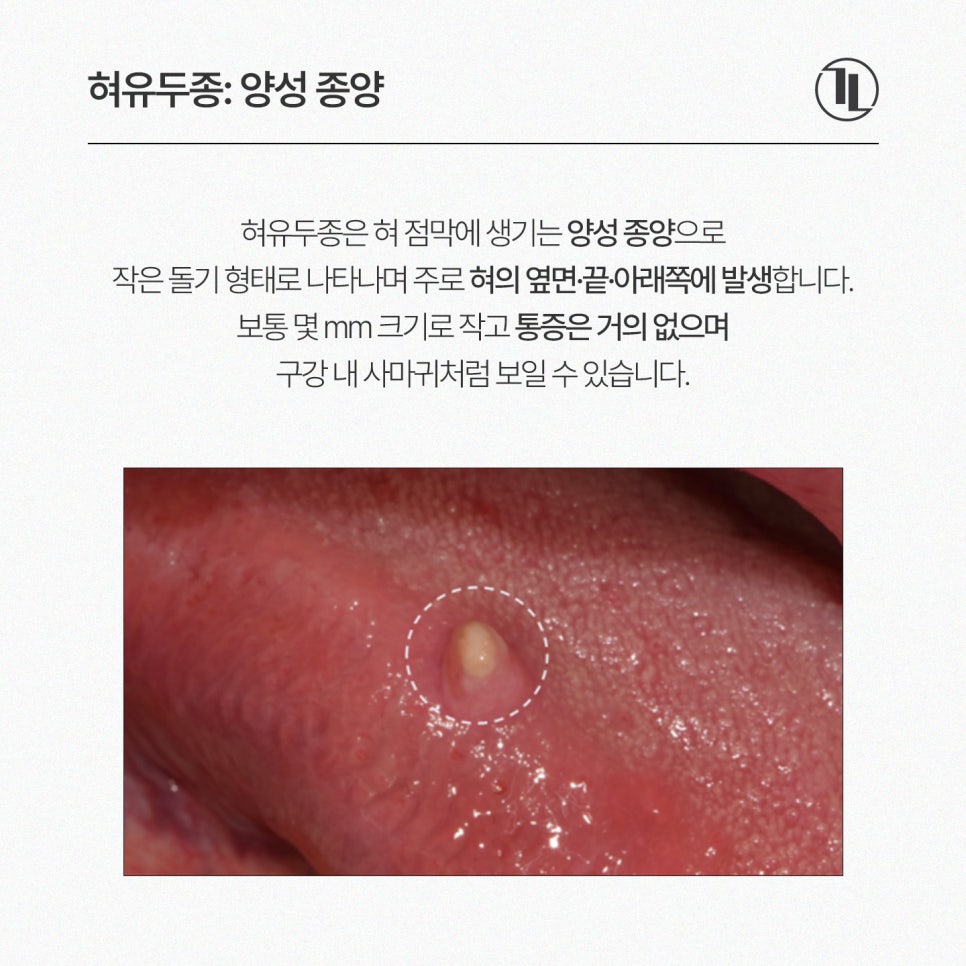
Tongue papilloma is
- a type of benign tumor that occurs on the mucous membrane of the tongue,
and it is characterized by appearing as a small protrusion.
It mainly occurs on the side, tip, or underside of the tongue,
and is often only a few millimeters in size.
At first glance, it looks like a wart in the mouth,
and it causes little to no pain.
⚡Characteristic symptoms of tongue papilloma
- Appears as a small protrusion (lump) on the tongue
- Almost no pain, only a foreign-body sensation
- Uneven or soft surface
- Color similar to the tongue or slightly white
🖐Question🖐
What kinds of tumors can occur on the tongue?
Tumors that occur on the tongue are broadly divided into
benign tumors and malignant tumors.
✅ Benign tumors
Benign tumors include fibromas and hemangiomas,
as well as the tongue papilloma introduced today.
Most are painless
and can be removed relatively simply.
✅ Malignant tumor (tongue cancer)
Most malignant tumors that occur on the tongue
are squamous cell carcinoma.
They may gradually grow larger
and may present symptoms such as pain, ulcers, and bleeding.
A diagnosis by a specialist is necessary,
and treatment must be received.
🔻
Lesions in the mouth can be difficult to diagnose accurately
based only on appearance or general symptoms,
so it is important to have them checked accurately at a clinic.
In particular, if the size gradually increases
or the shape changes,
it is a good idea to get examined.
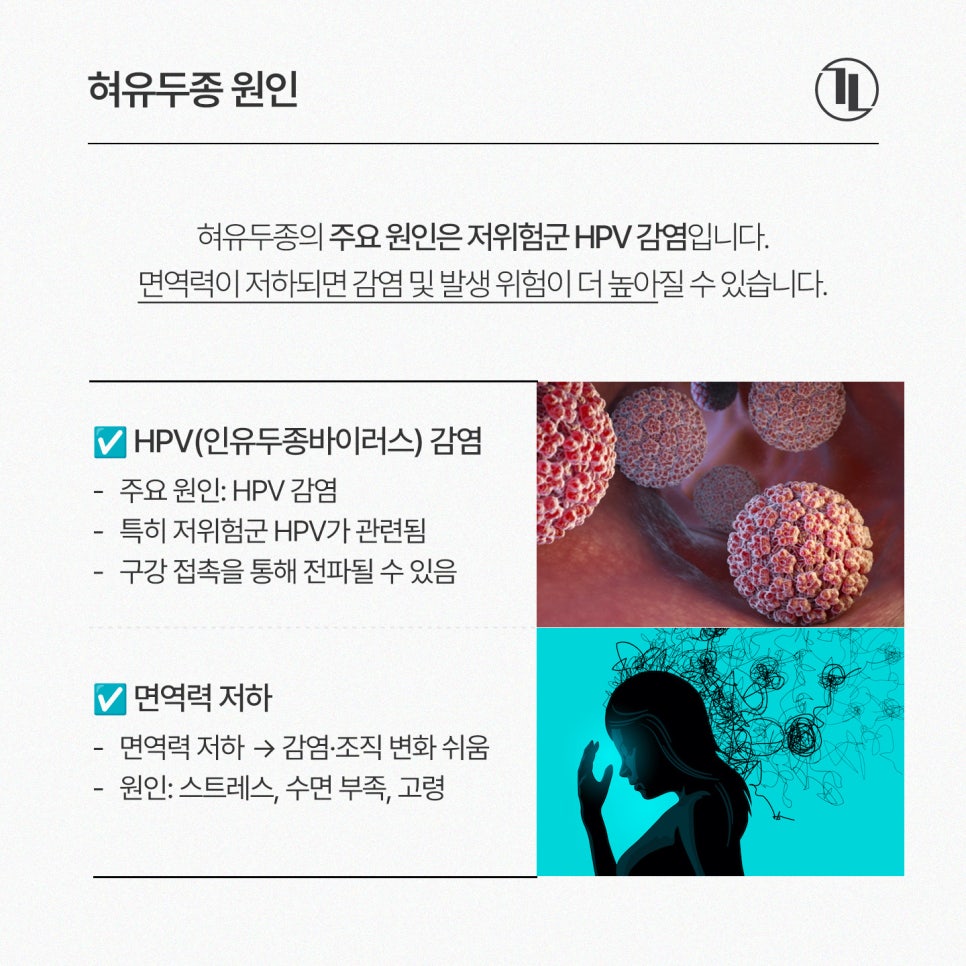
Causes of tongue papilloma
Tongue papilloma occurs for the following reasons.
✅ HPV (human papillomavirus) infection
The main cause of tongue papilloma is HPV infection.
In particular, low-risk HPV, which is not related to cancer,
is known to be the cause,
and it can be transmitted through oral contact.
✅ Weakened immunity
When immunity is lowered,
viral infection or tissue changes
can occur more easily,
increasing the risk of tongue papilloma.
(Chronic stress / lack of sleep / old age, etc.)
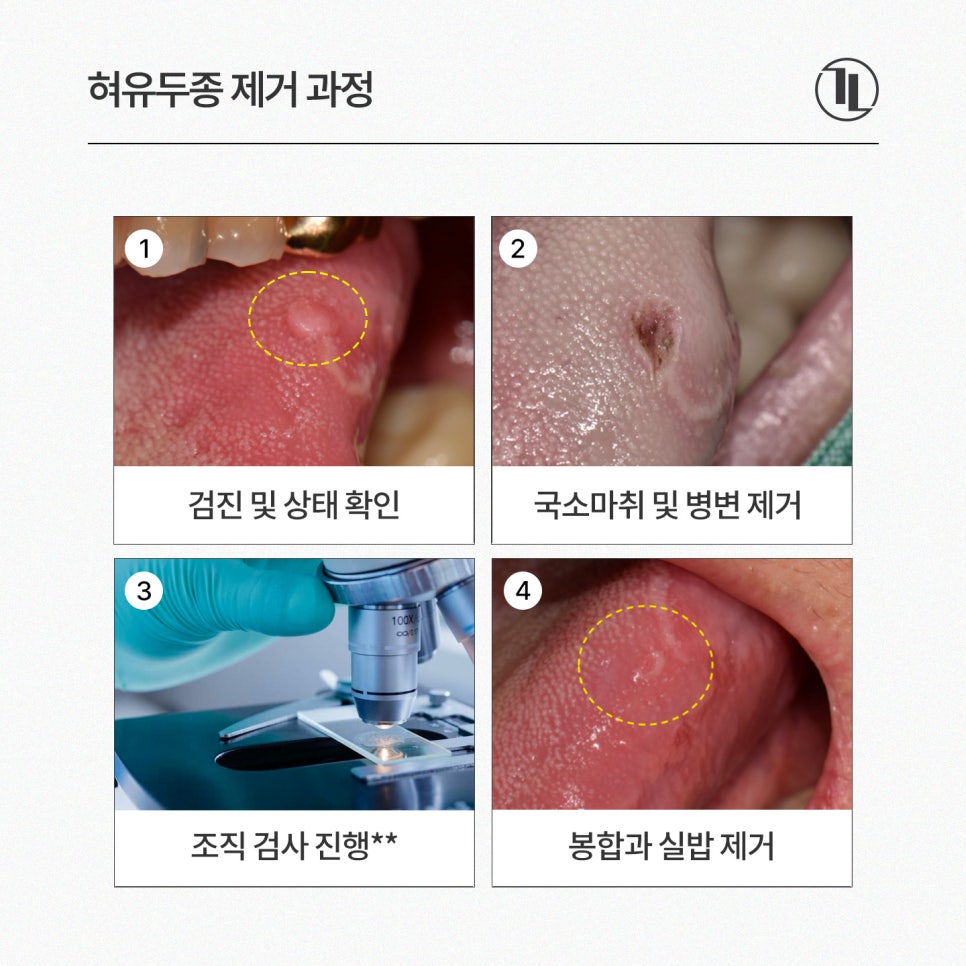
Tongue papilloma removal
Removal is carried out as follows.
Since it is a simple procedure,
excluding the examination time,
the procedure itself takes about 10 to 20 minutes.
① Examination and condition check
Through an oral visual examination,
the presence, size, and location of the tongue papilloma are checked.
② Local anesthesia and lesion removal
After local anesthesia,
the lesion is removed using a scalpel or laser.
③ Tissue examination
To differentiate it from other lesions and make an accurate diagnosis,
the removed tissue is examined.
The test results take 1 to 2 weeks.
④ Suturing and stitch removal
Depending on the size and location of the lesion,
a simple suture may be performed.
The stitches are removed about a week later.
These are the cases where removal is recommended! 👐
Since most tongue papillomas are benign,
there are many cases where they are not a major risk.
Therefore, they do not always need to be removed.
❗
However, in the following cases,
it is recommended that you visit a dental clinic for diagnosis
and consider removal.
✔ If the size is gradually increasing
✔ If the shape or surface changes abnormally
✔ If you feel a foreign-body sensation or persistent irritation
Recovery after tongue papilloma removal
Tongue papilloma removal is usually
carried out relatively simply,
and recovery is also fairly quick.
✔ Daily life is possible on the same day
✔ Eating is possible after the anesthesia wears off
✔ Avoid irritating foods for a few days
✔ Slight discomfort for 1 to 2 days
✔ If sutured, stitches are removed after one week
A small bump on the tongue
may look like a simple symptom,
but it is important to know the cause accurately.
Tongue papilloma is usually not serious,
but if you have symptoms such as persistent irritation,
changes in size or shape,
pain, or bleeding,
differential diagnosis from other lesions is necessary.
So be sure to visit a dental clinic
and receive professional treatment.



Previous image
Next image