Hello, this is Gangnam Leon Dental Clinic🙂
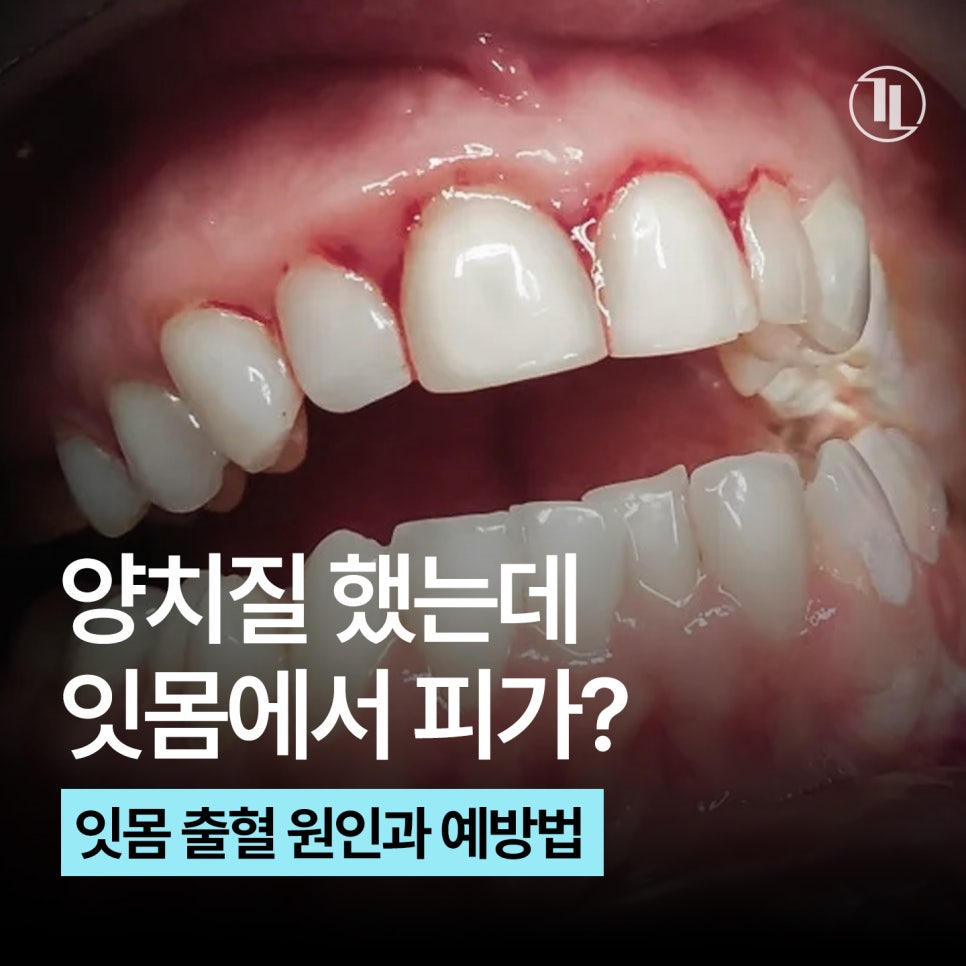
If your gums bleed when you brush your teeth,
many people assume it is simply due to irritation
or fatigue and move on.
But healthy gums do not bleed so easily,
even from minor stimulation.
If your gums bleed repeatedly,
it may be an early sign of gum disease such as
gingivitis or periodontitis.
In particular, since everyday oral care habits
have a major effect on gum health,
it is important to understand the cause accurately
and manage it properly.
Today, we will look at the causes of gum bleeding
and how to prevent it, focusing on four common habits
often seen in people whose gums continue to bleed.
What Are Healthy Gums?
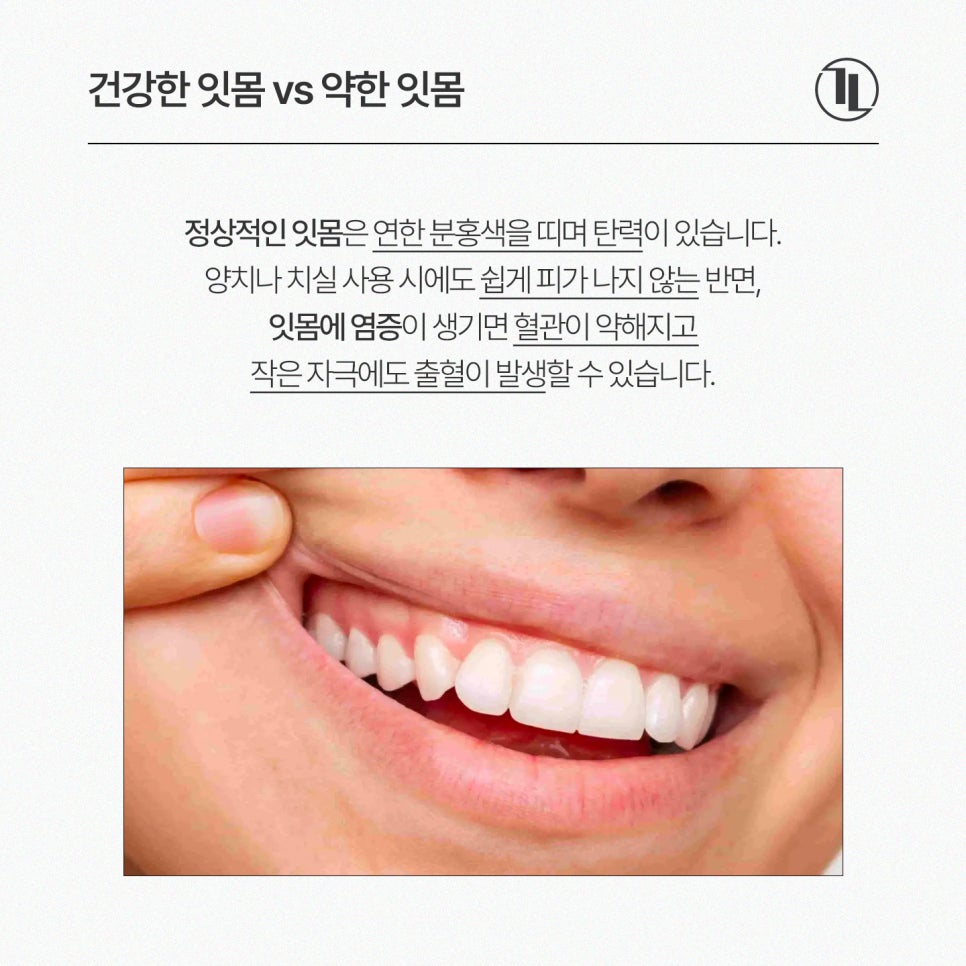
Healthy gums
do not bleed easily.
Normal gums are light pink
and have elasticity.
Even when brushing or using dental floss,
they do not bleed easily. However,
when the gums become inflamed, blood vessels weaken,
and bleeding can occur even with minor stimulation.
If gum bleeding repeats in particular,
it should not be seen as just a temporary symptom,
but is highly likely to be a sign that
inflammation has begun in the gum tissue.
Four Habits That Trigger Gum Bleeding
In addition to the main causes,
gum bleeding is highly likely to be worsened
by everyday habits that are repeated without much thought
and harm gum health.
1️⃣ Habit of delaying scaling for too long
One of the most common causes of gum bleeding
is tartar.
If plaque left on the tooth surface
is not properly removed,
it gradually hardens into tartar.
Tartar cannot be removed by brushing alone,
and it causes bacteria and inflammation
around the gums.
If this continues,
gums may bleed even when brushing your teeth.
👉 If you have not had scaling for a long time?
✅ Gum swelling ✅ Bad breath
✅ Gum bleeding ✅ Sensitivity
These symptoms may appear together.
2️⃣ Habit of brushing too hard
It is important to brush diligently
for gum health,
but brushing with excessive force
can instead cause gum damage.
The correct way to brush is
not to scrub with force,
but to sweep gently.
👉 What happens if you brush repeatedly with strong pressure?
✅ The gums become irritated
✅ The gum line recedes
✅ Bleeding may repeat
In particular, using a stiff toothbrush
can make gum irritation worse,
so a soft-bristled toothbrush is recommended.
3️⃣ Habit of not using dental floss or interdental brushes
The spaces between teeth are difficult
to fully clean with a toothbrush alone.
In fact, food debris and bacteria left between teeth
are often a major cause of gum inflammation.
Some people stop using floss
because it causes bleeding,
but this may instead be a sign
that inflammation is already present.
There may be a little bleeding at first,
but if you continue to manage it properly with the correct method,
it will gradually decrease.
👉 If you use it correctly and consistently?
✅ Reduced gum inflammation
✅ Helps prevent bad breath
4️⃣ Habit of dismissing gum bleeding as unimportant
Many people leave gum bleeding untreated,
thinking it is probably because they are tired.
However, if gum bleeding occurs repeatedly,
it is more likely related to gum disease
than simple fatigue.
👉 Especially if you have the following symptoms,
a dental checkup is needed!
✅ Bad breath gets worse
✅ Gums swell often
✅ Sensitivity to cold foods
✅ Feeling that the gums have receded
✅ Feeling that the teeth are loose
Because there is almost no pain at first,
if you simply let it go,
it may later require more extensive treatment.

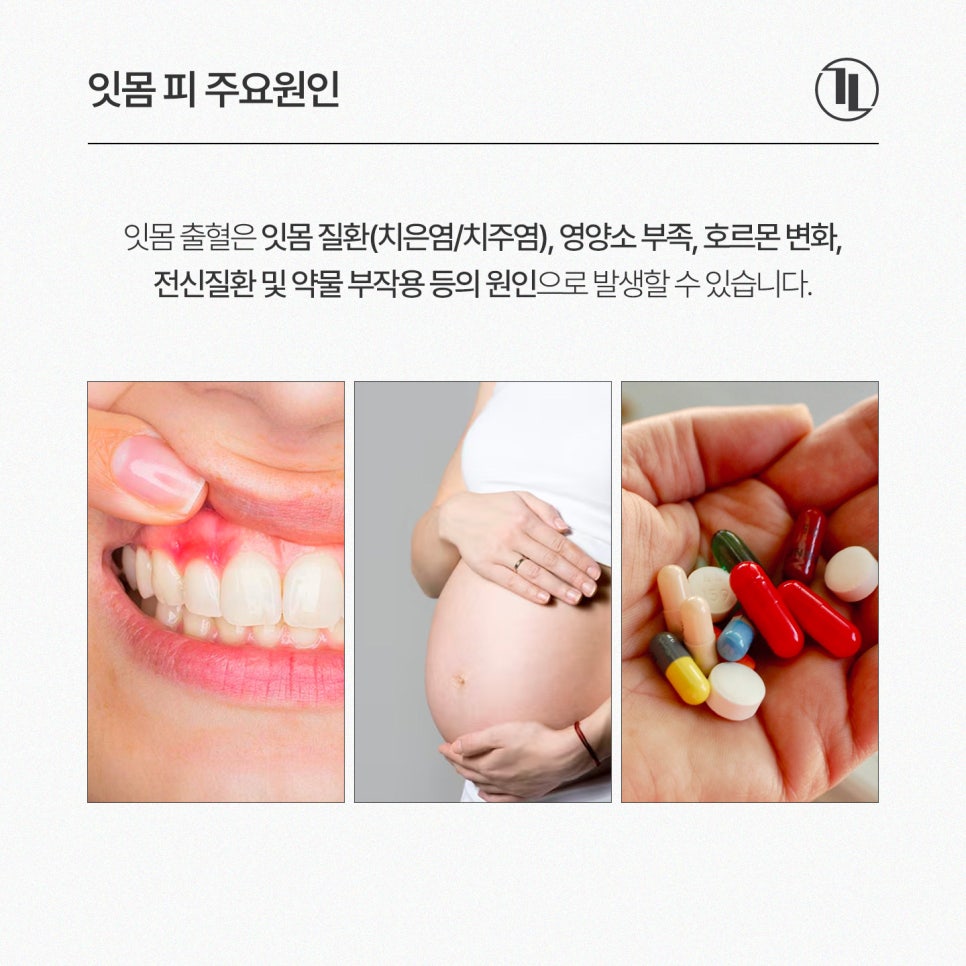
Causes of Gum Bleeding
In addition to lifestyle habits,
the causes of gum bleeding
can be related to various oral diseases
or overall health conditions.
1️⃣ Gingivitis and periodontitis
This is the most representative cause.
Plaque and tartar accumulate between the teeth and gums,
bacteria multiply,
and inflammation develops in the gums.
This is connected to poor oral hygiene habits
and delaying scaling for too long.
👉 Early symptoms of gingivitis
✅ Bleeding when brushing
✅ Swollen or red gums
👉 If left untreated, it can progress to periodontitis
✅ Damage to the jawbone
✅ Loose teeth
✅ Severe bad breath
2️⃣ Nutrient deficiency
If certain nutrients are lacking,
gum tissue and blood vessels can weaken,
making bleeding more likely.
👉 Nutrients closely related to gum health
✅ Vitamin C deficiency
✅ Vitamin K deficiency
✅ Iron deficiency
Vitamin C plays an important role in gum tissue recovery
and immune maintenance,
and if it is lacking,
gums can weaken
and bleed easily.
3️⃣ Hormonal changes
Hormonal changes can also affect gum bleeding.
During periods of major hormonal change,
blood flow to the gums and inflammatory responses increase,
which can make the gums more sensitive.
👉 Hormonal influence
✅ Pregnancy ✅ Puberty
✅ Menstrual cycle ✅ Menopause
Gingivitis during pregnancy,
called pregnancy gingivitis,
is one representative example.
4️⃣ Systemic diseases and medication side effects
Systemic diseases such as diabetes
affect immune response and inflammation control,
which can increase the risk of gum disease.
In addition, some medications can cause or worsen
gum bleeding.
If gum bleeding is more severe than usual or lasts a long time,
it is important to also check the medications you are taking
and your overall health condition.
👉 Representative related medications
✅ Anticoagulants
✅ Some blood pressure medications
✅ Immunosuppressants
Gum Bleeding Prevention and Care
Gum bleeding often improves temporarily
and then repeats,
so rather than simply relieving the symptom,
it is important to reduce the cause.
If you improve your everyday oral care habits even a little,
it can help prevent gum inflammation and bleeding.
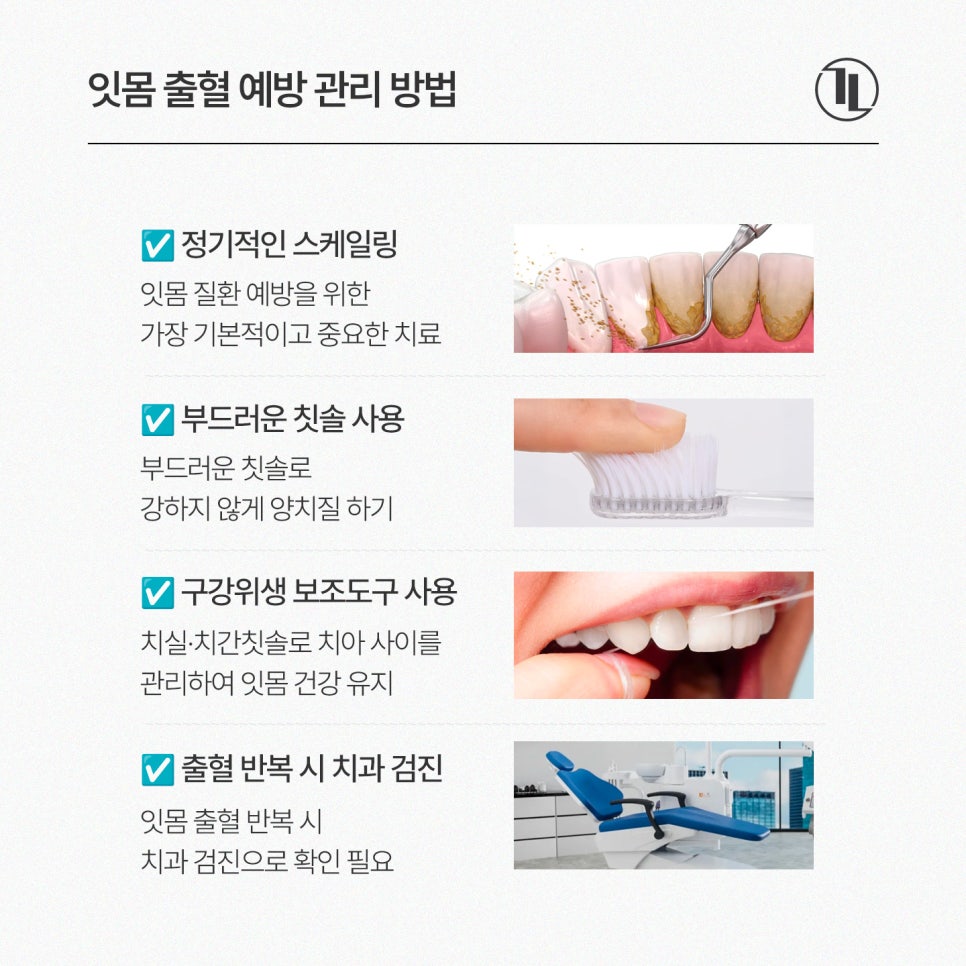
1️⃣ Get regular scaling
Scaling is the most basic and important treatment
for preventing gum disease.
Regular tartar removal helps reduce gum inflammation.
2️⃣ Use a soft toothbrush
It is important to use a toothbrush gently
without pressing too hard.
3️⃣ Use oral hygiene aids
Using hygiene aids such as
interdental brushes and dental floss
to clean the spaces between teeth that brushing may miss
can help maintain gum health.
4️⃣ Get a dental checkup if symptoms repeat
If gum bleeding repeats or lasts a long time,
it is necessary to check whether it is not just irritation
but a possible periodontal disease.
Bleeding gums while brushing may be common,
but if it repeats,
it may be a warning sign from your gum health.
In particular, lifestyle habits such as not getting scaling,
brushing incorrectly,
and not properly caring for the spaces between teeth
can be major causes that worsen gum inflammation.
Early gum disease can improve even with relatively simple care,
but if left untreated, it can progress to periodontitis,
so caution is needed.
If gum bleeding continues,
it is important to visit a dental clinic,
receive treatment after identifying the exact cause,
and maintain proper care in daily life.







Previous image
Next image