Hello, this is Gangnam Leong Dental Clinic.😃
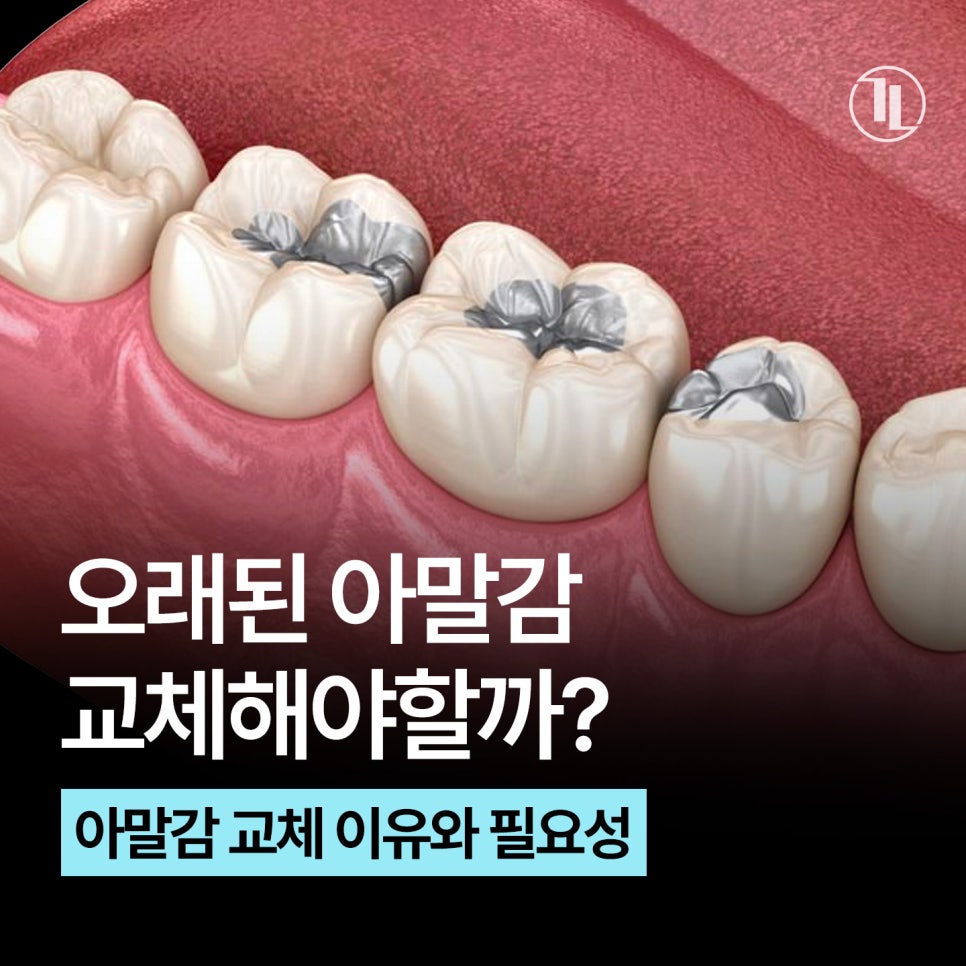
The silver-colored filling material, amalgam, was placed long ago when treating cavities.
In many cases, it is still being maintained as is.
Amalgam, which was used in dental care,
has long been one of the representative filling materials,
but in recent years, more people have been considering replacing amalgam due to concerns about aesthetics, mercury, and aging.
In particular, if you feel sensitivity or a chipped feeling,
or if the area around an old amalgam has become discolored,
it may be a situation where replacement is needed.
However, not all amalgam fillings must be
replaced or removed unconditionally.
Today, let’s take a look at the characteristics of amalgam
and what situations actually call for considering
amalgam replacement.
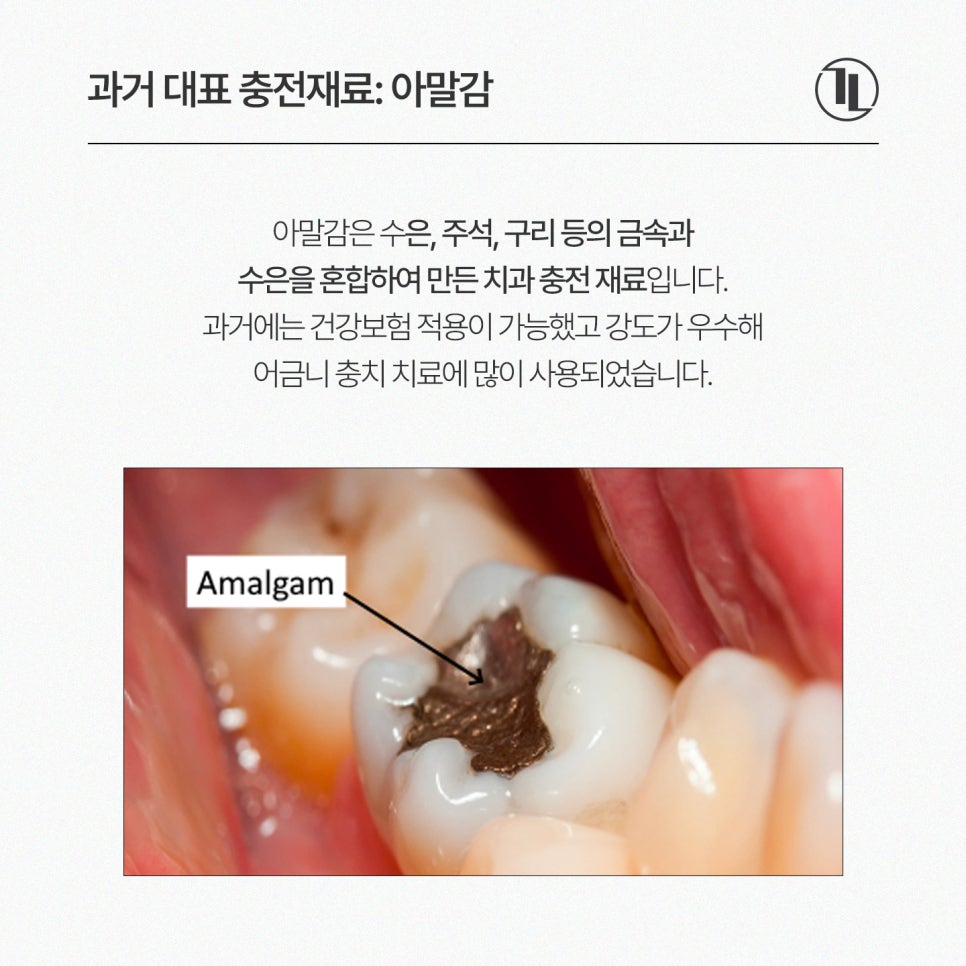
A representative filling material in the past:
Amalgam
Amalgam is a dental filling material made by mixing mercury with metals such as silver, tin, and copper.
In the past, it was covered by health insurance and was used frequently for treating cavities in molars because of its excellent strength.
📌Characteristics of amalgam
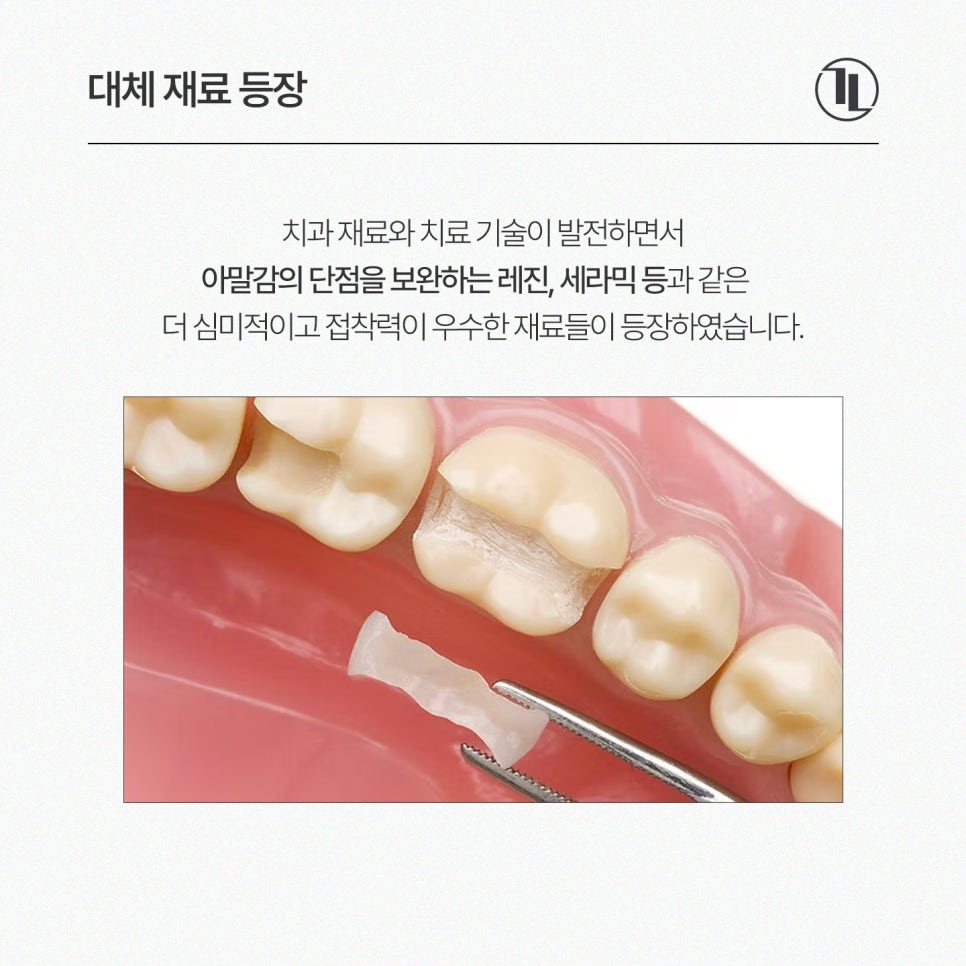
Why amalgam is being replaced
: The emergence of alternative materials and the drawbacks of amalgam
Amalgam was commonly used as a cavity-filling material.
But in recent years, there have been many cases of people considering amalgam replacement
or choosing other materials.
This is not simply because amalgam is a bad material,
but because as dental materials and treatment technology have advanced,
more aesthetic materials with better bonding properties have appeared.
✅ Resin ✅Ceramic, etc.
In particular, resin and ceramic
can achieve colors similar to natural teeth,
so they offer excellent aesthetics and can be treated in a way that bonds to the tooth.
On the other hand, because amalgam is a metal material,
its characteristics have led to a relatively declining preference,
as shown below.
✅ Disadvantages of amalgam
The necessity of replacing amalgam
If you have been keeping an amalgam filling,
you may be wondering whether it should be replaced.
If a long time has passed since treatment
and any of the following apply,
it is a good idea to consider replacement.
✅ Suspected risk of secondary cavities
As time passes, amalgam repeatedly expands and contracts due to its metal properties,
which can create tiny gaps between the tooth and the amalgam.
Because the treatment method for amalgam is closer to being inserted than bonded,
the sealing area weakens over time.
Food particles and bacteria can enter these gaps,
becoming difficult to remove,
and increasing the likelihood of secondary cavities.
✅ Chipping and tooth cracks
As amalgam contracts and expands over time,
it can cause tiny cracks in the tooth,
and if the cracks become severe,
the tooth may split or break.
✅ Discomfort when chewing
Old amalgam can wear down,
causing changes in the bite
and discomfort when eating.
✅ Aesthetic reasons
One of the main reasons people want amalgam replacement nowadays is aesthetics.
Some people feel stressed by the black metal filling visible when smiling or speaking.
As a result, with the increase in materials that have colors similar to natural teeth,
demand for amalgam replacement continues to rise.

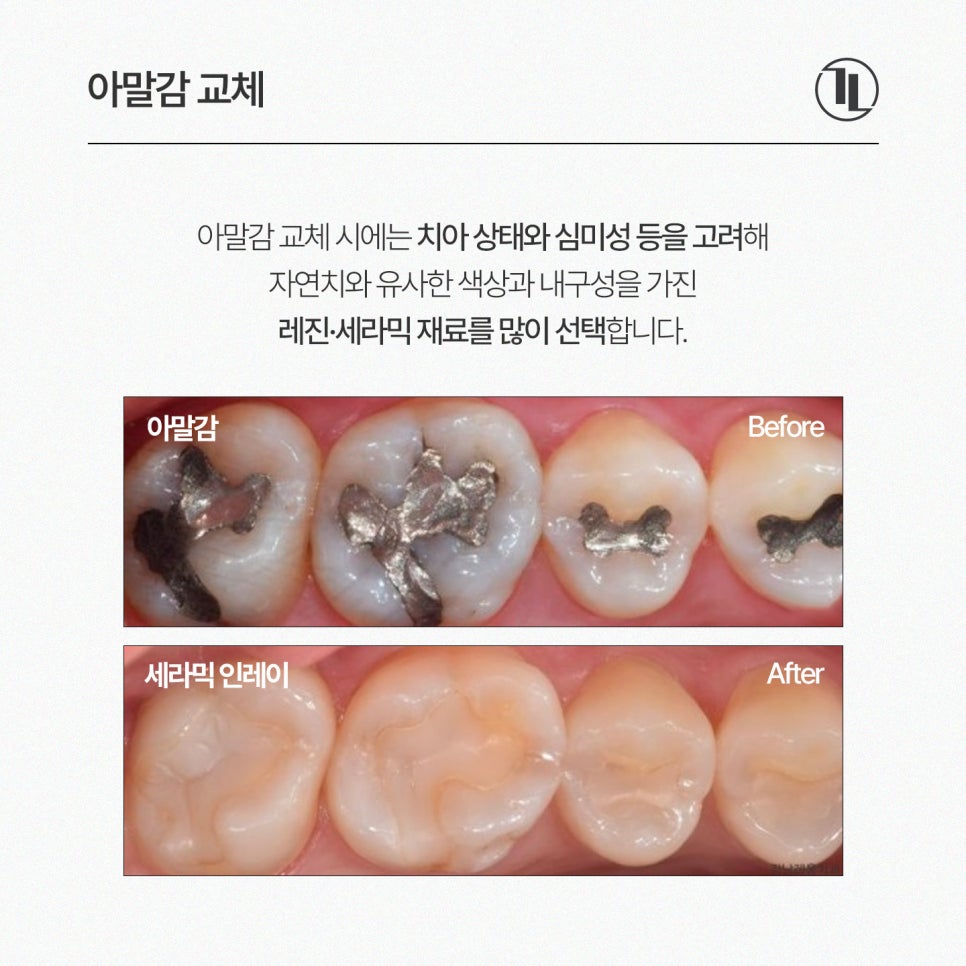
What material is used when replacing amalgam?
When replacing amalgam,
the material is selected by considering the condition of the tooth, the extent of the cavity, and aesthetic needs.
Recently, as mentioned above,
materials with colors similar to natural teeth and good durability have been used,
and resin and ceramic-based treatments are among the most commonly chosen.
✅ Resin treatment
If the cavity area is not large,
resin treatment is performed.
✅ Inlay and ceramic treatment
If the cavity area is wide
or strong chewing force is needed,
inlay or ceramic treatment may be considered.
The treatment method is determined by considering
whether the affected area is large and what level of strength is needed,
while taking into account the condition of the tooth and the bite.
Things to check before replacing amalgam
If the amalgam is stable and there is no problem,
there are cases where it is not forcibly replaced.
This is because unnecessary retreatment can cause problems such as
increased tooth reduction, financial burden, and increased sensitivity.
An accurate diagnosis comes first!
Whether amalgam replacement is needed
should be decided after comprehensively checking
visual examination, X-ray imaging, cavity progression, and the presence of pain.
In particular, if you have an old amalgam,
there may be problems developing inside even if it looks fine on the surface,
so regular checkups to monitor the condition are the most important.
Dental amalgam replacement should not be decided simply because it is old;
the process of accurately checking the current condition should come first.
However, if there are symptoms such as chipping, sensitivity, pain, secondary cavities,
or severe discoloration,
it is a good idea to confirm the need for replacement through a dental examination.
Recently, with a variety of treatment methods that consider both aesthetics and function,
such as resin and ceramic,
what matters most is making a treatment plan that fits your own dental condition.
If you are worried about old amalgam,
please do not leave it unattended,
and first check the current condition through regular checkups.





Previous image
Next image