Hello, this is Gangnam Leon Dental Clinic🙂
We are already approaching the halfway point of 2026.
As time passes quickly,
this is a good time to review,
one by one, the health insurance benefits
available to you this year.
As you may know, health insurance subscribers aged 19 or older
can receive health insurance coverage
for scaling once a year.
As the second half of each year approaches,
the number of patients visiting to receive
health insurance-covered scaling tends to increase.
Rather than waiting until the end of the year,
we recommend checking your oral condition
in advance while you have time
and taking advantage of the health insurance benefit for scaling.
In this post, we will take a detailed look at
why scaling is necessary,
scaling costs, health insurance coverage criteria,
the appropriate interval and whether it is painful,
post-procedure precautions,
and frequently asked questions.
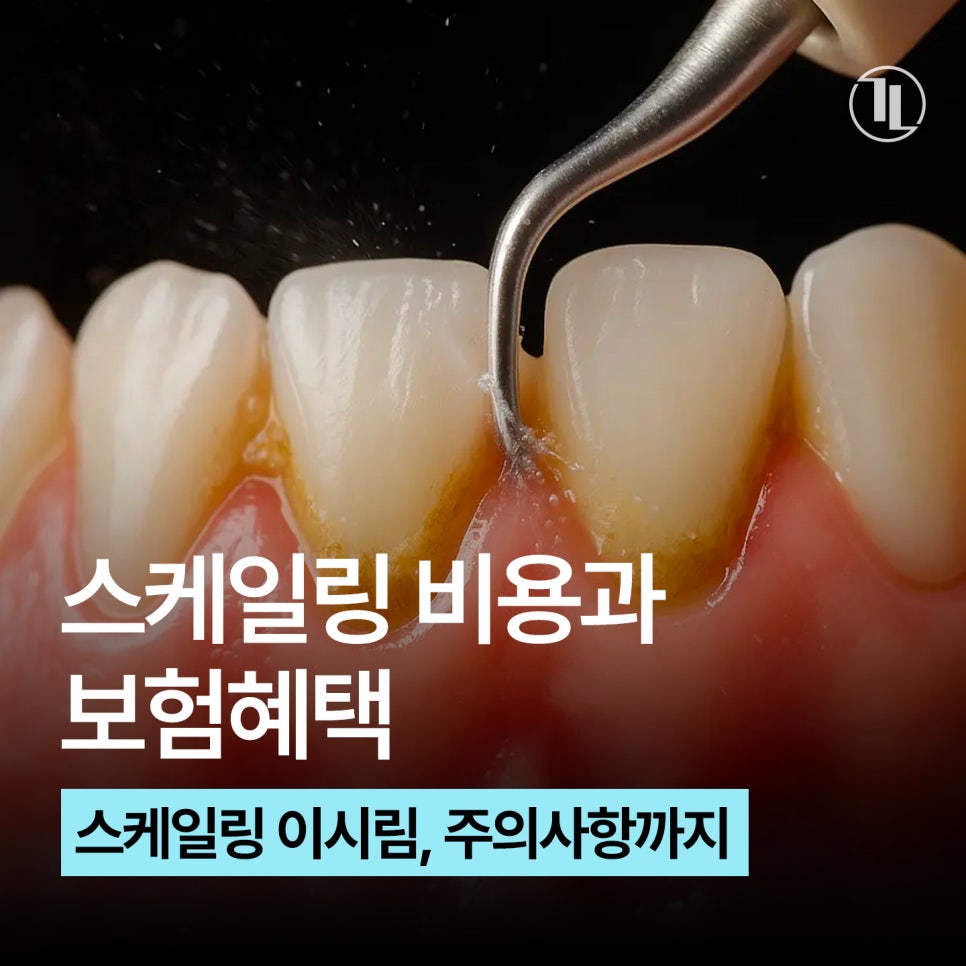
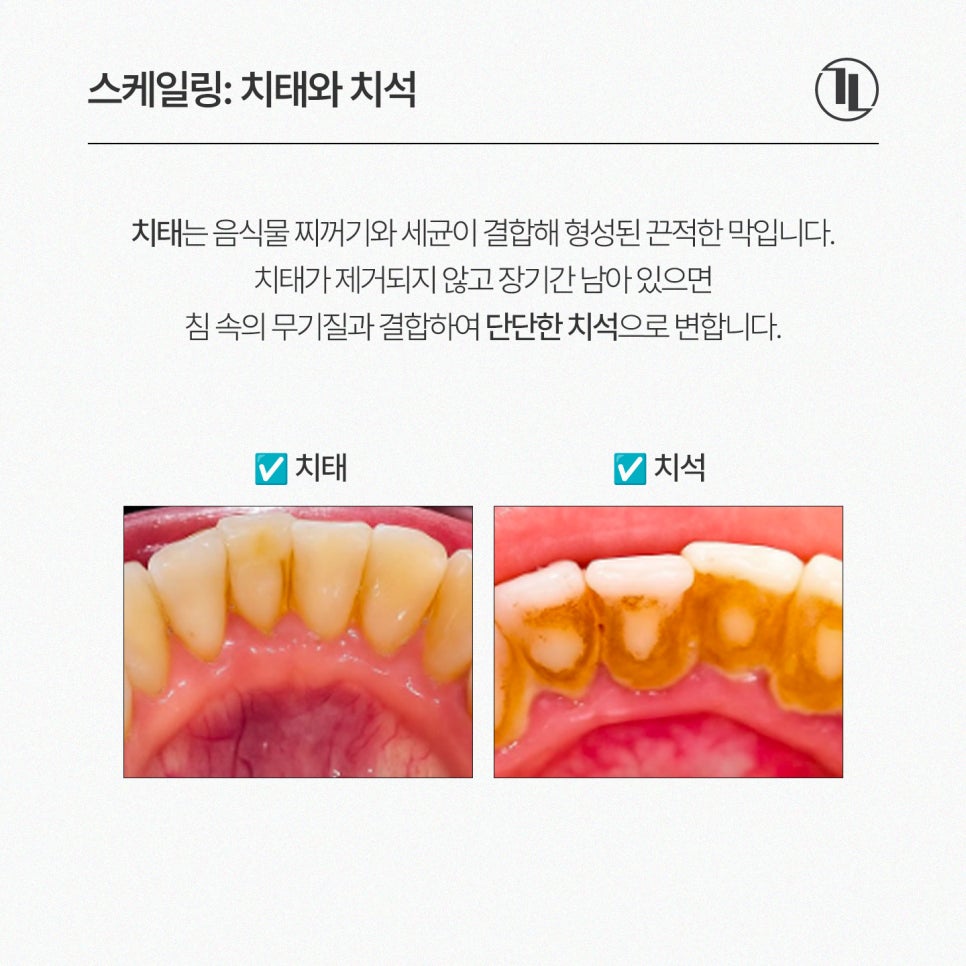
Why Removing Tartar Is Important
: The Need for Scaling
Even if you brush your teeth thoroughly every day,
plaque that has not been completely removed
may remain on the tooth surfaces and along the gumline.
Over time, this plaque combines
with minerals in saliva
and gradually hardens into tartar.
Plaque generally begins to calcify within several days
and forms especially easily in areas
that are difficult for a toothbrush to reach,
such as the inner surfaces of the teeth and around the gums.
The problem is that once tartar has formed,
it is difficult to remove through ordinary brushing alone.
Bacteria multiply more easily on the surface of tartar,
which can cause gum inflammation, bad breath,
and periodontal disease.
Therefore, to maintain a healthy oral environment,
it is important to remove tartar through regular scaling
and manage gum health.
📌The Tartar Formation Process
-
Food particles and bacteria that are not removed
-
Plaque formation
-
Tartar formation
-
Bacterial growth
-
Gum inflammation and progression to periodontal disease
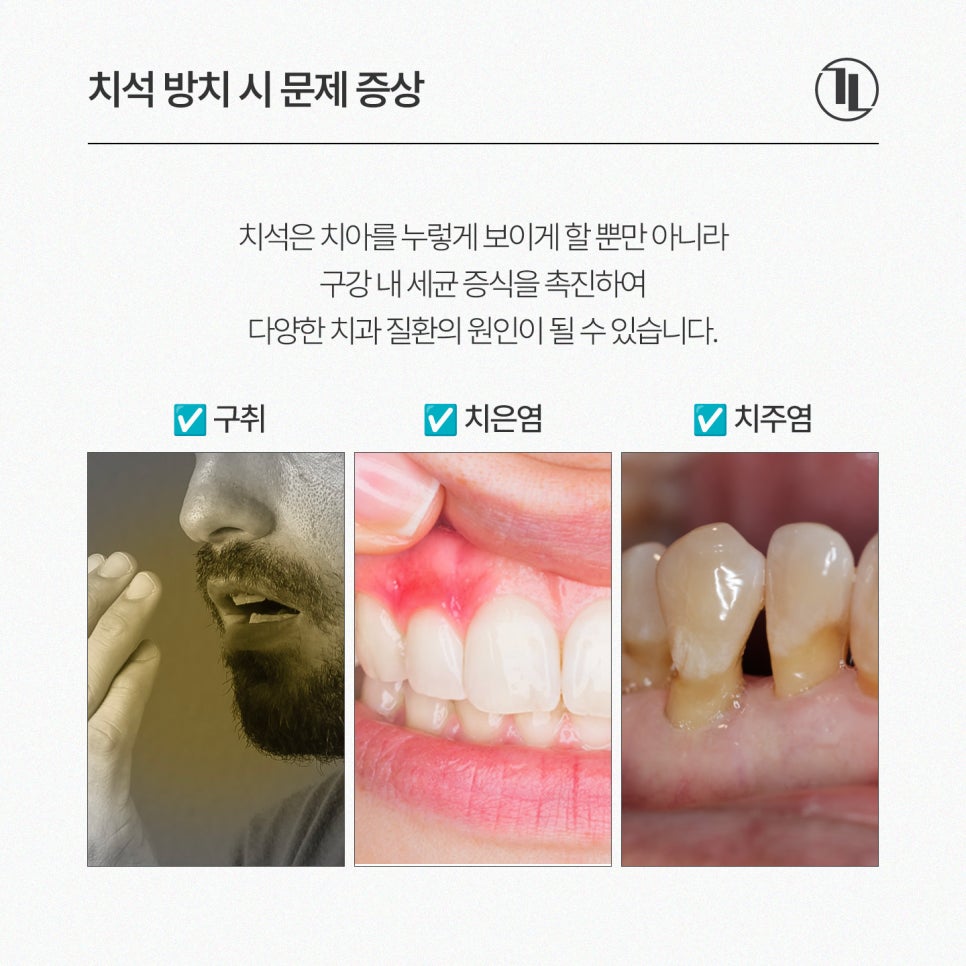
Symptoms and Problems Caused by Leaving Tartar Untreated
Tartar not only makes the teeth look yellow,
but also promotes the growth of bacteria in the mouth
and can cause various dental conditions.
✅ Bad breath
Bacteria multiply easily on the surface of tartar.
During this process, sulfur compounds and other substances
may be produced, resulting in bad breath.
✅ Gum inflammation (gingivitis) and bleeding
Bacteria around tartar cause inflammation in the gums.
Typical symptoms include bleeding when brushing
and swollen gums.
✅ Progression to periodontitis
If gingivitis is left untreated, it may develop into periodontitis.
The inflammation can spread beyond the gums
to the tissues and jawbone that support the teeth.
In severe cases, this can lead to loose teeth
or even tooth loss.
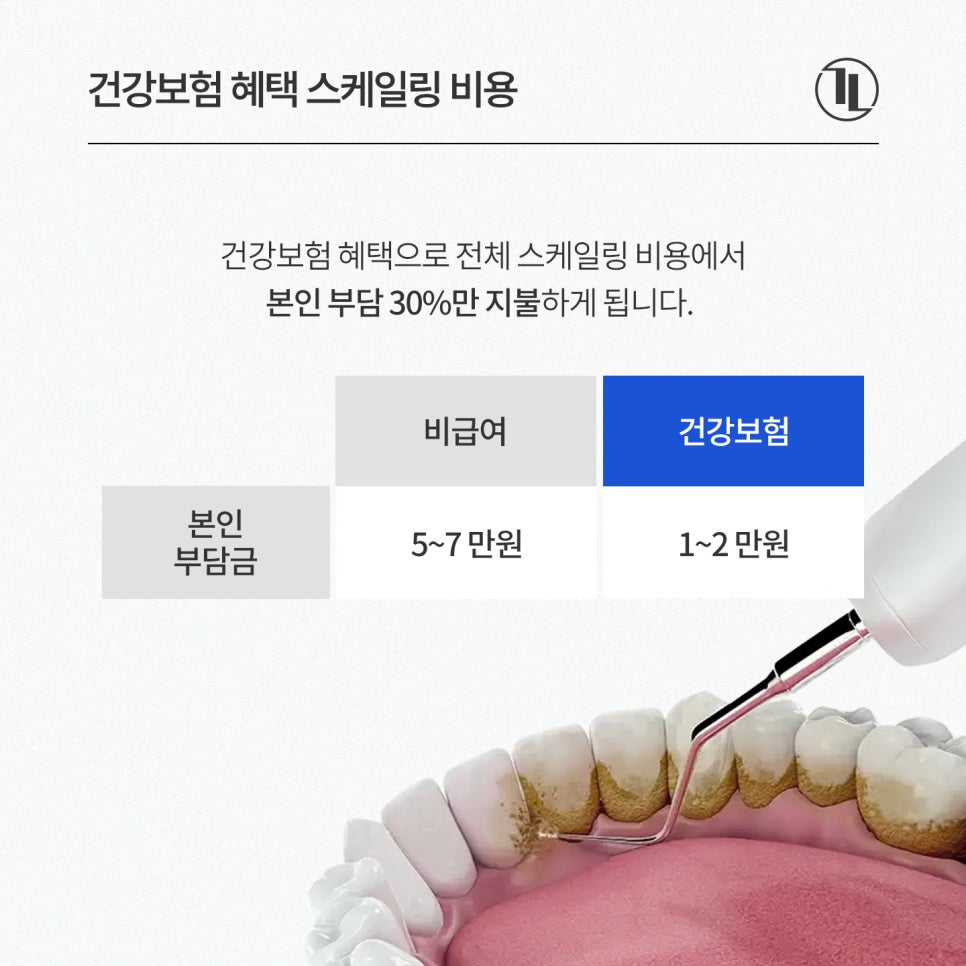
Scaling Costs
: Health Insurance Benefits and Coverage Criteria
The cost of scaling
depends on whether health insurance coverage applies.
When health insurance coverage applies,
the out-of-pocket amount may vary depending on
the type of medical institution and individual circumstances.
However, the average out-of-pocket cost
is 30% of the total treatment cost,
or approximately KRW 10,000 to the low KRW 20,000 range.
Reasons for differences in costs between hospitals
include the type of medical institution / whether additional examinations are performed /
the condition of the gums / whether accompanying treatment is required,
among other factors.
🔖Health Insurance Benefit Eligibility for Scaling
- Health insurance subscribers aged 19 or older
(any adult in Korea aged 19 or older)
🔖Number of Covered Treatments
Once a year
(based on January 1–December 31)
※ The benefit is limited to once per year
and automatically expires if it is not used within that year.
Recommended Scaling Intervals
Scaling should not be viewed as a treatment
that is completed after a single visit,
but rather as part of ongoing care.
The recommended interval may vary depending on
your oral condition and lifestyle habits,
as follows.
✅ General adults
Usually once every 6 months to 1 year
✅ Smokers
Because smokers develop tartar more quickly,
care every 3–6 months is recommended.
✅ During orthodontic treatment
Because plaque can easily accumulate around orthodontic appliances,
more frequent checkups than those for the general population may be necessary.
✅ Patients with gum disease
If you have periodontal disease,
your dental care team will establish
an appropriate care interval based on your individual condition.
Scaling Pain
Tooth Sensitivity During Scaling
One reason people postpone dental visits
is fear of pain.
However, the discomfort experienced during actual scaling
varies depending on the amount of tartar
and the condition of the gums.
😰 I have pain after scaling!
If there is a large amount of tartar
or severe gum inflammation,
you may feel discomfort during the procedure.
😕 My teeth are sensitive after scaling!
As tartar is removed,
the tooth surfaces that were originally exposed become visible,
which may cause temporary sensitivity.
This usually improves within a few days.
👉 Most discomfort improves over time.
Rather than being discomfort caused by the scaling treatment itself,
these are natural symptoms that may occur
as the process addresses problems caused by neglected tartar.
Therefore, it is important to manage tartar
through regular scaling.
Eating and Drinking Alcohol After Scaling
Precautions
After scaling, the teeth and gums
may be temporarily sensitive.
To help maintain a clean mouth for longer
and reduce discomfort,
it is advisable to keep a few precautions in mind.
At Gangnam Leon Dental Clinic, after scaling,
we also provide toothbrushing guidance and gum massage
to help temporarily sensitive gums recover quickly
and strengthen the gum tissue.
✅ When You Can Eat
After scaling,
the gums may be temporarily sensitive,
so it is best to avoid eating for 1–2 hours immediately after the procedure
and avoid hot or irritating foods for about 2–3 days
to give the gums time to recover.
✅ Alcohol and Smoking
Alcohol and smoking may irritate the gums,
so avoiding them for about one day, if possible,
may be helpful.
✅ Brushing
Brush as usual,
but do so gently and lightly.
Scaling FAQ
✋It feels as though my teeth have been shaved after scaling.
Removing tartar attached to the tooth surfaces
may feel like the teeth have been shaved,
but the teeth themselves are not shaved.
✋My teeth look as though gaps have formed after scaling.
As the tartar surrounding the teeth is removed,
the spaces that were originally there become visible.
As inflammation and swelling caused by tartar subside
and the original gumline becomes visible,
the spaces between the teeth may feel wider.
✋My teeth feel weaker.
Scaling itself does not weaken the teeth.
Rather, it can help prevent periodontal disease.
✋How long does a scaling appointment take?
It may vary depending on the patient’s oral condition,
but it usually takes approximately 30 minutes to 1 hour.
✋Is the health insurance benefit for scaling applied automatically?
The annual benefit is applied automatically during treatment
without separate documents or an application.
However, treatments exceeding once per year
are processed as non-covered care,
so prior confirmation at the reception desk is necessary.
✋I do not remember whether I had scaling this year.
The dental clinic can check whether you have received
health insurance-covered scaling.
You can also personally look up your “tartar removal” treatment information
through the National Health Insurance Service.
Scaling is not simply a procedure to clean the teeth.
It is an important preventive treatment
that removes tartar and helps prevent gum disease.
By taking advantage of health insurance benefits,
you can reduce the financial burden of the treatment,
so be sure to check your eligibility.
📌 Oral Health Checklist
✓ Your gums bleed when you brush.
✓ You have persistent bad breath.
✓ More than one year has passed since your last scaling.
✓ You have a smoking habit.
✓ Tartar is visible.
✓ Your gums frequently swell and hurt.
If any of the items above apply to you,
check your current oral condition through a dental examination
and maintain healthy gums and teeth
with regular scaling.




Previous image
Next image