Hello, this is Gangnam Leon Dental Clinic🙂
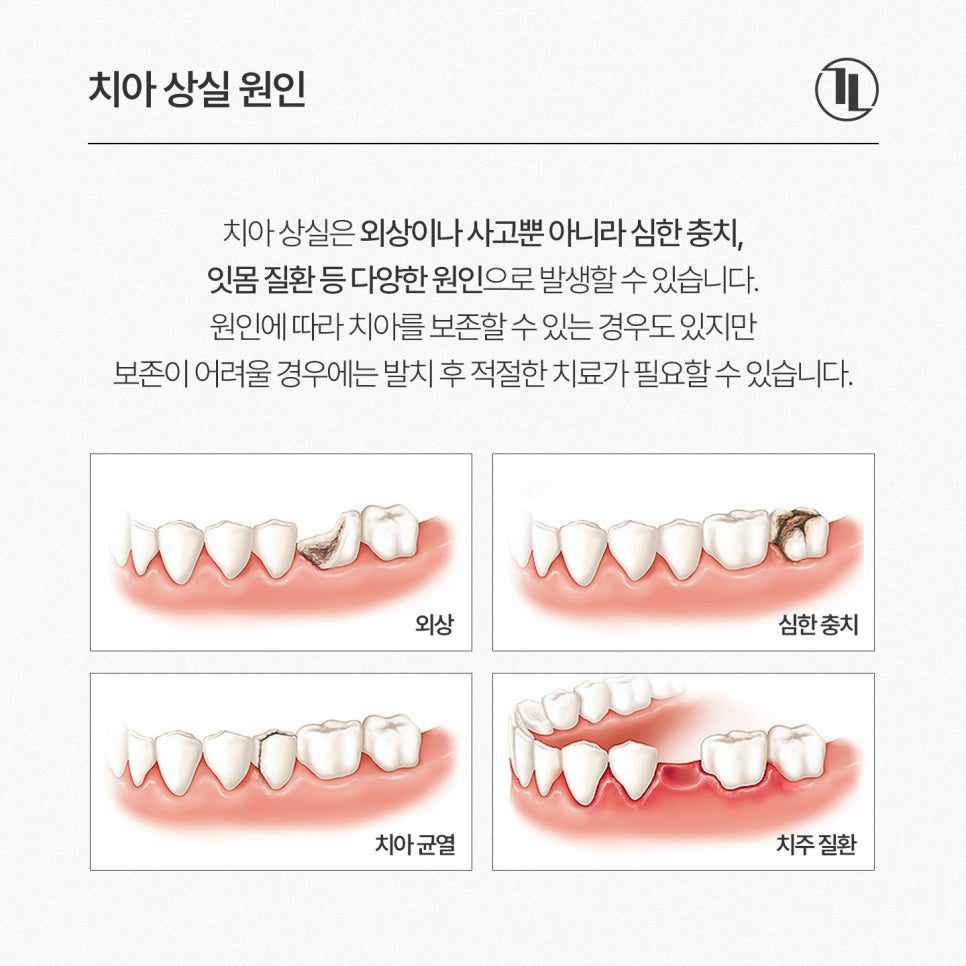
Teeth can be lost or require extraction for various reasons, including trauma or accidents, severe cavities, and gum disease.
Losing a tooth affects not only speech and chewing function but also the overall structure of the mouth, so even if only one tooth is missing, it is best not to leave it untreated and to seek dental care.
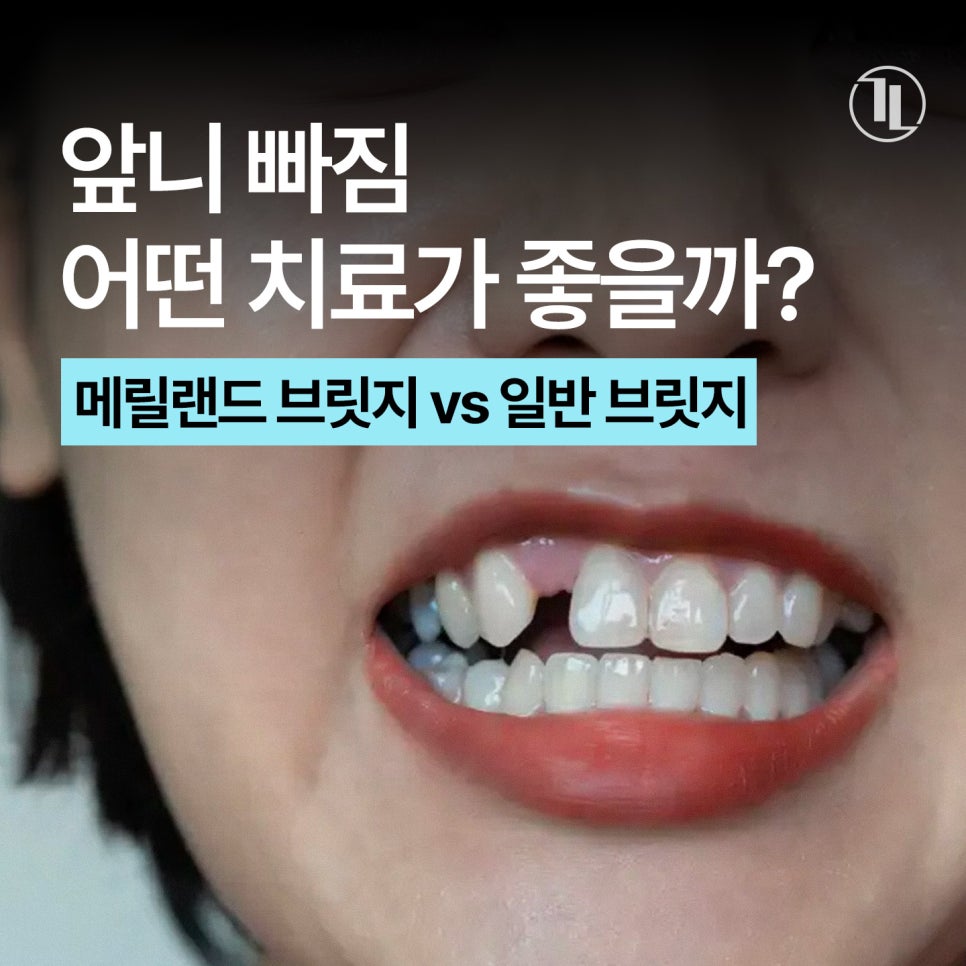
In particular, missing front teeth can also cause aesthetic concerns, so many people seek advice on treatments that are both quick and natural-looking.
In this post, we will review the advantages and disadvantages of implants, traditional bridges, and Maryland bridges that may be considered when a tooth is lost, as well as which situations each option may be suitable for.
🔖 Summary
1️⃣ Causes of tooth loss
2️⃣ Problems that can occur when a missing tooth is left untreated
3️⃣ Treatment comparison
4️⃣ Considerations when choosing a treatment method
5️⃣ Frequently asked questions
Causes of Tooth Loss
There are various causes of tooth loss.
From sudden accidents to dental disease, a tooth may need to be extracted or may be lost for many different reasons.
✅ Trauma and accidents
This includes cases where a tooth is broken or knocked out due to a fall, an impact during sports, or a traffic accident.
The front teeth are especially vulnerable to external impacts and are therefore often lost due to trauma.
✅ Severe cavities
If a cavity has progressed deep into the tooth and it is difficult to preserve the tooth, extraction may be necessary.
This includes cases where recovery is difficult even with root canal treatment or where the tooth has been extensively damaged.
✅ Gum disease (periodontal disease)
As periodontitis progresses, the gums and alveolar bone that support the teeth can become damaged, causing the teeth to loosen and eventually be lost.
✅ Tooth fracture or cracks
If a tooth cracks down to the root or is severely broken after chewing hard foods or experiencing trauma, extraction may be necessary if it is determined that the tooth is difficult to maintain.
✅ Recurrent infection or cases that are difficult to treat
If inflammation continues to recur even after root canal treatment, or if it is determined that the tooth can no longer be preserved, extraction may be considered.
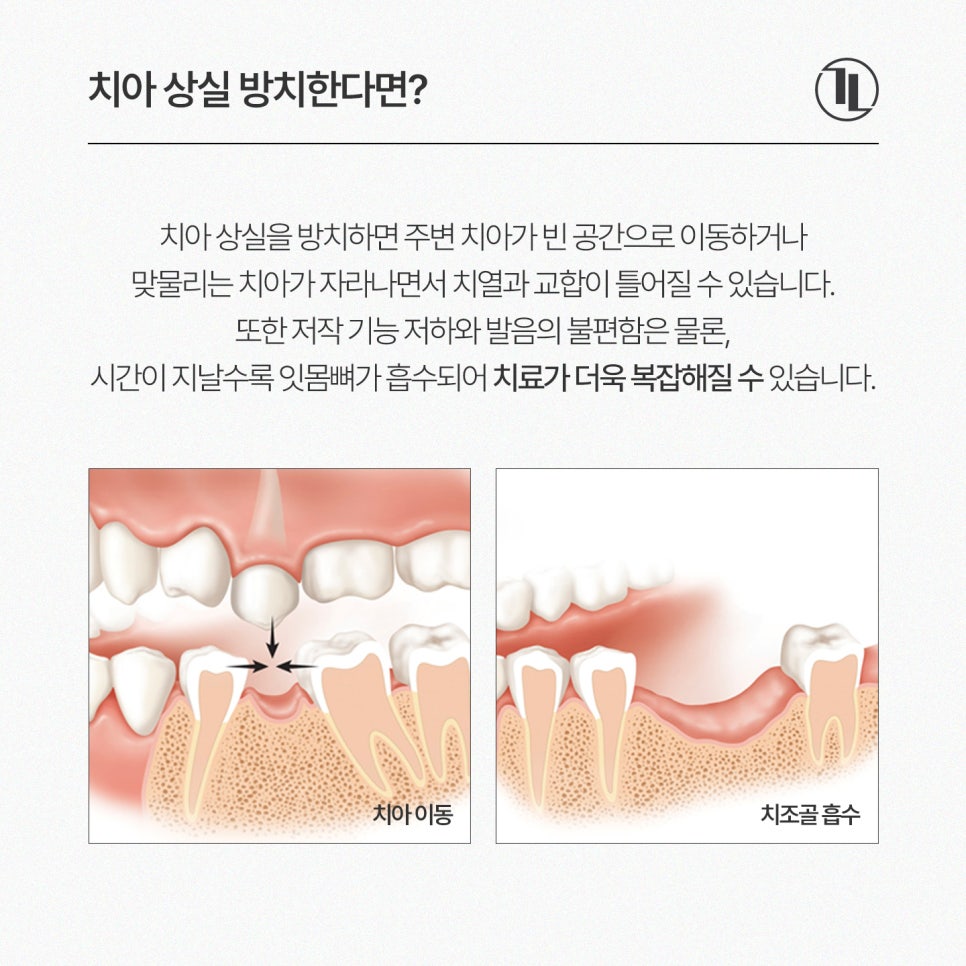
What Happens If a Missing Tooth Is Left Untreated?
Teeth function while maintaining balance with one another.
Even if only one tooth is missing, various changes may appear over time.
🚫 The opposing tooth may become elongated.
🚫 The neighboring teeth may tilt toward the empty space.
🚫 The load on other teeth may increase.
🚫 Aesthetics and speech may be affected.
🚫 The alveolar bone may gradually be resorbed.
👉 Therefore, if you have lost a tooth, it is best to visit a dentist as soon as possible for a consultation about treatment.
Missing Front Teeth
3 Treatment Options
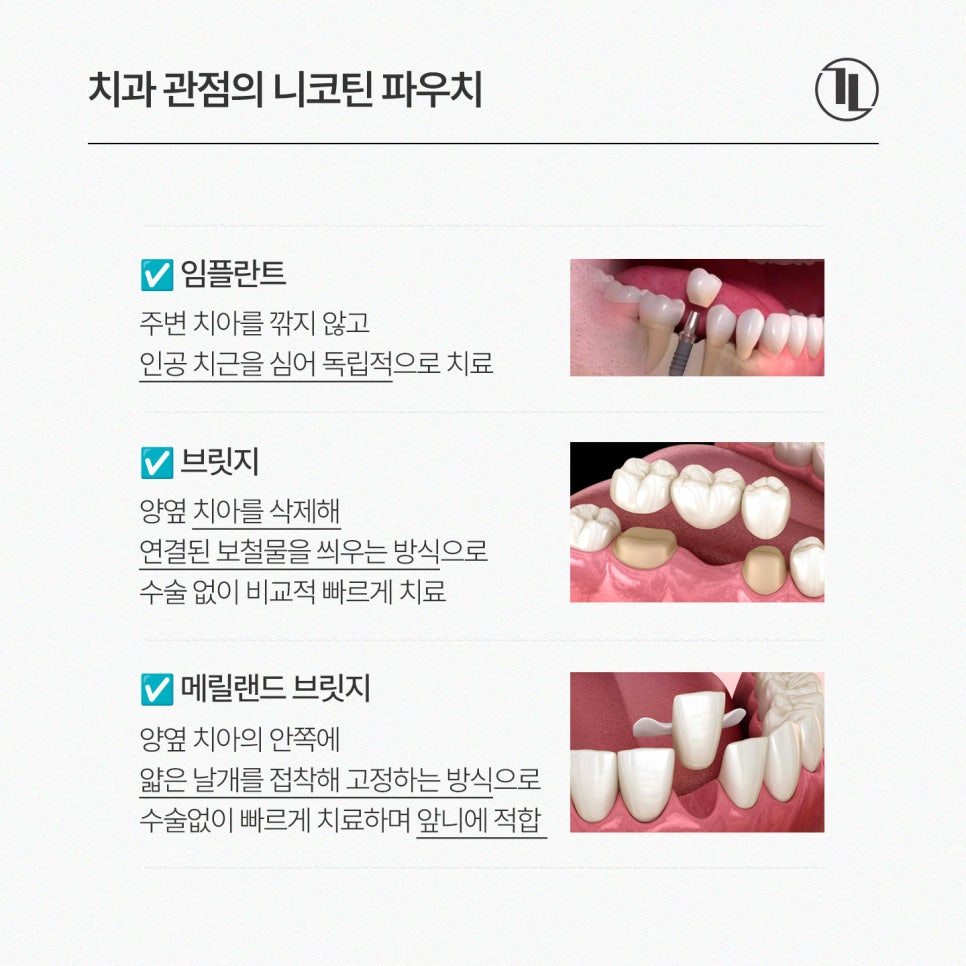
There are three treatment methods that can be considered when a tooth is lost.
The appropriate treatment may vary depending on how many teeth have been lost, whether they are front teeth or molars, and the condition of the surrounding teeth and gums.
For an accurate diagnosis, it is best to visit a dental clinic for an examination and consultation.
❶ Implants
A treatment that restores the function and aesthetics of the original tooth by placing an artificial tooth root in the jawbone.
🔖 Features
-
Surgical procedure
-
Restoration of chewing strength similar to that of natural teeth
-
Stable long-term use
-
Bone grafting may be necessary depending on the condition of the jawbone
-
Can be used for molars or front teeth, and for partial or full tooth replacement
-
Relatively high cost
-
Requires a long treatment period (several months)
Suitable in these cases!
✔️ When sufficient space from the neighboring teeth is available
✔️ When the jawbone is in good condition
✔️ When chewing strength similar to that of a natural tooth is desired
❷ Traditional Dental Bridge
A treatment that uses the healthy teeth on either side of the missing tooth as supports, covers them with crowns, and connects them like a bridge to fill the gap.
🔖 Features
Suitable in these cases!
✔️ When surgical treatment is a concern
✔️ When implants are difficult or unsuitable
✔️ When relatively quick treatment is desired
✔️ When the teeth on both sides require crown treatment
❸ Maryland Bridge
A treatment that fills the space by bonding thin metal or ceramic wings to the backs of the teeth on either side of the missing tooth.
🔖 Features
-
No surgical procedure
-
Preserves the teeth more than a traditional bridge
-
Completed through quick treatment
-
Mainly suitable for front teeth (and sometimes premolars)
-
May become detached
Suitable in these cases!
✔️ When a front tooth has been lost
✔️ When the teeth on both sides are healthy
✔️ When you want to minimize the reduction of healthy teeth
✔️ When implants are difficult or unsuitable (due to insufficient space)
✔️ When a quick and natural-looking restoration is desired
| Category | Implants | Traditional Bridge | Maryland Bridge |
|---|
| Surgery required | O | X | X |
| Tooth reduction | - | Extensive | Minimal or none |
| Treatment method | Placement of an artificial tooth root + crown | Reduction of the teeth on both sides, followed by crowns to secure an artificial tooth | Wings bonded to the backs of the teeth on both sides to secure an artificial tooth |
| Treatment period | Several months | 1–2 weeks | 1–2 weeks |
| Application area | Both front teeth and molars | Both front teeth and molars | Mainly front teeth |
*The treatment period may vary depending on the patient’s oral condition.
What About Dentures?
Dentures are removable prosthetic devices worn over the gums. They are used when several teeth, most teeth, or all teeth have been lost.
🔖 Features
Suitable in these cases!
✔️ When several teeth have been lost
✔️ When surgery is difficult due to systemic disease or other reasons
✔️ When you want to reduce the financial burden of implants
Considerations When Choosing
A Treatment Method
The same treatment is not suitable for every patient, even when the type of tooth loss is the same.
In general, the following factors should be evaluated comprehensively.
✅ Number of missing teeth
✅ Whether the missing teeth are front teeth or molars
✅ Condition of the gums and alveolar bone
✅ Health of the surrounding teeth
✅ Presence of systemic disease
✅ Aesthetic expectations
✅ Treatment period
✅ Budget
👉 At a dental clinic, the necessary factors are assessed comprehensively through an oral examination, X-rays, and other evaluations. The most suitable treatment method is then determined through consultation with the patient.
Frequently Asked Questions
✋Can a Maryland bridge be used for a long time?
This may vary depending on the bonding condition, oral care, occlusion, and other factors.
Regardless of the treatment, regular examinations and care are important.
✋Can a Maryland bridge come loose?
Because it is secured with an adhesive, it may become detached if strong impacts or excessive chewing forces occur repeatedly.
However, recent advances in bonding materials and prosthetic techniques have led to significant improvements.
✋What is the difference between a traditional bridge and a Maryland bridge?
✔ A traditional bridge involves extensively reducing the teeth on both sides of the missing tooth, placing crowns on them, and connecting the prosthesis. It provides excellent stability but requires the reduction of healthy teeth.
✔ A Maryland bridge involves bonding thin metal or ceramic wings to the backs of the teeth on both sides. This minimizes tooth reduction, but there may be limitations depending on the application area and occlusal conditions.
✋I have lost one tooth. Do I really need treatment?
If tooth loss is left untreated, various problems may occur, including movement of the surrounding teeth, changes in the bite, and reduced chewing function.
It is best to consult a dentist as soon as possible and establish an appropriate treatment plan.
There are various treatment options when a tooth is lost.
The important thing is not which treatment is generally better, but choosing the method that is most suitable for your current oral condition and lifestyle.
In particular, a Maryland bridge may be considered when a front tooth has been lost because it can preserve the healthy teeth as much as possible, but it is not suitable for every patient.
Please determine your specific treatment plan through a dental examination and consultation.





Previous image
Next image