Hello, this is Gangnam Leon Dental Clinic🙂
Have you ever experienced a sharp, tingling sensitivity in your teeth when drinking cold water or brushing?
Many people think it is simply a temporary symptom and ignore it, but the cause may be cervical abrasion, which occurs as the area where the teeth and gums meet gradually wears away.
Cervical abrasion may begin with sensitivity alone, but as the abrasion progresses, the tooth may become notched or the root area may become exposed, increasing discomfort.
In severe cases, continued damage to the tooth structure may lead to a wider range of treatment.
In this post, we will compare the causes, symptoms, and treatment methods for cervical abrasion and also look at ways to prevent it.
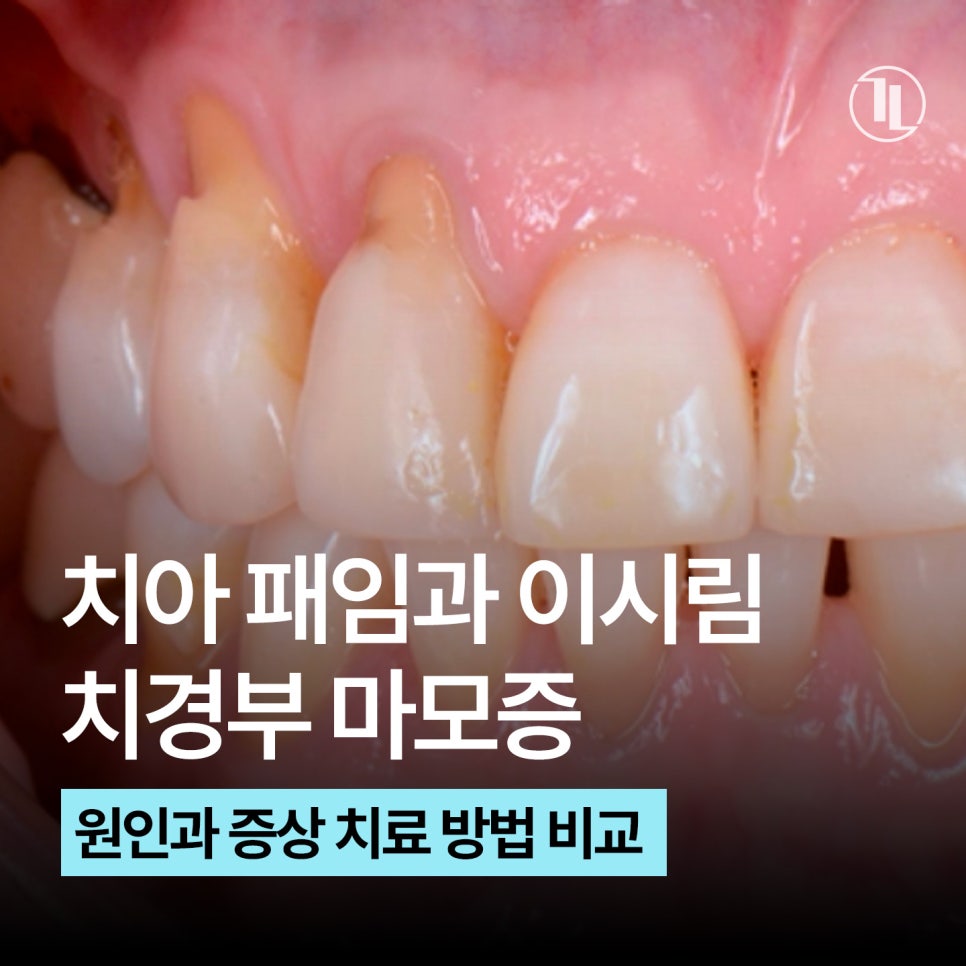
🔖Summary of Cervical Abrasion
1️⃣What is cervical abrasion?
2️⃣Causes of cervical abrasion
3️⃣Symptoms of cervical abrasion
4️⃣Treatment methods for cervical abrasion
5️⃣Prevention of cervical abrasion
6️⃣Cervical abrasion FAQ
Cervical Abrasion
:Notching of the Tooth Root
Cervical abrasion refers to a condition in which the cervical area becomes worn into a V- or U-shaped notch due to repeated physical or mechanical irritation.
The exposed dentin is sensitive to external stimuli, so sensitivity can easily occur even with cold foods or cold air.
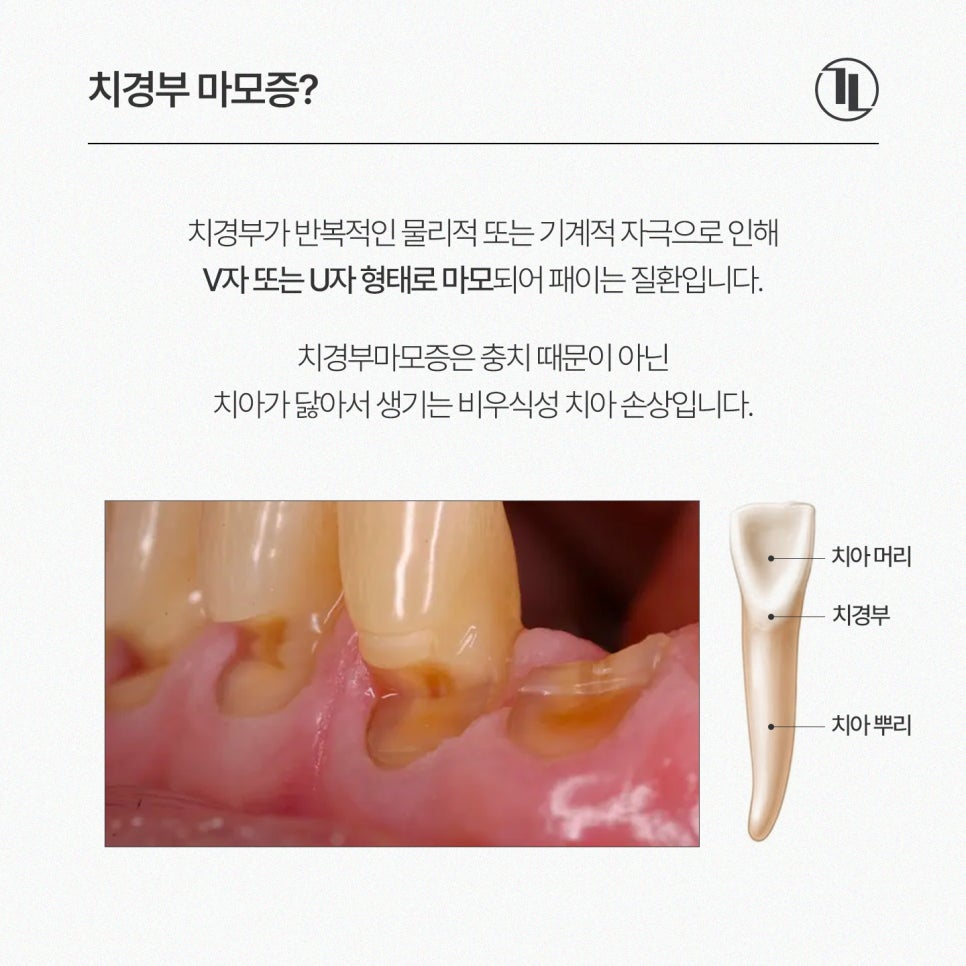
✋Question✋
Where is the cervical area?
The cervical area is the boundary where the crown and root of the tooth meet—the area that touches the gums.
Because force is structurally likely to be concentrated in this area, it is relatively vulnerable to various forms of irritation.
Causes of Cervical Abrasion
Cervical abrasion often develops through the combined effects of several factors.
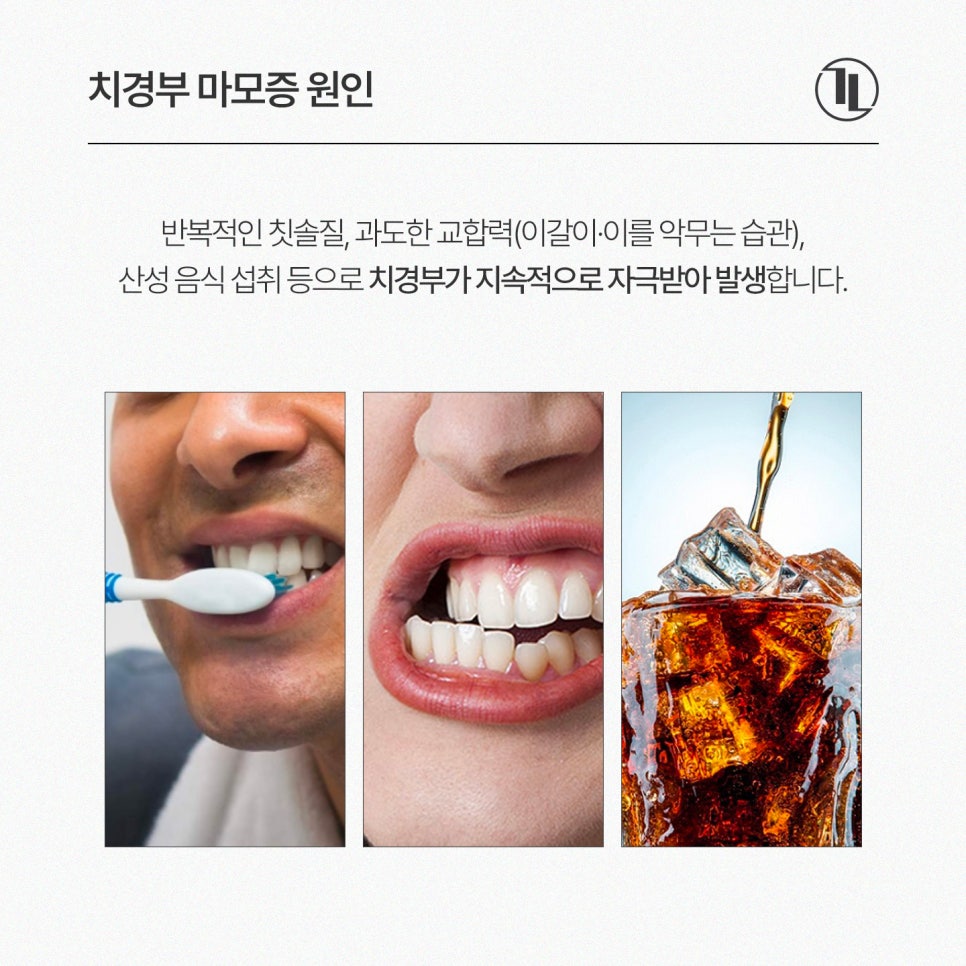
✅ Incorrect Brushing Habits
This is one of the most common causes.
The following habits can continuously wear away the cervical area.
-
Brushing forcefully from side to side
-
Using a hard-bristled toothbrush
-
Brushing with excessive force
-
Using highly abrasive toothpaste for a long time
✅ Biting Forces and Teeth Grinding
When a person clenches their teeth forcefully or grinds their teeth during sleep, repeated stress becomes concentrated in the neck of the tooth.
This force can create microscopic cracks on the tooth surface and may further worsen damage to the cervical area over time.
✅ Acidic Environment
Frequent consumption of carbonated drinks, fruit juice, and sour foods can weaken the tooth surface.
When the teeth are weakened, they are more easily affected by brushing and biting forces, which can accelerate abrasion.
Symptoms of Cervical Abrasion
Check Your Symptoms
If the following symptoms occur repeatedly, it is advisable to consider the possibility of cervical abrasion and have a dental examination.
Symptoms may be mild at first, but the area of abrasion can gradually expand, so early diagnosis is important.
🔖Checklist
✅ Your teeth feel sensitive to cold water.
✅ You feel pain even when eating sweet foods.
✅ The root area of a tooth looks visibly indented.
✅ You experience pain when brushing.
✅ Your teeth look yellowish.
✅ Only certain teeth remain sensitive.
Treatment for Cervical Abrasion
GI vs. Composite Resin
The materials most commonly used to treat cervical abrasion are GI (glass ionomer) and composite resin.
Both materials fill the notched area and help relieve sensitivity, but each has different strengths and features. The appropriate material is selected according to the condition and location of the tooth and the oral environment.
| Category | GI | Composite resin |
|---|
| Aesthetics | Somewhat inferior | Very similar to natural teeth |
| Retention (bonding) | Average | Excellent |
| Durability | Average | Excellent |
| Fluoride release | 0 (helps prevent cavities) | x |
| Cost | Relatively affordable (covered by national health insurance, KRW 10,000–20,000 per tooth) | Relatively expensive (not covered by insurance, approximately KRW 70,000 per tooth) |
| Recommended area | Deep areas below the gums | Areas where aesthetics are important |
🔖 Features of GI
🔹Its fluoride release helps reduce the risk of cavities
🔹It is relatively affordable because it is covered by national health insurance
🔸It is less aesthetic than composite resin
🔸Its lower strength means it is less durable
🔸Its color does not look natural
🔖 Features of Composite Resin
🔹It has good aesthetics because its color is similar to that of natural teeth
🔹It is strong and resistant to abrasion
🔹Its surface is smooth and causes little foreign-body sensation
🔸It is expensive because it is not covered by insurance
🔸The quality of the result may vary depending on the dentist’s skill
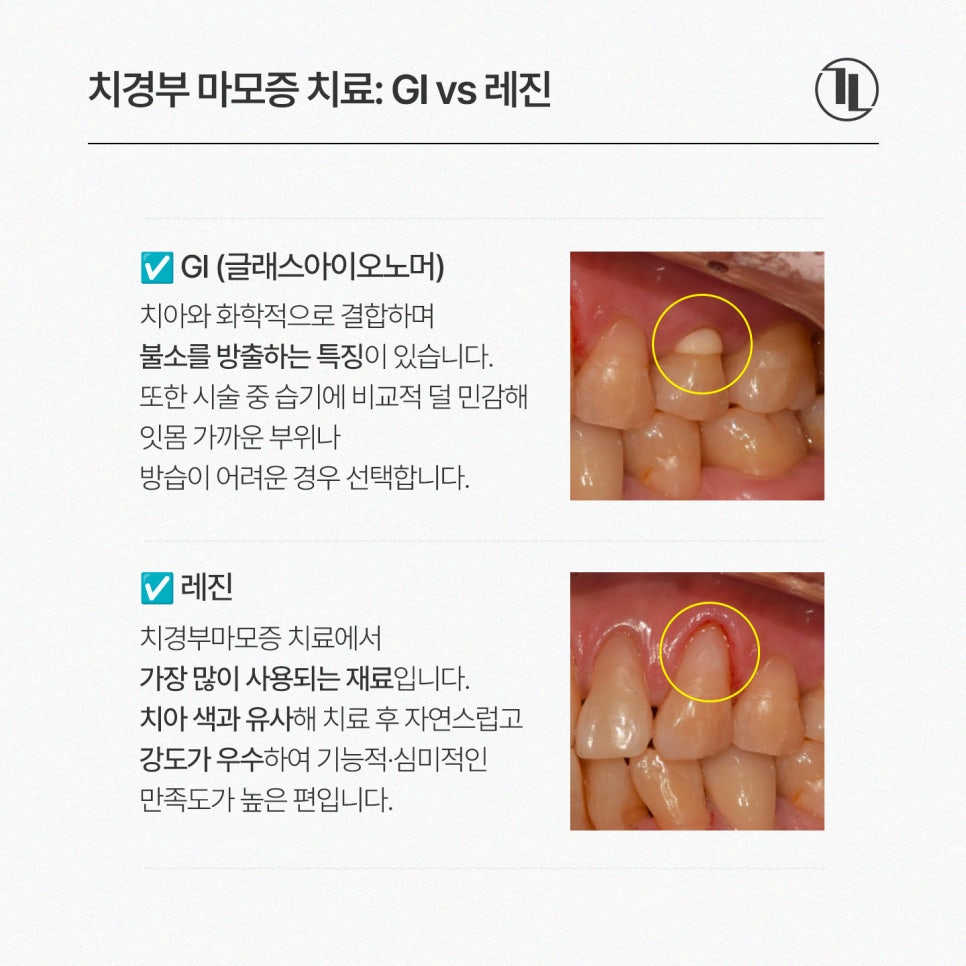
✋Question✋
Which material is better?
It depends on the patient’s condition.
When multiple teeth need treatment, the advantages of each material can be considered, and GI and composite resin can be used together according to the situation.
✅ When GI is suitable
-
For patients at high risk of cavities
-
When temporary or supplementary restoration is needed
-
For treatment of molars that are not easily visible
-
When you want to receive insurance coverage
✅ When composite resin is suitable
Cervical Abrasion
Prevention & Care After Treatment
Even after composite resin treatment, the area may become abraded again at any time if the original cause remains.
Therefore, the following care is needed.
✅ Use a soft-bristled toothbrush
✅ Do not brush forcefully
✅ Manage teeth grinding and clenching
✅ Review your habits when consuming acidic foods
✅ Have regular dental examinations
Cervical Abrasion FAQ
✋Can cervical abrasion heal naturally?
Tooth structure that has already been worn away does not regenerate naturally.
However, improving the underlying causes may help slow its progression and manage symptoms.
✋Do I have to receive treatment?
Whether treatment is needed is determined through a comprehensive evaluation of the severity of symptoms, the extent of abrasion, and the presence or absence of sensitivity.
✋Can I use my teeth for a long time after composite resin treatment?
The longevity of composite resin can vary depending on each person’s oral environment, including oral hygiene, biting habits, and whether they grind their teeth.
It is advisable to improve its longevity through regular examinations and proper habits.
✋Can it recur?
Yes. If the habits causing it continue, it can occur again at any time in the same area or in other teeth.
Therefore, improving incorrect habits is most important.
✋How is it different from gum recession?
Gum recession is a condition in which the gums move downward and expose the tooth roots, while cervical abrasion is a condition in which the area at the gumline becomes worn into a V-shaped notch.
Gum recession and cervical abrasion often occur together.
| Gum recession | Category | Cervical abrasion |
|---|
| Gum tissue | Area affected | Tooth structure (enamel and dentin) |
| Periodontal disease, aging, excessive brushing, tooth movement | Main causes | Forceful brushing, biting forces, teeth grinding, tooth wear |
| Exposed tooth roots, teeth appearing longer, sensitivity | Typical symptoms | V-shaped notching at the cervical area, sensitivity |
| Periodontal treatment, gum care, and gum grafting when necessary | Treatment | Composite resin restoration and lifestyle improvements |
Cervical abrasion often causes only mild symptoms at first and is frequently left untreated.
However, if tooth sensitivity recurs or the neck of the tooth appears notched, it is important to receive an accurate diagnosis and treatment at an early stage.
Treatment itself is important, but correcting improper brushing and managing biting habits are also key to preventing recurrence and maintaining oral health.
By accurately identifying the symptoms and causes and creating a treatment and care plan suited to your individual oral condition, you may be able to maintain your natural teeth in a healthier condition for longer.
If you have any questions about cervical abrasion treatment, please feel free to leave a comment at any time.


Previous image
Next image