Hello, this is Gangnam Leon Dental Clinic🙂
Bright, clean teeth can
have a considerable impact on a first impression.
However, as time passes during everyday life,
teeth can naturally become stained.
As tooth color gradually changes in this way,
many people begin considering teeth whitening.
Especially before important events such as
weddings, job interviews, and profile photo shoots.
Does DIY whitening really work?
How long does teeth whitening last?
How much does it cost?
In this post, we have organized everything you may be curious about,
including the causes of tooth staining,
the differences between professional teeth whitening and DIY whitening,
cost and results, the treatment process,
and frequently asked questions.
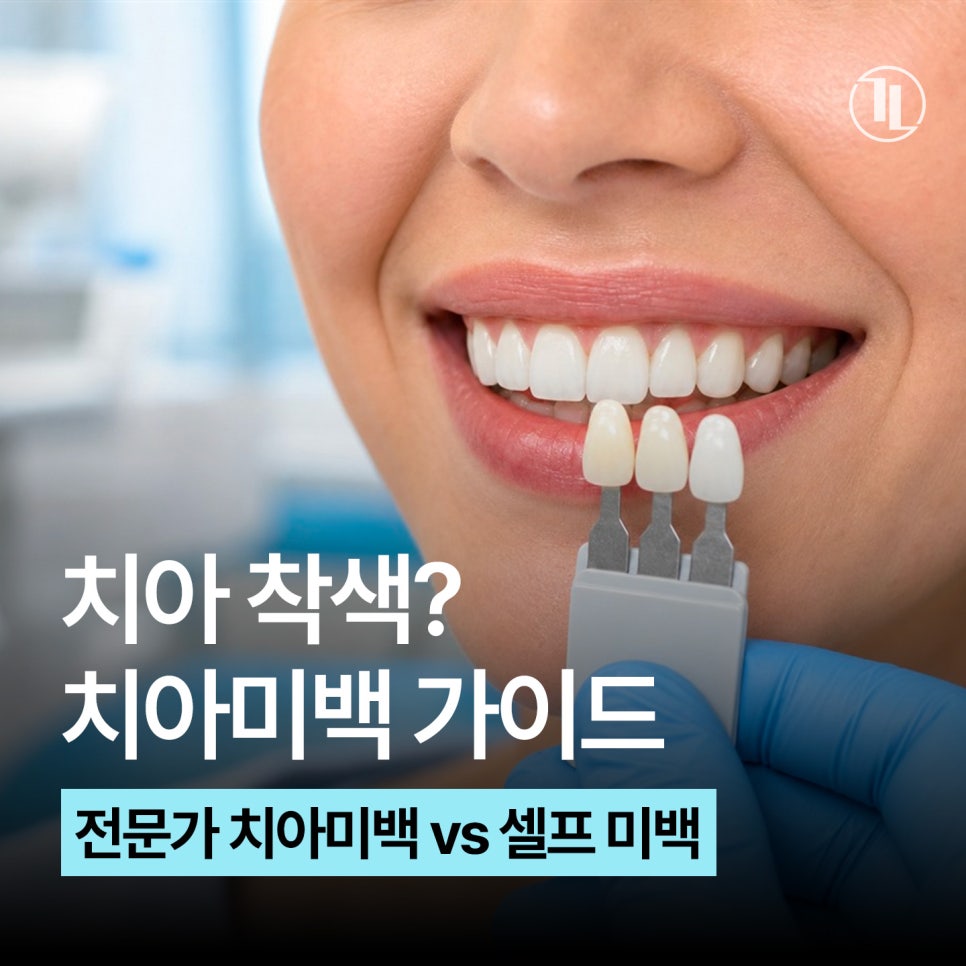
🔖Teeth Whitening Summary
1️⃣Causes of staining
2️⃣Professional teeth whitening vs. DIY whitening
3️⃣Cost of teeth whitening
4️⃣Teeth whitening process
5️⃣Teeth whitening results and side effects
6️⃣FAQ
Causes of Tooth Staining
:Why Teeth Turn Yellow
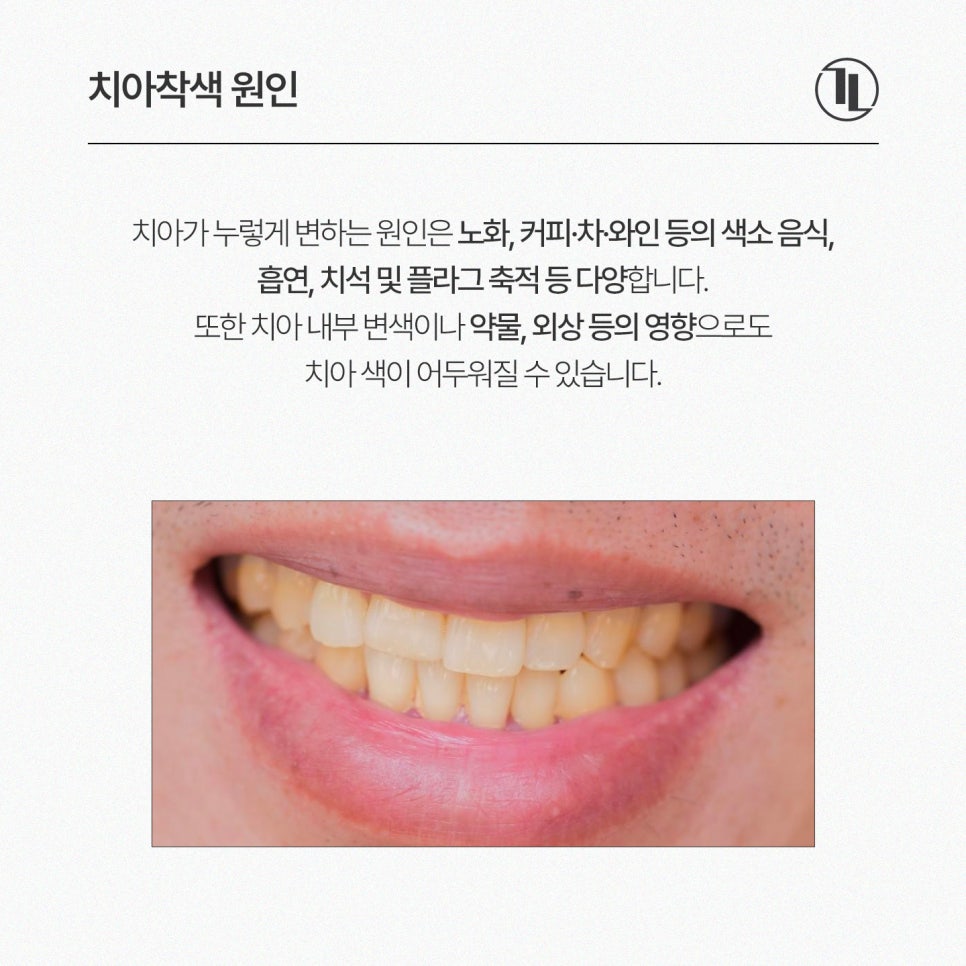
The causes of yellowing teeth
are broadly divided into extrinsic and intrinsic factors.
✅Extrinsic Staining
This refers to staining that occurs
when pigments accumulate on the tooth surface (enamel).
It is the most common type
and is closely related to lifestyle habits.
Coffee, green tea, black tea, wine,
curry, cola, and so on
Tar and nicotine in cigarettes
can cause staining on the tooth surface.
✅Intrinsic Staining
This refers to staining or discoloration
that occurs inside the tooth (the dentin or during tooth formation).
As people age, the enamel gradually becomes thinner,
exposing the color of the underlying dentin
and making the teeth appear yellowish.
In some cases, the color inside a tooth may change
due to certain medications or dental trauma.
In such cases, fundamental dental treatment,
rather than general whitening, is necessary.
Professional Teeth Whitening
vs. DIY Whitening
Which method is better
depends on the condition of your teeth and the results you want.
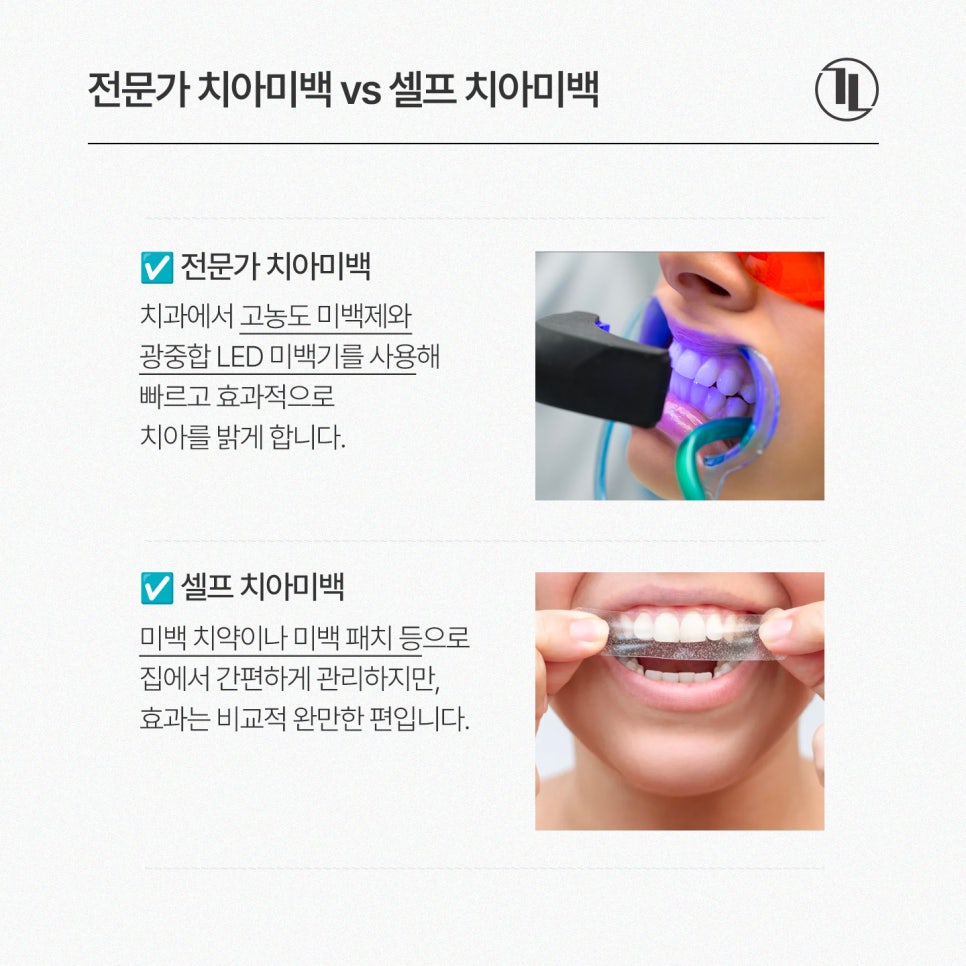
✅Professional Teeth Whitening
A high-concentration whitening agent is used at the dental clinic,
followed by light exposure to accelerate the effect.
Because the condition of the teeth and gums is checked before treatment,
a treatment plan can be developed based on the individual’s condition.
✅DIY Teeth Whitening
Common options include whitening toothpaste, whitening strips,
and whitening gels.
Because instructions and results vary by product,
it is important to carefully check the instructions
before use.
| Professional Teeth Whitening | Category | DIY Teeth Whitening |
|---|
| High-concentration whitening agent + light exposure | Treatment | Whitening toothpaste, whitening gel, etc. |
| Relatively rapid changes can be expected | Results | Very gradual |
| Performed after a dental examination | Safety | Follow the product instructions |
| Approximately 1–3 sessions (individual differences); 20–40 minutes per session | Time required | Several days to several weeks |
| Can last from several months to more than 2 years depending on lifestyle habits | Duration | Varies depending on the product and care |
| Relatively high | Cost | Affordable |
| For those who want rapid changes | Recommended for | Managing mild staining |
Cost of Professional Teeth Whitening
The cost of teeth whitening
varies depending on the treatment method, dental clinic, and type of product.
Therefore, rather than choosing based solely on cost,
it is a good idea to consider the following factors as well.
The general cost is approximately KRW 100,000–300,000 per session,
and you may also choose to receive treatment
with a price benefit during a promotional period.
✔️Current degree of tooth discoloration
✔️Desired brightness
✔️Duration of the results
Teeth Whitening Process
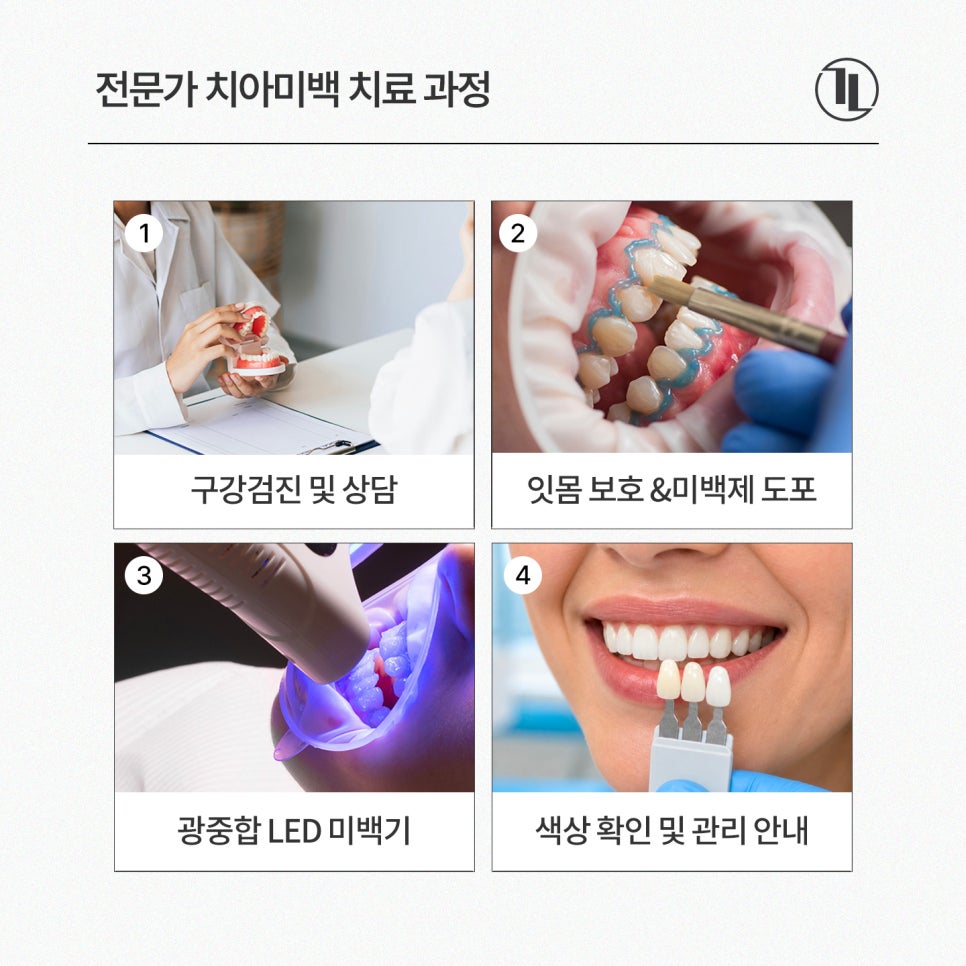
Professional teeth whitening
usually proceeds as follows.
① Oral Examination and Consultation
We examine whether the teeth are in a condition suitable for whitening,
including cavities, gum disease, tooth wear, and the presence of restorations.
We also discuss the desired tooth color
and expected results.
② Checking Tooth Color
The current color of the teeth is measured and recorded
before treatment.
This allows an objective comparison
of how much brighter the teeth have become after treatment.
③ Scaling When Necessary
If tartar or surface staining is severe,
scaling is performed first.
Cleaning the tooth surface thoroughly
helps the whitening agent act more evenly.
④ Gum Protection
A protective agent is applied
to prevent the high-concentration whitening agent from contacting the gums.
This can help reduce gum irritation and discomfort.
⑤ Applying the Whitening Agent
A whitening agent containing hydrogen peroxide
or carbamide peroxide is applied to the tooth surface.
The whitening agent breaks down pigments inside the teeth,
helping them appear brighter.
⑥ Light-Activated LED Whitening Device
A special light source is used
to accelerate the whitening reaction.
⑦ Removing the Whitening Agent and Checking the Color
After the designated time has passed, the whitening agent is removed
and the teeth are cleaned thoroughly.
The degree of whitening is then checked
by comparing the color with that before treatment.
⑧ Post-Treatment Care Instructions
For 24–48 hours after treatment,
it is best to avoid dark-colored foods such as coffee, wine, and curry
and to avoid smoking whenever possible.
Following the care instructions provided by the dental clinic
can also help maintain the whitening results for longer.
Teeth Whitening Results and Duration
The results are greatly affected by the individual’s tooth condition
and lifestyle habits.
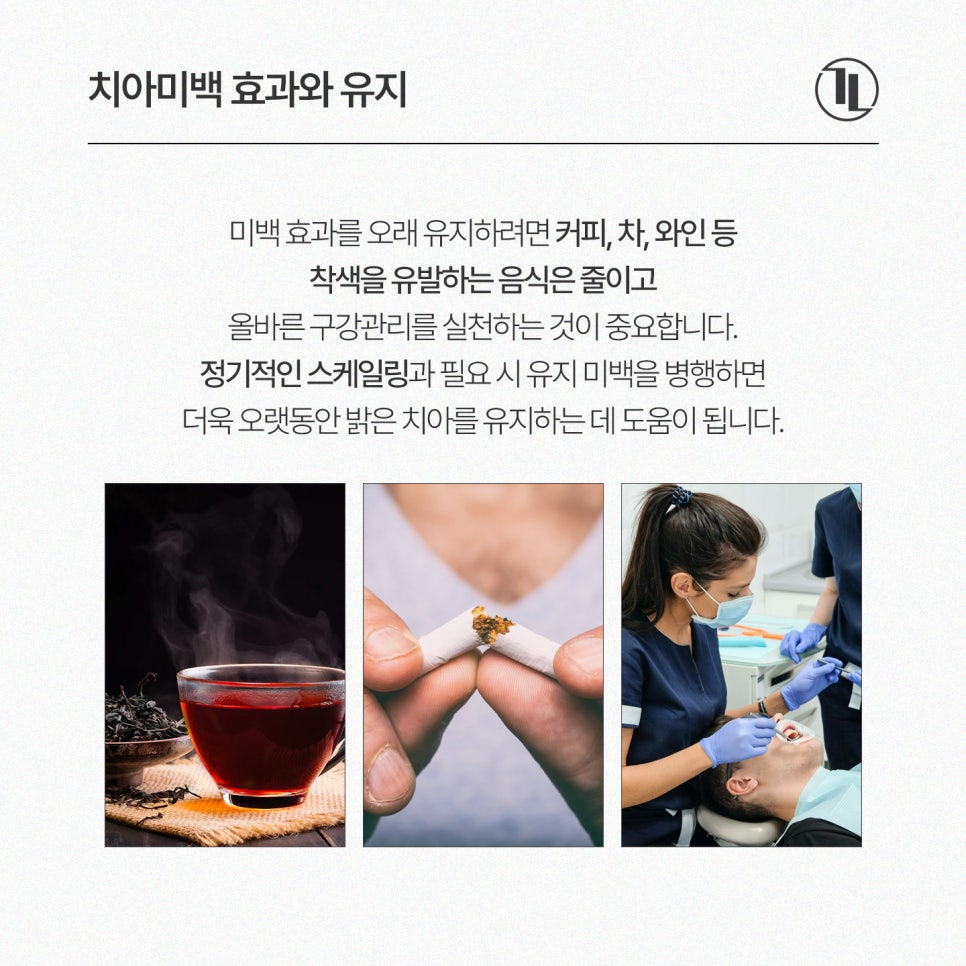
The following habits
can help maintain the whitening results.
Depending on lifestyle habits,
the results may last from several months to more than two years.
✔️Reduce consumption of foods that cause staining
✔️Reduce smoking
✔️Get regular scaling
✔️Brush your teeth properly
✔️Follow the dental clinic’s recommended care methods
Side Effects and
Precautions for Teeth Whitening
Although teeth whitening is a relatively common treatment,
some people may experience the following symptoms.
✅Tooth Sensitivity
This is the most commonly reported symptom
and is usually temporary, improving over time.
✅ Gum Irritation
Contact between the whitening agent and the gums
may cause irritation.
✅ Restorations Do Not Change Color
Crowns, laminates, composite resin, and similar restorations
do not whiten like natural teeth,
so consultation is necessary before treatment.
✅ Precautions After Treatment
The 24–48 hours after treatment
are an especially important period during which the whitening agent
stabilizes on the teeth.
It is best to avoid staining foods whenever possible.
Teeth Whitening FAQ
✋How many teeth whitening sessions are needed?
The number of sessions required may vary
depending on the original tooth color, the cause of staining,
the condition of the teeth, and lifestyle habits.
Treatment is often performed in approximately three sessions.
In this case, one or two sessions are performed on the same day,
and the remaining session is performed
about seven days later.
✋My teeth are sensitive after whitening.
Temporary sensitivity may occur after whitening,
but if there is pain or it persists for a long time,
it is necessary to check whether there were pre-existing issues
such as tooth cracks, cavities, gum recession,
or tooth sensitivity.
In general, these factors are checked
through an examination before whitening treatment.
✋Can professional teeth whitening and DIY whitening
be performed together?
Combining DIY whitening
with professional teeth whitening
may improve the whitening results and how long they last.
For mild staining, gradual DIY whitening
along with lifestyle management may be helpful,
but if you want rapid changes and need a professional examination,
you may wish to consider professional teeth whitening.
Post-treatment care habits
have a significant effect on maintaining the whitening results.
Reducing foods that cause staining and smoking,
along with regular oral care,
can be helpful.
If you have any other questions about teeth whitening,
please feel free to leave a comment.
Previous image
Next image