Nonhyeon-dong Orthodontics
Can Senior Generations Also Get Orthodontic Treatment?
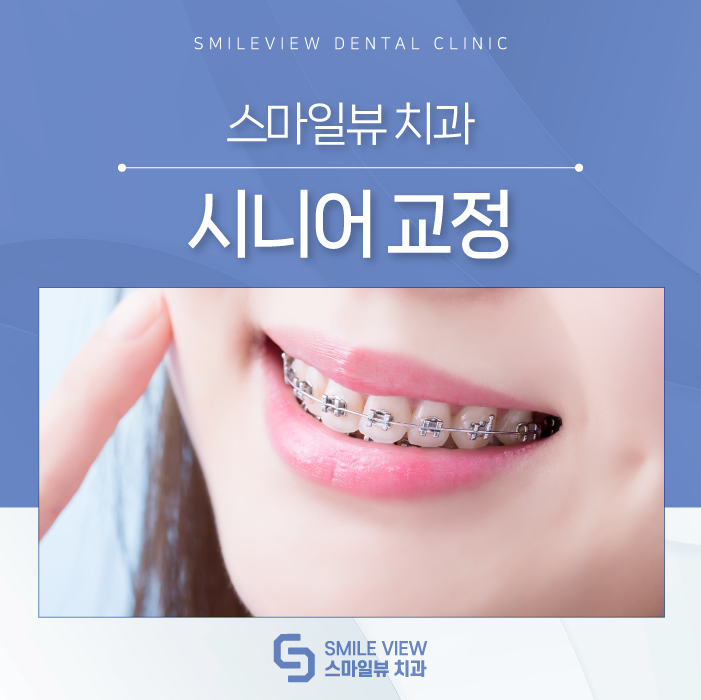
Hello, this is Smile View Dental Clinic.
As we get older, the health of the mouth and gums becomes an important concern for everyone.
It is often easy to think that the process of correcting tooth alignment is something only teenagers or younger generations go through, but in reality, more and more middle-aged and older adults are also considering it.
This is because many people experience unclear pronunciation, discomfort when chewing food, or a sense of misalignment as gum disease recurs.
Age itself is not an absolute barrier, but the condition of the gums, the health of the bone supporting the roots, and whether there are any accompanying oral diseases are important criteria when planning the process.
Therefore, alignment correction for middle-aged and older adults goes beyond simply achieving aesthetic balance and is meaningful in that it is closely connected to overall oral health management.
In this post, we will organize the necessity of alignment correction after getting older, the points to consider, and the management points to keep in mind.
-
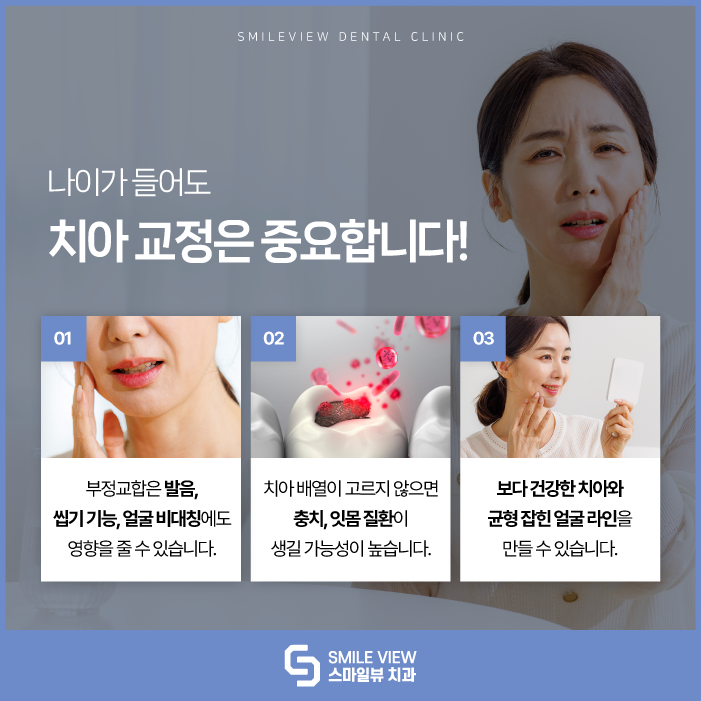
Orthodontic treatment is important even as you get older!
-
Effects on pronunciation and chewing
When the teeth are misaligned, pronunciation may become unclear, or it may be difficult to chew food. This can also affect facial balance and asymmetry.
- Increased risk of cavities and gum disease
If the teeth are not aligned evenly, brushing may not be done properly, which can increase the likelihood of cavities or gum disease.
- Oral health and aesthetic balance
Well-aligned teeth make hygiene management easier and can also help balance the facial line.
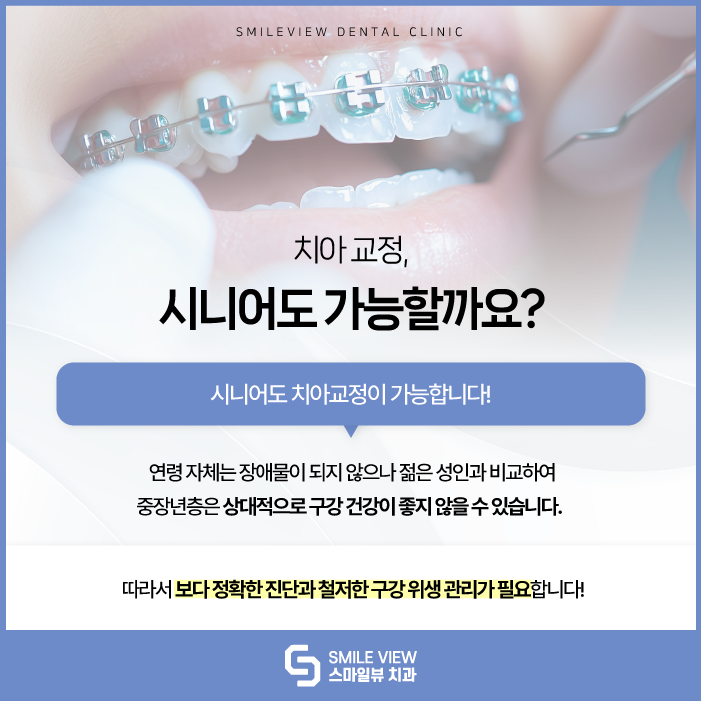
- Is it possible for seniors too?
Orthodontic treatment is possible even in senior age groups.
Age itself is not a direct limiting factor in the process of correcting tooth alignment, but among middle-aged and older adults, the health of the gums and alveolar bone may decline relatively more easily.
Depending on the oral condition, the orthodontic method and treatment period may vary.
Therefore, a thorough oral examination before orthodontic treatment is necessary, and if there are cavities or gum disease, prior treatment may take priority.
Nonhyeon-dong orthodontics is not just about correcting alignment; it should be carried out together with overall oral health management, and it can be performed more safely when thorough hygiene management and regular checkups are also maintained.
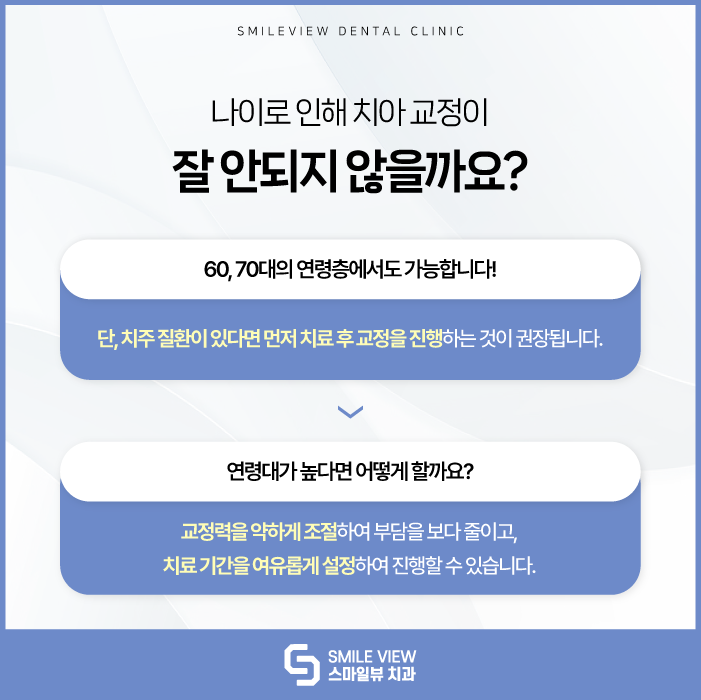
- Is improvement difficult at an older age?
Nonhyeon-dong orthodontics can be performed even in the 60s and 70s, and age itself is not an absolute limiting factor.
However, if there are gum or periodontal diseases, treatment for those conditions is needed first.
If cavities or gum problems are present as well, it is advisable to begin the alignment correction process after prior treatment.
The process of correcting alignment is adjusted according to age,
and the older the patient is, the more often the force is applied gently to reduce the burden, and the treatment period is usually planned with more leeway.
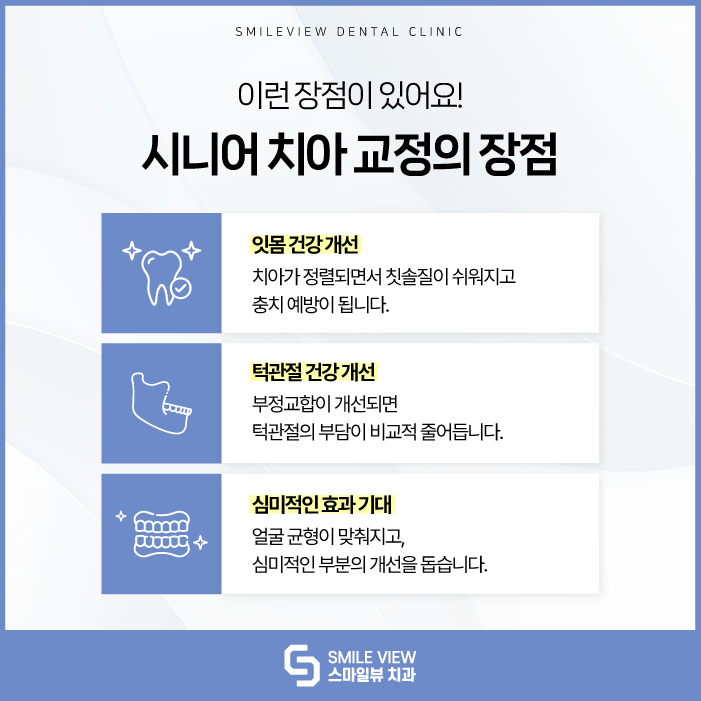
- Benefits of senior orthodontic treatment
CASE 01. Improved gum health: When the teeth are evenly aligned, brushing becomes easier, which can have a positive effect on preventing gum disease and cavities.
CASE 02. Improved jaw joint health: If malocclusion is corrected, the burden on the temporomandibular joint is reduced, which can help maintain chewing function and manage overall oral function.
CASE 03. Expected aesthetic effect: When the oral structure is organized, facial balance can improve, and positive changes in appearance can also be expected.
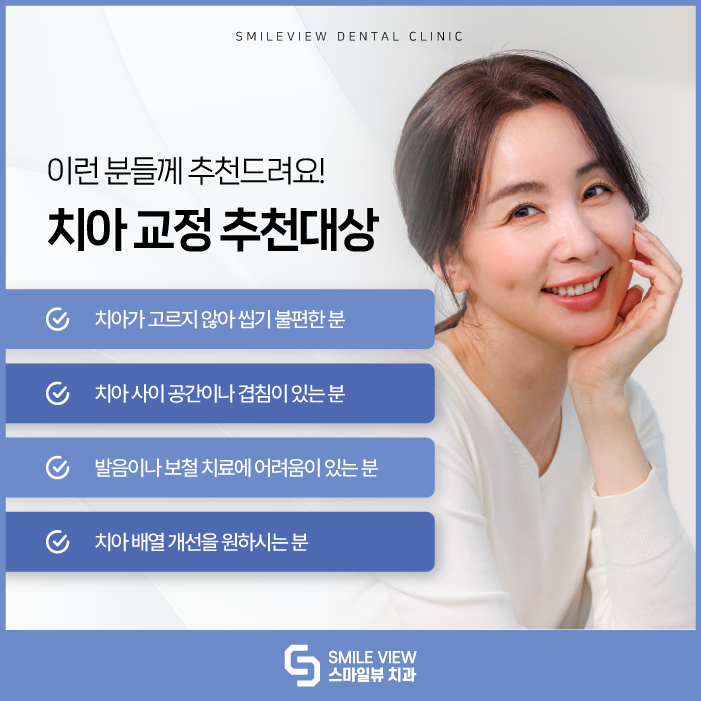
- Considered for people like this
✅ People who often feel discomfort while chewing food because their teeth are uneven
✅ People who need alignment improvement because of gaps between teeth or severe crowding
✅ People who have difficulty pronouncing sounds clearly or have limitations during prosthetic treatment
✅ People who want overall improvement and harmony in tooth alignment
For such people, the process of correcting tooth alignment can be one option.
If orthodontic treatment is considered according to an individual's oral condition and needs, changes can be expected in both functional and aesthetic aspects.
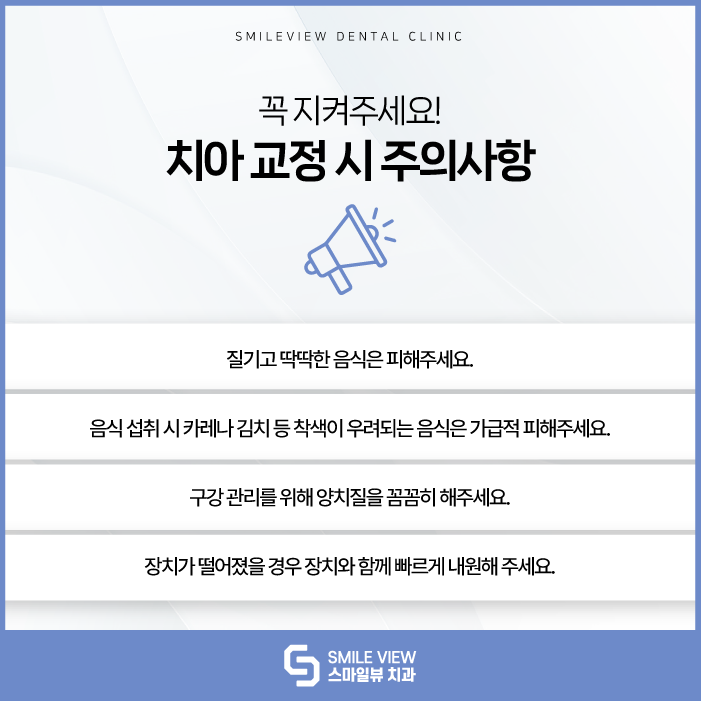
-
Precautions for Nonhyeon-dong orthodontics
-
Be careful with food intake
Chewy and hard foods can put stress on the appliance, so it is best to avoid them.
- Be cautious with foods that may stain
Highly staining foods such as kimchi, coffee, and curry may leave stains on the appliance and teeth, so caution is needed.
- Thorough oral care
During orthodontic treatment, it is important to protect gum health by brushing carefully and using dental floss diligently.
- Appliance management
If the orthodontic appliance comes off, do not leave it as is; it is best to visit the clinic promptly with the appliance.
Nonhyeon-dong orthodontics can be seen as part of oral health management beyond a purely aesthetic purpose.
Age does not mean treatment is impossible, but the plan may vary depending on the condition of the gums and oral structure.
The important point is to accurately assess the current oral environment and establish a systematic plan suited to the individual's condition.
Since the process of correcting tooth alignment requires long-term management, lifestyle improvements and oral care must be carried out together, and it can help not only with short-term changes but also with long-term health maintenance.
Ultimately, whether to undergo this treatment depends more on the current condition and willingness to manage it than on age. Thank you.
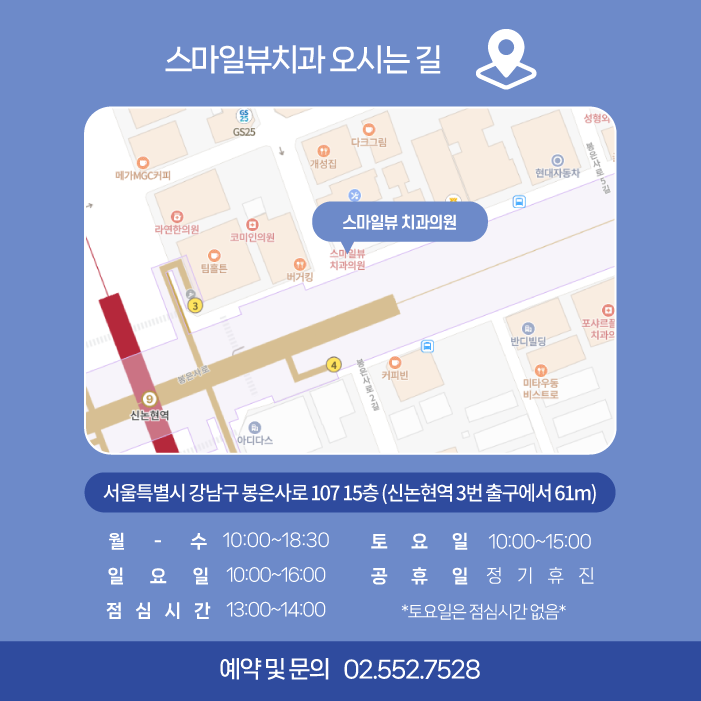
Smile View Dental Clinic
15F, 107 Bongeunsa-ro, Gangnam-gu, Seoul